
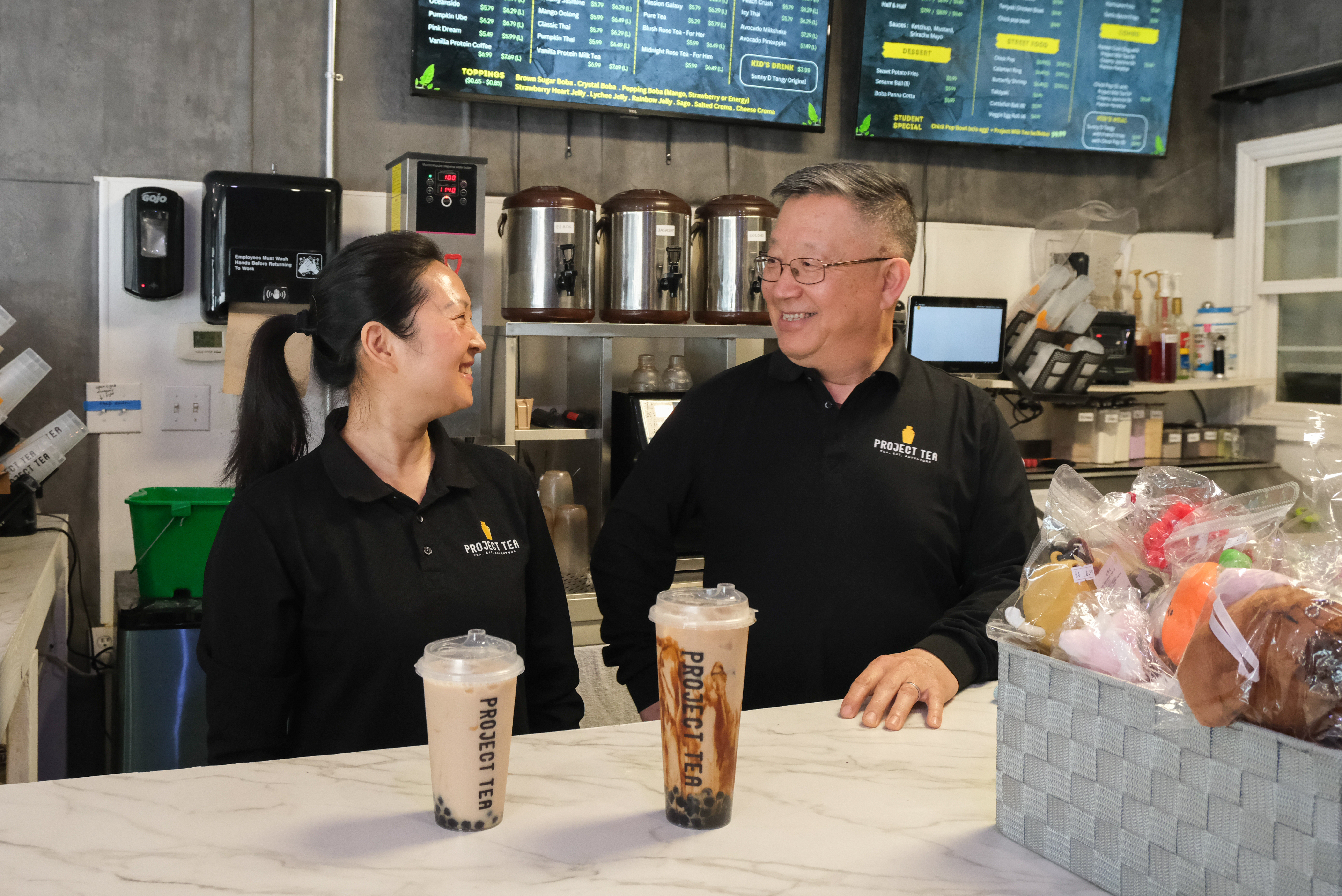
Chico residents Ashley Liu and Tom Zhang met online in 2022 after each left a difficult marriage. Two years later, Liu moved from China to the United States to join Zhang, who was living in Sacramento, Calif.
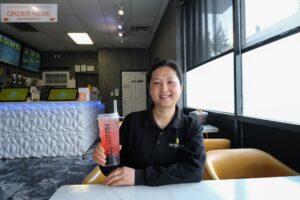
Liu married the “Mr. Right” she found in her 50s, and together they decided to take over Project Tea, a Chico boba shop.
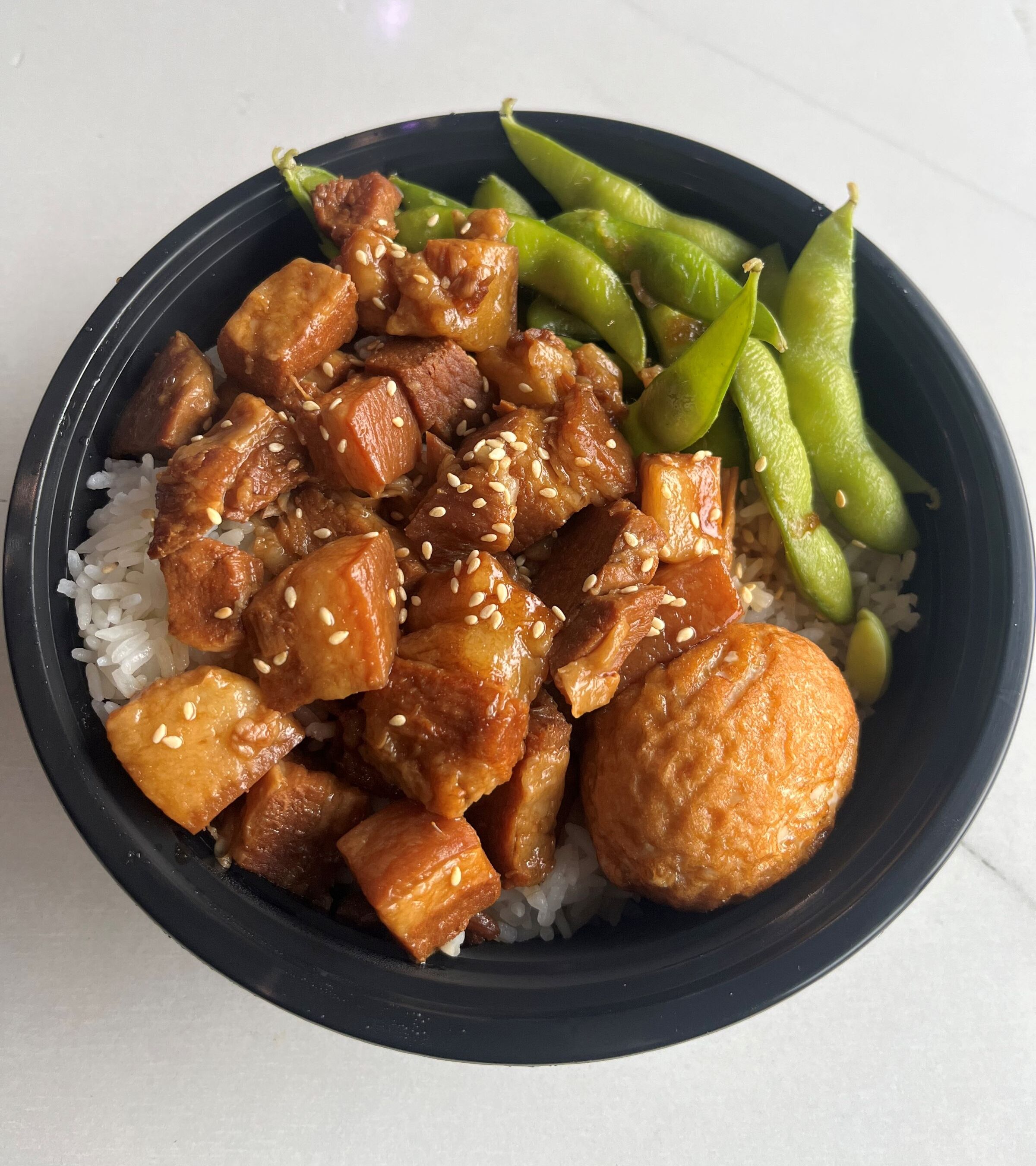
In January 2026, one year after they arrived, the couple added a new item to the menu: the Pork Belly Rice Bowl. They weren’t sure whether American customers would enjoy this classic Chinese dish, but it turned out that the red braised pork belly was loved not only by Chinese residents in Chico, but also by American customers. (See sidebar on writer’s experience here.)
For Liu and Zhang, their boba shop represents more than a business.
It symbolizes the fresh start of their marriage and a space where they explore the blending of Chinese and American culinary traditions, share food with the community, and in the process, find a deeper sense of home themselves.
As nationwide immigration crackdowns and tightening visa policies have made many immigrants — documented or not — feel unwelcome in this country, Zhang and Liu’s story stands as a reminder that immigrants, building and seeking a better life far from home, can also strengthen the local economy, enrich the culture, and foster a more vibrant and welcoming community.
Liu said that when she saw Chinese students in Chico fall in love with the Pork Belly Rice Bowl, and watched an American mother spoon-feed her baby rice that had been soaked in soy-based sauce, mouthful by mouthful, she felt a deeper connection with Chico.
“I was so happy to see a wide range of local people enjoy our authentic Chinese food, no matter whether they are Asian or not,” Liu said in a recent interview conducted in her native language of Mandarin.
It happened in a flash
In 1988, Zhang came to the United States as a visiting scholar in the Information Systems department at San Francisco State University. He later obtained a green card, chose to remain in the United States, and built a career as an IT engineer.
Around 2005, he transitioned into the food industry and opened a restaurant after he decided he wanted to be self-employed.
Liu met Zhang on an international dating website. At the time, Liu, heartbroken by her ex-husband’s infidelity, was living in Chengdu, China. Zhang was just divorced from his ex-wife after nearly 30 years of marriage, during which they had gradually found themselves with little left to talk about.
Liu said that the ending sentence in Zhang’s bio on that website impressed her.
“He wrote, ‘I’m 60 years old, and I’m still thrilled by the beginning of a new life,’” Liu recalled. “I was curious and eager to learn how an old man can still hold this kind of hope.”
Zhang, who can be taciturn, said that Liu’s authenticity amazed him.
Zhang and Liu exchanged messages for three days and had a video call on the third. By the end of that call, they decided to be together.
Zhang flew back to China immediately after that country ended its Zero-Covid policy and opened the border at the beginning of 2023. They became engaged soon after. Liu received the K-1 visa (fiancée visa), and came to the United States in June 2024. She received her green card in the spring of 2025.
In Romance of the Three Kingdoms, one of Four Great Classical Novels of China, the surnames of three main characters are Liu, Guan and Zhang. So, the couple, whose surnames are, respectively, Liu and Zhang, named their registered company Guanless Legend.
During the time they were separated by the Pacific Ocean, Zhang fashioned a phone holder out of iron wires so it would be easier for him to talk with Liu for hours on video calls.
But in Liu’s eyes, the most romantic part of their story is this boba shop, a 1,100-square foot suite located on Sacramento Avenue, not far from the university.
“Choosing to come to Chico, a small town we had never heard of, and running this boba shop, are very romantic,” Liu said. “The boba shop is the baby of our love, and a fresh start to our new life.”
The Chico rumors: It’s rural and white
Zhang knew almost nothing about Chico when a boba supplier informed him of the opportunity to take over the shop in summer 2024.
He began asking around about the town. His first impression, based on what he was told, was that Chico was rural, predominantly white, and a place where many people carried guns.
The couple opened Google Maps, and looked at photos of the area surrounding the shop’s location. It appeared old and run down.
“Maybe we shouldn’t even bother going,” Zhang told Liu.
“Why not? It is just a one-and-a-half-hour drive,” Liu said. “We should at least take a look.”
In their relationship, Liu is the one more willing to try something new.
After they arrived in Chico, spoke with the shop’s original owners, and observed the business for an entire day, they decided to purchase the property.
Seven months after moving to Chico, while shopping at a garage sale, they noticed an Asian woman walking by. “Talk to me in Mandarin now,” Liu whispered to Zhang. “If she is Chinese, she’ll definitely look at us.”
When they began speaking Mandarin, the woman turned toward them. Her name was Echo Song, and she’s a sociology professor at Chico State who is originally from Shandong Province in China — the same province Zhang is from.
Liu and Song became friends, and Song introduced the couple to the larger local Chinese community. Song was the first Chinese friend she made in this “white small town,” Liu said.
Authentic red braised pork belly comes to Chico
Three months after opening their new Chico shop, Zhang and Liu treated employees to a meal. Liu prepared several Chinese dishes, including red braised pork belly.
The pork belly was the first dish to be finished by their American employees, including both white workers and Asian Americans. That came as a surprise to them — they had always assumed Americans wouldn’t enjoy pork belly and had modified their dishes to accommodate what they believed their clientele would like.
Several months after Liu first made pork belly for the employees, some of them began asking her to make it again. When she finally did, one employee who wasn’t scheduled to work that day came to the shop just to eat. Zhang and Liu were stunned. “Did they like pork belly that much?”
At the time, Zhang was considering adding more dishes to the menu. An experienced businessman in the food industry, he knew that if he wanted to increase the shop’s revenue, he couldn’t rely on boba tea alone.
In January 2026, the Pork Belly Rice Bowl was officially launched as a rice bowl topped with red braised pork belly, edamame and tiger-skin egg. The tiger-skin egg is a Chinese cuisine in which eggs are fried until the outer surface becomes golden-brown and wrinkled, resembling a tiger’s skin.
In China, people like red braised pork belly for its rich and indulgent flavor. To Liu and Zhang’s surprise, in its first month, the Pork Belly Rice Bowl became the best-selling item in Chico, becoming popular among both Chinese and non-Chinese customers.
A Chinese university student told this reporter that she had been in Chico for half a year without finding authentic food from home. Then she discovered the rice bowl that reminded her of her grandfather in Beijing because of how it was prepared.
Moments like this made Liu begin to feel connected to Chico.
“When I hear customers talk about the dishes they love and ask us not to take them off the menu, and when I see the messages and reviews they leave for us, I feel a growing sense of stability and belonging in this city,” Liu said. “And little by little, I’ve come to like it here more and more.”
The experience also pushed Liu and Zhang to rethink their stereotypes about “foreigners” and encouraged them to further explore ways of blending food cultures.
Serve the community
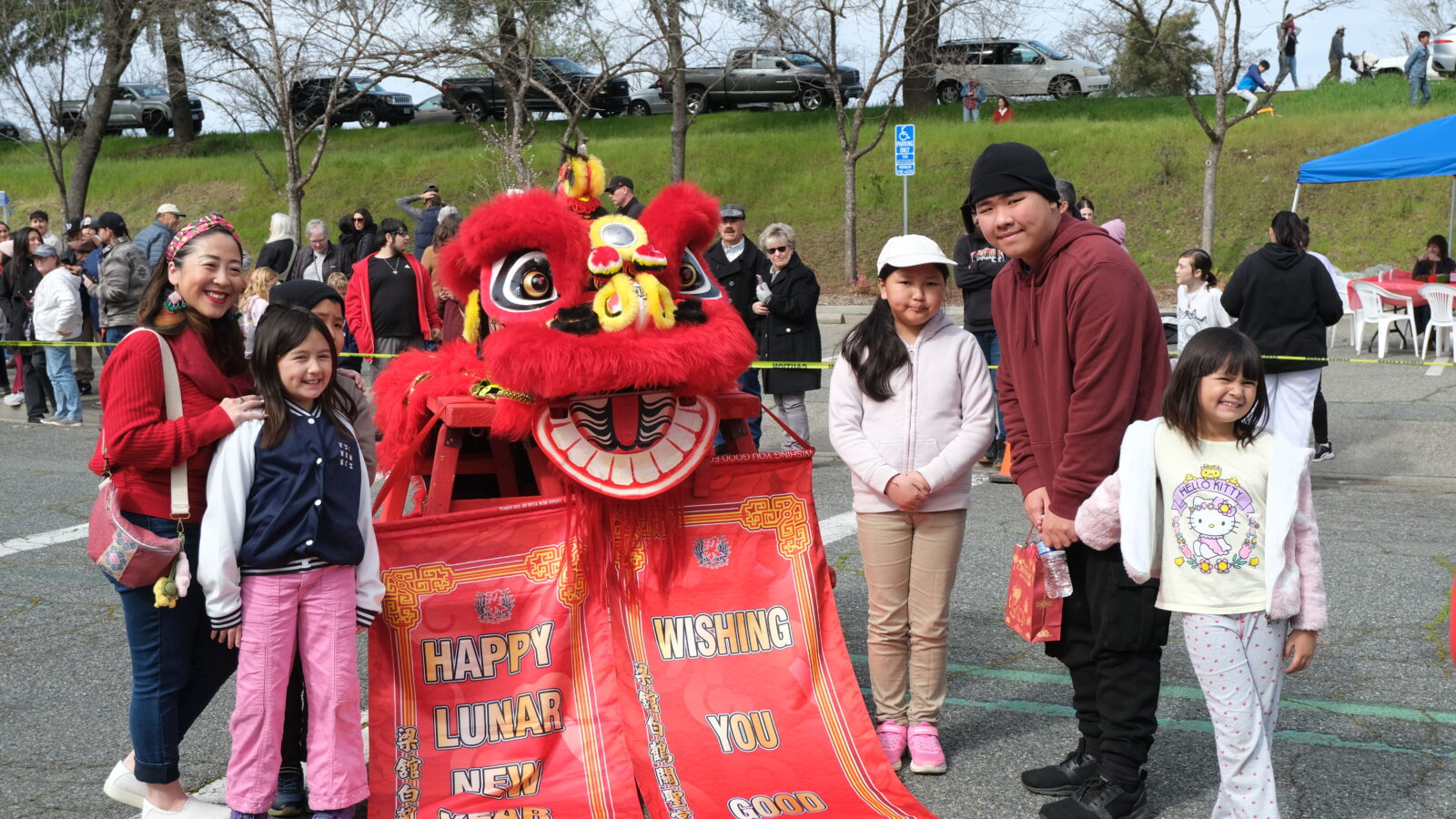
Thanks to Song’s invitation, Liu and Zhang attended the Chinese New Year celebration at St. John’s Episcopal Church in Chico. The couple provided fried dumplings and spring rolls at a discount.
Project Tea also occasionally provides space free of charge for Chico State student clubs and organizations to hold fundraising events.
Song describes the couple as “warm-hearted and helpful.”
Many of the boba shop’s employees are college students, Song said, and the couple gives them the flexibility they need during the busy finals week.
“Sometimes Liu and Zhang have to rush into their shop to cover shifts when the students cannot show up or are busy with school or exams,” Song said. “They are really serving student populations in Chico.”
Liu says some students often come to the shop to study or discuss schoolwork, but she doesn’t require them to order. She says she is happy to see them enjoy time in her shop.
Now, Zhang and Liu are planning to lease a property in downtown Chico and open a second boba shop, hoping to serve even more Chico residents.
Yucheng Tang is a California Local News fellow reporting for ChicoSol.