Chico State student remembered for her generosity, work with the unhoused

Butte County's third fatal domestic violence incident in 2 years
by Natalie Hanson | Posted December 12, 2025
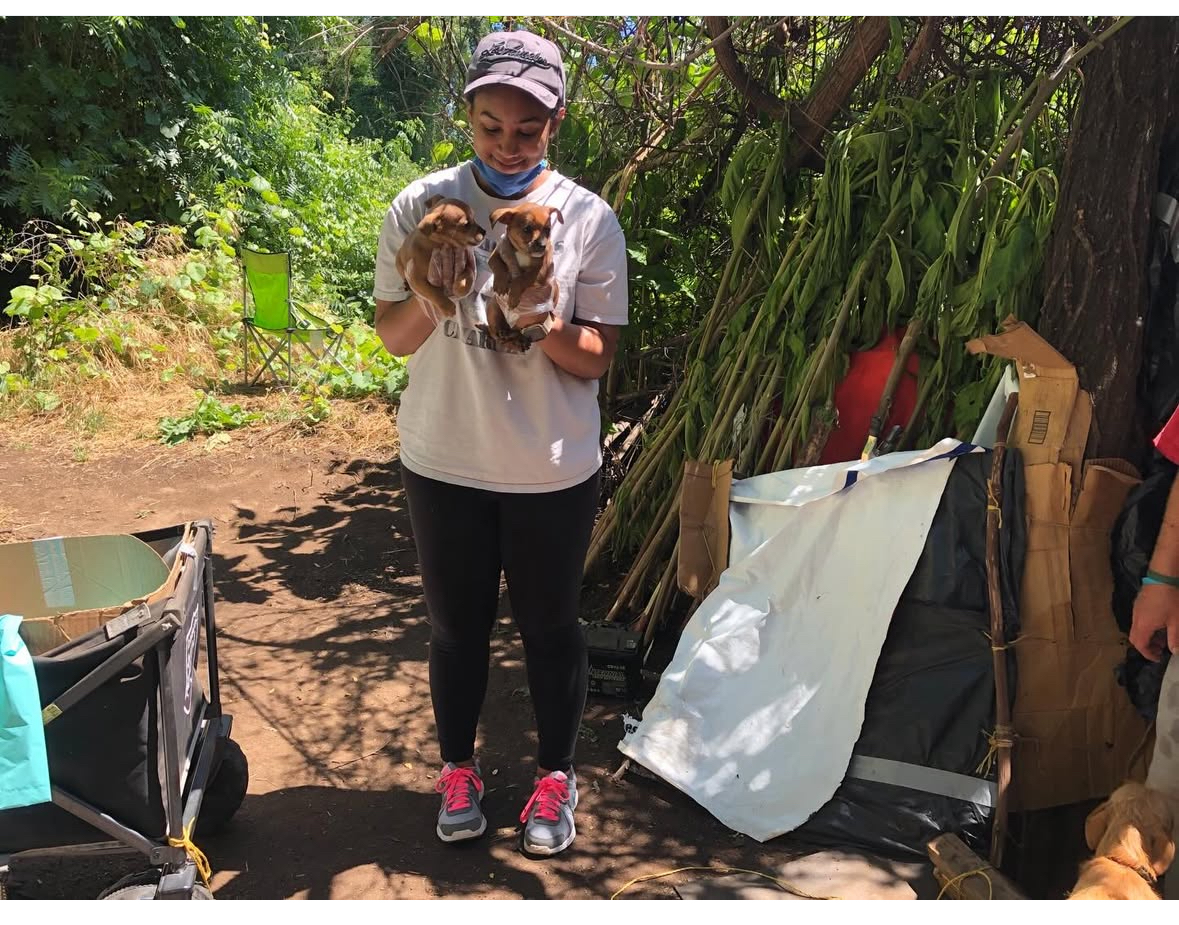
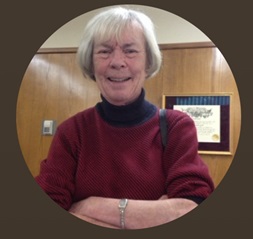
Alexandra Wynter’s photo on her social media.

Chicoans are honoring the memory of a 28-year-old university student and community volunteer who died Dec. 3 in what police are investigating as a murder-suicide.

Biological sciences major Alexandra Wynter, 28, was reported dead Dec. 3 in what the Chico Police Department has said was a fatal shooting on Warner Street. President Steve Perez said in a campuswide announcement Dec. 5 that she was on track to graduate in spring 2026, completing her degree while working at Enloe Health.  read more

Thank You, Judge Ann: A Remembrance

by Kim Weir | Posted March 19, 2024

photo courtesy of Butte County Superior Court
Judge Ann Rutherford

Retired Superior Court Judge Ann Rutherford, the first female judge in Butte County, served 40 years on the California bench. She died Feb. 16.

The people who Judge Ann Rutherford left behind are now sharing their verities about her. Groundbreaking, she was, and trailblazing. Remarkable. Highly regarded, sharp-minded, and quick-witted, too. She was all that.

But no words capture her depth of commitment to justice, or the fierceness of her intelligence and character. Anyone who mistook her decency and fairness for gullibility would regret it. She took no prisoners.

Once, an acquaintance of mine came before Judge Ann in a contentious divorce — one so nasty it led to criminal contempt charges against her ex-husband. His continuing harassment and defiance landed him in jail. Twice. The third time, Judge Ann told the bailiff to lock him up, with only a legal pad and pen, until he wrote his ex-wife a sincere letter of apology. And if, at the end of court that day, Judge Ann wasn’t happy with the letter’s content or tone, she would then send him to prison.

He wrote the letter. The harassment stopped.

* * * * *

The official story of Judge Ann Rutherford is impressive.

Judge Ann was Butte County’s first female judge, appointed by a new Governor Jerry Brown in 1976 to fill the open seat on the Chico Municipal Court. She was among his first judicial appointments. Starting with a nearly all-white, all-male California bench — and his own very high legal standards — half of Brown’s first appointees were Black, Mexican American, Asian American, and/or female, according to CalMatters.

In 1988 Judge Ann was elected as the first female judge on the Butte County Superior Court. She helped to establish the local court’s family law division, and served as its supervising judge starting in 1998. The Family Law section of the California State Bar Association honored her as Judicial Officer of the Year in 2000. Judge Ann kept “judging” even after retirement in 2001, taking cases as a traveling or temporary jurist until she retired fully in 2017.

But the unofficial story of how Judge Ann got her start — what I know of it — is better than the official one.

As president of the Chico Area Commission on the Status of Women, my mother spent days crafting her letter to Governor Brown in support of Ann Rutherford’s appointment. Mom listed Rutherford’s many sterling qualities and the superlatives she had earned, even then, as a young Chico attorney. Other friends and associates, area lawyers (those not trying to land the job themselves), and women’s rights activists also wrote to support her appointment.

There was a problem, however.

Governor Jerry Brown was a Democrat. Even in those exciting dating-Linda-Ronstadt days he knew which side of his bread got buttered.

But Ann Rutherford was a Republican. She came from a long line of Republicans, too, no doubt reaching back to the Civil War and the presidency of Honest Abe Lincoln. Back when the Grand Old Party was still grand, embracing principles as inspiring as they were heroic.

So, the question was: Would Jerry Brown overlook political party to pick the right woman for the job?

Mom decided to do what she could to make sure of that. Her most important outreach was to her sister and my uncle, Tom Harte, in Auburn.

A small-town attorney, Uncle Tom was also a stalwart of California’s old Democratic party, and had been since his days as a San Francisco longshoreman. Mom convinced him that Ann Rutherford was the best possible judge for Butte County. So, he fired up his Irish gift of gab and worked party connections up and down the state, county to county. He made sure everybody he could reach — and anybody else who knew somebody worth reaching — sent the governor a good Democratic word on her behalf.

Did that massive team effort land Ann Rutherford her first judgeship? It’s impossible to know. But I like to think so.

* * * * *

One day, not long after her appointment, Judge Ann called.

“Harriet,” she said to my mother. “I have a young man in my court who says he’s your son. He wants to change his name. But his reasons confuse me. I’m hoping you can clarify the situation.”

David, changing his name? That was a surprise. My little brother doing strange, inexplicable things? Not a surprise. He had always been a walking, talking three-ring circus, uproariously funny as early as kindergarten. But his life gradually darkened. After high school David could not keep a job, or manage school or new relationships, as hard as he tried. Then came the diagnosis of schizophrenia.

“He says you’re not his real parents,” Judge Ann said. “That there’s been a terrible mistake, though he doesn’t blame you. He says there was a mix-up, probably at the hospital, and he was sent home with the wrong family.”

“Oh,” my mother muttered. It was hell to hear David’s disjointed, deluded story recited, as a matter of fact, by Judge Ann. “So that’s it. That’s why he wants to change his name.”

We had heard most of it before. David was desperate to get back to England, to find his “real family.” As if switching out the facts of his past would change the insufferable present. Would silence all the voices no one else ever heard.

This particular delusion started when David was in the Air Force, stationed in England. Even the military began to think he might not be a good fit for the high-stress work of air traffic control. His “real family” story got more compelling after he came home. Once, in the middle of the night, my older brother had to drive down to the British Consulate in San Francisco. David had gone there to get a passport and free airfare. After the (baffled) Brits turned him down, he couldn’t remember where he’d parked his motorcycle. He couldn’t get home.

David’s desperate need for a new family was just one more shock, especially for my exhausted mother, on my brother’s long, scary march into mental illness.

“Can we say no?” Mom asked Judge Ann. “A new name won’t change anything, nothing that matters. It will just confuse the bureaucracy, and the few friends he has left.”

“No, Harriet. You have no say in this,” Judge Ann said. “Because he’s an adult. He’s not trying to defraud anyone, that’s clear enough. He has the right to change his name.”

Which is how David Alan Weir, Chico High Class of 1972, became Schick Dareman Schick, exiled imaginary citizen of England.

Distressed by his odd new identity but determined to stay connected, we siblings sometimes teased him about it — or tried to. “Schick Schick!” we’d howl. “What kind of name is that?” Ha ha ha. “Why not Gillette Gillette?” Ha ha ha ha ha ha.

Dareman just stared at us. He didn’t get the joke. My brother David would have gotten it, though. He would have laughed and laughed. Of course, he laughed easily — though never at someone else’s expense.

Judge Ann was like that too. She would never laugh at people. In talking with Dareman, she did not laugh. She did not laugh, or snicker, or smirk — and glared, loudly, at anyone in her courtroom who did.

As he finalized his name change, she was direct, as always, but also kind and accommodating. If he lost his place in the proceedings, or got confused or distracted, Judge Ann helped him find his way back. She treated him with the courtesy and respect he deserved as a human being and as a California citizen.

And then she sent my brother on his way — loaded down, I suspect, with many more copies of next-step reminders, lists of helpful people, and essential phone numbers than even he, at his most confused, could ever need.

Thank you, Judge Ann.

Kim Weir is a longtime local journalist and founder of Up the Road, a public-interest media project. She lives in Paradise.

Bill Mash always had a project going

Chico loses an activist and story-teller who gave the unhoused a voice
by Natalie Hanson | Posted December 6, 2022

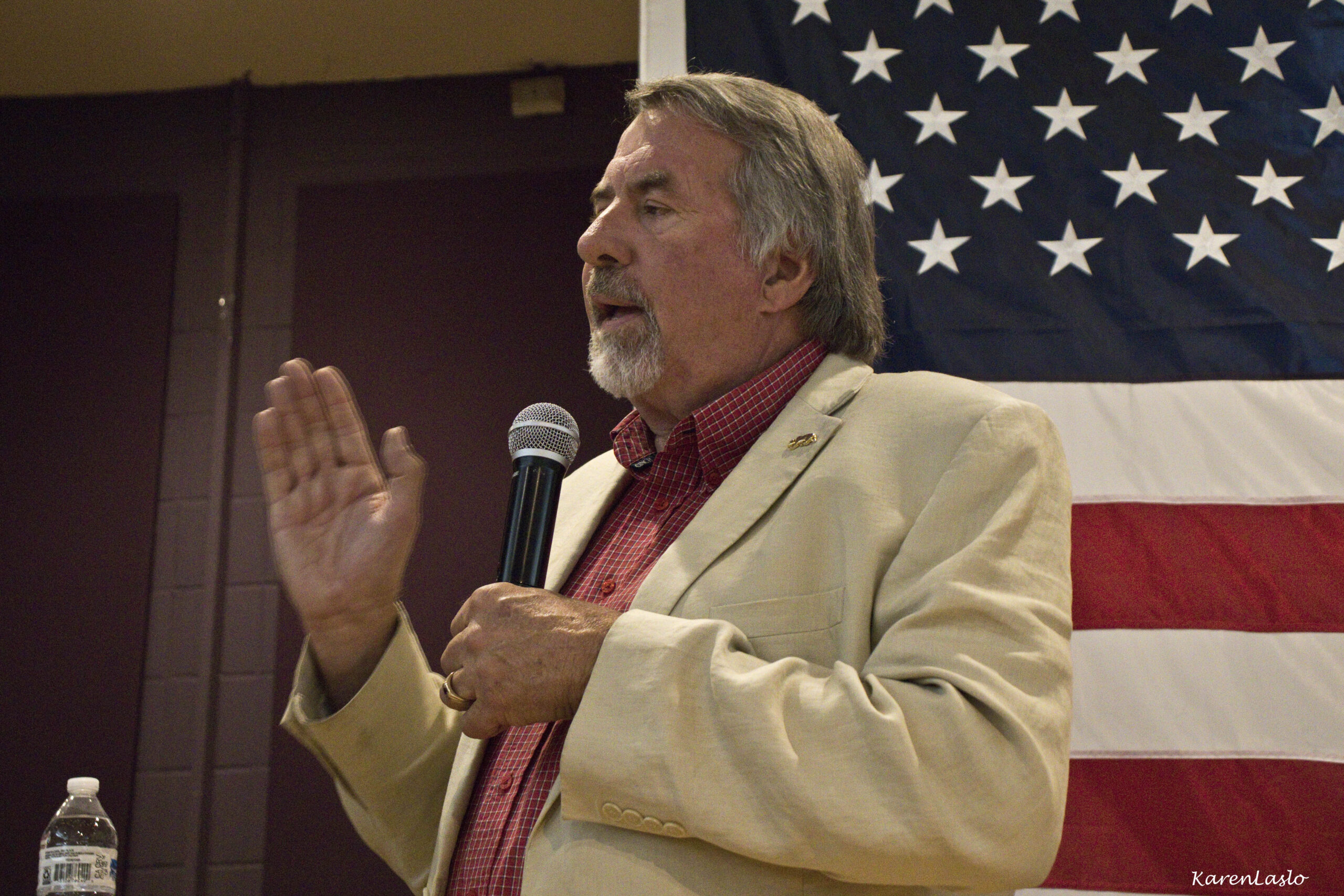
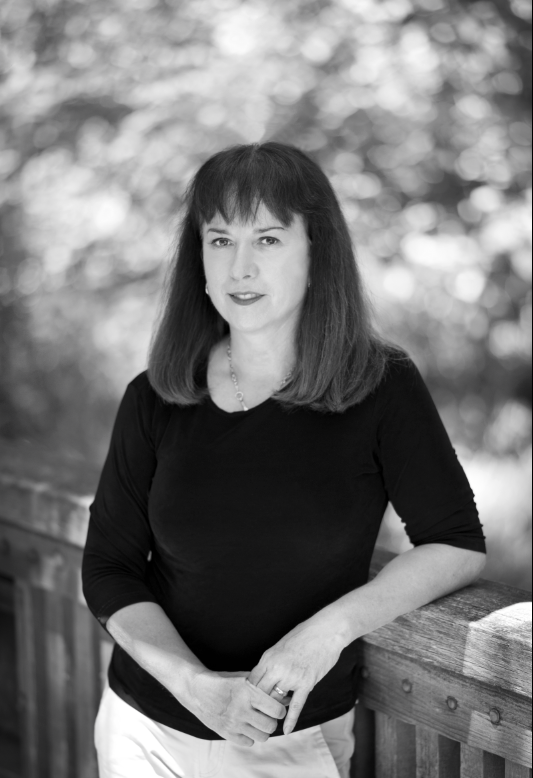
photo by Karen Laslo
Mash at KZFR radio station where he produced programs.

Eric Mash remembers how his father, Bill “Guillermo” Mash, always had projects underway. So when his father told the family that he had decided to move to Chico and write about homelessness, no one was surprised.

“He fell in love with Chico,” Eric said. “He just had this passion and fire within him to help others, and to always love and care about everybody. He did everything on a bicycle … helping the homeless, helping all the causes.”

Chico writer, radio personality and tireless advocate Bill Mash is being remembered by the Chico community as many friends and loved ones mourn his sudden death last week after a heart attack on Nov. 19.

Many who knew and loved him held a vigil for Mash on Nov. 20. Now they are sharing memories and offering support for his family who say they removed him from life support so he could die peacefully.

Mash -– who nicknamed himself “Guillermo” — was best known for his “Without a Roof” project, producing video and a radio show as he interviewed people living unhoused in Chico and published their stories. A short man with a big smile who carried belongings everywhere as he pedaled his bicycle through Bidwell Park, Mash was a fierce advocate for people without shelter and anyone facing dire straits.

Karina Mash of Lincoln, Calif., confirmed her father’s Nov. 29 passing after many members of the community began posting their condolences for and stories about Mash.

“You were such a giving man who always thought about others before yourself,” she wrote. “As much as I am still in shock that you left us yesterday, I know that you are no longer in pain or suffering and that comforts some of the worries I constantly had for you over these past 11 days. I love you so much Dad and can’t wait to join you someday up in heaven.”

Mash was also known for his “Imagining Community” shows on radio station KZFR. His writing and interviews were unmatched in the community for his ability to treat every subject with empathy -– meeting them where they were with a nonjudgmental spirit so they could tell their stories.

He was born June 29, 1960, in Methuen, Mass., and leaves behind siblings Jesse and Dillon Mash of Massachusetts and Tennessee, and sister Ellen Federico and mother Margaret Ann Sigmon of Hernando, Fla.

Mash served in the U.S. Navy from 1982 to 1984, then worked at Apollo Computers and Hewlett Packard until 2012. He married Lili Aram-Bost in 1988 and moved to Rocklin, Calif. Eric Mash was born in 1992 and Karina in 1995. Bill and Lili divorced in 2005.

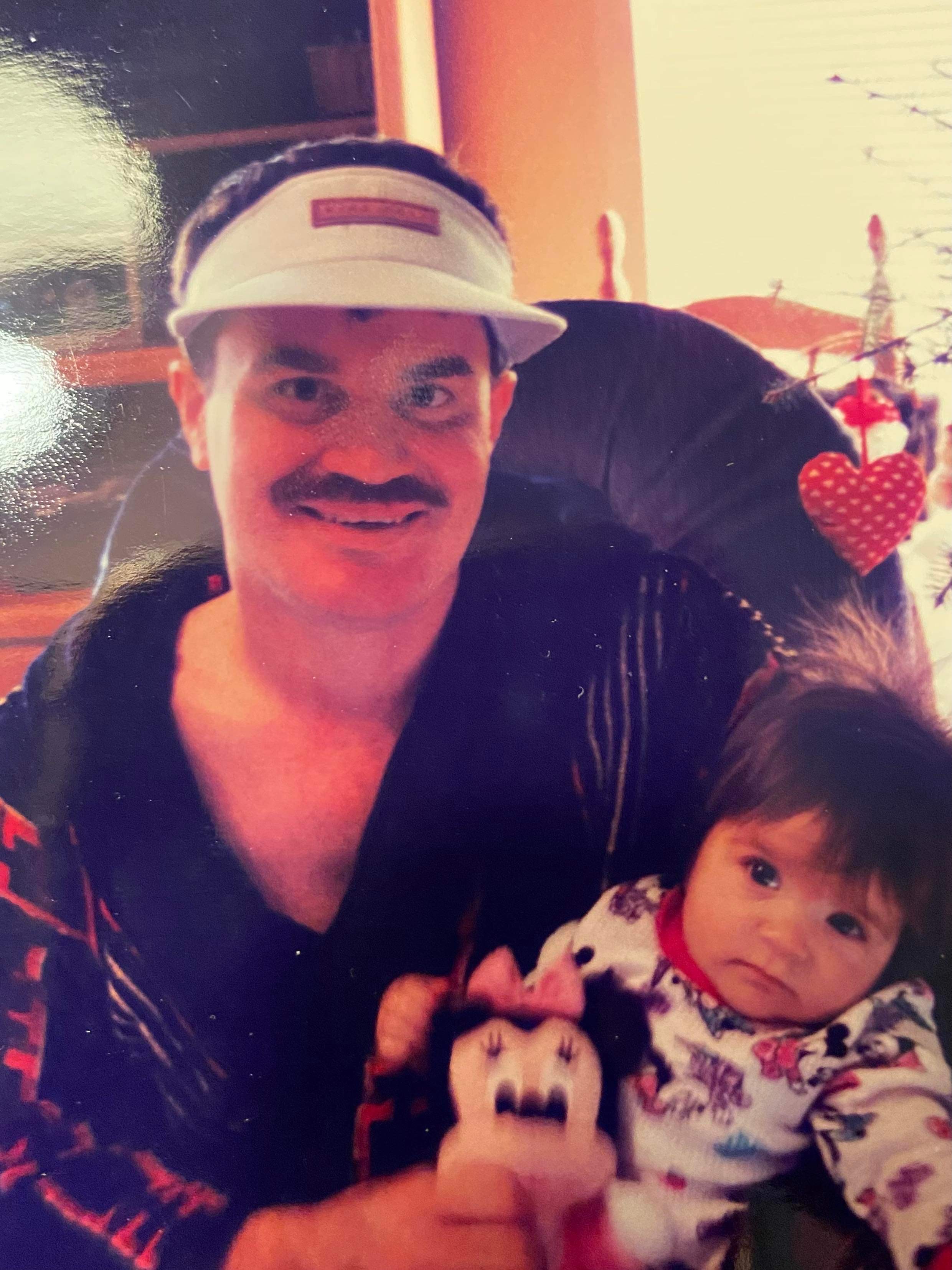
His children said they remember a happy childhood with their father in Rocklin, taking trips to amusement parks to ride roller coasters and enjoying “daddy dates” at Dairy Queen. In those days, Mash loved golf, hiking and his sports teams — the Boston Celtics and the Boston Red Sox, Karina Mash said.

Karina said her father decided in 2012 to take an early retirement, and one day decided to sell most of his belongings and hitchhike to Chico.

“He was a very giving man, especially after he moved to Chico,” Karina said. “He didn’t have a lot of money but he was pretty remarkable.

“Any money he did have, he would just give it to others, like for food and shelter. I remember him going to Enloe (Medical Center) and other hospitals and sitting with people who were homeless and didn’t have any options. He was very selfless, and he never really thought about himself -– he was always out on his bike or walking to help others.”

His father knew Chico like the back of his hand, and became deeply invested in the community and politics, said Eric Mash, who now lives in Oil City, Penn. Mash was also a gifted storyteller, and loved to hear a good story, be part of a story, or best of all, be the one telling a captivating story. Some of his storytelling appeared in ChicoSol as video reports.

“It amazes me, the ever-growing list of things he was a part of,” his son said. “He would get one thing started up, and then he would move on to the next thing and the next thing. He was able to help so many people and get so much done in such a small amount of time, just 10 years.”

Many also say Mash left an immediate mark on them from the first time they met him thanks to his positivity, sense of humor and care for others.

“He was the type of person that even if he didn’t like you, he loved you,” Eric said. “Even if he didn’t agree with you, he still heard you out. He wasn’t in it for the notoriety or accolades, he did it all because it was important to him. And he left a lasting impression on everyone he met.”

Dillon Mash agreed: “I always looked up to my older brother Bill as a child. He always had a smile on his face and a positive outlook on life. No matter who you are or where you came from, he would listen intently to you.”

Mash’s Chico family has spent the last week sharing their memories of him, often using the hashtags “whatwouldBilldo and “bemorelikeBill.” Advocate Chris Nelson’s Peace and Justice Program on KZFR held a 90-minute slot Friday for callers to pay tribute to Mash.

“I have never seen such connections as Bill made in this community,” Nelson wrote in her announcement posted online Thursday. “He knew everyone and he cared about everyone. We all saw it and recognized what a blessing he was to each and all of us.”

Robyn Engel wrote in a post on the Facebook group Team Chico-Paradise, “Bill/Guillermo Mash embodied all that’s exceptional about Chico.

“In fact, he MADE IT happen, he spotlighted it, he lifted to prominence the people and sentiments that are most relevant. Bill brought sorely needed attention to the human suffering that we see daily, and that most simply ignore and/or further denigrate.”

Charles Withuhn of North State Shelter Team remembered conversations with Mash on his front porch while Mash sheltered two unhoused people in his apartment.

“Bill was about being a better human,” he said. “We talked about spiritual ethics, community, rewarding activities that make you feel warm inside, to know the gratitude of the folks around you, what it must mean to be civilized.”

Chico advocates think that Mash would not want the goal of helping others living without to end after his passing, Withuhn said.

“The hateful words and hurtful actions we have seen lately in our community contradict our pledge, ‘with liberty and justice for all,’ and call us all to a more empathetic and a more effective response,” he said. “Providing shelter for all now is 10 times less expensive than the sweeps and more in line with our spiritual ethics. It is what Bill would do.”

For those who wish to help, a fund to support the Mash family has been set up on GoFund Me here.

Natalie Hanson is a contributing writer to ChicoSol.

This story has been corrected to state the date of Mash’s passing as Nov. 29. His organs were not donated, as previously stated, as that had become impossible.

Professor Denise Minor remembered as a mother, wife, teacher, writer

Teary former students hold impromptu memorial
by Leslie Layton | Posted July 15, 2021

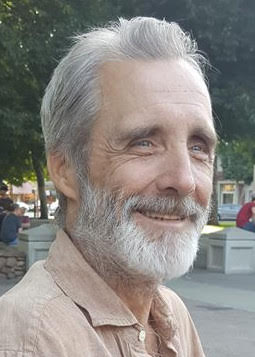
photo courtesy of family
Denise Minor

Spanish linguistics Professor Denise Minor will be remembered for many things – for her creative approach to teaching, devotion to her family, fierce loyalty to those she loved.

She has already been remembered for her joyful laugh, her love of language and her appreciation for its evolution, all of which shaped the students she taught and the Chico State Spanish Program that hired her in 2007.

A memorial fund in her memory has been opened here to aid first and second-generation Latinx students.

Perhaps it was her love of life that explained her courageous, unrelenting battle with cancer and her sadness at leaving those she loved at the age of 62. In gatherings since her July 1 passing, her laugh has been described as “mischievous,” “contagious” and “delighted.”

Denise, an associate professor, passed away at home in Woodland after an almost 9-year battle with breast cancer and surrounded by the family she loved – husband Alex and sons Nathan, 28, and Max, 25, and her dog Boris. She was a former journalist who contributed articles to ChicoSol and encouraged her students to do the same – both in English and Spanish.

Her fascination with ‘code-switching’ – a term used by linguists to describe that mix of languages often heard in immigrant communities – helped students who had grown up in Spanish-speaking homes view what is sometimes called ‘Spanglish’ not as a liability, but as a gift. Her view of code-switching reflected her belief that language is always evolving in ways that reflect the human experience.

But she also had a lasting impact on the Spanish Program, said her faculty colleagues, pushing the Department of International Languages, Literatures and Cultures to emphasize formal writing skills in both English and Spanish earlier in the major and working on behalf of non-tenured instructors.

“She was a brilliant linguist and a progressive activist who was always defending the working rights of our instructors at Chico State,” said Pilar Alvarez-Rubio, a retired colleague who attended an impromptu memorial organized by former students on July 11.

Rony Garrido, a Spanish professor, said Denise sought ways to help students improve formal writing and speaking skills required in professional careers.

“She brought a lot of that journalism background into the classroom,” Garrido said. “She was always reminding them to keep it simple and direct, and she was always trying to help students who needed extra support for their writing.”

As a dozen people stood in the shade on a sweltering afternoon on the university’s front lawn, former students recalled Denise’s delight more than 20 years ago when she first heard the word “chillaxin’” – a combination of the slang “chilling” and the more conventional “relaxing.”

She then published an essay in ChicoSol, “Chillaxin’ in California,” to introduce a series of student-authored articles about language.

“… I am fascinated by the rule-breaking, the invention of new words and the jumping back and forth between languages that constantly goes on in the banter of young people,” Denise wrote in the essay. “They are playing with language, the same way that they toy around with a soccer ball during recess or mix up tunes with their garage rock band.”

Students and faculty members said Denise’s appreciation for code-switching helped students learn self-confidence and overcome embarrassment they sometimes had about their language skills. Denise viewed the ability to “bounce back and forth between two languages” as a dance, said Jamie Fisher-Vargas, one of three former students who organized the memorial.

“She knew that they were not choosing a word in Spanish because they didn’t know it in English, but because it’s how your brain thinks and how it comes out,” said Fisher-Vargas, who was so influenced by Denise that she became a Spanish teacher who now works at Chico High. “Your Spanish was you and it was part of you, and she made you feel good about that.”

In a memorial tribute to Denise, Fisher-Vargas recalled how her teacher had encouraged students to apply their skills.

“If you were good at Spanish and had leadership qualities, she set you up to be in charge of conversation hour,” said Fisher-Vargas. “Talented writer? She got you units to write for ChicoSol. She hears you speaking in what we thought was ‘Spanglish’? She’d interview you and write an article on how cool code-switching is and the incredible abilities of balanced bilinguals to dance between both languages como si nada.”

That interest in the evolution of language led her to develop the curriculum for a popular general education course called “Bilingualism in North America.” The course was offered by other faculty members after Denise retired several years ago to focus on recovery from cancer treatment.

The course evolved out of Denise’s study of the interplay of the multiple languages that are spoken in many parts of North America, and became so popular that it eventually required help from a teaching assistant.

Juan Diaz-Flores, a 2021 Chico State graduate who majored in math, said he enrolled in the course only to satisfy his general education requirements.

“The ideas I took from her classroom are far more valuable than I could have imagined,” Diaz-Flores said in a written testimony. “Being a bilingual student and coming from a Hispanic household, I often felt alone in my studies. Maybe it was because of this that I used to look at my culture with resentment. Whatever the reason, it was Dr. Minor who gave me a new perspective. It is because of her that I now look at my culture with pride and realize how advantageous I am. Words cannot express how grateful I am to have met Denise and how lucky I was to have taken her class.

“She opened my eyes to a brand new world that I now have the pleasure of exploring,” added Diaz-Flores, who is leaving soon for his first visit to his mother’s home country of Guatemala.

Garrido said Denise worked for other curricular innovations as well. For example, the department is set to begin offering a course she had wanted called “Spanish for the Professions” that will provide more paths for use of a Spanish major.

At the memorial, Spanish Professor Sarah Anderson said she is using a book Denise co-authored on how Spanish should be taught. (Denise co-authored the book, “On Being a Language Teacher: A Personal and Practical Guide to Success” with a friend from the University of California, Davis, where she had earned her doctorate in linguistics.)

To Denise’s former students at the memorial, Anderson said the book, “tells the stories of all of you.”

“That book contains the stories of her teaching experience,” Anderson said. “I’ll carry her with me throughout the fall semester …. and always. She was a colleague, a friend, a mentor.”

As a journalist, Denise worked for Pacific News Service in San Francisco and freelanced for a neighborhood publication, “The Noe Valley Voice.” In 1987, the paper’s editor arranged a blind date for her with a dashing bachelor new to San Francisco. She married Alex Milgram two years later.

Alex was impressed immediately – with her mind, her exuberance and her prettiness. She took that exuberance to her final battle with cancer.

“She always left space for things to be better the next day,” Alex told ChicoSol. “She would soldier on and not complain; she would show up to take a treatment or go into surgery, just do what had to be done.”

Alex has set up a scholarship fund at North Valley Community Foundation in her memory, the Denise Minor Memorial Scholarship Fund, to provide help to Spanish-speaking students who want to pursue a teaching career.

“It was heartbreaking for Denise to leave her beloved teaching profession,” Alex said. “When she was in front of the classroom, her illness and any other problems of her life simply faded away. She was in her element. If she was somehow to be able to continue that legacy, this would be one of the ways to do it.”

Leslie Layton is editor of ChicoSol, and became acquainted with Denise when she agreed to serve as Spanish-language adviser to ChicoSol when it was publishing in both English and Spanish.