
guest commentary by Richard Roth
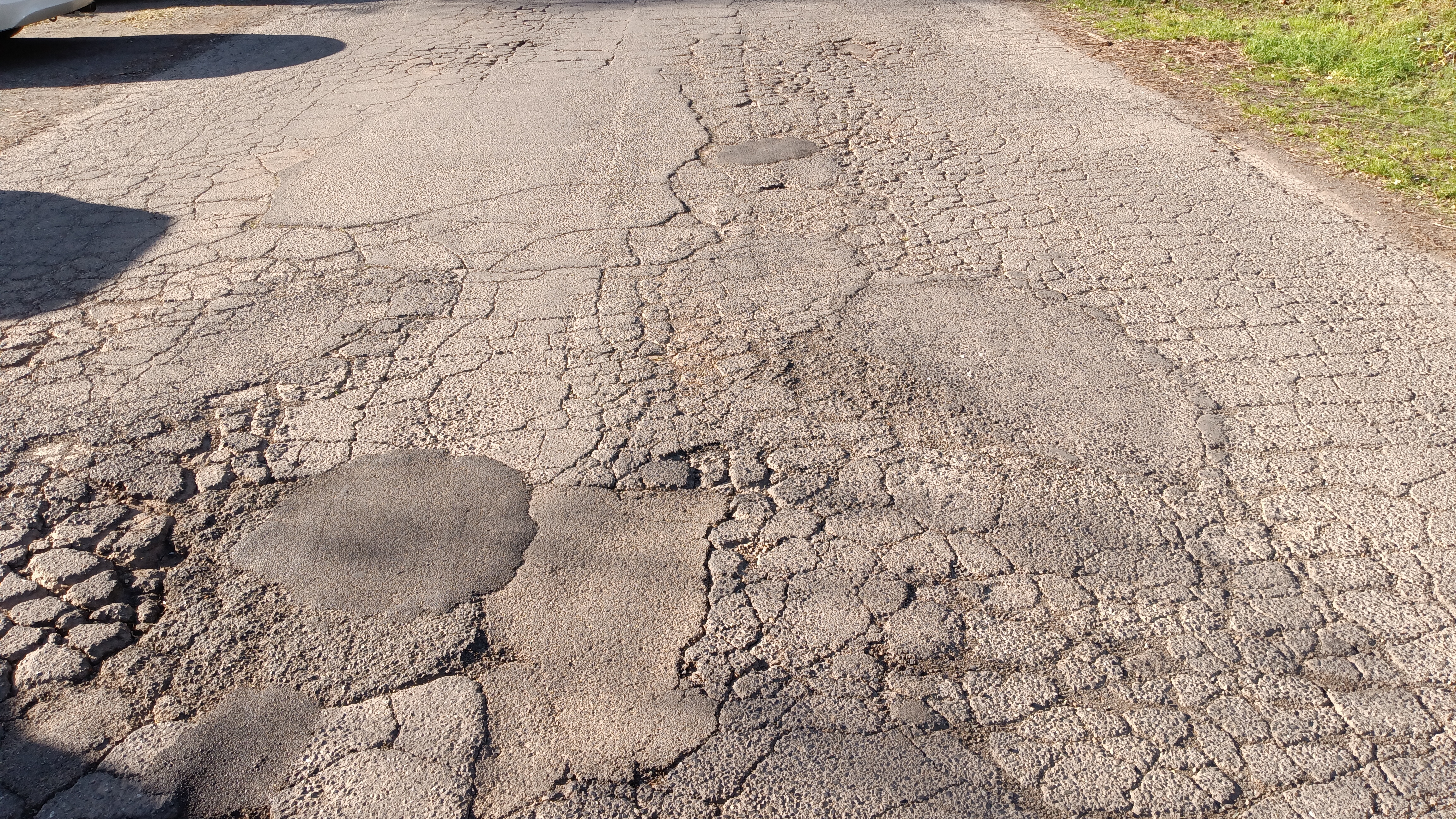
Roads don’t fail suddenly. They deteriorate along a well-understood curve, and there is a window — measurable, predictable, documented — during which relatively cheap preventive treatment keeps a road in service for decades. Miss that window, and the cost of the same road multiplies by 14.
City of Chico reports make the math plain. A road in good condition can be slurry-sealed for $9.80 per square yard. Allow that same road to deteriorate to the point of failure, and the cost becomes $137.07 per square yard for full-depth reclamation or complete dig-out and replacement. That is a 14-to-1 cost multiplier.
Chico has been missing that window, systemically, for years.
The City of Chico 2023 Pavement Management Program Update modeled various budget scenarios, finding that preventive maintenance to improve the entire road network would require approximately $90 million per year over five years.
In November 2022, Chico voters passed Measure H — a 1% general sales tax that raised the local rate from 7.25% to 8.25%. The ballot language listed roads prominently among the intended uses, alongside fire, police, and parks.
A significant portion of road spending has gone toward expansion, not preservation. Both have value. But only preservation addresses the deteriorating network that Chico residents drive on every day. Expansion actually increases the future maintenance burden by adding new lane miles to the inventory.
The City’s capital project list, as outlined in a September 2024 City of Chico press release, told the story clearly. The 2026 budget included millions for widening the north Esplanade from two lanes to four, for the SR 99/Eaton Road roundabout, for the Notre Dame Bridge reconstruction. The allocation for pavement preservation — the crack seals, slurry seals, and thin overlays that keep existing roads from crossing into reconstruction territory — was $1.5 million citywide.
The Bruce Road project widened approximately 2 miles of road from two lanes to four, replaced the bridge over Little Chico Creek, and added bike lanes and roadway lighting.
The deferred maintenance backlog is a city accounting problem. The road conditions that produced it are a household budget problem for every person who drives in Chico.
AAA’s 2022 national data found that pothole damage costs American drivers an average of nearly $600 per repair incident, with roughly one in ten drivers sustaining damage serious enough to require a shop visit in any given year.
Research from Auburn University’s National Center for Asphalt Technology (NCAT Report 15-02) found that driving on roads in poor condition increases vehicle repair and maintenance costs by 30 to 40 percent compared to roads in good condition.
According to World Population Review, Chico has a 2026 population of approximately 102,700 residents, with a poverty rate of 22.69%. For a family already facing economic pressure, a $600 suspension repair or a tire destroyed by a pothole is not an inconvenience. It can mean a missed rent payment, a skipped grocery run, or a job lost because a car couldn’t be fixed in time.
The roads are not free to neglect. The City saves on its maintenance budget; residents pay the difference with their own money, on their own time. The fiscal year 2026–27 budget is currently being drafted. When it comes before the City Council for public discussion — likely within the next several weeks — the allocation for pavement preservation will be one number worth watching.