
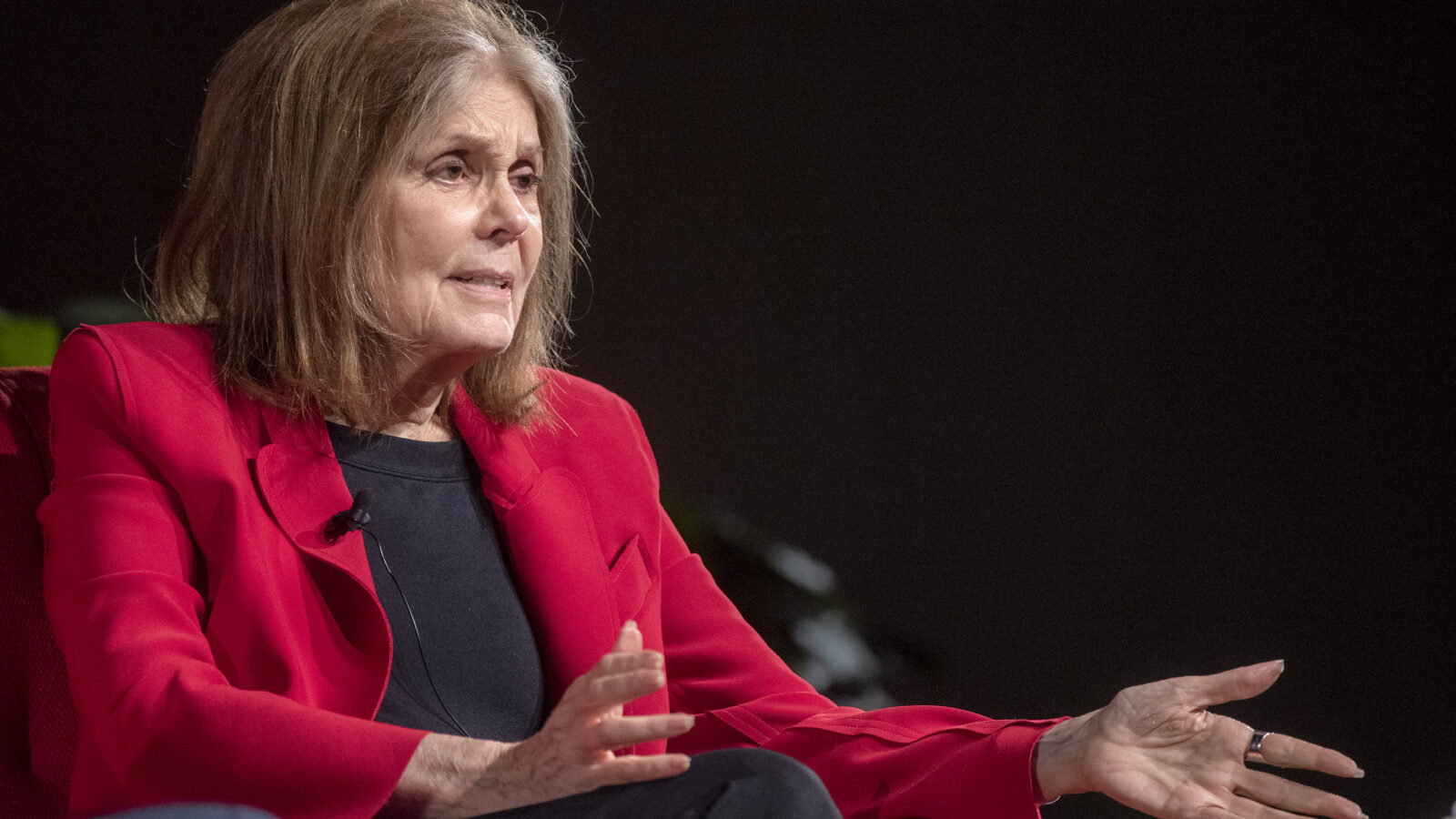
Gloria Steinem died at age 92 on Sept. 2. If you’re like me, when someone we loved, admired or deeply respected dies, that momentous news sparks personal memories. Sometimes that review brings realization about how profoundly that person changed lives.
My own reflections on how this amazing woman affected me stretch back to the 60s and 70s, when we still received news via print media, radio and television. So I, like many people, first became aware of Gloria Steinem when she went undercover as a Playboy Bunny and wrote a strong expose of the demeaning experience most “bunnies” endured in those clubs. “A Bunny’s Tale,” for Show magazine, launched Steinem as a writer and journalist. But, at the time I was a bit put off by what many called out as a stunt, not serious journalism.
The fact that Gloria Steinem was physically attractive, and indeed “sexy” by any beauty standards, allowed me, and many others to shrug her big-league bunny debut as largely self-promotion. Or worse: Gay Talese dismissed her altogether, as Steinem recalled in her 2015 memoir, “You know how every year there’s a pretty girl who comes to New York and pretends to be a writer? Well, Gloria is this year’s pretty girl.”
Hardly. As it turned out Gloria Steinem had real talent, a strong work ethic and ambition. She succeeded gloriously and on her own terms, despite her detractors. Squeezing into a too-tight costume to go underground as a Playboy bunny would not diminish her capabilities as a writer, nor limit the reach of her activism as she fought for social justice and equal rights for all. Yes, she was a feminist first and foremost. But she also got the big picture — that if one group was discriminated against, no group was truly free.
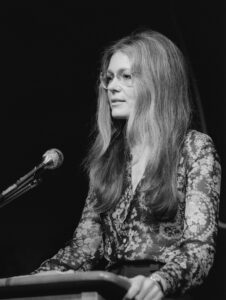
As the years went by I admired more and more her careful use of language. She preferred using the term “human” to society’s constant need to label and divide humans by sexual preference, skin color or ethnic background. For Gloria, we were all in this quest for approval and inclusion no matter who we loved or how we looked. We are, at the core, all human animals, and she understood that all humans suffer a need to be loved and treated fairly.
Second wave feminism
Fairness in all things became a rallying cry for the second-wave of feminism (women achieving sufferage, the right to vote being the first) for good reason, including relentless bias and discrimination in the workplace. Most women have horror stories.
Take mine for example. At age 12, I got a strong start working in the family business, my granfather’s full-service dairy complete with “dairy bar.” I worked there many nights and weekends throughout high school. During college I had all sorts of jobs. I was a house cleaner, waitress, dishwasher, babysitter. I also did stints as life guard, swimming instructor and camp counselor. I even pumped gas a couple of weekends. I was a hard core worker. In my teens and 20s, I felt confident that I could do anything a job required.
Then, in 1970, I started applying for “real jobs” and the outrage and disappointments piled up as I began more professional work. In those days interviews were always in person and behind closed doors. During one of my first interviews for an office job, the third question from my male interviewer shocked me. “And are you on birth control?” he asked as if he had every right to know.
“They gave us, collectively, the language and tools to start to change the world”
But why? What did birth control have to do with doing the job? Was he concerned I would get pregnant and quit? Did he want to know if I was sexually active? I had no idea and sat there dumbstruck, embarrassed and humiliated. I finally responded, red-faced, with a quiet “yes.”
He seemed satisfied and continued the interview. But, when called for a second interview I declined. I lied and said I had already accepted another job. I didn’t know how or where to funnel my anger. Back then, there were no laws concerning sexual discrimination in the workplace, whether verbal or physical. The pay inequity was always outrageously evident and unquestioned.
Gloria Steinem and her sisters in the struggle identified, labeled and codified these injustices. They are considered “the second wave” of the battle for women’s rights. They gave us, collectively, the language and tools to start to change the world.
Ms. Magazine in the mail
Back to Gloria’s life and her steady success as a writer, author, journalist, essayist, columnist. It was the co-founding of Ms. Magazine in 1972, with other women’s movement leaders, that finally employed all of her skills focused on her deepest political concerns. I was an early subscriber, and to receive Ms Magazine in the mail was literally thrilling. Its pages reflected one of her most famous memorable truisms, “Yes, the truth will set you free, but first it will piss you off.”
“To receive Ms Magazine in the mail was literally thrilling”
At last, we had an alternative to the recipes and decorating magazines. Women felt seen and heard, as month after month, we devoured insightful, hard-hitting articles about the inequalities women faced and what could be done about those issues. Gloria really was the essence of “cool.” She kept calm and carried on for all of us. Without a word, Gloria personally demolished the negative stereotype of feminists as women who just didn’t care about their appearance.
Even if Gloria wore jeans and T-shirts, she looked stylish, sophisticated and put together with that great hair, aviator glasses and eye-catching jewelry. She could pull off “the look” in a bandana, leather jackets, trench coats, beautiful black evening dresses or a white cotton blouse tucked into jeans. She fascinated the press, which is generally good for the cause. More importantly, her language was never casual. Her words were concise, conveying knowledge, strength and concern. She was direct and brave, despite serious deprivations in her early life.
The language of authenticity
How did she become the person we admire so deeply? Which makes me wonder about two other beloved icons — how did Dolly Parton become Dolly Parton? And how did Robert Francis Prevost of Chicago become Pope Leo XIV, head of the Catholic Church? American originals all!

Dolly Parton was keenly aware of how her flashy, attention-getting country gal fashion played, with that big fake hair and bold make up. It was part of her entertainment persona. Dolly could also, quite spontaneously and fiercely speak her truth to power. When asked by a reporter if she supported Black Lives Matter, Dolly almost roared back, “What! You think only our white asses matter in this world?”
Pope Leo, diehard White Sox fan, surprised many by returning to more traditional rituals and formal papal attire than followers had expected from this quiet man, known for his work with the poor in South America. He too, can spontaneously drop the inspired zinger. When Vice President Vance told Pope Leo to avoid intervening in politics and leave the business of war to President Trump, the pope immediately and firmly responded to Vance, “And it is my business to talk about peace.”
Yes, appearances have their part to play in conveying a message and actions speak louder than words. However, exceptional, authentic leaders make certain that their words count.
Trudy Duisenberg is a Chico resident who had a career in publishing and public relations. She has produced and directed several documentaries.
4 Comments
I have enjoyed the many tributes and memories written about Gloria, and this one is special in the way Trudy ties her to Dolly and the Pope. The message is clear—- say it plain and say it truthfully. Words matter.
Trudy, thank you for your Excellent article about Gloria Steinem.
Maybe the “good ol boys” of Chico and Butte County, who are in control of police and politics, will read it.
It is time for the women of Butte County to speak truth to power.
The insanity of Trump’s stunts are indicative of the depravity of his crimes against girls and women. Omens.
Thank you for writing this Trudy.
I had the pleasure of interviewing Gloria for my radio show.