

This story is part of a series on an investigation by the watchdog group Disability Rights California into the Butte County Jail. This story focuses on DRC’s description of deficient mental health treatment in the jail.
In March, just days before a Butte County Jail inmate fixed a bed-sheet noose to the bars of his cell, he requested to speak with the jail’s mental health support staff. The inmate, who was being held in “administrative separation,” or solitary confinement, had a known history of suicidal ideation.
Jail staff had observed the inmate’s mental health struggles when he had arrived. Staff had found the inmate “somewhat emotional,” and requested further evaluation.
The inmate was placed in solitary confinement as a consequence for “being disrespectful/rude towards custody staff,” where he was out of sight of the jail’s guards, an investigation has found.
A mental healthcare worker visited the inmate four days after he requested mental health support. Upon arrival, the healthcare worker found the inmate to be out on the rec yard. The healthcare worker left without speaking with the inmate.
The inmate hanged himself later that day.
Coty Meibeyer, a senior attorney with Disability Rights California (DRC), in an interview with ChicoSol, called the inmate’s suicide a “really tragic incident that reflects a lot of DRC’s concerns about psychiatric and mental health care” in the jail.
DRC found Butte County jail lacking critical mental health services, it says, and links that to multiple suicide attempts by inmates.
DRC is tasked with protecting the rights of disabled Californians and has investigated jails throughout the state, in some cases using litigation to force compliance with the law.
The Butte County Sheriff’s Office declined to comment on DRC’s findings letter issued earlier this month, but said in a statement that it was “evaluating (DRC’s) recommendations and working cooperatively where we see opportunities to improve.”

DRC opened the investigation in August 2025 after receiving complaints about the treatment of inmates with disabilities. The watchdog group is hopeful the county will continue to address concerns, and Meibeyer says litigation may be unnecessary in Butte County.
“We’re hopeful that we can continue to work with the Sheriff’s Office and county counsel to remedy these issues,” Meibeyer said in an interview. “The response has indicated a willingness to work with us.”
Still, the group’s findings letter warns there is work to be done to come into compliance with laws and industry best practice guidance.
“Butte County Jail is behind other California counties in the provision of adequate mental health care services consistent with constitutional and legal requirements,” DRC says. The attorneys found that many people suffering from mental health issues fail to receive “meaningful treatment.”
The investigation attorneys said the jail’s new North Facility, which opened earlier this year, “offers a meaningful opportunity to achieve the improvements that are needed.”
Butte County opened the north wing of the jail in part to better serve inmates with serious mental health needs and in part to house inmates for longer periods of time, Sheriff Kory Honea has said. In 2011, California passed the Public Safety Realignment Act, keeping certain felons in local rather than state custody.

DRC says it’s urgent that the jail better serve those inmates with mental health needs. “A remarkably large proportion of people incarcerated in the Butte County Jail have behavioral health needs, with scores of incarcerated people having a serious mental illness,” DRC says.
The report focused on the use and consequences of solitary confinement for inmates suffering from mental health issues, a practice that DRC says needs “urgent” improvement. “We were informed that it is a relatively frequent practice for people requiring suicide precautions to be placed in [solitary confinement], often for multiple days at a time,” DRC states in its findings letter.
It says that “highly restrictive isolation settings” seemed, in fact, to be making some inmates with mental health problems sicker.
The findings letter says that when DRC visited in May, about 12% of all inmates – 63 people – were in solitary confinement. Nearly all inmates in the jail’s solitary confinement cells — 93% — were receiving mental health treatment, attorneys found.
DRC says the county has increased the availability of telepsychiatric treatment — visits with a remote psychiatrist by video — and is working to move beyond that by increasing in-person treatment.
In a response letter to DRC, the county indicates it’s stepped up suicide prevention efforts as well.
Use of barred cells discouraged
The main jail, which was built in the 1960s, has cells with barred doors rather than flat metal doors. These older, barred doors present undue risk of use in suicide attempts, DRC says. Meibeyer explained that cell bars can be used as tying points for a noose, as occurred in March.
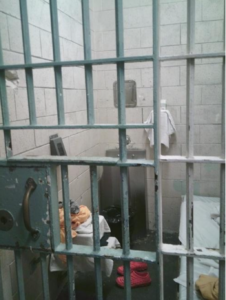
The March suicide “reflected a lot of the concerns that we had discussed even prior to that incident,” Meibeyer said. “Cells used for restrictive housing that had bars concerned us during our [September 2025] tour. We said [cells with bars are] simply too dangerous to remain in use.”
“To their credit, they stopped using those cells,” Meibeyer said.
In response to DRC’s investigation, the county also said it stopped using cells with barred-doors for solitary confinement.
Concerns over use of solitary confinement
In some instances, the report found solitary confinement used as a punishment for self harm. According to the report, jail staff discovered an inmate “bleeding profusely after self-lacerating his right arm,” the report states. This inmate was found in “extreme distress,” and was “kicking his cell door repeatedly as ‘a lot of blood’ collected on the cell floor.”
“We were informed that it is a relatively frequent practice for people requiring suicide precautions to be placed in solitary confinement…” — DRC
After treatment at a local hospital, jail staff placed the inmate back in the same cell, where he was stripped of clothing and placed in a “safety smock” — a large, unrippable vest given to inmates at suicide risk. DRC could not find any record of an “appropriate treatment plan” following the incident, but saw that jail staff had issued the inmate a “major rule violation” for “flagrant failure to follow safety or sanitation regulations.”
The watchdog agency took issue with this “punitive” use of solitary confinement as a punishment for self harm, saying that punishing the “act of self-harm, without due consideration of mental health treatment needs and appropriate housing needs, is inconsistent with modern correctional standards and constitutional requirements.”
“This reflects our concerns with the systemic deficiencies of the suicide prevention program at the county jail,” Meibeyer said. “Using safety smocks and putting individuals in solitary confinement often exacerbates suicidal ideation. Returning someone to that same isolation unit was a concern.”
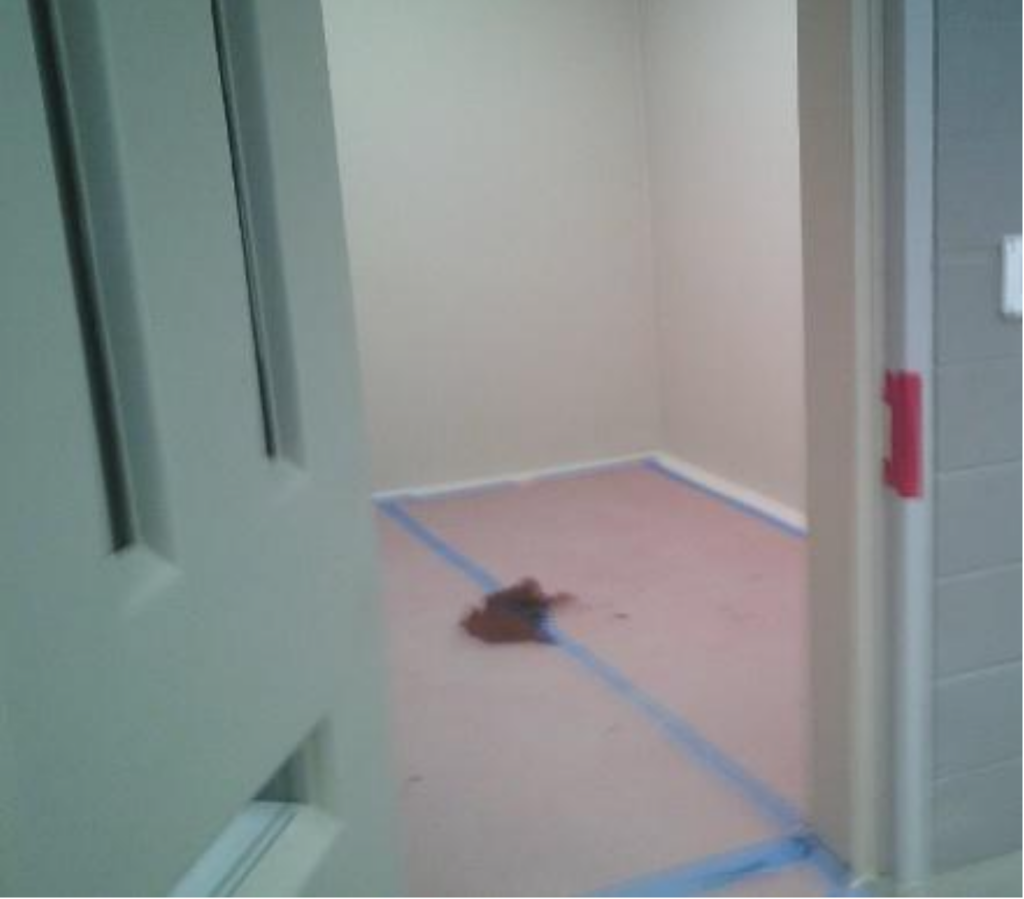
DRC reports that inmates who are placed in safety smocks are sometimes placed in “safety cells,” which also concerned the investigators. A safety cell is a “small, windowless room with rubberized walls, no furniture, and no bedding,” DRC states. “They are left to sit or lie on the ground, using a grate on the floor as a toilet.”
In its response letter, the county counsel says it appreciates DRC’s “continued engagement” and looks forward to the group’s upcoming Dec. 8 visit.
“As we recognize we can always do better, we are reviewing these policies to ensure they are adequate and align across disciplines,” the county’s response states. “We share the goal of providing clinically appropriate, constitutionally adequate, and accessible services for individuals in custody.”
That kind of response has encouraged investigators.
“We felt like the county and the sheriff’s office have acknowledged the importance and seriousness of our findings and our concerns,” Meibeyer said.
DRC: Reduce the jail population
DRC said better coordination was needed between the sheriff’s office, Butte County Behavioral Health (BCBH), and the jail’s mental health services provider Wellpath. The findings letter notes frustration among jail staff with BCBH’s service system, but also noted improved coordination and communication since the beginning of the investigation.
DRC recommends that the county “connect people with appropriate and evidence-based housing and support services.”
Butte County Behavioral Health did not respond to a request for comment.
“One woman with mental health needs reported that she has been cycling in and out of the Jail since she was a minor and had never been connected to community behavioral health Services,” DRC’s report states.
The jail holds an average of more than 540 inmates at a given time, the sheriff’s website says.
“Historically, Butte County’s Jail incarceration rate has been significantly higher than the statewide average,” the watchdog group says.
“Butte County detains significant numbers of people with disabilities and histories of cycling through the Jail, hospitals, and homelessness,” DRC says, recommending that the county “connect people with appropriate and evidence-based housing and support services.”
“Investing in these services can help prevent future incarceration,” DRC says. “We urge Butte County to take concerted action to reduce its Jail population and, in particular, the number of people with serious mental illness in custody,” it adds.
Elias S. Myers is a contributor to ChicoSol. Leslie Layton is editor.