
On a cool night in late October at the Big Chico Creek Ecological Reserve, Ken Sobon marched down a foothill with an armful of equipment and a few birding enthusiasts-turned-citizen scientists in tow. The dwindling embers of a controlled burn sizzled along the hillside just a few hundred feet north.
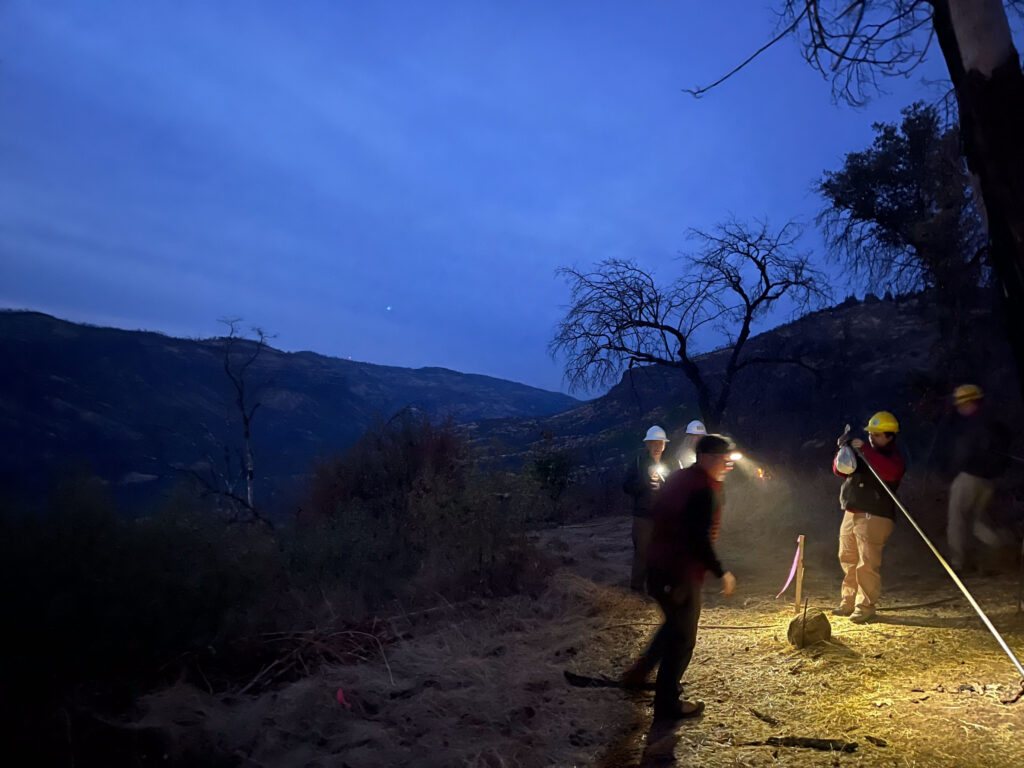
The small parade of hard hats and headlamps approached the site they would be hiking back and forth from for the next five hours: a flat portion of the hill where AltaCal Bird Alliance President Sobon, with the help of his research assistant Morgan La Sorella, set up a wall of nets resembling a baseball batting area. Sobon, a science teacher, turned on his speaker to play a fast-paced, one-note hoot on a loop that was high-pitched and hollow.
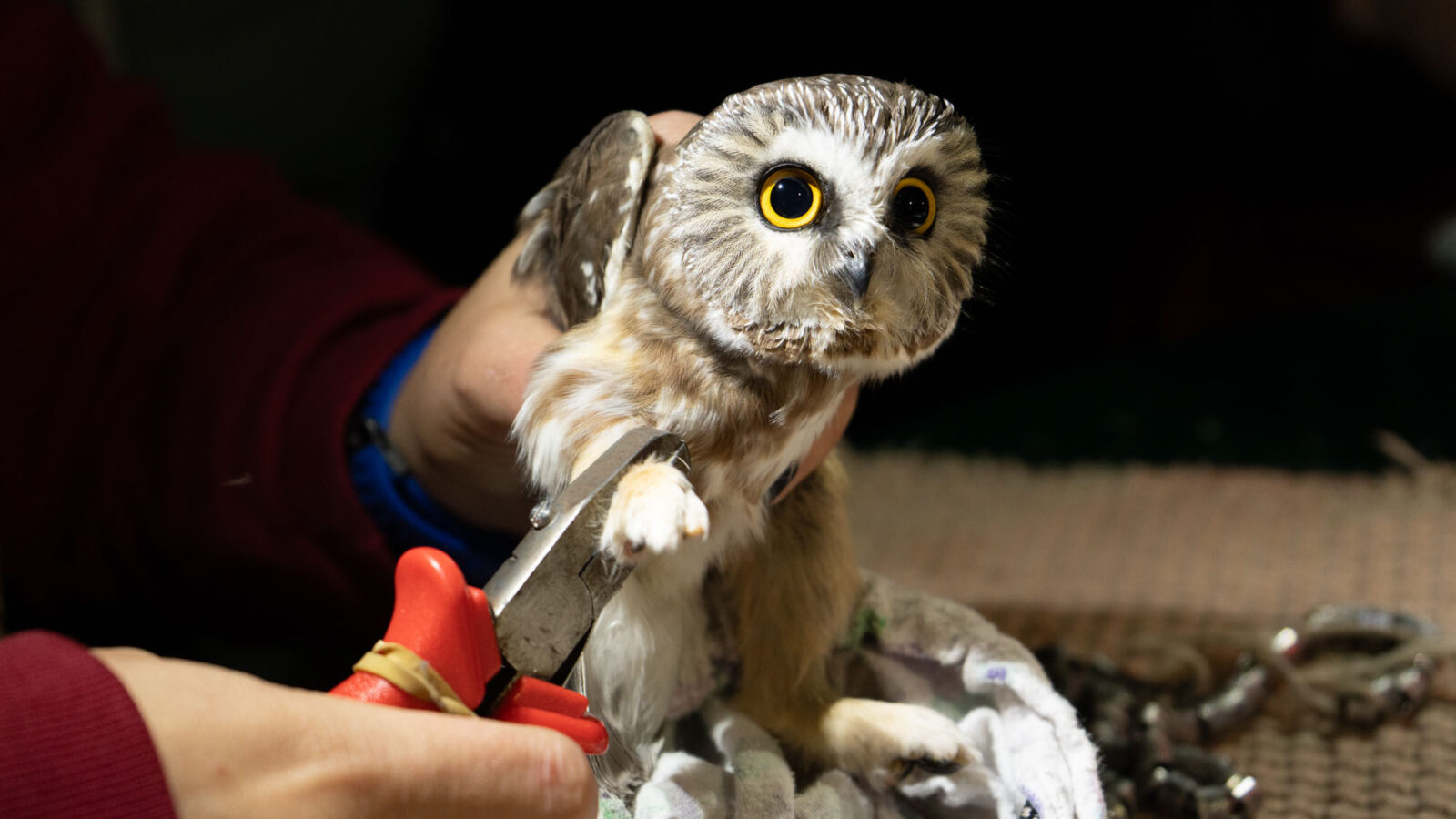
The reedy call would beckon the Northern Saw-whet owls, one of the most abundant owls in North America. The owls then get caught in the mist net, which is checked every 20 minutes. The researchers extract the soda-can-sized birds from the net, put them in individual cloth bags, and hike them up to a picnic table, where they get weighed, measured, cleared of possible parasites and banded with an ID number.
The documentation takes just a couple minutes, and then the researchers release the unharmed birds in a nearby tree.
The Saw-whets’ temperament and population size across North America make them good research subjects, including for early career ornithologists.
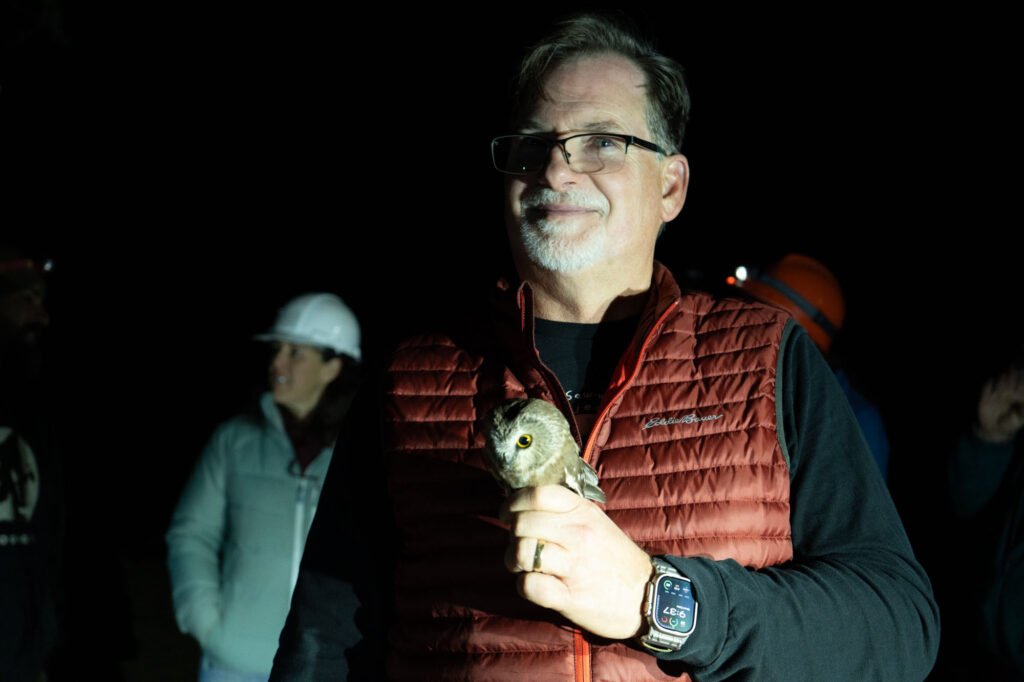
“The owls tell us a lot about the ecosystem because they’re both migratory and they’re residents,” Sobon said. “They’re pretty easy to work with, they’re small and incredibly cute.”
The Saw-whets are a secretive bunch. With keen amber eyes and curved bills the size of a push pin, the birds keep a low profile, hunting small rodents by night, and, often without a sound, retreating to forest foliage by day. The Saw-whets are also opportunists, going where there’s food. They don’t have fixed migration patterns, and some Saw-whets don’t fly south at all, but some winter in lower elevations, like the Sierra Nevada foothills. And if their prey options are good, the usually monogamous males might take on more than one mate.
“We’re out here because there’s a gap in our knowledge. We’re trying to fill that gap,” Sobon said of the owls’ behavior.
Sobon’s been working with the Saw-whets for 15 years as part of Project Owlnet, a network of researchers at sites across North America that have been banding the owls – putting lightweight metal anklets with serial numbers around their legs – since 1994.
When the 2024 Park Fire burned more than 400,000 acres in Butte and Tehama counties, most of the reserve burned, too. Sobon’s study has 20 years of baseline data, and it’s no longer just about migration, but also fire recovery.
“We’re seeing Saw-whets are pretty resilient,” Sobon said, “My research has kind of morphed into being post-fire recovery, and that’s going to be some sexy data. How long does it take for these species to come back?”
The first season after the fire, Sobon said, the air still smelled smoky. “We caught 44 owls. A normal season is around 100. Last year, we got 84. It’s okay, they’re bouncing back. This year, we have 156 already,” Sobon said.
On this particular night, AltaCal, which is a chapter of the Audubon Society, had invited some of its members to join the banding. Sobon and La Sorella, who are out banding owls six nights a week, normally work in relative silence, their ears attuned to the frequencies of birdcalls and coyote yips.

“Even side conversations, we’re not having those unless it’s a whisper,” Sobon said as a waning moon crept above the ridgeline, “because you’re very focused on the task and on getting the data right.”
The nearby prescribed burn did not deter the Saw-whets.
“You saw how close the fires are burning, looking over at the nets, right?” Sobon said. “If there’s smoke, we cancel.” The 28 surrounding acres were burned in a prescribed, contained fire, with 1 acre kept unburned for the research site.
“That’s the way the Indigenous burned. They would burn these areas to improve the habitat, and they kept it low intensity,” Sobon said. Prescribed burns can reduce the severity of wildfires like the Park Fire.
“What we’re seeing with certain species, like the Screech Owl, the Pygmy Owl, even the Great Horned Owl, those owls just kind of left” — Ken Sobon
Sobon recalled catching a Western Screech Owl eight years in a row, who fledged 28 owlets. The Screech Owl was banded and had her fledglings in a nest box, which meant Sobon could keep track.
“But the fire burned her nest, and she’s gone,” Sobon said.
After the Park Fire, he didn’t hear any screech owls because of their habitat loss. The fire consumed many of the mature trees where they would put their nests. Sobon put up nest boxes, but their numbers didn’t return. He explained that the owls that survived had to move on, in search of prey and nesting habitat.
“What we’re seeing with certain species, like the Screech Owl, the Pygmy Owl, even the Great Horned Owl, those owls just kind of left. They are gone,” Sobon said of the two years after the fire. Although this season, Sobon notes signs that the Screech Owls are returning, too.
The Saw-whets, though, are having a record year in Chico. They might offer a model of resilience in the face of environmental threats exacerbated by climate change.
“It’s really early, but those are the signs,” Sobon said. As the night went on, the team set a new record of owls in a season.
“I mean, they bounced back from 44 captures to 84. And now we’ve surpassed our record for all 20 years.”
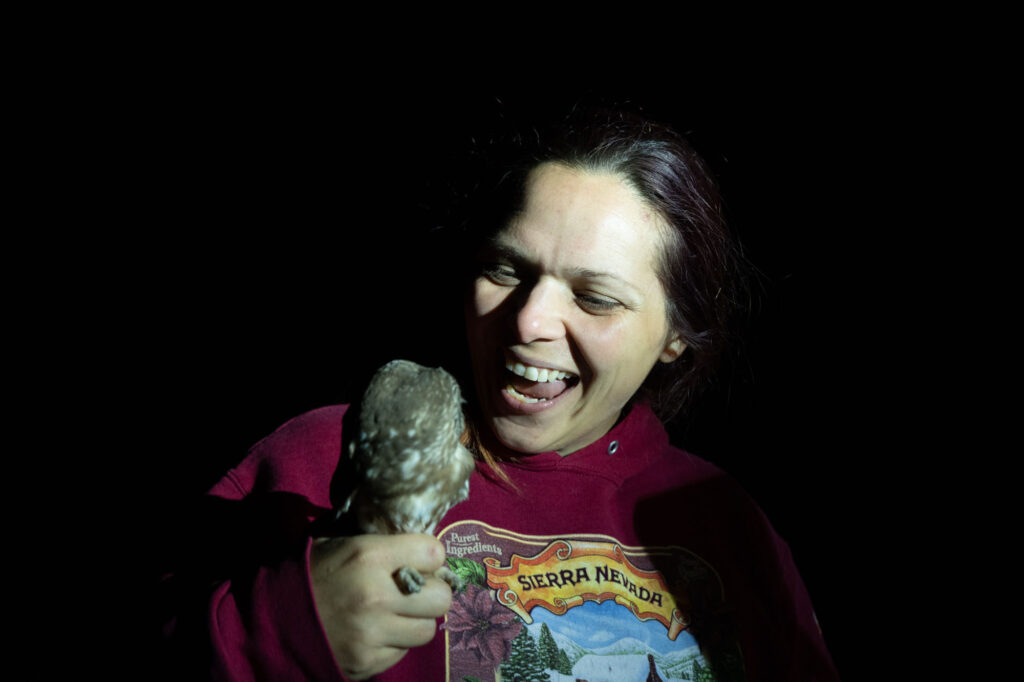
Each Saw-whet seemed to have a distinct personality, with the sweet ones welcoming gentle strokes behind the head, and the spunky ones poking their talons and beaks into their researchers’ fingers. But Sobon noticed that the recapture birds, the owls that are captured from previous years, are often the “fiery” ones.
The ecological reserve site, which is on Mechoopda ancestral land and owned by Chico State, is off a steep, unpaved road in the Sierra Nevada foothills only 10 minutes east of Chico. The reserve’s elevation ranges from 700 to 2,000 feet. At this altitude, the Saw-whets are passing through, or spending their winters at the lower elevation.
Sobon explained that as temperatures rise and weather events become more extreme, the Saw-whets’ high elevation nests will be threatened.
“So these owls are a species of concern because they nest in high elevations,” Sobon said. “And with climate change, their nesting areas are going to get pinched off. There’s not going to be any high elevation left. They’re going to keep going higher and higher, so there will be nowhere for them to nest.”
Sobon referenced Owlnet colleague Julie Woodruff’s work in Marin County, where the cooler temperatures on the coast could allow the Saw-whets to nest at lower altitudes.
“She’s finding that in those cooler temperatures, Saw-whets might be breeding at lower altitudes, so they’re moving coastal,” Sobon said during a lull in owl retrieval.
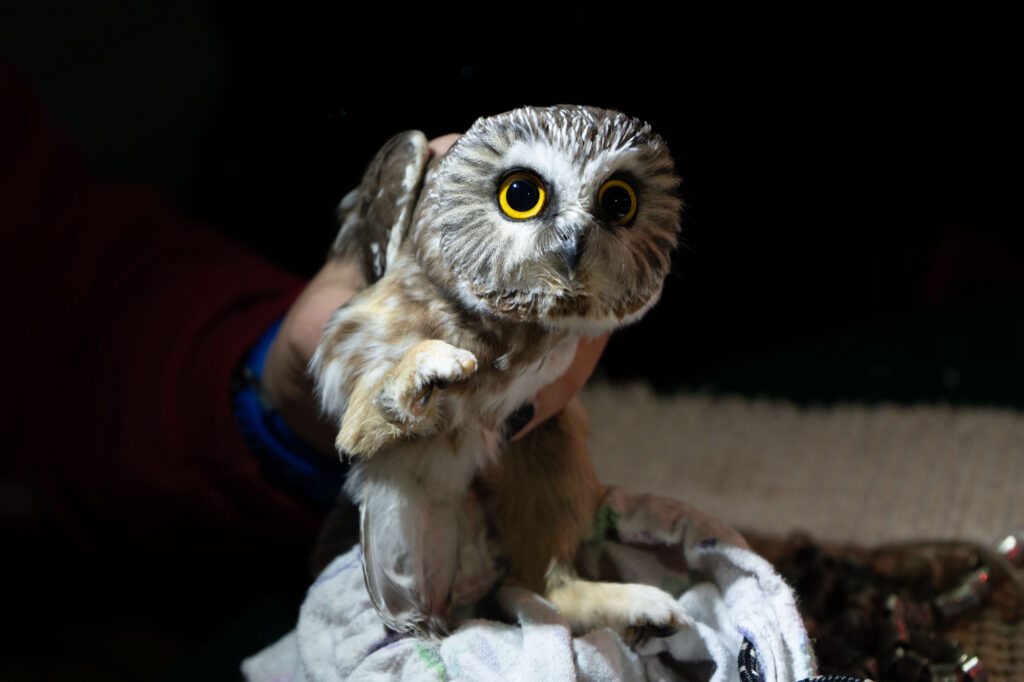
“So will our Sierra Saw-whets move coastal?” Sobon said. “Will they move up? How are they going to respond to the changing climate? And it’s not just warming, right? With climate change, it means cooling, it means more storms, it means volatility. So where will they end up?”
The Saw-whets wintering in Chico, or passing through, aren’t necessarily moving to the Bay.
But when Sobon and team capture a bird that has a band from another station, called a foreign recovery, they can figure out the owl’s past movements. One foreign recovery, from Montana, flew to Chico in 35 days. AltaCal’s Owlnet has caught one bird from British Columbia, and the British Columbia birders have caught two owls with bands from Chico.
One Saw-whet banded in Chico flew to a station Woodruff maintains in Napa. “So it flew across the valley in five days,” Sobon said.
By mid November, near the end of the banding season, which runs from early October until Thanksgiving, the AltaCal team had 330 Saw-whet captures. The previous record for all seasons over 20 years was 160.
Katherine Kihiczak is a California Local News fellow reporting for ChicoSol.