Butte County responds to courthouse ICE arrests

Hispanic Resource Council & other groups answer call to action
by Leslie Layton | Posted July 29, 2025
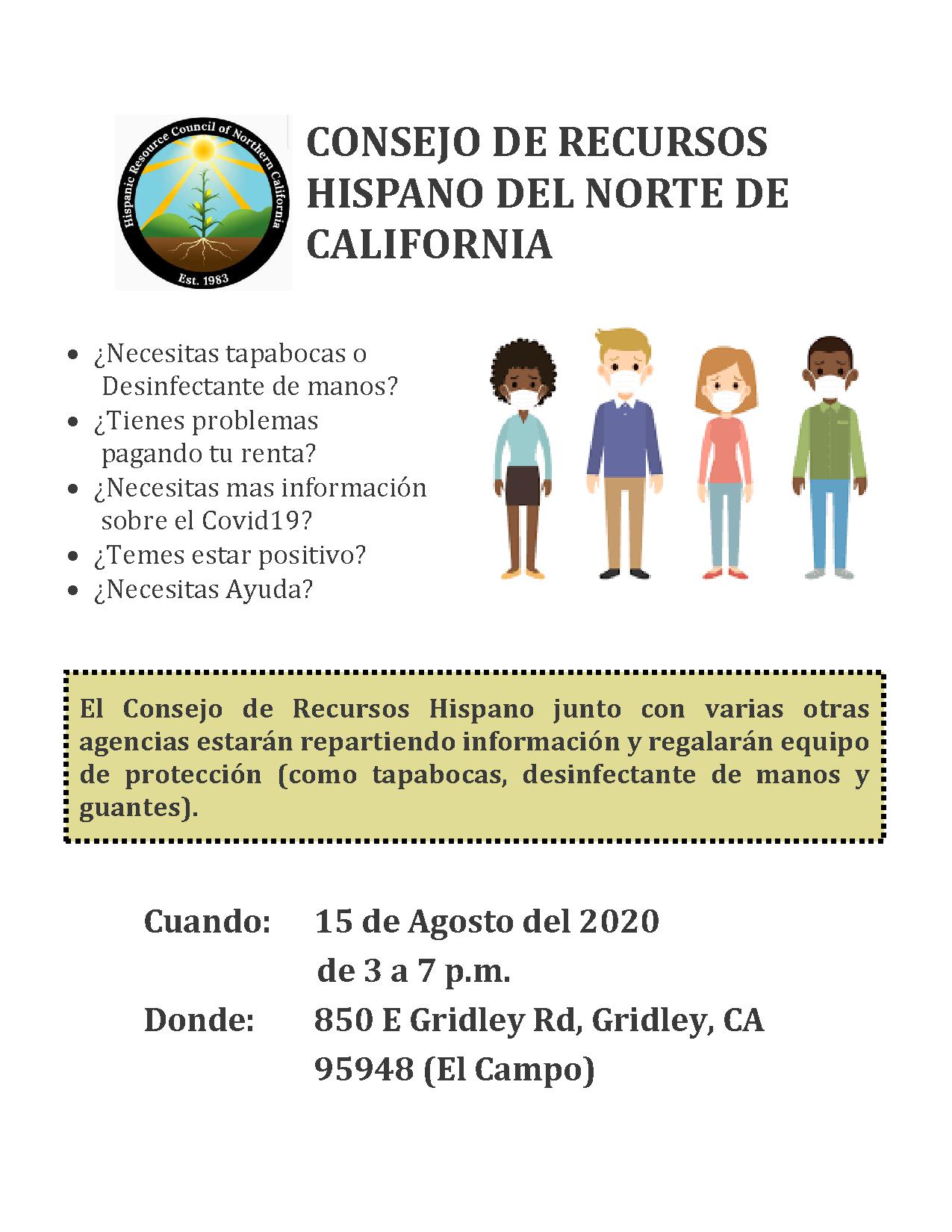
Hispanic Resource Council flier letting immigrant workers know that they can find out if they qualify for a grocery gift card by calling 530-519-3118.

This story was updated on July 30 with a statement from Butte County Superior Court.

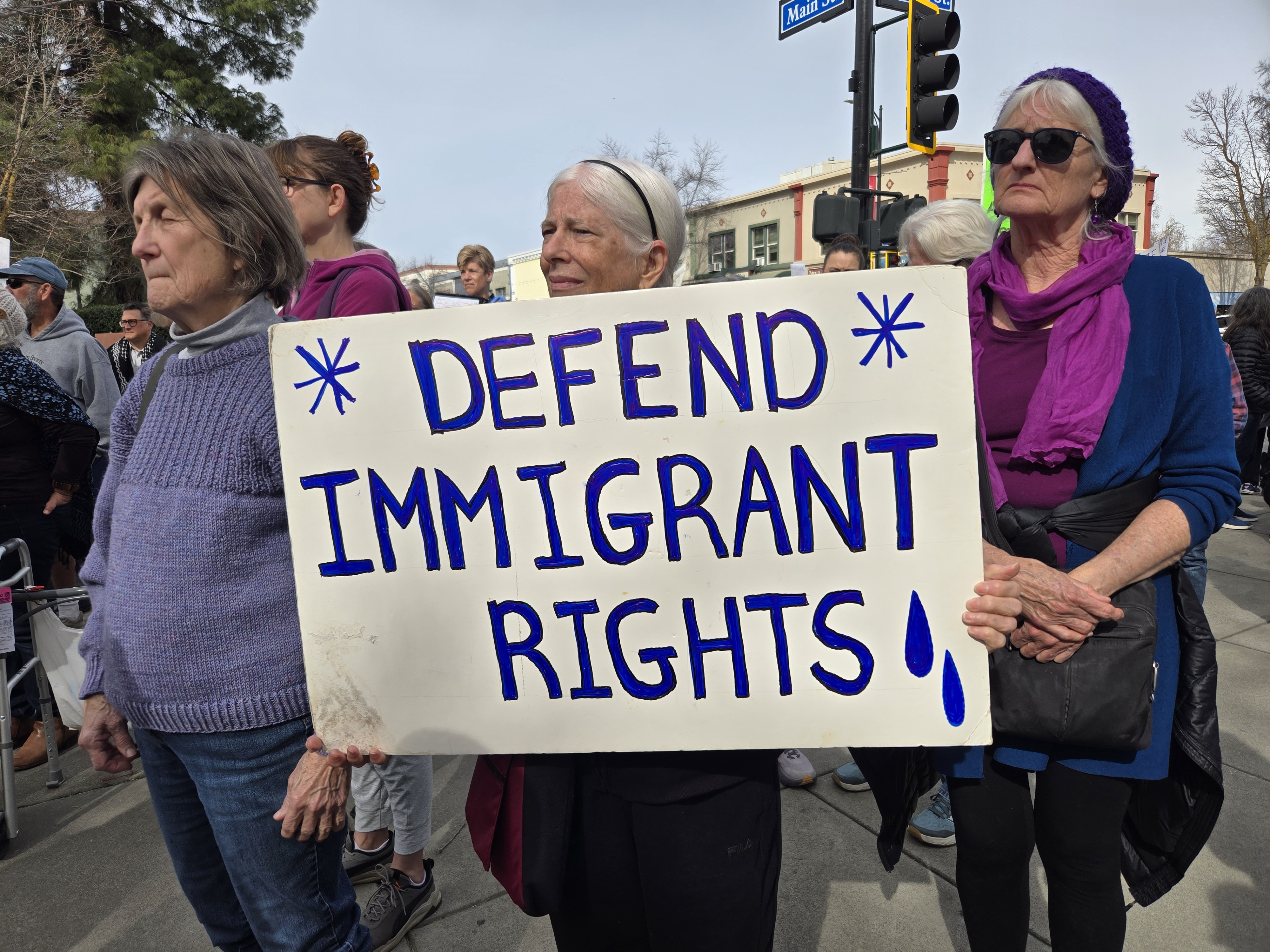
Officers from Immigration & Customs Enforcement (ICE) made a July 28 appearance at Butte County Superior Court and may have arrested as many as six people.

Action News Now reported that six people were arrested after ICE arrived, quoting an “unnamed source.” The advocacy organization NorCal Resist said it had confirmed one arrest when that person’s companion connected with its Rapid Response Network. ICE agents have been taking immigrants at courthouses throughout the state, but it was the first confirmed ICE sweep at a courthouse in Butte County.

NorCal Resist will offer a July 30 court watch training for interested citizens. read more

COVID-19 outreach events reach hundreds of needy families

Ethnic disparity in positive cases appears to drop
by Leslie Layton | Posted October 19, 2020

photo by Kate Sheehy/Semillas
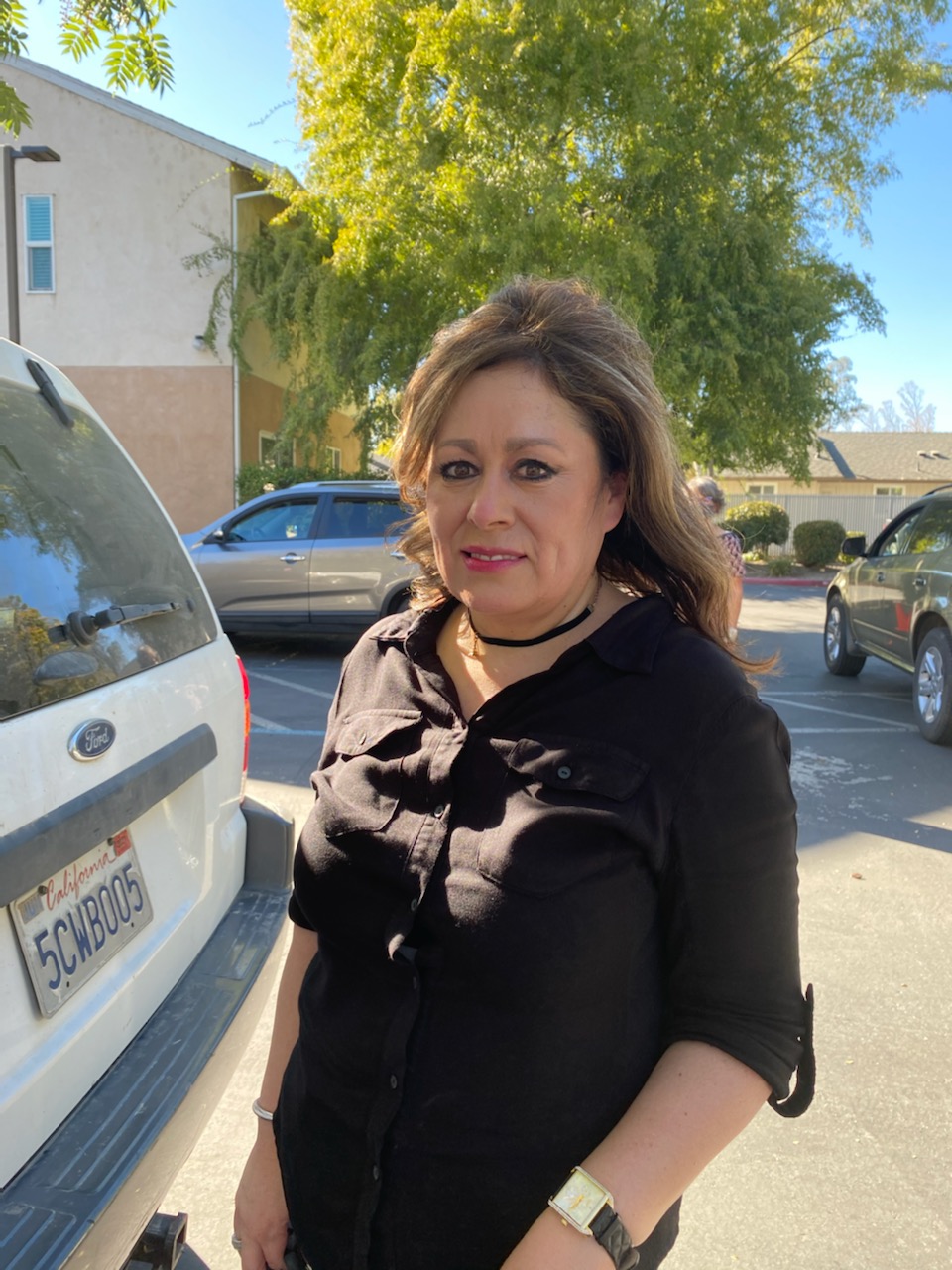
Reyna Nolta from the Hispanic Resource Council at the COVID-19 prevention event in Orland on Saturday.

A COVID-19 prevention campaign targeting low-income and minority communities in the region — that public health officials believe has been effective — is reaching hundreds of families as it winds down for this calendar year.

Spearheaded by the Hispanic Resource Council of Northern California, staffers from a host of social service agencies and Butte County Public Health have distributed more than 2,000 masks, more than 1,000 bottles of hand sanitizer, information packets and educational materials translated into Spanish at events throughout the North State. The latest events, held Oct. 17 in Orland, Chico and Oroville, were the last big projects in the 2020 prevention campaign although other facets of the campaign will continue.

The Oct. 17 Orland event featured a food giveaway and the participation of Mexican consulate officials. Representatives of the consulate explained the importance of prevention and recounted stories of COVID patients who have suffered serious neurological effects from the illness, said Reyna Nolta, a member of the Hispanic Resource Council.

People had already lined up for PPE (personal protective equipment) and emergency food supplies when the Orland event began at 3 p.m.

Nolta said the people who showed up for all the events “really needed” the supplies, and she was startled by the large number of elderly people in need of assistance.

“They’re hurting,” Nolta said of the families who attended the events. “They were grateful, people kept saying, ‘thank you, thank you.’ They were really appreciative.”

At the Oroville event, held at the African American Family & Cultural Center, several families often shared a single car in order to attend. “That tells me they don’t have transportation, maybe they don’t have money for gas,” Nolta said.

Donations came from Enloe Medical Center, the League of Women Voters and other organizations; the nonprofit Semillas has been using GoFundMe to raise money to buy pinto beans, canned tomatoes, cooking oil and other food supplies.

Danette York, Butte County public health director, said today she believes the prevention campaign has helped stem the spread of the virus, although she still has no definitive data to prove that.

A race and ethnic breakdown of Butte County’s COVID-19 cases shows only 13 percent of people testing positive identified as Hispanic for the 30-day period ending Sept. 24. But there’s a caveat — the data also shows that in 46% of the cases, ethnicity was reported as “unknown.” More data will be available within a couple of weeks, York said.

Butte County Public Health says race and ethnicity data have often been “missing from provider and lab reports.”

ChicoSol reported in early July that in about 41 percent of the county’s cases, people identified as Hispanic or Latino. That story moved Nolta and other members of the Hispanic Resource Council to launch a bilingual outreach campaign with the support of public health, Northern Valley Catholic Social Services, the North Valley Community Foundation and other government agencies, foundations and nonprofits.

“We are working hard to do some outreach to decrease the disparity, and we believe we’re having an effect, but don’t know [yet] if it’s that big,” York said.

There have been 51 COVID-related deaths in Butte County according to data released today by public health. Almost 69 percent of the 3,002 cases thus far have come from Chico.

Hispanic Resource Council launches COVID outreach campaign

COVID testing fear a problem
by Leslie Layton | Posted August 13, 2020

Reyna Nolta and the Chico-based group she works with knew, shortly after Independence Day, that they had been called to act.

She had read and been interviewed for a July 4 ChicoSol story that reported on the disproportionate way in which COVID-19 was slamming the Latino community in Butte County. Now, the Hispanic Resource Council of Northern California (HRCNC) – an organization with a clunky name but a trustworthy reputation — has in a matter of weeks organized five events targeting Latino, Black and Hmong families with information and supplies to stem the spread of the virus.

The first PPE (personal protective equipment) giveaway was a success, and the second will be held from 3 p.m.-7 p.m. Aug. 22 at 1003 Newport Ave, Orland (at the Rancho de Soto apartments.) Events will also be held on following weekends in Oroville, Chico and Palermo and announced on ChicoSol.

“We stepped in to try and save lives,” Nolta said of HRCNC’s efforts. “It was the right thing for us to do to service this community that is, in fact, in trouble.”

But HRCNC faced a challenge: Figuring out what role to play to save lives. Soon after reading that Latinos were more than 40 percent of Butte County’s total COVID-positive case number, it decided to hold a weekend event in Gridley that would offer free testing.

ChicoSol, by way of a June 19 Public Records Act request filed with the county, obtained a breakdown by race and ethnicity of all COVID cases for the first half of the year. The July 4 story reported on figures that startled the Latino community; people identifying as Hispanic or Latino only make up 15 percent of the county’s population.

But turnout at the HRCNC testing event was poor, and Nolta awoke in the middle of a night soon after that effort. She said she realized the situation was “worse than I thought.”

Some members of the Latino community believe that COVID is only a problem in large cities like Los Angeles. Others fear testing positive, unsure whether they can access follow-up medical care.

“Some have no [health] insurance; some are afraid they’ll be confined and not able to work and feed their families,” Nolta said. “Some who are positive are keeping it private because of the stigma.”

Nolta realized that testing — especially given the lag time waiting for results — wasn’t a good use of their time.

The HRCNC decided instead it should assume a new leadership role in COVID prevention and education. Members had realized there was no printed information or public service announcements on prevention available locally in Spanish. Fliers that were available were in English.

“The county was not prepared to tackle the situation,” Nolta said. “There were no PSAs in Spanish and the agencies didn’t have a lot of information to give out. We needed to step in and help those agencies; we’re a trusted organization.”

In fact, HRCNC was in many ways an ideal platform for outreach. The council is a 30-year-old organization that is known mostly for sponsoring an annual information fair, Día del Campesino. It’s comprised of representatives from some 50 regional agencies and nonprofits, including Butte County Public Health, Northern Valley Catholic Social Services and Community Housing Improvement Program.

About 20 of the 50 HRCNC members have since come together to form a COVID-19 prevention and education task force.

The HRCNC Facebook page, newly-focused on COVID-19, has received requests for information from viewers in Chico, Williams, Yuba City, Marysville, Woodland and elsewhere, Nolta said.

And the organization is now collaborating with the African American Family & Cultural Center and the Hmong Cultural Center of Butte County to reach the Black and Hmong communities.

One morning last week, a Yuba City man messaged HRCNC on Facebook. He wanted to know whether his family of four could access free testing for COVID-19; one clinic had already told him there would be a $33 charge per person.

HRCNC arranged for the family to undergo testing – at no charge – with Ampla Health.

The man, an immigrant, wanted an evening appointment, Nolta explained, because he needed to be available for work during the day to ensure the family could pay its bills. Nolta said he wasn’t confident he had been working in a safe environment; co-workers had been coughing and he wasn’t convinced they had been tested or would divulge a positive test result if one was had.

“This is what a desperate situation it was,” she said.

On Saturday, HRCNC members and Butte County Public Health equity coordinator Kyle Willman will hand out masks, gloves and hand sanitizer supplied by Willman’s department. They’ll also distribute packets that include fliers translated into Spanish by HRCNC and a list of pandemic-related services.

Nolta said the HRCNC is in need, though, of a greater supply of masks and hand sanitizer, as well as more options for financial assistance to people testing positive. The public health department can often get the cost of a hotel room covered for someone who needs a quarantine, and HRCNC then tries to make referrals for help with grocery bills and rent.

The challenge is immense.

The HRCNC plans to hold Zoom meetings to encourage testing and provide information on services that are available for those who test positive. Willman says Public Health is working on PSAs that will be aired in Spanish.

Race and ethnic disparities have been commonplace throughout the nation during the pandemic; infection and death rates are often disproportionately high in low-income and minority communities where access to testing and follow-up care are problems and many people work at high-exposure jobs.

These problems are compounded, Nolta said, in communities that have many undocumented workers who fear deportation.

At the time Butte County Public Health provided ChicoSol the race breakdown, Blacks and Asians each had one community member who had tested positive. The little town of Gridley, which is about half Latino/Hispanic, comprised 35 percent of the county’s total positive case number.

But since then, the numbers of COVID positives from Chico and Oroville have shot upward; Butte County has a total of 1,321 people who have tested positive – more than an eight-fold increase since the end of June. Gridley now has about 12 percent of the county’s total COVID-positive case number.

Public Health has reported an increase in the number of COVID-related fatalities from three to 12; Director Danette York said her department has accessed more information about several recent deaths in the county that increased that total today.

Nolta said she hopes the work HRCNC is doing in the community will, in a few weeks, be reflected by lower infection rates in communities of color.

District 2 Supervisor Debra Lucero has asked for race/ethnic breakdown data on an ongoing basis. Lucero pointed out that data compilation locally has been hampered by several problems: The state’s under-reporting glitch; The fact that most agencies were unprepared to handle something of this magnitude; The fact that most Butte County departments are “chronically understaffed .”

A Butte County Public Health spokesperson today confirmed that breakdown data will be released monthly beginning this month.

Leslie Layton is a freelance, bilingual journalist who edits ChicoSol.
This story was updated to reflect new information from Butte County Public Health and after the first HRCNC event was held.