
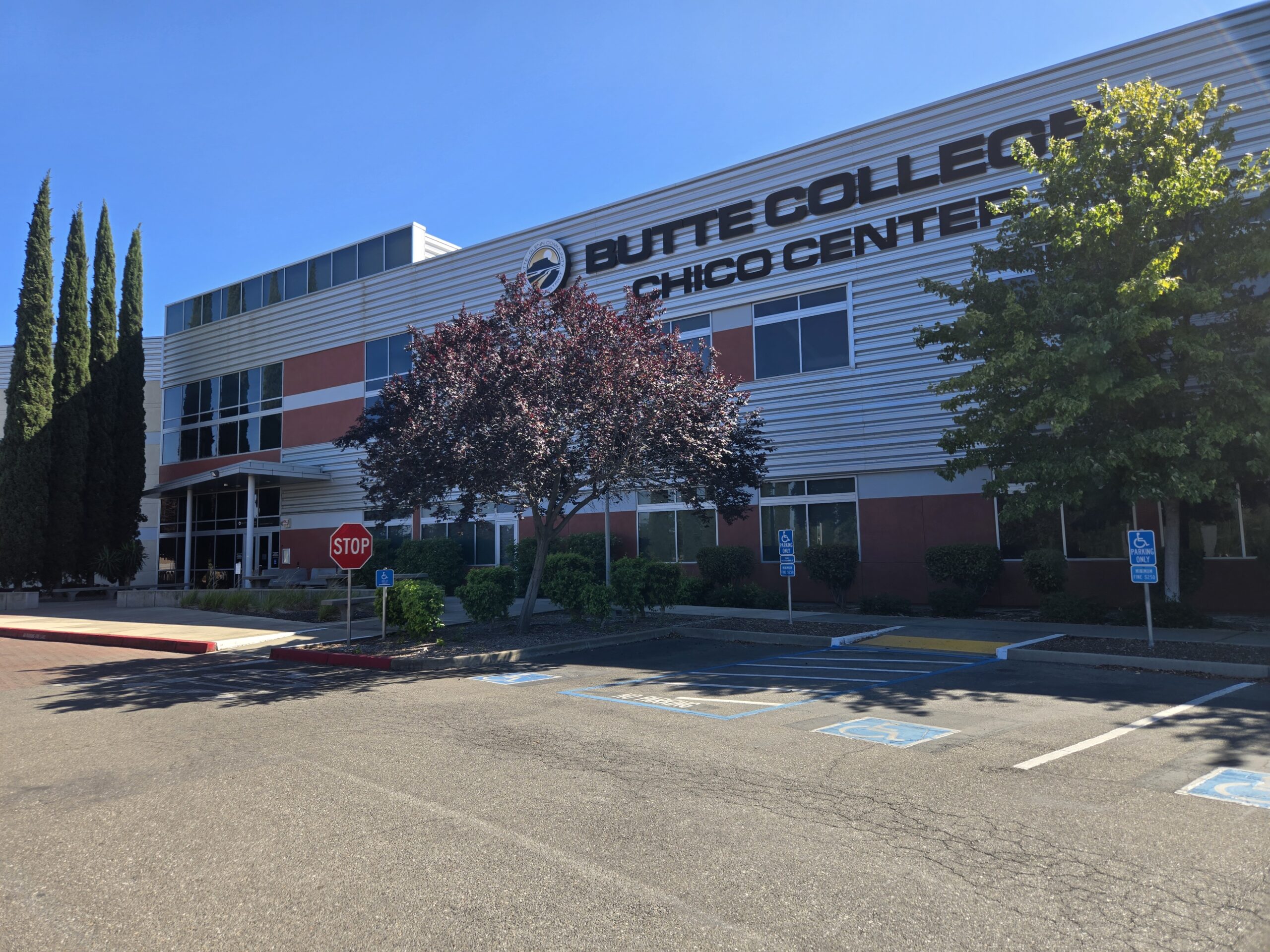
California’s universities and colleges are the front lines for migrant students who seek support and a pathway to higher education.
Higher education institutions tout California’s Dream Act Application (CADAA) as a lifeline — as pressure grows to protect immigrants in California amid a sweeping and forceful immigration crackdown.
In a recent briefing hosted by American Community Media, panelists shared how students can, under the California Dream Act of 2011, apply for and receive Cal Grants and the California College Promise Grant at community colleges, as well as institutional and state aid at California colleges and universities.
“We are seeing some resistance, what you call a ‘chilling effect’ due to the federal activity” — Christian Gutierrez
“The truth is that our communities are in turmoil,” said Daisy Gonzales, executive director of the California Student Aid Commission (CSAC). “Many [prospective students] are thinking of not pursuing higher education.
“Many of the Californians that we are neighbors with — our families, teachers, coworkers — are living in unprecedented times where their data is being shared between federal agencies to attack them and target them in the name of federal immigration enforcement.”
Gonzales encourages undocumented students who are ineligible for FAFSA to apply for aid through the Dream Act, where “the data that students complete will only be used to determine state and institutional aid eligibility, and is not shared with the federal government.”
But the CSAC – the state agency responsible for distributing over $3 billion in financial aid – is still seeing decreases in applications from students from undocumented, mixed-status and refugee families.
Last spring the CSAC reported a 38% drop in Dream Act applications and a 14% drop in the Free Application for Federal Student Aid (FAFSA) applications statewide. The number of financial aid applicants who have at least one undocumented parent fell 44% in February compared to February 2024.
At Butte College, public relations officer Christian Gutierrez has noticed the trend.
“We are seeing some resistance, what you call a ‘chilling effect’ due to the federal activity. Our approach is always to ensure students of their rights under FERPA,” Gutierrez said, referring to the federal law that protects student privacy.
Butte College’s UndocuCenter offers counseling services and support for undocumented students and their families, including assistance with Dream Act applications and scholarship information.

CADAA protects students’ data under state law.
To become eligible for aid, students must have attended a state high school for at least three years and graduated, or show completion of coursework, or hold an associate degree from a California community college.
Although aid deadlines vary among public and private universities, the final deadline for applicants intending to start community college this fall is Sept. 2. The deadline to apply for CSUs passed in May.
“Choosing to pursue your dreams, choosing to apply for financial aid, is an act of resistance” — Daisy Gonzales
Gonzales said that many mixed-status migrant students and families are living in “unparalleled times.” The Department of Homeland Security has data-sharing agreements with the Internal Revenue Service, U.S. Postal Inspection Service and the Department of Housing and Urban Development. It is unknown if it has an agreement with the Department of Education, but many students are fearful of applying to college nonetheless, Gonzales said.
“Choosing to pursue your dreams, choosing to apply for financial aid, is an act of resistance for many of these communities who would otherwise have no access in this country,” Gonzales stated.
CSU Long Beach student Celeste Mar, who wants to be a school counselor, said that she’s spent two financial aid cycles counseling undergraduate students at her university who are concerned about ICE raids.
“I’m a first-generation student,” Mar said. “I remember being in high school filling out FAFSA, and even years ago there was still that fear. I see that our students and their families are being targeted simply by the way they look. During this political climate, our students are still hesitant. They believe that by not filling out these applications, that means that they get to protect their families.
“I want to become that support that students can look to in order for them to realize that higher education is possible for them,” Mar added.
In an interview with ChicoSol, Butte College’s Gutierrez said he is himself a first-generation college graduate. He wants to see students benefit from community college opportunities even if they’re worried about the future under the current administration.
“Ultimately, with this population and any population we want to inform and empower the student to make the decision that is best for them and their families,” he said. “That may look different for each student. A student may decide they are ready to enroll but may not feel comfortable completing a financial aid application in which case we will work with the student to identify other ways of bringing the cost down, like scholarships that do not collect the same level of information.”
The Butte College financial aid office hosts regular workshops covering FAFSA and CADAA applications, while the UndocuCenter provides statewide and local resources for undocumented and mixed status students, including access to free legal services through the California Community Colleges Chancellor’s Office.
“This ensures that regardless of where a student begins their journey … they’ll have access to information and knowledgeable support staff who can inform them and advise them through the process,” Gutierrez said. “We want to ensure that regardless of how a student enters the matriculation process they have access to the appropriate information and support to make the choices that are right for them.”
The college also recruits at events throughout the North State specifically geared toward migrant communities in order to assure people they can safely go to college, Gutierrez said. Butte College also shares the stories of students from mixed-status families in promotional materials.
“Representation is important – seeing other students going through it helps,” Gutierrez added.
Christopher Gonzales, chief strategy officer of 10,000 Degrees, said that higher education is a priority for the California legislature and Gov.Gavin Newsom. He has seen students rely on the state’s legal protections over the years. (10,000 Degrees is a 44-year-old college success nonprofit serving eight Bay Area counties and Utah.)
“We had a student in Sonoma County who we’ve worked with for over two years, who had a lot of instability in their home life, being from a mixed-status family,” he said. “We were able to do some fact-checking with the student, and work through with that family over multiple meetings that it really is safe to apply through the California Dream Act Application.”
Natalie Hanson is a contributing editor to ChicoSol.