
The Corporation for Public Broadcasting announced today its upcoming closure. For decades it has helped support 1,500 locally managed public television and radio stations nationwide.
At the KIXE public television station in Redding, there’s a third-Thursday-of-the month magic. It’s called KIXE Storytime, and children who show up with their parents, grandparents or other caregivers hear a story, take part in a related craft-making activity and enjoy a snack.

Because it’s free of charge, it’s available to families whose activities may be limited by their financial resources. It’s not the kind of program that you might immediately associate with a television station – but, well, this is the “public” in public TV.
It’s the kind of outreach at KIXE, a PBS affiliate, that now worries General Manager Rob Keenan after Congress cut $1.1 billion from the Corporation for Public Broadcasting (CPB). That “claw back” came in the H.R. 4 “Rescissions Act” signed into law by President Trump on July 24.
Federal funds channeled through the CPB provide 40% of KIXE’s budget, and, as well, almost 24 percent of the annual budget for Chico’s community radio station KZFR. In the wake of the bill’s passage — which cuts previously approved funding for this fiscal year and the next — boards at North State broadcast outlets are scrambling to maintain service in an underserved region.
“It’s unprecedented that we would lose funding in this way,” Keenan said in a recent phone interview. “We’ve been relying on federal funding for 56 years – especially the smaller stations.”
KIXE serves 10 northeastern California counties that reach to the Oregon border on an annual $2.1 million budget. “It’s a lot of rural area, a lot of underserved population, a big chunk of the state,” Keenan said.
Some of that area is also served by KZFR and North State Public Radio (NSPR), which has stations in Redding (KFPR) and Chico (KCHO). That means that broadcast media that together serve hundreds of thousands of rural North State residents with outreach, local programming and disaster alerts will suffer a significant blow.

Keenan said that when Congress passed H.R. 4 and the president signed it into law “they might have thought they were getting rid of larger, urban, left-leaning stations.” But the stations that will be most hurt are the smaller stations in rural communities that depend on the “educational and arts programming we provide,” he said.
In recent years, both PBS and NPR have been Republican targets, with the Trump Administration and other lawmakers (see ChicoSol sidebar on growing pressure on the media) accusing them of left-leaning bias.
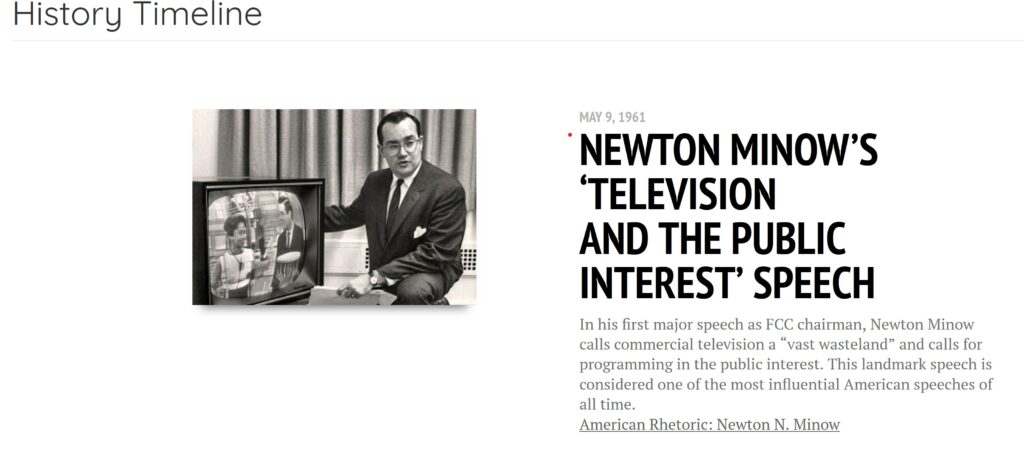
The Corporation for Public Broadcasting was established in 1967 when President Lyndon Johnson signed into law a bill that would set up public broadcast. That was six years after what is called a “landmark speech”: Newton Minow, then chair of the Federal Communications Commission, called commercial television a “vast wasteland.”
“The whole idea was that we were going to have a vehicle the federal government could use to approve funding for local stations for public media,” Keenan said, “and through this venue, there would be a buffer between the government and editorial at the stations.”
But as the country has become more polarized, and in the generally conservative area where KIXE is located, Keenan found himself fighting perceptions that public television has either a liberal or conservative bias. That’s in spite of the fact that much of the evening programming on KIXE includes shows like “Antiques Roadshow,” “Finding Your Roots,” and British dramas, and there are six mornings a week of children’s programming.
“Generally speaking, we run the gamut,” Keenan said. “But the majority doesn’t have a political bias.”
The Zephr braces
KZFR, a.k.a. the “Zephr,” a community-run station founded more than 30 years ago, will lose $119,00 in community service grant funding this fiscal year. The station has some reserves but may be forced to trim back some programs and “step on the gas” for fundraising, said General Manager Grant Parks.
“We’ll re-examine our entire budget,” Parks said, “but we have fixed expenses that we can’t really adjust.”
KZFR’s broadcast range serves a region with more than 200,000 people, and KZFR.org streams live.
The station has 120 volunteers who provide a variety of music and public affairs programming. Volunteers who don’t have a background in audio production are trained, free of charge, at the station. The programmers are a diverse bunch, and include DJs, teachers, maintenance workers and retirees, Parks said.
“There are a lot of sources for climate reporting, but [KZFR] programs like “Ecotopia”and “North State Water Report” report on ecological stories from right in our backyard,” he said.
The station’s board of directors had approved the conditional hiring of a news coordinator at its June meeting in an effort to ramp up news programming. But Parks said KZFR will now have to “re-examine whether bringing on additional staff is the best move at this juncture.”
NSPR worries about the future
At North State Public Radio, Director of Operations Sarah Bohannon said her station hadn’t received CPB funding for this fiscal year because parent station Capital Public Radio hadn’t met compliance requirements. “But that doesn’t mean the need has gone away,” Bohannon said. “CPB support was an anchor for us for many years, and it could be again.”
In fact, by November of this year, CapRadio will end its management of NSPR — an NPR affiliate — and the station will be transitioned to Chico State, which is already facing a budget deficit of more than $32 million, according to this NSPR story.
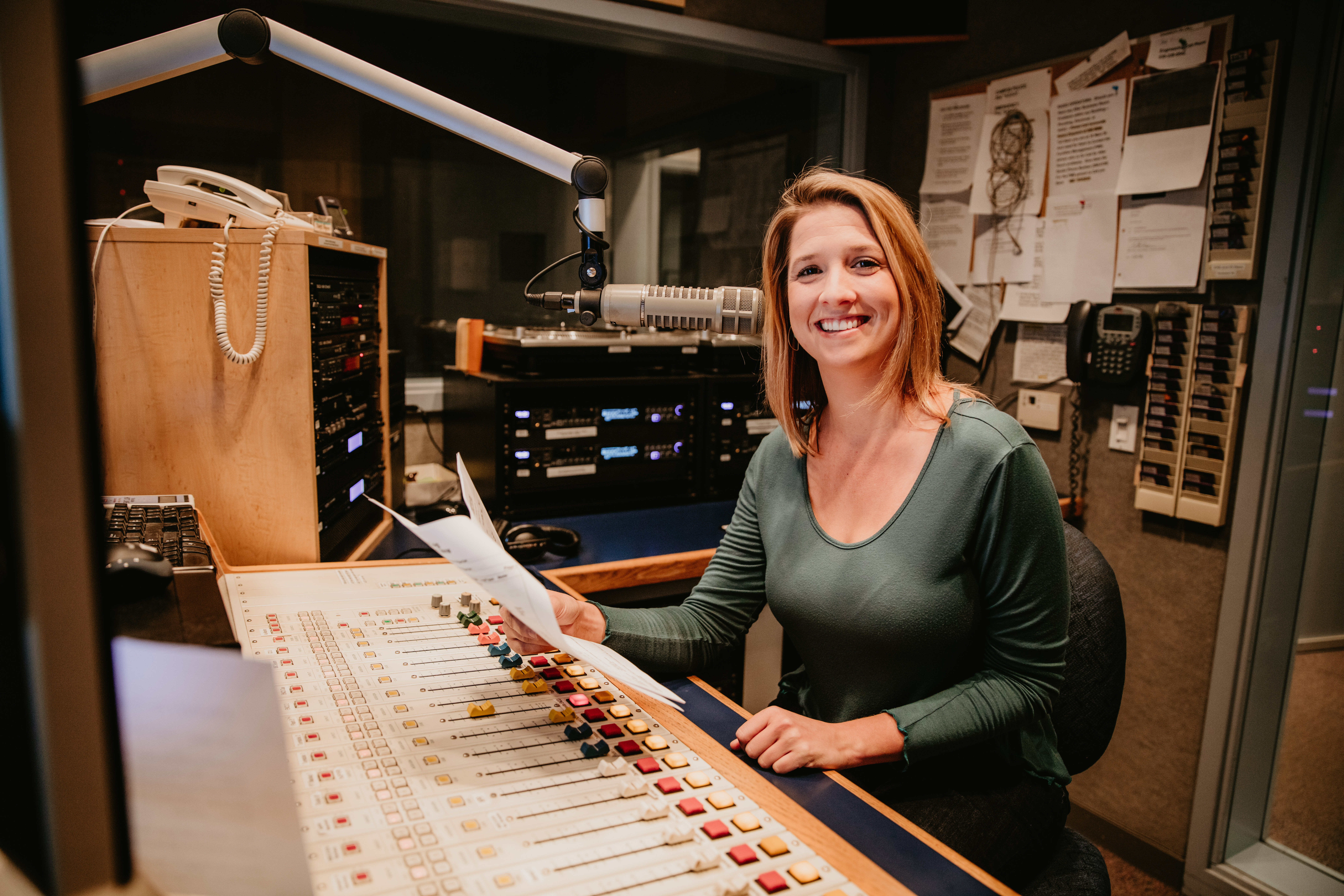
“It’s a scary time to work in public radio, but even scarier to imagine a world without local journalism,” said Bohannon, who oversees what is surely one of the region’s largest newsrooms with six or more working journalists.
NSPR reaches about 40,000 listeners weekly throughout 11 North State counties. NSPR, Bohannon said, responds to the “disasters [that] happen over and over again in our region.”
Last year, when evacuations for 106 zones affected by the Park Fire were issued, “our news team aired every single one of those evacuation warnings,” she said. “We were making sure those evacuations were repeated and understood by our listeners.
“This is an area that’s often overlooked, underserved and in real need of the kind of in-depth, local reporting we provide,” she added.
District 1 Congressman Doug LaMalfa voted in favor of the bill. LaMalfa’s staff didn’t respond to a ChicoSol request for comment.
Media experts say the relatively small amount that was put into public broadcasting prior the Rescissions Act amounted to about $1.58 per person in the United States per year.
Keenan said he wasn’t surprised by LaMalfa’s vote. “They’re voting as a unified block,” Keenan said of congressional Republicans. “[LaMalfa] really doesn’t believe in the funding for public media.”
The station’s streamed programs will continue, Keenan said. But what might be affected in the future are outreach programs, like the monthly story time and the station’s annual Mr. Rogers Day of Kindness in September – programs that he says support many “underserved families.”
As the station struggles to make up the loss of $845,000, it will have to look at the programs that require staffing.
Staff at all three outlets said they would be ramping up donation campaigns.
“We may be working the hardest we’ve ever worked in our lives and our careers,” Keenan said.
Leslie Layton is editor of ChicoSol, which has an advertising exchange agreement with KIXE. ChicoSol operates as a nonprofit news outlet that is funded by donations and small fellowships.
3 Comments
What an awful and clear picture you are painting for all of us in the north state. We all rely on all these media outlets.
Other countries spend much more (even 10x more) per capita on public broadcasting than the U.S. before these cuts. 90% of our major media content is spun for the 1%. These cuts represent a dangerous move away from balanced information for our country.
Excellent reporting on what Trump’s cutbacks actually mean on the ground. This is speaking truth to power. Well done.