
On Aug. 11, masked agents with Immigration and Customs Enforcement (ICE) handcuffed and pointed their guns at a disabled 15-year-old while he waited for his mom to pick him up from school in Arleta, California. On Aug. 8, ICE arrested Benjamin Guerrero Cruz as he walked his dog in Van Nuys, days before the 18-year-old was set to begin his senior year of high school.
These are just two in a string of examples of ICE’s aggressive implementation of the Trump Administration’s mass deportation agenda, an approach experts say is traumatizing kids and families and sending a chill through school communities across the country.
“This back-to-school season, children are facing the terror of wondering if their parents will be there to pick them up,” said America’s Voice Executive Director Vanessa Cardenas during an Aug. 28 virtual briefing. “The usual first day jitters have been replaced by fear.”
She added, “This is the hidden cost of Trump’s agenda, education chaos and psychological scarring.”
On his first day back in office, Jan. 20, President Trump rescinded a Biden-era policy that directed immigration agents to steer clear of “sensitive locations,” including churches, hospitals and schools. In the weeks and months since, ICE agents have carried out operations targeting all the above locations, among others, as it pursues the administration’s aim of 3,000 arrests per day.
A Stanford study released in June found that in California’s Central Valley a precipitous 22% drop in school attendance followed in the wake of raids in the area earlier this year. Other studies have shown similar results. Researchers warn that absenteeism across the state could climb as the raids continue.
“This creates a toxic climate of fear and uncertainty which causes intense stress, anxiety and trauma,” said child clinical psychologist Allison Bassett Ratto. “As children see immigrants be detained, they are not seeing violent criminals being apprehended by uniformed police. Instead, what they see are classmates, family and neighbors being apprehended in violent and confusing ways while going about their daily lives.”
Ratto explained that the torrent of images and reports of ICE apprehensions are creating a sense among all young people, immigrant or otherwise, that “nowhere and no one is safe.” Students, she noted, carry that sense of fear and anxiety into the classroom, hampering learning.
“We as educators are taking action,” said Noel Candelaria, secretary-treasurer with the National Education Association, the nation’s largest labor union representing more than 3 million educators and school staff members.
“We’re working with superintendents to adopt safe zone policies. Across the country we see inspiring examples,” he said, pointing to the Columbus Education Association in Columbus, Ohio, where school staff are working with families to draw up plans in case one or more parent is apprehended. “While this administration should never have put students in this position, we are coming together to keep each other safe.”
In California two bills—SB 48 and AB 49—are currently moving through the legislature that would limit ICE’s ability to conduct operations in and around schools.
Still, the impact of immigration enforcement policies is just one in an array of headwinds public schools across the country are facing as enrollment falls and as the White House continues to push for greater privatization through the expansion of school vouchers.
States including Florida, Texas, New York and California tie school funding to attendance, which means they lose money as fewer students show up to class.
“Every student that does not show up is a dollar lost,” said Fedrick Ingram, secretary treasurer with the American Federation of Teachers, pointing to Miami Dade where the district is already confronting a deficit of some 13 thousand students. “We know there is a big portion of people not sending their kids to school because of what is happening. There is a direct connection with funding, the lack of students and the fear.”
Candelaria pointed to another district in Arizona, which closed three schools before the start of the current school year due to lack of funding. “This will only be exacerbated as parents fear sending their kids to school. It is already having an impact.”
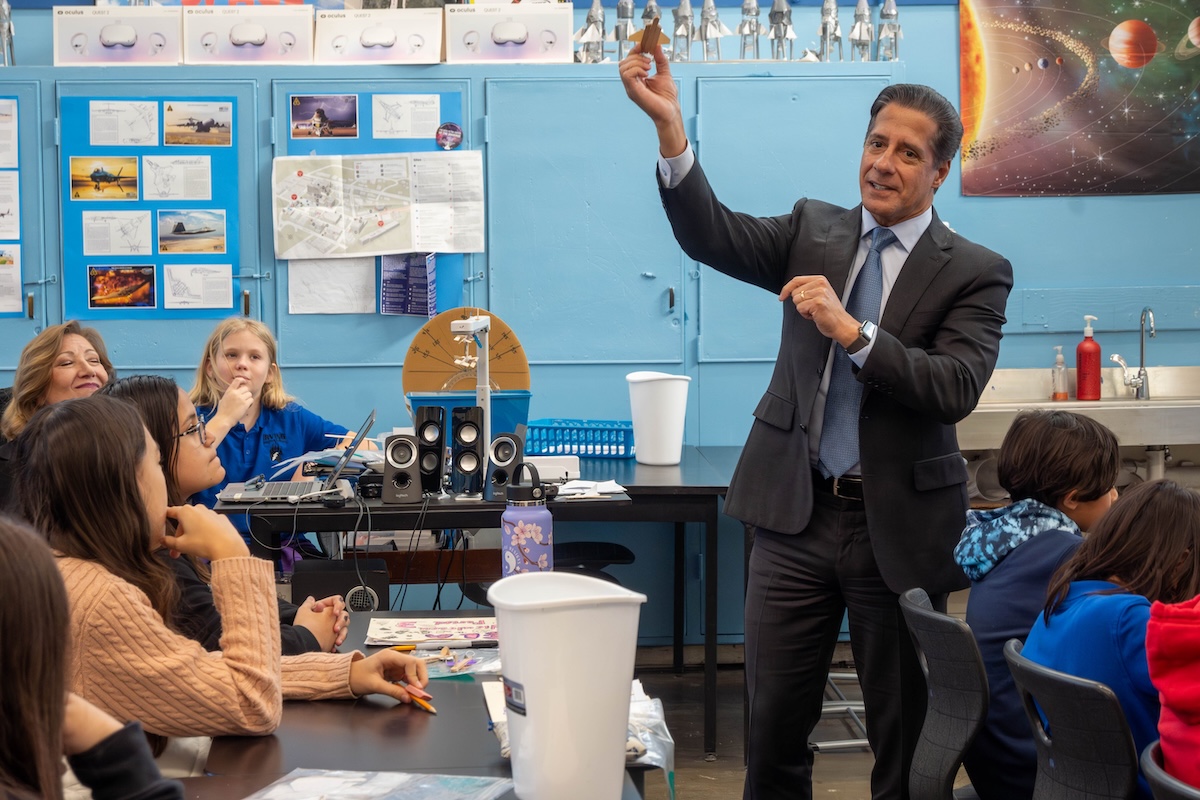
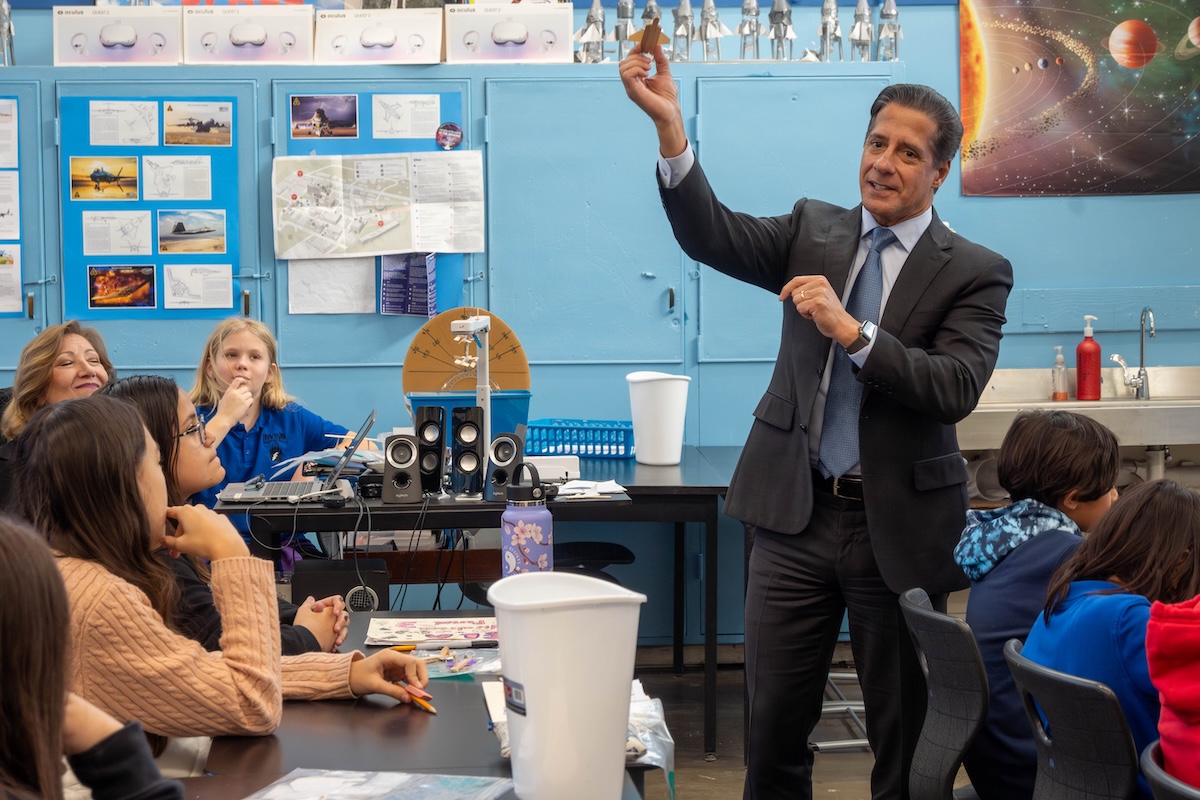
Perhaps nowhere else has the force of the Trump White House’s policies fallen harder or more visibly than in Los Angeles. LAUSD Superintendent Alberto Carvalho drew on his own experience as an undocumented immigrant to describe the impact of current policy on today’s students.
“As an educator, as an American by choice not chance, as an immigrant once undocumented, as someone who once slept under a bridge, I cannot speak or address any issue without recognizing the impact education has had on my life,” said Carvalho, adding that “thousands of kids are now facing the same abuse I felt when I was a teen alone in this nation.”
Carvalho ticked off the procedures and protocols that LAUSD schools have put in place in response to ICE raids. These include guides, legal aid and food assistance for impacted families, free transportation and expanded bus routes for parents or guardians who fear being detained while bringing their kids to school, and increased mental and emotional support.
“We called fourteen thousand homes and knocked on two thousand doors to understand the circumstances, to bring resources, and explain conditions,” said Carvalho, adding there were instances where neighbors spoke of families who had self-deported out of fear.
And while he said LAUSD attendance numbers have increased slightly compared to last year, the district won’t know for certain where attendance stands until after the Labor Day holiday.
As for kids who may be experiencing fear, Ratto said parents may be reluctant to talk openly about what is happening, but she said failing to do so can “increase the risk of anxiety and trauma.”
She also stressed the importance of scripts in empowering students—especially students with disabilities—to communicate their rights to immigration agents. “Students need to practice these scripts,” she said.
Referencing the Aug. 27 school shooting in Minneapolis, which killed two and injured 18 others, Cardenas said, “Our officials have a responsibility and duty to protect all our children. Adding fear of deportation to the fear of gun violence erodes the sense of school as a safe haven.”
This article was originally published by American Community Media and reprinted by ChicoSol.