

Changemaker is an occasional series that highlights community members contributing interesting work. Submit ideas for the series to ch**********@***il.com.
Chico attorney Ron Reed’s life falls into two distinct chapters: One of getting, and one of giving.
Before turning 47, he was a land developer in Wyoming, trying to earn enough money so he could do nothing after retirement. After 47, he retired, sold out everything in Wyoming, and moved to Chico, but then attended McGeorge School of Law in Sacramento, beginning a busy second half of his life.
During the past 40 years, he has served as a public defender for juvenile defendants, made 28 trips to Tanzania to help local communities build water wells, and initiated a 12-unit housing program for the unhoused in Butte County.
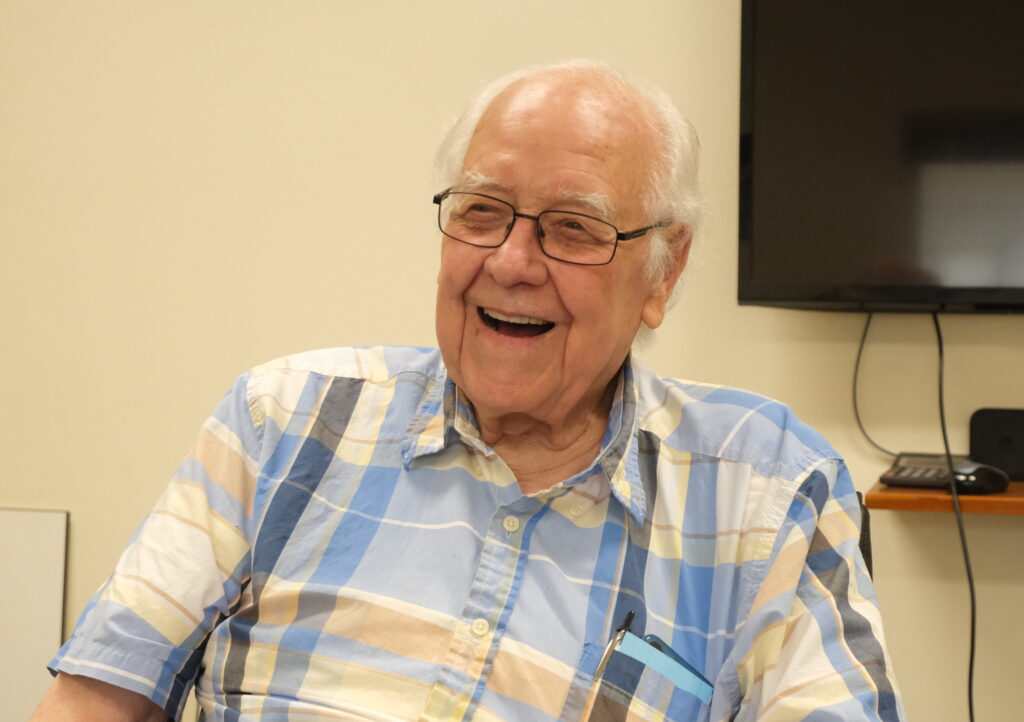
Now, at 91, Reed still goes to his law office most weekdays. When this reporter met him in his office, he relied on a stand-assist walker to move around, but his mind remains sharp and his laughter infectious.
“Life is not about getting, but about giving,” he said, referring to his favorite African saying several times. He didn’t realize the wisdom of the saying until he retired. “There’s no happiness unless you learn to give to other people.”
Reed’s life of giving began in 1986, when he started working as a contract public defender in Butte County. Most of his cases involved juveniles. By around 2000, he noticed a sharp increase in juvenile crime, along with a rise in gang activity that became a significant issue in the county.
Nearly a decade later, Reed witnessed a major shift in how the criminal justice system approached juveniles. Around 2009, he said, a new philosophy began to take shape.
“In 2009, we had some social scientists come in and meet with us … we would assess juveniles and treat them differently,” Reed recalled. “Before that, we had treated everybody (the same), put them in juvenile hall, regardless of the level of their crime or what was going on.”
This shift in thinking prompted Reed to start reading studies and reexamining his own assumptions. He came to understand that locking up first-time or low-level offenders often does more harm than good.
“If you put a juvenile who just does a single crime in juvenile hall, you contaminate them, you tie them into everybody else, and you do more harm than good,” he said.
In response, Butte County began developing more diversion and treatment programs. “We changed our atmosphere or our attitude quite a bit. That changed very many things,” Reed added.
Reed recalled a boy who had been involved in a gang. After witnessing his friend get shot by a rival gang member, the boy rushed him to the hospital—but his friend died in his arms. That traumatic moment became a turning point. The boy realized the gravity of his choices, left gang life behind, got a girlfriend, had a child, and “is still doing good,” Reed said.
While staying in the juvenile hall, the boy helped Reed make a documentary. The documentary, “Who Are You Going to Be? Don’t Let a Gang Decide for You,” features interviews with incarcerated youth serving long sentences for gang-related crimes and is aimed at young people who may be considering joining a gang.
The documentary was meant to show teenagers that although being in a gang might seem fascinating and adventurous, the consequences can be terrible. For example, he says, “When you see somebody shot and killed, and they die in your arms—really? That suddenly makes you realize this is not fun anymore.”
The person who killed this boy’s friend also appeared in the documentary and shared his story. Reed later became his attorney and helped him secure parole about one year ago, and now “he is out, living a good life,” Reed said.
As a public defender, one of his jobs was defending the defendant who might have hurt or even killed others. He was always asked the same questions, by his friends, by the college and high school students, or by victims’ family members.
“Why do you defend people who hurt others?” “What’s the justice for the victims?” “How can you do that?”
Reed was never hesitant about his choice.
“A person should not be judged by the worst thing they ever did in their life,” Reed always responded. “They should have a chance to see who they can really be. And for many people, they change their life and they turn it around. And that in itself is a reward.”
Now, Reed serves as the director of Project Upstream, a program that “prepares young offenders between the ages of 18 and 25 to go to prison.” It’s designed to assess a person’s rehabilitation competencies and, based on that assessment, develop a case plan for prison programs to support their reentry into the community.
“We go to the jail and meet with them,” Reed explained. “Sometimes we say, ‘Okay, if you will enroll in college, get just a 6-month course in college and complete that, we will send you a package of goods to use.’”
Reed’s wish is that they will come out of jail as a person their family would be proud of, and as a person “who would be an asset to the community.”
To him, juvenile halls and jails should serve not just as places of punishment, but as spaces that help individuals become better people.
Sometimes, the reality also saddened him.
He mentioned one of his clients, a former young gang member. When this client was getting out of juvenile hall, Reed believed he would do great and thought of this case as a success. Reed spent a great deal of time talking to him when he was in the juvenile hall. But not long after release, he went to a party, threatened somebody with a gun, got into trouble, and ended up in state prison at age 18.
“When people I really believed in failed,” Reed said, “I felt upset.”
After so many conversations, Reed had come to see him almost like a friend. Watching someone you care about relapse into the same destructive patterns, he said, is painful.
At that moment, he questioned himself: “Maybe I should quit working with people and I should just go back to being a contractor and build things, hit things with a hammer and a nail. It goes in. And you don’t have to worry about people.”
But this frustration only stayed with him for a short time. He quickly shifted to a more positive outlook: “Probation officers, teachers, everybody who works with people who have made mistakes and ruined their lives — you work with them, they will fail. And you have to accept that and then pick up, move on, hope for the same person, and try to get them back on track.”
Over his more than 30-year career as a public defender, he had worked with more than 6,000 juveniles, driven by his unwavering hope in people with troubled pasts — young people whom most others had already given up on.
In 2004, while still working as a public defender, he began a side project: traveling to Tanzania to help local communities drill wells. On his first trip, he joined a group of international volunteers. There, he saw villagers drinking from polluted streams, falling ill, and young children dying as a result.
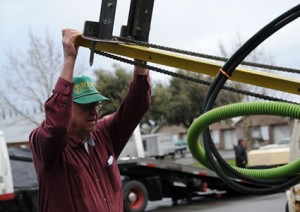
After his second visit, he began traveling there on his own, training local people in Tanzania to drill water wells themselves. Over the years, he sent 25 rigs to the country and continued visiting for 15 years — until he was 85.
In 2019, he felt he was too old to travel so far. At that time, the homelessness issue had become a serious problem in the area after the 2018 Camp Fire. He was thinking: ‘Why don’t I help people in Butte County instead of those in Africa?’
So, he decided he would try to help with the homeless population in Butte County.
“I saw that the real need was for places for people to live,” Reed said. “I wanted to build a housing project for homeless people.”
He acquired a piece of land in Oroville and put together a project called Base Camp Village that provides 12 apartment units for unhoused people with mental illness. The approach was creative — Butte County jail provided alternative custody workers to build the units. After completion, Reed turned over the project to Caminar, a non-profit that works with mentally challenged people.
If you put a juvenile who just does a single crime in juvenile hall, you contaminate them — Ron Reed
When asked how to stay healthy, he gave this reporter a mysterious smile.
“I ate badly, drank beer, and lay around,” he said jokingly. “I didn’t do anything unusual, but for some reason, I stayed healthy, I never got sick.”
“I am just an ordinary guy,” he added.
Reed was born in Kansas City into a Jehovah’s Witness family and moved with his family 22 times before the age of 7. His father, a World War I veteran, worked as a bookkeeper but was often unemployed, while his mother did housework for others. Despite the instability, Reed said he had a good upbringing.
Reed seldom spoke with his taciturn father, but he loved conversation. In high school, he joined the debate team. He was drawn to argument, a skill he later realized had laid the foundation for his law career.
After graduation, he served as a missionary for Jehovah’s Witness. But at 28, he began questioning his faith, concluding that “there were more people who weren’t Witnesses that I liked or that I thought God would favor.”
He left the religion and became a land developer.
After he retired and moved to Chico, he spent a year doing nothing before realizing, “Doing nothing is not what a human wants. I was desperate for something to do,” he said.
That search for purpose would later lead him to a new chapter of his life — one that took him from local courtrooms to Tanzanian villages, from defending troubled youth to helping them reset their lives.
Yucheng Tang is a California Local News fellow reporting for ChicoSol.
5 Comments
A very beautiful story about a very unassuming man that has done amazing things for our local community and communities far beyond. Thank you Yucheng Tang, Ron Reed, and ChicoSol. You are the best of the best.
Hi Ron! Good to see what you have been doing!!!
A great story about a great man who really has had a positive impact with his life. Good job Mr Tang and Chico Sol.
I think this kind of a story will have to inspire anyone who reads it to want to get out and do something to make the world a better place. I know I feel inspired. These are all such great projects. But we probably can all come up with a project that appeals to us – either helping out with something already going on, or coming up with something new that “somebody should do”. Thanks Ron for all the good energy you put out into the world. You are impacting so many people for the better, those you know about, and those you will never know about.
Ron is an old friend and a class act. I enjoyed working with him very much. Helen Harberts
I met Ron in 2014, to see the work he was doing on water wells. He has a giving heart and is so full of joy! His life has been one of the most inspiring I have ever witnessed.
The chapters he has written after “retiring” have changed so many lives!