
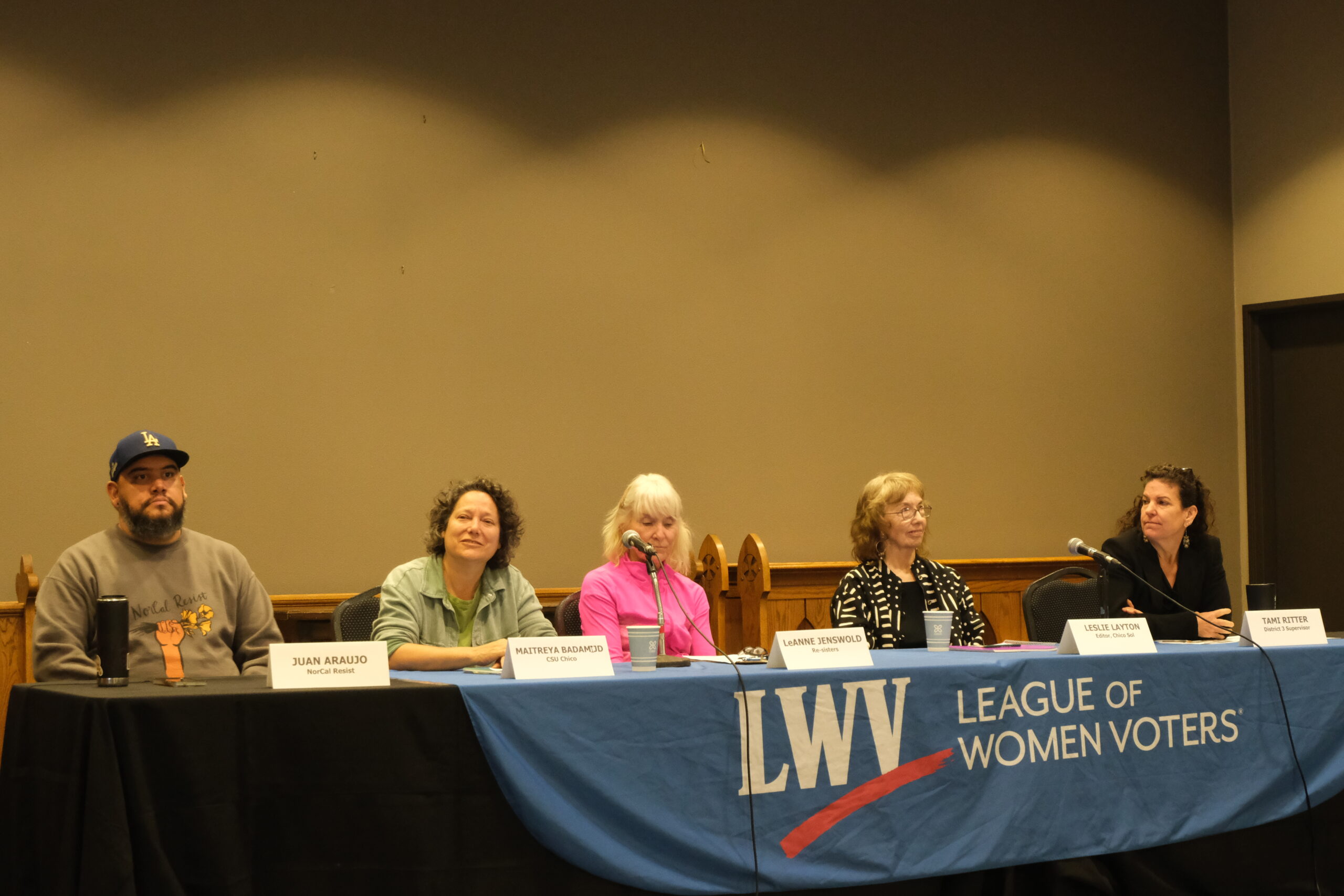
Maitreya Badami, an associate professor at Chico State, talked during an Oct. 25 panel presentation about the fear that is affecting student life on campus.
“There definitely is an atmosphere of fear among our Latino students, whether they are citizens or non-citizens,” said Badami, an associate professor in the political science and criminal justice department. “They’re not participating in activities that they would otherwise. I am talking to citizens and folks with green cards, lawful permanent residents, not to mention our DACA students who have this temporary protection that could be gone at any moment. They’re terrified.”
DACA status refers to people who have temporary protection under the Deferred Action for Childhood Arrivals program. Immigrants with legal status can become vulnerable in the crackdown underway because of past convictions, political activity or for other reasons.
Badami was one of five speakers at a panel discussion organized by the Butte County League of Women Voters at St. John’s Episcopal Church. The discussion centered around the impact of the immigration crackdown and massive deportation, the resources available for affected families, and support community members can provide to those in need of help.
In addition to Badami, the panel included Leslie Layton, ChicoSol’s managing editor; Tami Ritter, Butte County District 3 supervisor; Juan Araujo from NorCal Resist; and LeAnn Jenswold, founder of Re-Sisters.
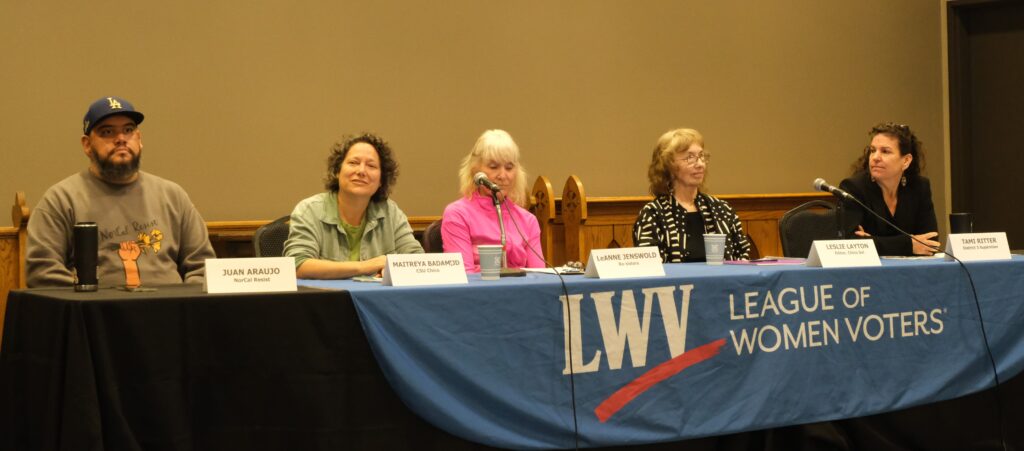
Some heart-wrenching stories were shared during the discussion. For example, Jenswold said a Hispanic green-card holder close to her lost their green card, but it will take a long time and cost hundreds of dollars to get a new one.
“This person has just gone away into the shadows,” she said. “They can’t get a job because they don’t have an ID and a green card.”
She added that that person was also worried that if officers from Immigration & Customs Enforcement (ICE) come, they could be detained. They were struggling to file the necessary application for a replacement card without the funds to do so.
“That just shows how some [immigrants] are living right now,” Badami responded.
Layton talked about a recent change that Butte County law enforcement made that will keep some immigrant inmates in jail instead of staying out with ankle monitors. That’s so that the inmates aren’t picked up by ICE before serving out their terms locally.
Speakers also shared some resources that are available in the local community.
Araujo mentioned that NorCal Resist has been in contact with the fiancé of a man who was taken at Butte County Superior Court in July and offered support in the form of rent.
“NorCal Resist is a resource for people,” Araujo said. “If the main breadwinner in the household has been taken, the families can call us and ask for assistance. We have assisted with rent, we’ve assisted with clothing, food, we are trying to help other families that have been impacted in the region as well.”
Badami mentioned that the Dream Center at Chico State has an emergency account where they’re making funds available to students who encounter these unexpected expenses associated with the loss of family members who are taken into custody. Layton noted that the Hispanic Resource Council has been giving out grocery gift cards to those in need and is accepting ongoing card donations.
Ritter said it’s important to make sure those systems of support are in place. “Because unless it is impacting someone else’s bottom line, there is not a lot of concern from those that are in power and in control,” Ritter added.
She said when Sheriff Kory Honea gave his report to the Board of Supervisors, the only question that was raised in relation to this was “how this could potentially negatively impact agriculture, so one of our board members wanted to make sure that there was some type of guest worker permit.”
At one point in the discussion, Badami explained the difference between immigration enforcement actions and criminal law enforcement actions.
“There’s a lot of confusion and misinformation about sort of asserting that all of this immigration enforcement is going after criminals. It is not,” Badami said.
“The vast majority of people that are ‘undocumented’ overstay a lawful admission. And even those that didn’t, their entry was either a civil violation or misdemeanor, which is a very minor criminal offense. And then they stay and they have not committed a criminal offense in the United States.
“These immigration enforcement actions are not criminal law enforcement actions,” she said, adding that the other side is “creating the story that these are criminal people. It is meant to create dissension and hatred among the people here and make citizens who are ill-informed afraid that the U.S. has been invaded.”