
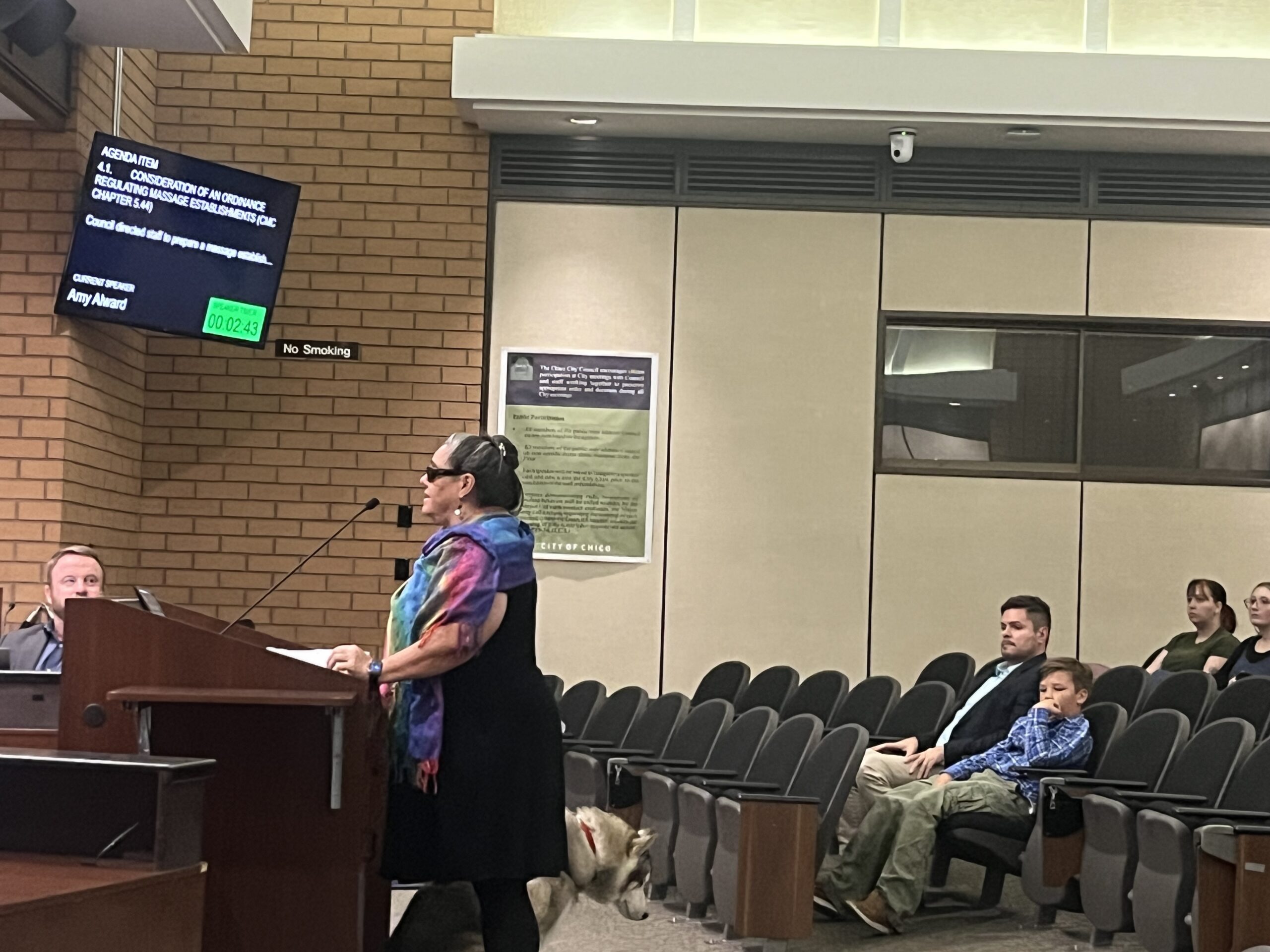
The Chico City Council unanimously approved Nov. 4 a new massage ordinance aimed at preventing human trafficking and illicit activity in local establishments. The ordinance establishes several operational standards for massage businesses and was developed after multiple rounds of community engagement.
Initially, the proposal required all massage practitioners to be certified by the California Massage Therapy Council (CAMTC).
After community feedback, the ordinance was revised to include several exemptions. Long-time practitioners can now receive a permanent exemption from CAMTC certification by providing proof of prior massage-related education and at least five years of work experience as massage therapists.
One of the main concerns that has been raised is that many immigrant massage therapists in Chico speak limited English, which could make it difficult for them to attend CAMTC-approved schools, said Dan Hays, a former city councilmember and massage parlor owner who employs several Chinese massage practitioners.
“To receive ‘Certification’ from CAMTC an applicant must complete schooling in an approved school. For persons who do not speak English, this is where the butterfly tangles in the web… especially for Asians, as there are no approved schools in northern California which teach in any Asian languages — the closest is in the Bay Area,” Hays wrote in a letter to the Asian American Advancing Justice Southern California.
That organization has sued CAMTC for denying Asian students massage therapy certification.
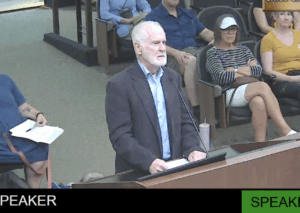
To compound that problem, Hays said, the school will not accept an application unless that person has a verifiable high school diploma or has passed a GED test—which in California, is only available in English and Spanish.
He said that CAMTC’s certification requirements force these therapists to quit their business or employment and attend English classes and an approved school for an undetermined length of time, with little or no time left to provide for their families—an “unjust hardship.”
But even with exemptions, not all parties are satisfied.
“It’s hard for a therapist who came from China and attended massage school there eight years ago to provide proof” and thus qualify for an exemption, Hays told ChicoSol.
Under the new ordinance, the immigrant therapists who work for eligible professionals but lack records of previous schooling still need to attend CAMTC-approved schools and obtain certification. However, the City extended the temporary exemption period to two years to give them more time to comply.
Councilmember Addison Winslow said he was glad to see the ordinance pass, noting that while many assume human trafficking doesn’t occur in Chico, “it actually happened.”
“I think that we have an obligation to work for a Chico that’s safe for [people who can be victimized] too — a country that’s to them as free as we purport ourselves to be. And I think this is a little thing that we can do,” Winslow said.
Councilmember Mike O’Brien called the measure a model for how the government should engage with residents when crafting policy.
“This was an example of how a good government should work,” O’Brien said. “So I want to applaud our staff for making those efforts, for making this happen, working through some of the details that were unintended.”
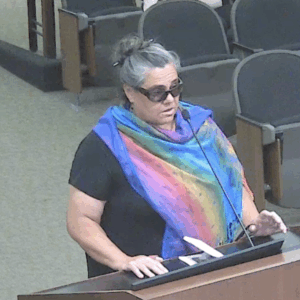
Amy Alward, a massage therapist, was the only speaker during the public comment session on this topic. She acknowledged the ordinance’s improvements but expressed doubts about its effectiveness.
“I don’t think any municipality has the ability to eradicate human trafficking, the human traffickers. The bad actors have far more resources than we have available in small municipalities,” Alward told ChicoSol after the meeting. “I think it’s admirable to make an ordinance. I don’t know if it’s going to have an impact.”
Hays believes that existing state and federal laws are sufficient to address human trafficking, and that the new ordinance “is a way to produce more governing power on people and add more money to the City’s revenue.”
Yucheng Tang is a California Local News fellow reporting for ChicoSol.