
On the first anniversary of the fire that destroyed the iconic Bidwell Mansion, we’re posting a poem written and contributed by local poet Danielle Alexich.
Sleep-drunk, we hear sirens from bed
and at dawn check our phones.
I stride the neighborhood avenue
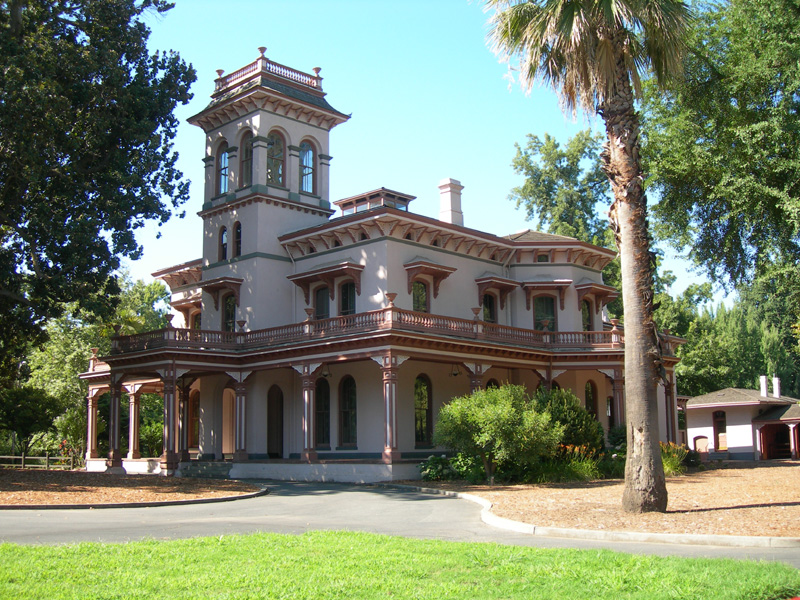
to find Bidwell Mansion,
Victorian landmark,
yesterday pink,
now charred and smoldering,
grieving itself,
collapsed into a Dalian dream.
Light seeps through majestic trees.

Locals line the sidewalk.
Girl Scout alumni who toured
ornate, eerie rooms
with a blind and brilliant docent.
Old-timers holding hands.
Unwitting parents whose kids
cut class to smoke weed on the veranda.
Amid the rubble, steps survive,
once slick from generations
of events, spontaneous picnics,
first kisses, erased footprints
of those who were conquered.
Before Bidwell betrayed the Mexican culture,
some called him Don Juan,
a title of respect.
While traveling on the steamboat Belle,
a boiler burst, broke his skull and stamped
a coin size pit above his eyebrow.
A man with a hole in his head
who would protect yet exploit
Indigenous people
along lush Chico Creek.
I step off the curb.
A sedan with open windows
flies down the Esplanade
and a woman shouts on repeat.
Great day for Native People!
They kept slaves in there!
A villa for Mechoopda pagans
and Annie’s plan to save them.
How tangled are the roots
of American memory,
bearing fruit
both rotten and ripe.
In one photo the mansion looks stately,
nostalgic, a tribute to our town.
In another, obscene.
So much depends
on where you angle the light.
Danielle Alexich has taught English at both Chico State and in public schools. She facilitates poetry and writing workshops in the community and for incarcerated youth, and has been published in small-press anthologies.
2 Comments
I really like this poem and its attempt to capture the complexity of that history. I can feel both the poet’s reflection and her sadness over the burned building.
So interesting how poems are interpreted.I feel like the consolatory tone is more about the events that led up to the incident of the burn. There is historical background and a light shed on significant details of how the mansion was revered and who has been invisible. I did not sense sadness in this poem on the part of the poet. Instead, I sensed an acquired distancing from the emotions and controversy that erupted from the burning of Bidwell mansion. She mentions that so much depends on how you angle the light at the end to indicate her perspective is not fixed, and she is not the one behind the camera, even though she tells the story.