
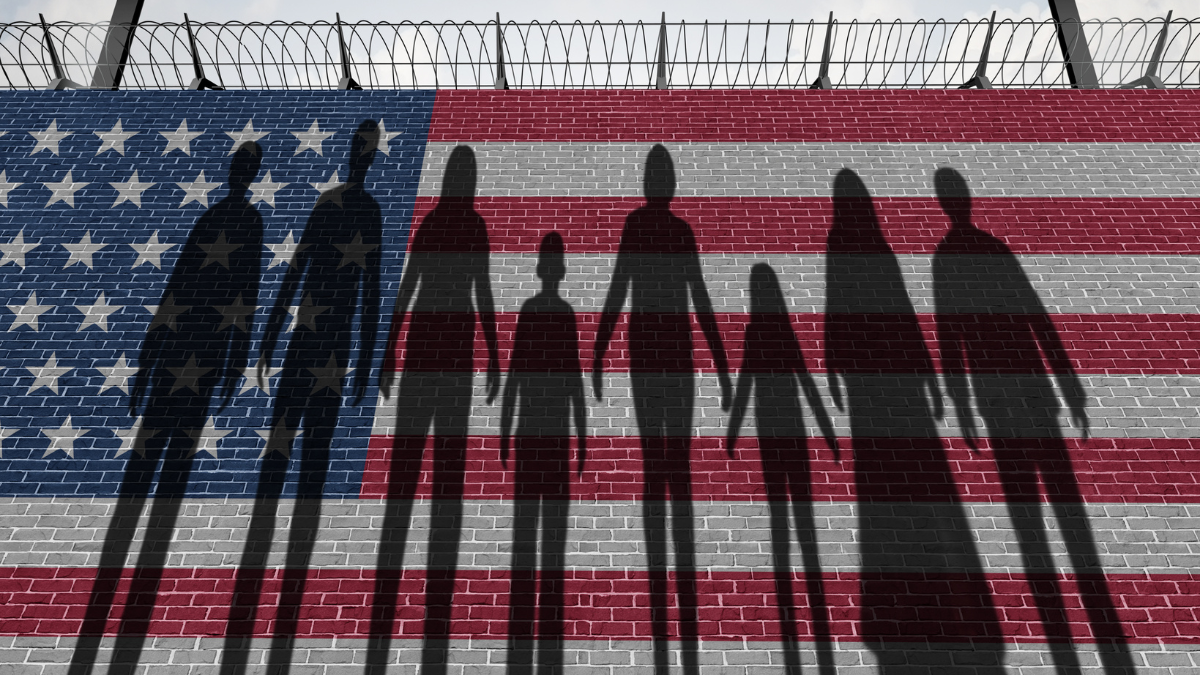
For students like Andrea who identify as Dreamers – young people who came to this country as children — the increasing pressure to self-deport has created an uncertain future. And like Andrea, hundreds of thousands of people now face uncertainty as the Trump administration takes steps that threaten their ability to remain in the country.
Andrea did not give her last name when she addressed a Dec. 5 panel convened by American Community Media (ACoM), but she said that she has lived in the United States since she was 5 years old.
“We’re being told by the administration to self-deport to a country we did not grow up in,” said Andrea, a resident of Maryland. “But I’ve lived here my whole life, and I want to contribute to this country. I’ve built my entire life here.”
Legal experts at the briefing pointed to the immediate dangers facing Dreamers and recipients of the Deferred Action for Childhood Arrivals (DACA) program. AcoM reports that more than 2 million immigrants could lose legal status because of “sweeping changes that could redefine who belongs in the United States.”
The administration has restricted visas for people from 19 countries and appears to be pursuing an unprecedented mass cancellation of status for people who otherwise relied on a lawful status to live and work in the U.S. – including current university students.
Andrea, a graduate student working on public policy degree, said her application for relief under DACA is on hold after a federal court ruling blocked the processing of new applications about four years ago. “We’re seeing a wave of undocumented individuals who have gone to college, are in college, are about to graduate – and they don’t know what to do, they can’t work,” she said.
Hiroshi Motomura, UCLA Center for Immigration Law and Policy co-director, said that this administration is unique in its efforts to “turn back the clock.” Motomura said the goal is to score political points and solidify support, while systematically stripping away the rights and citizenship of some people.
“I think what the administration has been doing in a much broader perspective is making some people feel they belong and some people feel they don’t belong,” Motomura said.
DACA participants are increasingly at risk of being detained and placed into deportation proceedings, immigration attorneys say. The program was built in 2012 by President Barack Obama to protect some Dreamers, but doesn’t provide a pathway to citizenship.
Venezuelans live with fear
The administration has aggressively pursued a repatriation program for people from countries such as Venezuela, which worries activists like Adelys Ferro of the Venezuelan American Caucus. She said that Venezuelans are fearful but determined, having spent years “doing everything they were told to do.”
“They register and apply for work permits,” Ferro said. “They pay taxes, they build businesses. Their kids are in our schools, churches and universities. Venezuelans are fleeing a dictatorship, as you know. And yet they’re treated as if they were a danger instead of people escaping danger.
“Our families feel they are being used as political bargaining chips.”
The courts weakened
Former immigration Judge Jeremiah Johnson said there’s a targeted effort to remove any judge who handles cases of people with legal or pending status. Johnson is vice president of the National Association of Immigration Judges and among at least 25 judges recently removed from the bench in San Francisco.
“If you remove judges, courts, you’re removing that process of review,” Johnson said. “You’re turning people that once had legal status to illegal status. When you see the judges removed, I think you see the administration trying to circumvent the law … and go forward with this program.”
“I don’t think it’s a stretch to see a future where San Francisco and larger immigration courts are dismantled completely,” Johnson said. “Then you have hundreds of thousands of undocumented people waiting for their status, and when they do come to court … that’s when ICE comes.
“Then they find themselves spending months in detention, and then they accept an order of removal because of the conditions they find themselves in.”
Bright spots on the horizon
On the brighter side, Motomura thinks citizenship law will survive.
Laura Flores-Perilla, a staff attorney at the Justice Action Center, said that she continues to challenge removal of asylum seekers and those with other avenues for relief. Unfortunately, many people attending hearings are at risk of seeing their case dismissed and being taken by ICE agents into expedited removal processes.
Such swift deportation processes are unlawful under due process in civil court, she said. However, she said that immigration attorneys are focusing on a few recent wins.
College leaders plan to serve all students
College officials in Butte County say that undocumented students eligible under Assembly Bill 540 and the California Dream Act will remain eligible for their programs and services.
AB 540 exempts certain students from paying non-resident tuition rates and may allow them to apply and receive state aid at certain California public and private colleges.
“We recognize that these sudden changes and the possibility of losing long-held temporary protections are deeply unsettling for our immigrant communities,” said Butte College spokesperson Christian Gutierrez in an email to ChicoSol. “Our commitment to these students has not changed, and we will continue to support them just as we always have.”
At Chico State, diversity officer Joseph Morales said that the university is committed to support all students “as federal immigration policies continue to evolve.”
“Our dedication to their safety, well-being, and ability to pursue an education has not changed,” Morales said. “Students from undocumented, DACA, international, and other immigration backgrounds are valued members of our community, and we will continue providing the resources, guidance, and care they need to thrive.”
At the briefing earlier this month, Andrea said their fears aren’t quelled by such promises, and fear isn’t new to young immigrant adults.
“We’ve lived in fear for years — the majority of my life if not all of my life,” she said. “Policies aren’t just paper – they shape every part of my day.”
Natalie Hanson is a contributing writer to ChicoSol. Leslie Layton contributed reporting to this story.