
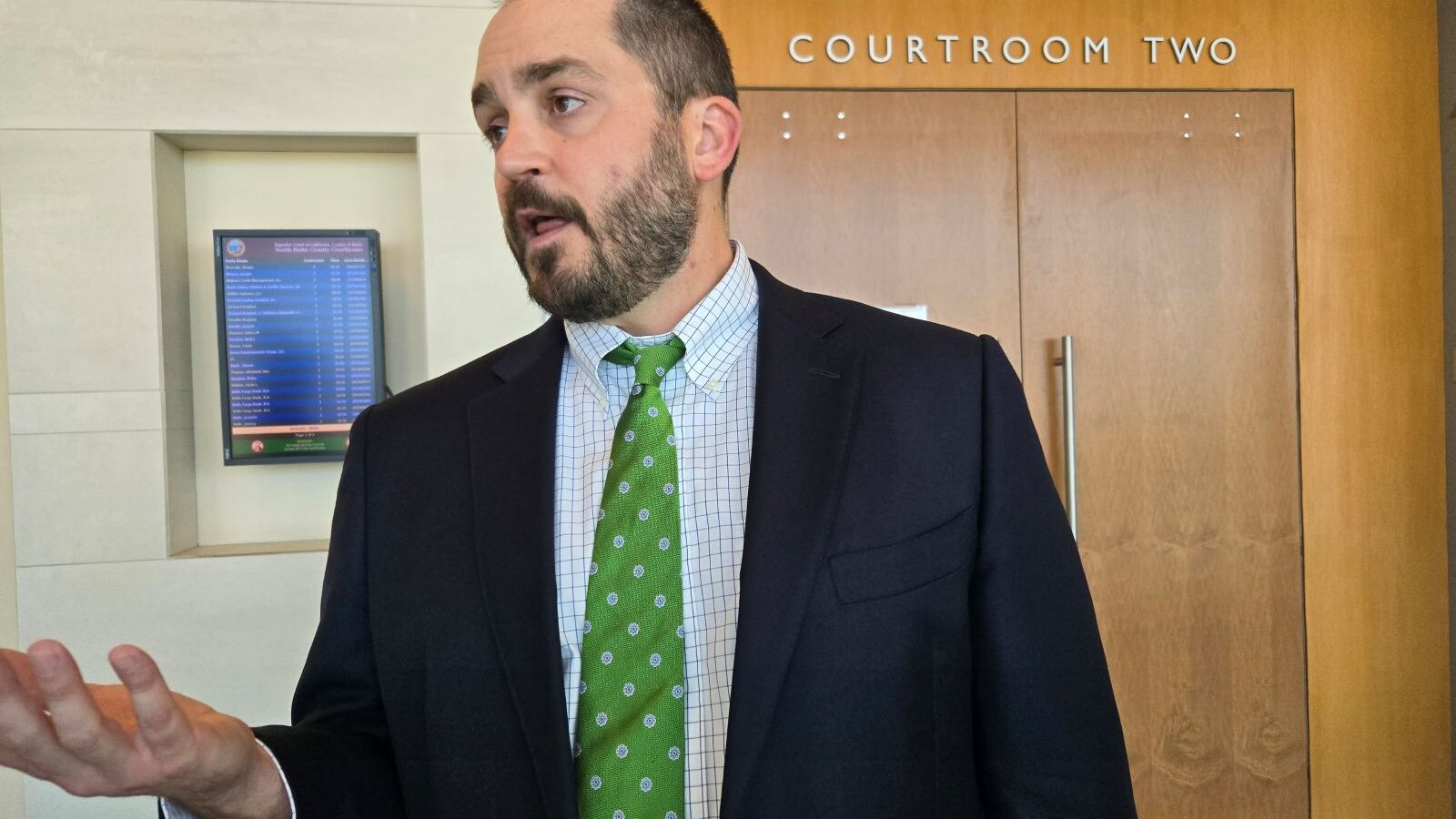
Butte County Superior Court Judge Stephen Benson has taken under consideration a request for revisions to his tentative ruling that generally favored law enforcement in a Public Records Act lawsuit.
ChicoSol contributor Dave Waddell, who filed a Dec. 22 complaint against Butte County District Attorney Mike Ramsey, Sheriff Kory Honea and the Chico Police Department for alleged non-compliance with the California Public Records Act, made the request in a May 13 hearing at Chico’s North Butte County Courthouse.
The judge’s tentative ruling was largely in favor of the defendants; for example, Benson denied a request to rule that Butte County’s law enforcement agencies have been in violation of the California Public Records Act by delaying for many months the release of records.
“…with respect to Petitioner’s request for declaratory relief … the Court declines granting the request at this time …,” states a May 13 court filing. “… the Court does not have evidence that this will likely recur at this stage.”
The so-called “declaratory relief” would have sent a message to Butte County law enforcement that it must release certain records, such as officer body-worn camera videos, on a timely basis in the future, said Matthew Cate, Waddell’s San Francisco attorney who specializes in public records cases.
In most use-of-force cases, agencies must release records within 45 days from the date of the request unless there is, in certain circumstances, a pending investigation.
The delays that Waddell has experienced suggest that other parties will also face difficulties in obtaining public records, Cate argues. Records recently released were provided well beyond the 45 days of his client’s requests, he said in a brief.
“I think that’s sufficient to show it’s likely to happen again in the future,” Cate said after the hearing. “Maybe [agencies] won’t comply with that 45-day deadline. The key to stopping that is for there to be a ruling that says, ‘This violates the law and you can’t do that,’” Cate told ChicoSol.
The lawsuit’s origins
Waddell’s complaint from last year was based on his difficulty in obtaining records in five cases; the oldest is a non-fatal shooting that took place in the West Sacramento Avenue Safeway parking lot in November 2022.
Waddell received the requested record – a single audio recording of an officer interview — “less than 24 hours before the [May 13] hearing,” he said, adding that the request had been submitted to the DA more than 200 days earlier.
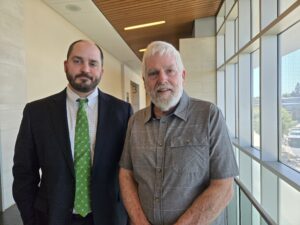
Waddell began making record requests in the five cases nine months ago. Some of the records have been released in recent months with redactions, and in most cases Waddell still doesn’t have all requested records.
Some records have been released for:
- The case of Michael Oxley, who was killed by a Chico Police Department SWAT team in March 2025. Waddell received some redacted video from the shooting last fall, but contends there were unlawful redactions. Chico PD has provided no other records, such as recorded officer interviews and Oxley’s autopsy report.
- The case of Valerie Cadwallader, who was killed by a Butte County sheriff’s deputy in May 2025. Some video was released in this case a week ago, but officer interview and autopsy reports, as well as other requested documents, are missing.
- The April 2024 case of Jason Sampson, who was shot by a deputy after he climbed into a Chico PD patrol SUV. The Sheriff’s Office released video records in March and written records this month. Waddell is challenging redactions to both.
In a court filing opposing Waddell’s complaint, attorneys for the City of Chico and Chico PD state that it’s necessary to withhold some documents in the Oxley case that would “substantially interfere” with an ongoing investigation, and “videos will be redacted consistent with Chico’s current practices to blur identifying markings of only witness officers …”.
Blurring the faces of officers, the attorneys contend, protects those officers from doxing and other problems.
“Chico has, at all times, complied with its statutory obligations relating to the public disclosure of video and documentary records…,” they write.
Cate contends that “redactions to conceal officer identities” in footage violates the Public Records Act.
Judge Benson’s tentative ruling suggests he was concerned that disclosures could interfere with investigations.
But Cate said the mere fact that there’s an ongoing investigation isn’t enough to justify withholding information.
“Agencies that are resisting disclosure have to show why disclosure of the records could be expected to interfere with a criminal enforcement proceeding,” Cate said. “We submit that the defendants haven’t done that here.”
Benson ruled in Waddell’s favor in the Sampson case: The judge said that blacked-out officer names in reports and blurred officer images in videos must be unredacted.
An invasion of privacy?
Benson ruled that records can be redacted to conceal the injuries an individual suffers during an encounter with law enforcement to protect that person’s privacy.
Cate challenges that, pointing to the case of Sampson.
“The fact remains that Sampson engaged in conduct – for which he has been convicted and sentenced – that prompted officers to chase him, try to arrest him, and ultimately shoot him when he climbed into an officer’s car with a gun.
“To suggest that Sampson retains a reasonable expectation of privacy in preventing disclosure of images of the extent and nature of the injuries he sustained is to ignore, entirely, the context in which those injuries occurred,” Cate wrote.
“I hope we get a good outcome here that helps inform the community of their rights” — Matthew Cate
The challenge to reporters
Chico State Professor Aaron Quinn teaches Investigative Reporting in the journalism department and attended the May 13 court hearing. (Quinn notes that he and Waddell were colleagues when Waddell taught at Chico State.)
Quinn believes the court should have granted the ruling that Waddell requested in relation to timely record releases, and says the denial of that declaratory relief creates a “profound burden on journalists who don’t have institutional legal representation or significant personal wealth.”
Quinn wrote in an email to ChicoSol: “It limits access to those documents only for those who can afford considerable legal costs … It’s a taxpayer-funded bully pulpit that the City of Chico seems happy to use.”
Attorney Cate told ChicoSol he “appreciates the court’s consideration” of the many complex issues before issuing a definitive ruling.
“I hope we get a good outcome here that helps inform the community of their rights to seek these records and informs the public officials and agencies of their obligations to disclose the records as the Legislature meant,” Cate said.
Leslie Layton is editor of ChicoSol and as well taught in the Chico State journalism department.
1 Comment
Thank you to Dave Waddell and the ChicoSol team for bringing this case to public attention. It appears that DA Ramsey, Sheriff Honea, and other publicly funded law enforcement officials are attempting to conceal serious misconduct by “peace officers.” The lack of transparency is deeply concerning.