

This two-part series analyzes three decades of Butte County’s opposition to marijuana and reviews the state of legal cannabis in Chico.
Part I
On June 30, 2010, Rick Tognoli was tending what he thought was a legal indoor medical-marijuana garden at his residence. Tognoli, who ran a collective called Scripts Only Service, spotted a Butte County sheriff’s patrol vehicle, followed ominously by four unmarked SUVs.
Deputies told him they had a warrant to look around. Among the evidence seized were Tognoli’s plants, cell phone, computer and banking records, the Chico News & Review reported.
Raided at about the same time that morning by a law enforcement task force were a total of eight storefront collectives in the Chico area, as well as 11 residences purportedly connected with those dispensaries. Authorities froze all three of Tognoli’s bank accounts — a personal account; a second for his business, Tognoli Trucking & Grading; and a third for Scripts Only Service — that together held about $35,000.
It was not until 26 months later — in September 2012 — that Butte County District Attorney Mike Ramsey finally acted, bringing 14 felony counts against Tognoli and his wife Donna related to the cultivation, sales and transport of marijuana.
Donna Tognoli said Ramsey spent a couple of years trying — and failing — to prove the Tognolis had laundered money. Finally, in February 2013 — 32 months after the raid — the 14 felony charges against the Tognolis were tossed out of court by a judge.
Rick Tognoli said the hold on his money crippled his trucking business, costing $750,000. The couple reported amassing $20,000 in legal expenses.
The raid and its aftermath were not an anomaly.
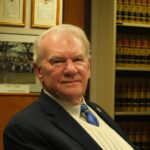
For nearly three decades, Ramsey created his own rules restricting marijuana, lost at three levels of court when those rules were challenged, and used multi-agency raids to destroy businesses he couldn’t convict. Along the way, he kept Chico 15 years behind comparable California cities in an industry that would eventually generate more than a million dollars a year in city revenue with zero reported public safety problems.
Tognoli said the charges were retaliatory because two weeks earlier he had called conservative county Supervisor Larry Wahl a liar at a Board of Supervisors meeting with Ramsey in attendance. Ramsey was there to tell the board a county marijuana-growing proposal was “unconstitutional.”
“I’m against medical marijuana dispensaries,” Ramsey told the News & Review shortly after charging the Tognolis. He claimed the only legal cooperatives were “hippie-type ones” that grew cannabis communally.
“Those too sick to grow for themselves must assign a personal caregiver such as a family member or licensed vocational nurse,” declared Ramsey, 16 years after Californians’ 1996 legalization of medical marijuana.
Max Del Real, a lobbyist for marijuana growers, attributed the delay in charging the Tognolis to law enforcement ineptitude and a lack of evidence. “If a case is really serious, you usually get quick action from the DA. The Butte County busts ignored state law and made them seem like the Wild West,” Del Real told the News & Review.
The massive operation that ensnared the Tognolis was led by the Butte County Sheriff’s Office, according to the News & Review. It involved more than 100 officers from seven counties, three cities, the town of Paradise, Chico State, the Butte Interagency Narcotics Task Force, the state Department of Justice, and other agencies. Between the raid and the investigation leading up to it, Butte’s Sheriff’s Office invested hundreds of hours of staff time costing more than $9,000. The Chico Police Department had 14 officers working the case at a cost to taxpayers of $4,300.
After the expenditure of those and other public funds by the dozens of law enforcement agencies involved, how many convictions was Ramsey able to obtain? The answer is zero. Besides the Tognolis, only one other raided dispensary, Mountainside Patients Collective, was even charged, and those counts were dropped because the owner was seriously ill.
“I’m against medical marijuana dispensaries” — Mike Ramsey, Chico News & Review, 2010
The 2010 raids also harmed people who were not the stated targets. One Chico couple, Dylan and Hilary Tellesen, had their home raided, even though they had no connection to any of the marijuana dispensaries. According to an account in the News & Review, “The day of the raid police seized four computers, cell phones, documents, even a New Yorker magazine featuring a story about pot on the cover … When [Hilary] got to San Francisco with her kids the following weekend, with $30 in cash and half a tank of gas, she quickly learned their bank accounts had been frozen. ‘It was extremely embarrassing,’ she said.”
The bank accounts were shortly unfrozen, but it took two months for the couple to get their cell phones back and even longer before their computers were returned. “My son now thinks police take things from your house,” Dylan said. “If I wasn’t connected, why didn’t I get any of my stuff back to begin with? They took our livelihoods — we live on our computers.” Ramsey, the CN&R reported, refused to admit that the raid on the Tellesens’ home had been a mistake.
The bust that made collateral damage of the Tellesens — and the years of legal limbo that followed — was the result of Ramsey’s effort to keep marijuana out of Butte County, an effort that put him at odds with voters, courts, and the state attorney general.
Ramsey vs. Prop. 215
Thirty years ago, Californians voted to approve the use of marijuana for medical use with the passage of Proposition 215, the “Compassionate Use Act of 1996.” Not long after, Butte County gained a reputation in Bay Area news stories as the site of “one of California’s more vociferous battles over marijuana” because of a “zealous anti-marijuana” bias in law enforcement. Following the passage of Prop. 215, the first medical marijuana supplier in the state to be prosecuted in federal court was arrested in Butte County.
Ramsey was against Prop. 215, calling it a “Trojan horse” aimed at “the wholesale legalization of marijuana.” He viewed pot as “alternative medicine,” scoffing at doctors who approved cannabis for “something as simple as depression or backache.” He encouraged cops to make on-the-spot decisions about whether a grower held a valid medical certificate. When in doubt, Ramsey advised, confiscate the plants “and then fight it out in court,” the Enterprise-Record reported.
Ramsey’s position was that Prop. 215 did not actually make medical marijuana legal in California. Rather, it merely provided an “affirmative defense” in criminal court for those who ran afoul of law enforcement. He equated it with “self-defense for murder.” Ramsey argued that buying and selling marijuana remained illegal under any circumstance. For its possession to be legal under Prop. 215, Ramsey contended, the pot would have to be grown by the patient or by the patient’s primary caregiver, he told the Enterprise-Record. Contributing financially to a collective in exchange for marijuana was not allowed under Prop. 215, according to Ramsey’s representation of the measure.
Defense attorney Dale Rasmussen countered that “many ill people don’t have the garden space, skills or even the strength to cultivate … or have care givers who are able or willing to do it for them.”
“Ramsey’s Rules” put to the test
Ramsey posted rules on his office website, basically permitting the growing of six mature plants per patient. In 2005, Butte sheriff’s deputies made a warrantless search of a grow site near Oroville that totaled 41 marijuana plants. David Williams, who was in his fifties, was growing the plants as part of a “co-op” along with his wife and five others who held doctors’ medical recommendations under Prop. 215. Together, their seven scripts provided waivers for as many as 42 plants.
As directed by Ramsey and then-Sheriff Jerry Smith, deputy Jake Hancock acted forcefully. Hancock, who would soon become an investigator for Ramsey’s office, told Williams that all but 12 plants — six each for him and his wife — needed to be uprooted. Otherwise, Williams would be arrested and face criminal prosecution for growing more than Ramsey allowed.
Williams, as ordered, destroyed 29 plants but later sued Butte County for civil damages. He was represented by San Francisco attorney Joseph Elford of Americans for Safe Access. Elford said ASA became involved “after receiving repeated reports of unlawful behavior by Butte County law enforcement.” The lawsuit argued that Ramsey — in insisting that medical marijuana patients or their primary caregivers actively participate in the cultivation process — had violated Prop. 215 by creating “a de facto ban on medical marijuana patient collectives,” according to Americans for Safe Access.
Gordy Dise, described as a “legal strategy consultant” in news stories, predicted Williams would win his suit and said it was “ludicrous” to be battling in court over a law that at the time was 11 years old. Dise equated Williams’ treatment with barging into people’s homes 11 years after the end of prohibition looking for alcohol, the Enterprise-Record reported.
Three courts, three losses
Butte County Superior Court Judge Barbara Roberts was tasked with deciding whether Williams could sue the county. Roberts sided with Williams, ruling that very sick patients cultivating collectively “should not be required to risk criminal penalties and the stress and expense of a criminal trial in order to assert their rights,” according to a published account of the ruling.
Ramsey long complained about the vagueness of Prop. 215. He called for the state to provide “some clear guidance to get law enforcement out of the middle of this controversy.” In August 2008, then California Attorney General Jerry Brown did so, issuing guidelines for medical marijuana. The rules allowed cooperatives and collectives to sell marijuana to their members, something Ramsey had argued was not permitted by Prop. 215, the News & Review reported.
Despite the direct rebuke of Ramsey’s Rules by the state AG, the County of Butte sued its own Superior Court to try to overturn Judge Roberts’ judgment, appealing to California’s 3rd District Court of Appeals. A three-judge court panel voted 2-1 to uphold Roberts’ ruling. After the state Supreme Court declined to hear an appeal, the ASA’s Elford called the victory historic because it affirmed the fundamental constitutional right under Prop. 215 of medical marijuana patients to cultivate pot collectively.
Brad Stephens, who represented Butte County in the Williams case, argued that Ramsey had merely tried to “clarify some confusion” and that the DA’s directives were not county policy because they had not been adopted by the Board of Supervisors, the Enterprise-Record reported. However, it was Ramsey’s directive that patients must grow their own marijuana that was the basis of forcing Williams to destroy 29 plants.
Rick Tognoli described the district attorney’s reaction to Williams’ court victory to the News & Review: “When I told Ramsey about this ruling he looked me in the eye and said, ‘Judge Roberts is a poor judge.’”
Dave Waddell is a freelance journalist. Part II of this series will come soon.
5 Comments
Thank you for covering this story.
Great article. Thank you for bringing the truth to light.
Dave Waddell deserves a Pulitzer Prize, along with ChicoSol. I trust that Ramsey will eventually get what he deserves.
Is DA Ramsey afraid gummies will cause a crime wave in Butte County? He has once again proven he is out of touch with reality. He seems to want the world to act as he sees fit from his bully pulpit as the DA, making him the king of a small rural county. His comments about the homeless, people of color, the mentally ill, legal marijuana, and civil rights are seriously out of date and troubling.
“Was the father there for the delivery?” The Honorable Judge Barbara Roberts.