
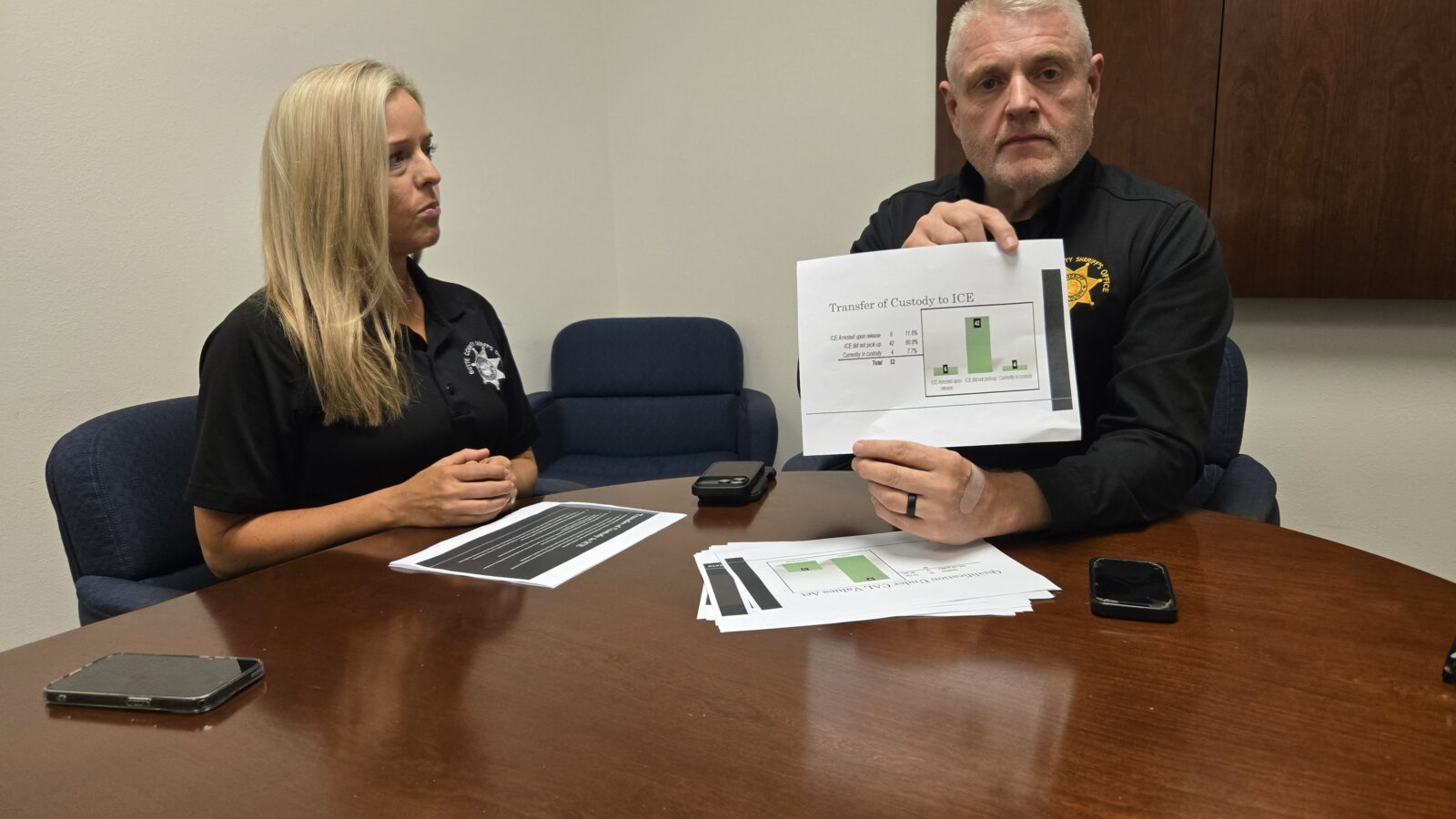
The Butte County Sheriff’s Office (BCSO) coordinated the transfer of seven individuals from the county jail to Immigration and Customs Enforcement (ICE) from Jan. 1 to Sept. 24, according to data released to ChicoSol.
These individuals are among 25 inmates who were sought by ICE through the county jail through August of this year, according to BCSO. The reasons for ICE’s interest in these inmates, as well as their status now, are unclear.
The figures released by BCSO for the first part of 2026 already show an increase this year over last year in jail-related ICE detentions. In 2025, federal authorities took custody of six individuals upon their release from the jail. These early numbers continue a trend of heightened immigration enforcement in Butte County under the second Trump administration.
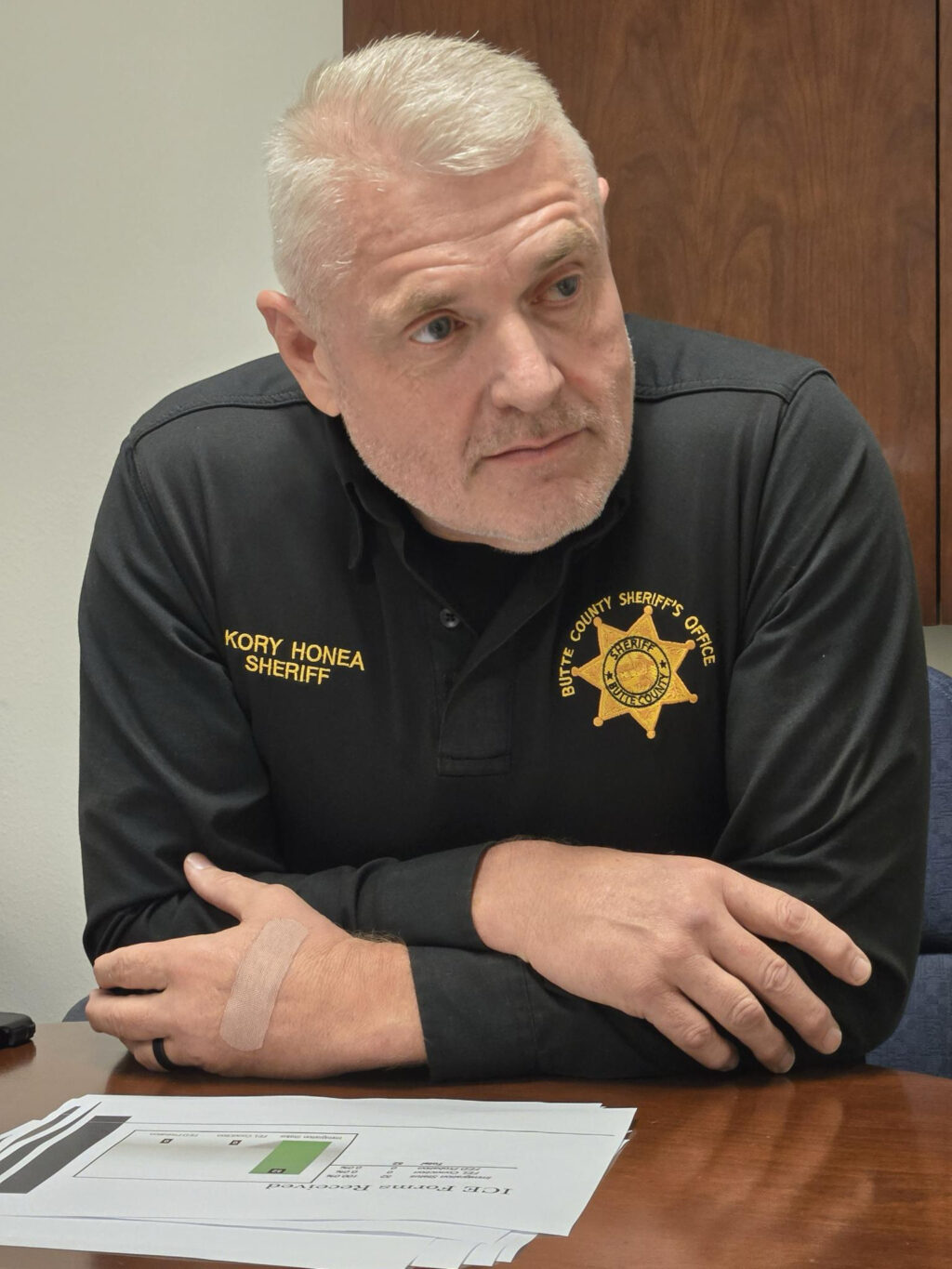
“There’s definitely a difference in terms of the focus from one administration to another, no doubt about that,” Butte County Sheriff Kory Honea told ChicoSol. “I don’t recall this being as dramatic in the first Trump administration.”
Federal immigration authorities can seek individuals in custody in two ways: they can ask to be notified of an individual’s release or they can ask the local authorities to extend the detention of an individual in custody for up to 48 hours past scheduled release time. These requests are called ICE detainers.
But under California law SB 54, the Values Act, California law enforcement is barred from sharing data to assist with federal immigration enforcement in most cases. Exceptions exist for repeat offenders, cases with judicial warrants, and offenses considered violent and serious under state law, according to the ACLU of Northern California.
That means that once a detainer request is received, BCSO must determine if a release notification for the targeted individual can be provided under SB 54 exceptions.
In 2025, ICE sent BCSO 52 detainer requests, up from 13 the previous year — constituting a 300 percent increase. This growth in federal immigration interest in the county mirrors national trends in increased immigration enforcement.
The six individuals detained in 2025 were facing serious charges or in some cases had been convicted of felonies.
Coordination with ICE does not require a conviction or warrant, Honea said. For certain crimes, a judicial opinion that a conviction is likely is enough to permit ICE contact, the sheriff said.
“(For) people who have been convicted of certain violent or serious crimes, under those circumstances, California law would allow law enforcement agencies to provide information to ICE,” Honea said.
While preliminary figures for 2026 show the number of detainer requests below those received in 2025, this year has already surpassed the number received any year under the Biden administration.
“The numbers were relatively steady for a number of years,” Honea said. “Then they increased.”
Nationwide, ICE detainer requests to American jails have grown by over 180 percent since 2023, recent research from the Deportation Data Project, a research group out of UC Berkeley and UCLA, has found.
The rise of ICE interest in Butte County jail “seems to be in line with national trends reflecting increased enforcement,” said Phil Neff, a data analyst for the Deportation Data Project.
Detainer requests are just one avenue for the ramped-up immigration enforcement. Following the transition from Biden to Trump administrations, ICE arrests tripled nationwide from 200 a day to roughly 600 a day, according to the Immigration Research Initiative.
Honea believes that SB 54 jeopardizes public safety. To Honea, SB 54 has curtailed local law enforcement’s role as a liaison between federal forces and local communities.
Honea sees releasing individuals sought by immigration authorities sends ICE out onto the streets, where they introduce risks to citizens and law-abiding immigrants alike.
“Do we like the idea of federal law enforcement officers going out into our communities and arresting people who were previously in jail?” Honea said. “We’re seeing the real problem associated with ICE agents and border patrol agents hunting in the community.”
Honea is relieved that street-level ICE deployments have largely bypassed Butte County.
“We have not had the kinds of negative interactions that you’ve seen play out on TV,” Honea said. “I’m thankful for that. I don’t want that on our streets. I don’t want to do that.”
Last year, the Federal Bureau of Investigation (FBI) participated in immigration enforcement in Butte County, a trend reflected nationwide. This use of FBI resources concerns Honea.
“Historically, the FBI didn’t involve themselves with immigration enforcement. They were busy fighting the war on terror and investigating bank robberies and doing those kinds of things, right?” Honea said. “Under this administration, priorities have been shifted.”
Honea says he’s worried about law enforcement resources being stretched too thin. “I hope that other kinds of federal crimes aren’t going uninvestigated or not being addressed properly because we have diverted the attention of FBI agents away from them.”
In January, California Senator Alex Padilla voiced similar concerns. “(A)n agent arresting non-violent immigrants necessarily means one less agent available to catch child predators and drug traffickers,” said the senator in a joint press release with 30 other U.S. senators.
Honea sees the wider, unresolved debate over immigration as the heart of the problem.
“This is a symptom of the problem,” the sheriff said. “The problem that needs to be addressed is the fact that the U.S. government under both [parties] for decades and decades and decades have failed to develop an immigration policy that allows for people who want to come to this country, who are going to be good, law abiding, productive citizens.”
Elias S. Myers is a contributor to ChicoSol.
This story was produced in collaboration and with support from American Community Media’s Aqui Estamos/Here we Stand reporting project.
4 Comments
I am grateful that Sheriff Honea expresses the need for an immigration policy “that allows for people who want to come to this country, we are going to be good, productive law abiding, productive citizens.” a failing of both Democratic and Republican regime. Especially as opposed to the anti-immigrant culture that is sweeping our nation and reflected in many law enforcement folks’ attitudes.
ChicoSol, please edit above: “who” are going to be good, productive….
Thank you, and thank you for this article
Most of the people being detained/arrested by ICE now are not criminals. Many are here on work permits with pending cases. Sheriff Honea makes some very good points — we have not had a sensible immigration system for many years. We have relied on undocumented workers as a major part of our economy, but kept them in this vulnerable position, and now chaos has ensued for hundreds of thousands of people. This will also have a disastrous effect on our social security system, since undocumented people normally pay into the system for decades through their employment, but never collect. Now we will need to figure out how to replace that huge funding stream into the system (which of course was never fair to the undocumented workers anyway).
Excellent interview and good to see so many reasonable points. Leslie made my point: we need to figure out how to NOT disrupt the lives of so many people following the rules of this creaky and slow and underfunded system so their lives are not derailed. How can the focus just be on real criminals, and not innocent people trying to live with a broken system?