
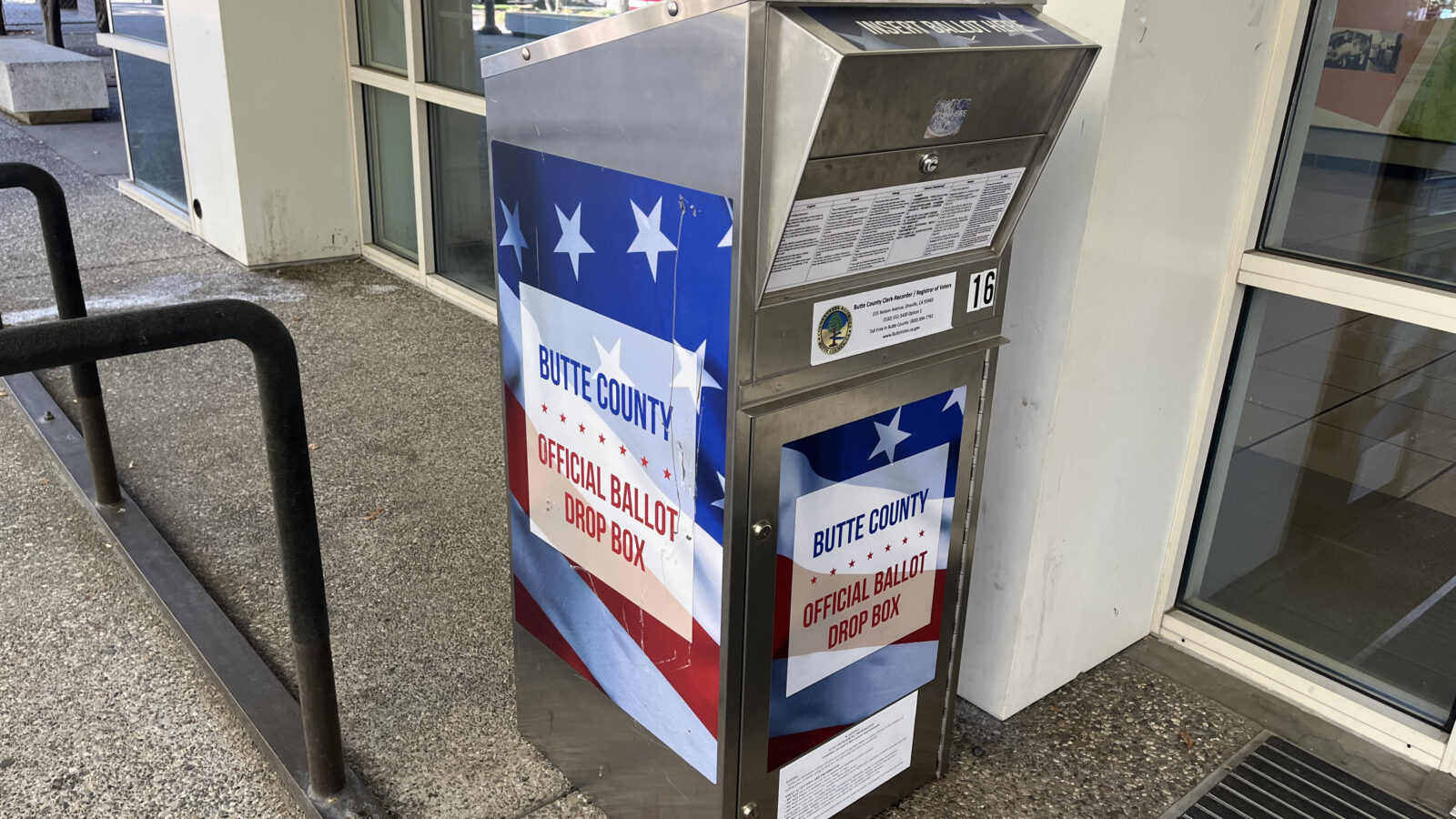
From how city dollars are spent to its municipal code, Chico’s City Council is the main legislative body that deliberates and votes on the direction of Chico.
Key issues like homelessness, housing, downtown and city funds are top of mind for candidates and voters alike. ChicoSol asked each candidate to choose a location they felt represented who they are as they shared their vision for Chico.
District 2
Shelby Hebert at Lindo Channel
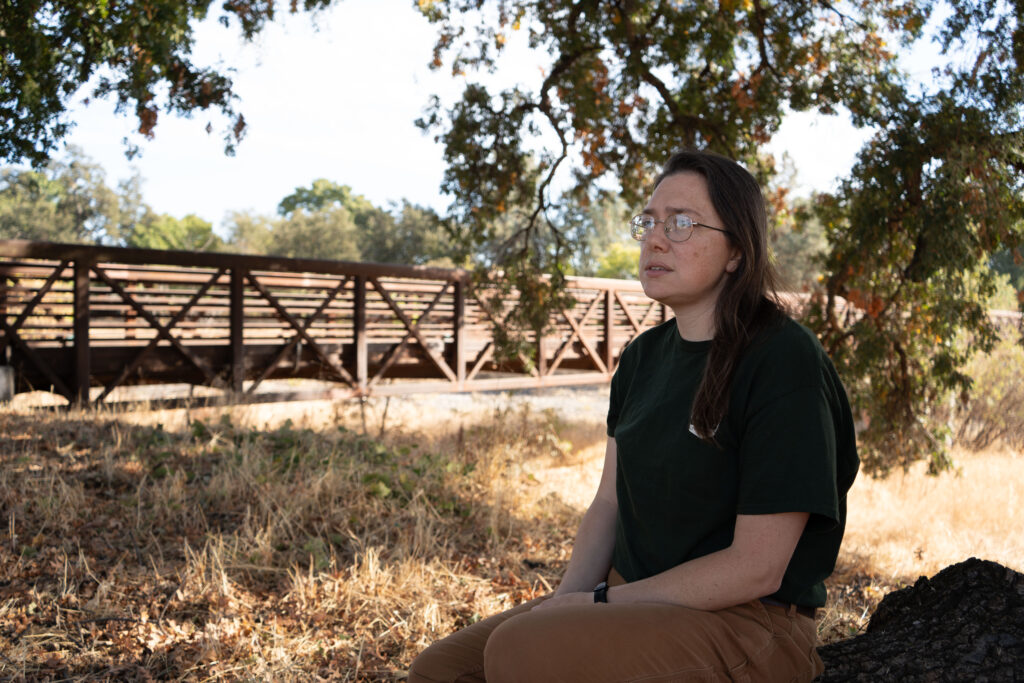
The first couple times that some of Shelby Hebert’s mentors and peers asked her to run for the District 2 City Council seat, she said no. But she took their suggestions to heart and started paying close attention to meetings, taking notes and asking questions until she was confident that it was a good idea to run for the position.
Hebert, who is a fire resilience project coordinator and also worked as an AmeriCorps fellow, said that it was also exciting to her to see the work that the three councilmembers younger than her — Addison Winslow, Bryce Goldstein and Katie Hawley — have done so far.
Hebert sat in the shade of a large tree in a District 2 portion of Lindo Channel, a site that she chose because it meanders through a few districts and offers a shared outdoor space. Hebert, who biked to the interview, explained that this sort of community green space is what she loves about Chico.
Homelessness: Hebert said she would like to see more partnerships between public and private organizations to create housing solutions. Hebert would also like mental health initiatives integrated into addressing homelessness, which she emphasized would happen on the county level. She believes that there is not a one-size-fits-all approach to homelessness, that it’s a multifaceted issue.
Hebert said she is troubled by people camping at and leaving litter along creeks and on bike paths, but has concerns about the city’s possible approach after the Warren Settlement expires.
License plate reading cameras: Hebert also said that residents in District 2 have expressed concern about automated license plate reader (ALPR) cameras and surveillance.
“There was someone in our own town here picked up by ICE recently, and it was reported that they were targeted using vehicle license plate data,” she said. “So folks have some concerns that that kind of sharing, which is unlawful, is causing harm in our community.”
Hebert would like to see more parameters on data sharing, if not a complete stop to it.
Kasey Reynolds at the Municipal Services Center
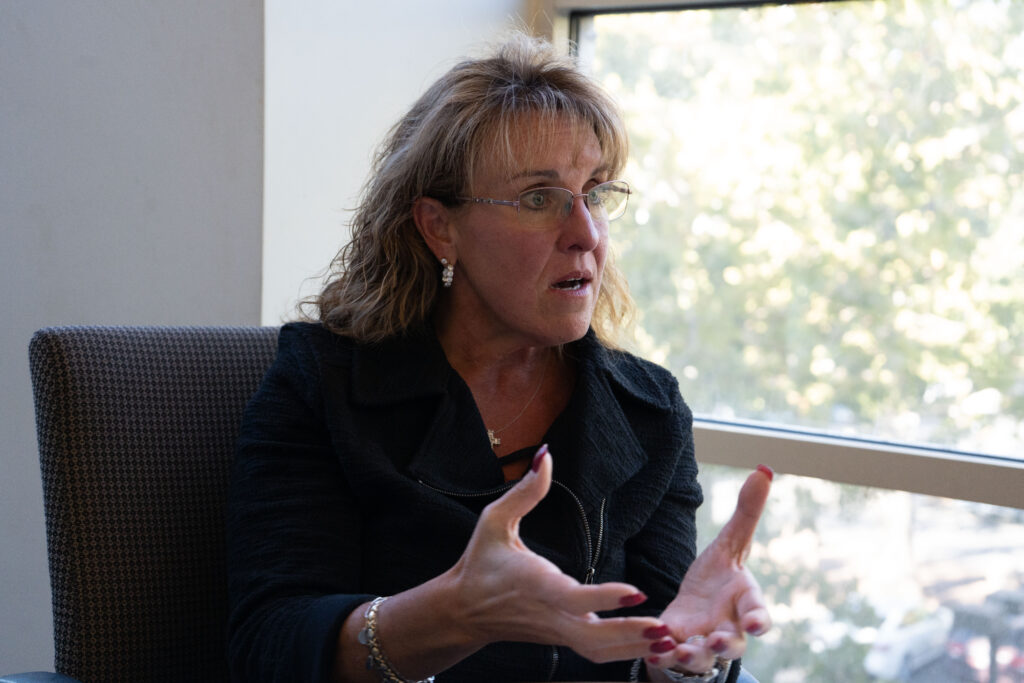
On the way to the Municipal building’s third floor, Mayor Kasey Reynolds greeted city staff she has worked with for nearly eight years.
Reynolds has been Chico mayor for two years. She also is a long-time co-owner of Shubert’s Ice Cream and Candy, a downtown staple.
Homelessness: If she wins reelection in District 2, she has her sights set on a smooth transition out of the Warren Settlement. But what that transition entails, she says, needs to be a collaborative discussion.
“If we can get 90% of the community all agreeing that this is what’s going to work best for the citizens and the community members and the unhoused to get them the best that they can possibly have, I think that would be a huge success,” she said.
Reynolds said she’s supportive of a managed campground — as long as it’s not managed by the city, because she’s concerned about the city being held liable.
Downtown: Reynolds also said the vision for downtown needs to be a collaborative effort among stakeholders.
She said that downtown business owners tell her the biggest issue preventing people from going downtown is the unhoused population.
“It’s littered with garbage everywhere and people’s personal belongings,” she said. “That’s not welcoming to a downtown business environment. Or to bringing people down or enticing people to come down and shop in a downtown business environment.”
Reynolds wants to rely on Chico’s 2030 General Plan to guide development and housing. She said more types of housing are needed, from affordable housing to homes that would compel doctors and other professionals to move to Chico.
“Otherwise, we have what we have right now — which is, the exact same house that you can get here in Chico is about $100,000 more than in Redding,” she said.
District 4
Tracy Vincent at the Bidwell Mansion burn site
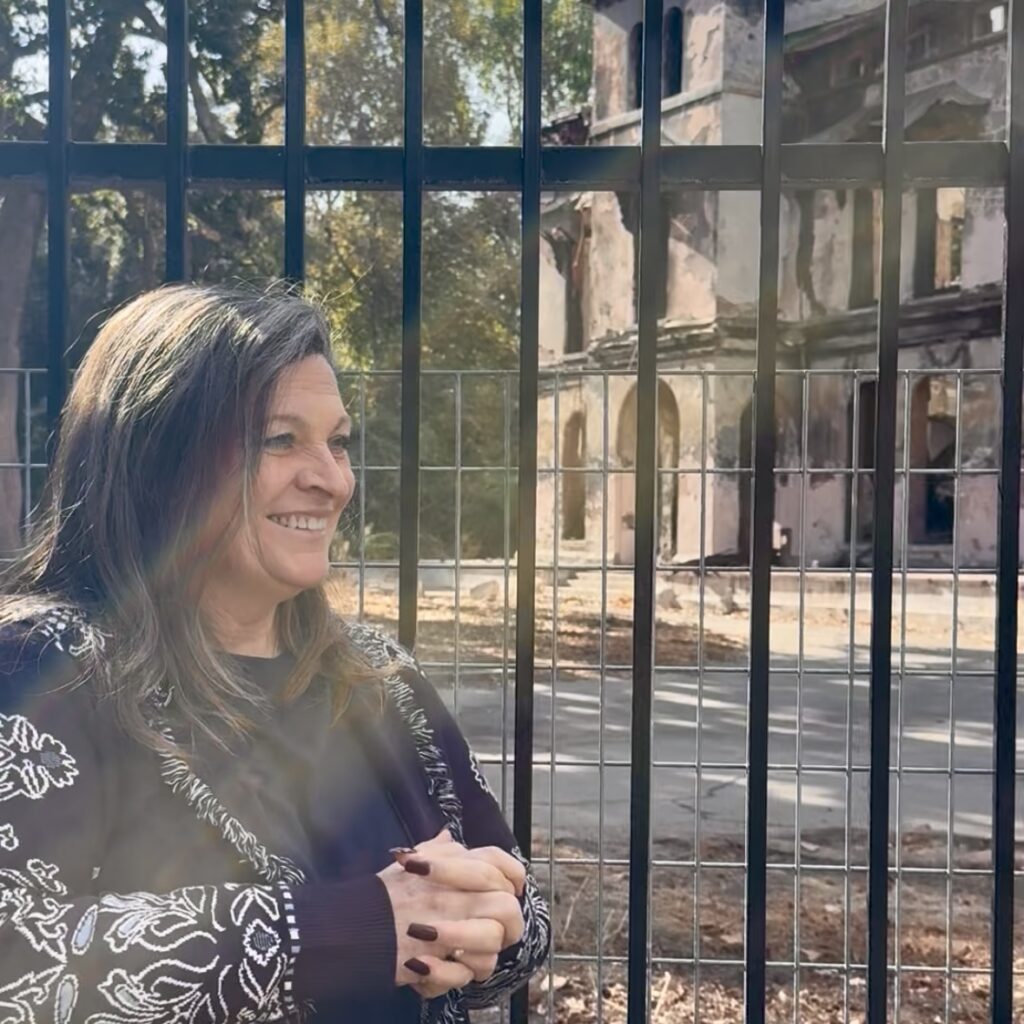
Tracy Vincent, who is challenging incumbent Councilmember Addison Winslow, met ChicoSol in front of the charred remains of Bidwell Mansion, beneath a persimmon tree bearing fruit. The original building, she said, was in some ways the face of Chico.
Now, post fire, it offers an opportunity to be more inclusive in representing Chico’s history by including the Mechoopda Tribe.
Vincent, a Navy veteran with a nursing background, said that her experience and lack of party preference make her well-suited to act in the best interest of Chico’s community, with its range of political perspectives. Vincent also chose the location to plug the Reimagine Bidwell Mansion State Historic Park Open House on Oct. 25.
Homelessness: Vincent would like to see a combination of compassion and anti-camping enforcement in relation to Chico’s unhoused population.
“You can’t just have a free pass to live in a park or in a waterway or any other situation that’s not appropriate for sleeping and keeping trash,” Vincent said. “That is a public health and safety issue. So we do need to address having our homeless just out and about camping.”
Vincent said that with winter coming, the city needs to take action to get people housed immediately. “I think we might be in for a rough one, and I’d rather see people getting housed now and getting them into the shelters now,” she said.
Vincent also proposed community service as an alternative to fines. “I think we should be offering community service, because that will allow them to also be closer to the system and the things that they need,” she said.
She emphasized that there is not a single solution that will work for “everyone.”
Downtown: Vincent equates its issues with larger economic challenges. Vincent often compiles and posts job postings on her social media, and said, “We need to be aggressively pursuing jobs.”
She also suggested that the city organize an almond blossom festival in February, as a way to capitalize on agricultural business and tourism and celebrate Chico.
“We need to have a destination for people to come visit, stay for the weekend, maybe have a big bike ride through the orchards, have people staying in hotels, eating in our restaurants,” Vincent said.
Addison Winslow on the roof
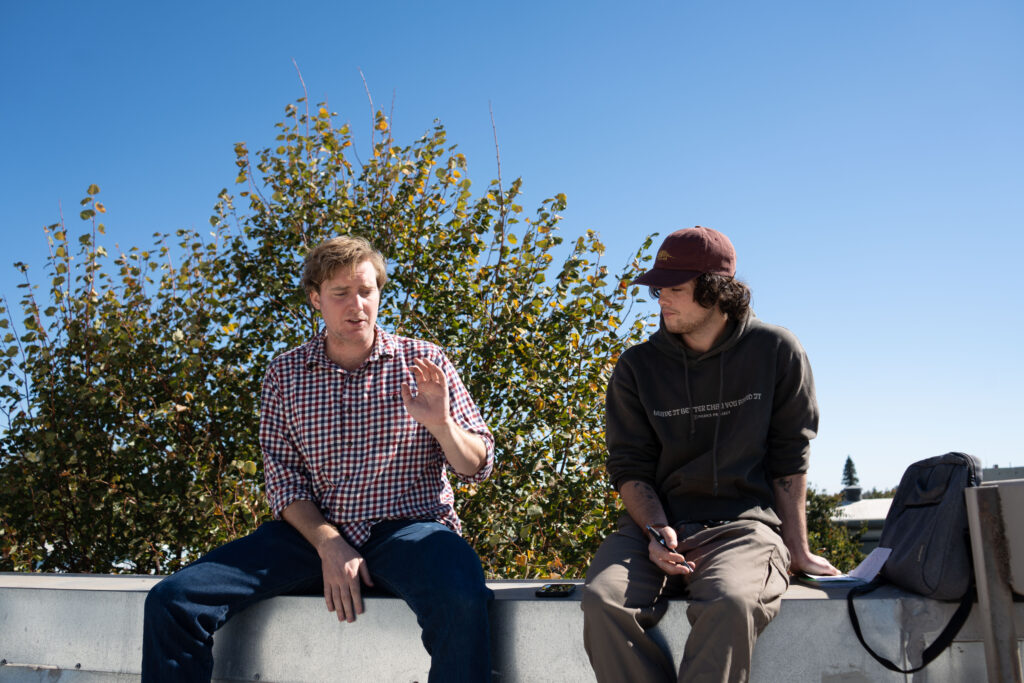
Addison Winslow sat atop the downtown building where he rents an office, looking out over the economic center of his hometown.
Winslow has been on City Council for four years, and since then has worked to inform the community of the Council’s work via social media. He was the sole progressive councilmember until he was joined in 2024 by Hawley and Goldstein.
Downtown: Winslow envisions a downtown that is more walkable and bikeable, and with housing built on top of or in between businesses. “So all these things work to just make downtown a more comfortable place for people to hang out,” he said.
He also advocates for a tax on building owners who leave spaces vacant.
“It just drags us down a lot that we have a sort of concentration of ownership, and a very lazy and self-centered property-owning class,” Winslow said, referring to those building owners. “And the city’s been unwilling to do anything against them.”
Homelessness: Winslow said that the city has anti-camping ordinances that need to be enforced, but there has to be options other than “shipping people to jail.”
He said he believes that camping in greenways should be stopped, but that more outreach needs to be underway. Winslow believes there should be a managed campground.
Winslow also said more affordable housing needs to be developed, and protections for renters should be strengthened. He noted that Chico renters are considered heavily burdened because so much of their income, on average, goes to rent.
Housing: “If you’re building in the city of Chico, you come to an agreement with our city to meet the needs that our city has,” he said regarding his views on new development.
Winslow said he spends a great deal of time researching, asking questions and looking through staff reports.
“We don’t have to be experts on things as City Council members, but we do need to be able to process the expert information and opinions,” he said.
District 6
Megan Thomas Petty at the disc golf course
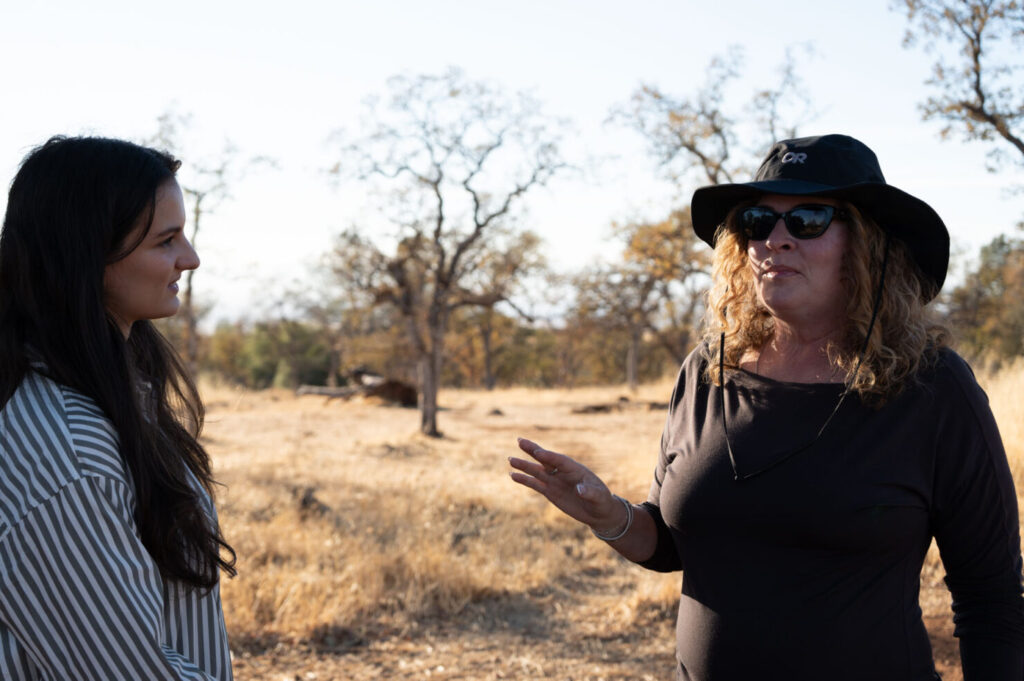
Since coming to Chico from Missouri, Megan Thomas Petty has worked as an attorney and city commissioner, and now she’s challenging Councilmember Tom van Overbeek for his District 6 seat. Thomas Petty said she decided to run because it felt like the natural progression of her community involvement in Chico, and she isn’t satisfied with her representation.
Thomas Petty chose to meet ChicoSol at the disc golf course at Peregrine Point, which she wrote a referendum in favor of saving in 2008. Thomas Petty explained that she drafted the referendum early in her law career, and the document garnered thousands of signatures and helped the spot become a reality. The course, which is a sharp turn off Highway 32, has sweeping views of Upper Bidwell Park.
Thomas Petty sees the creation of the disc golf course as an example of local government responding to community interests.
Homelessness: Thomas Petty is paying attention to the upcoming end of the Warren Settlement. “I don’t want us to set ourselves up for another lawsuit as a city, right? And plus, you can’t move people if they don’t want to be moved.”
Thomas Petty said she would support establishing a monitored, overnight parking lot for those sleeping in their vehicles, encourage collaboration with churches and other organizations to create tiny homes, open managed, rotating campground sites and lower the barriers to entry for the Genesis pallet shelter housing.
Downtown: Thomas Petty said she would like to revitalize downtown by increasing interaction between City Council and owners of vacant downtown properties. “We want to work with property owners and say, you know, what can we do to get this occupied?” she said.
Housing: Thomas Petty would like to develop housing options while maintaining the city’s unique connection and access to nature.
“We need affordable housing, but we also want to be true to our Chico roots, and we want to be true to what makes Chico special, which is kind of the integration of nature and community.”
Tom van Overbeek at Five Mile Recreation Area
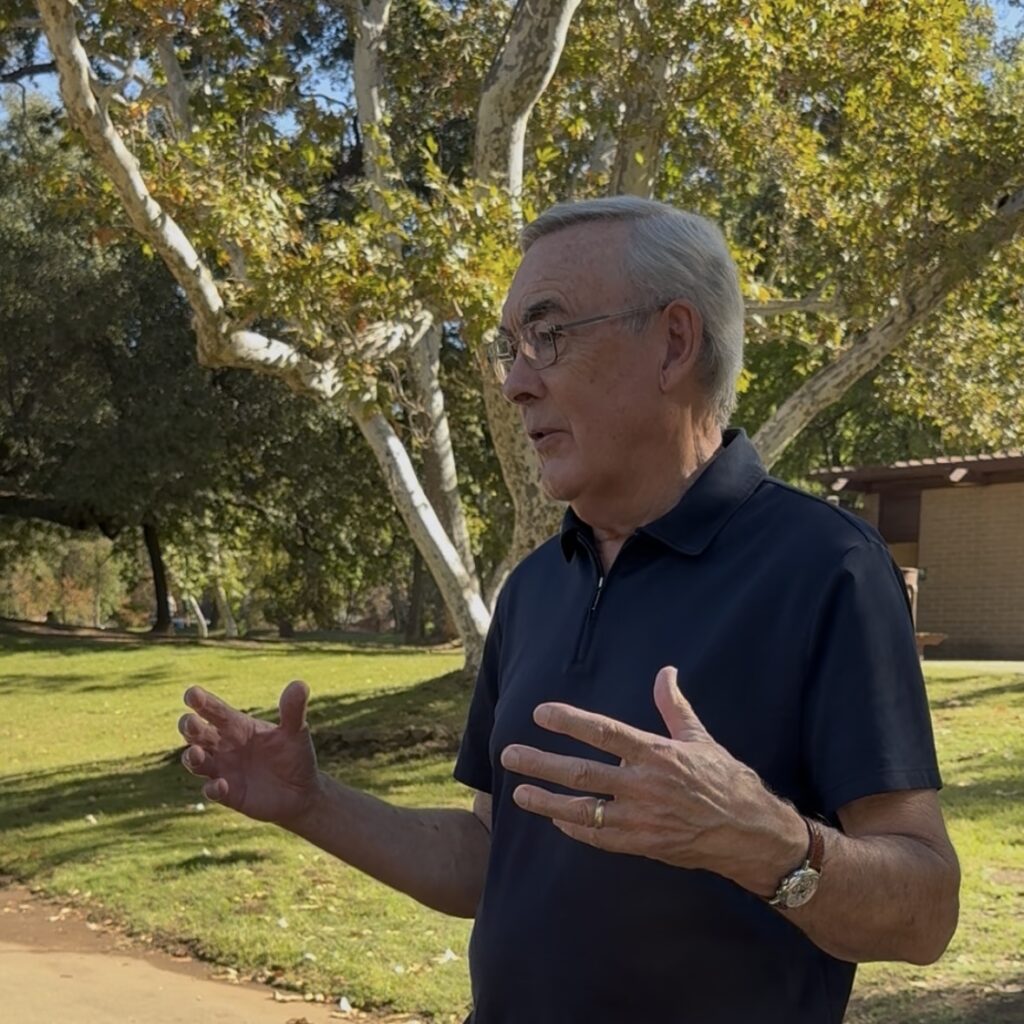
Councilmember Tom van Overbeek pointed at a large gate situated in Big Chico Creek at Five Mile Recreation Area. For years on Council, he’s been sounding alarm bells over decades-long debris buildup along a diversion channel that he says could flood hundreds of homes downstream if the nearby levee fails.
Van Overbeek has been District 6’s representative for four years. He came to Chico from the South Bay Area, where he was a tech executive. He owns and develops commercial property throughout Chico.
Homelessness: He said he initially ran for City Council after reading the Warren Settlement Agreement. With that settlement expiring in January, van Overbeek is anticipating enacting the changes he’s been hoping to make since his election in 2022.
Van Overbeek said he wants to see stronger anti-camping ordinance enforcement for unhoused people who refuse to go to the shelters. He argued that the city shouldn’t continue to allow people to sleep in public spaces, such as Downtown Plaza or along waterways.
“You go to shelter, you go to services. And if you don’t, you go to jail,” he said.
He believes it is more compassionate to put people refusing shelter in jail than to leave them outside where they could die. Van Overbeek says many unhoused people die of drug overdoses.
Housing: van Overbeek said housing is increasingly scarce in Chico, and he wants to see development in areas designated by Chico’s 2030 General Plan. He said infill projects aren’t a viable option, adding that high construction costs outpace what a developer makes back in rent.
“There’s a lot of talk about low-cost infill, and that’s a complete myth,” he said. ”I happen to know something about it because I built five infill projects. It’s very hard to make the economics work as a developer, because cities don’t build housing.”
Downtown: Van Overbeek owns a building downtown, barring him from voting on many matters related to the city’s economic center. But he said the city needs to clear the unhoused from the streets and public spaces and create a more pedestrian-friendly downtown.
He said many of those concepts were found in the downtown revitalization project, which he said he would have voted for if he had been allowed.
Chris Hutton is a contributor to ChicoSol. Katherine Kihiczak is a California Local News fellow reporting for ChicoSol.