
Until recently, Kwumbe Walker, a part time Doordash driver, drove his own car for work — a 1998 Chevy Malibu. Until recently, he completed his deliveries, filled his tank, and still went home with a profit. And until recently, that worked — but with soaring gas prices, it’s become impossible.
Walker now rents a Nissan Versa that gets up to 40 mpg. He said that after renting and fueling the Versa, he still saves more than he had with the older 20-mpg Chevy.
“Yesterday I made $200 and spent $20 on gas,” Walker said, referring to the Versa. “It’s honestly not that bad. This car’s pretty good on gas.”
“I work 9 to 5 bro, but I don’t make enough money to actually live, you know?” said Walker who splits his time between Doordash and a job at a retirement home. He hopes to someday pursue a trade app renticeship, but, until then, Doordash helps keep the lights on.
Walker is one of many Chicoans impacted by stubbornly high fuel costs. In Chico, the high cost of fuel has forced many to reconsider daily decisions.
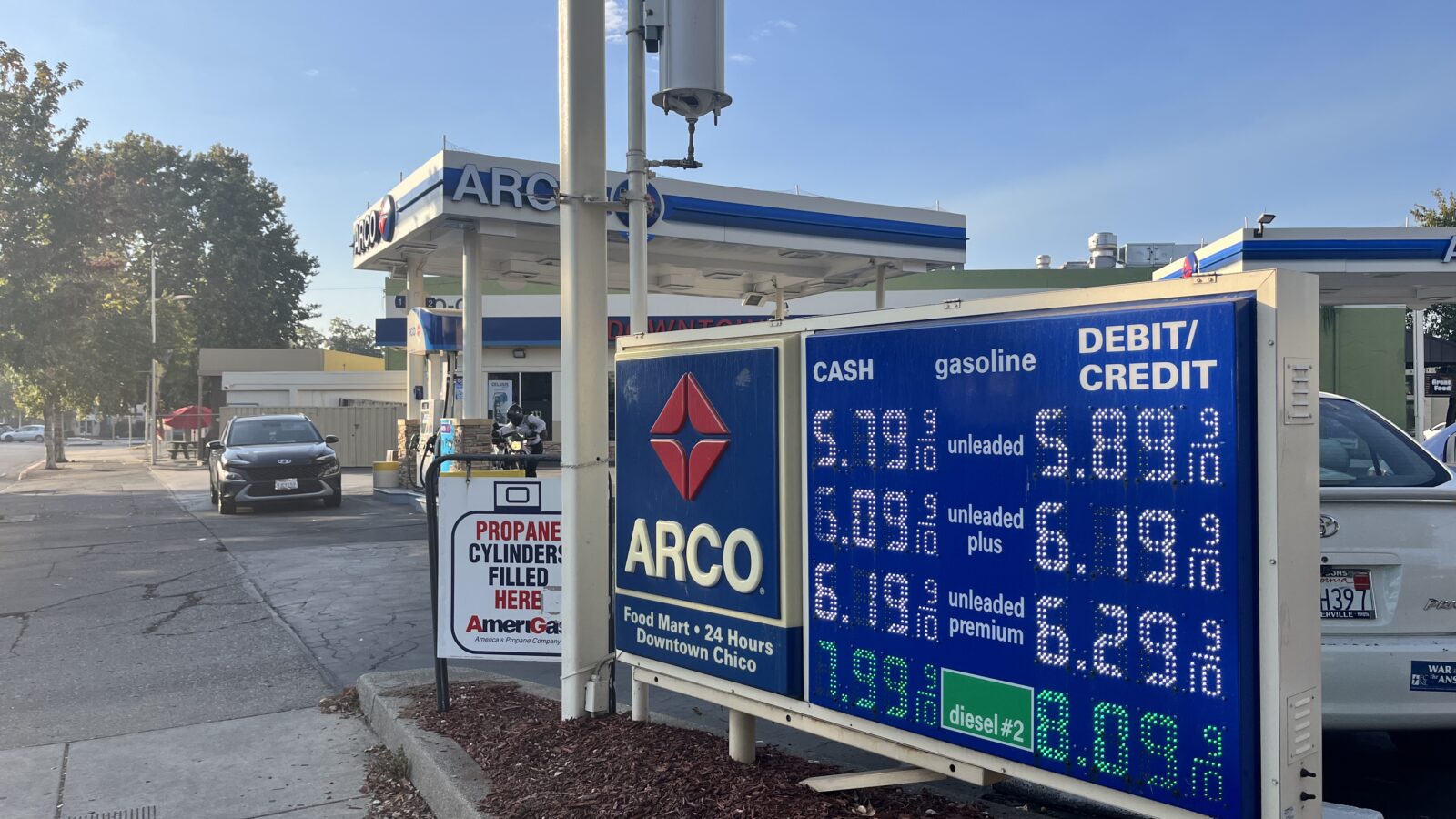
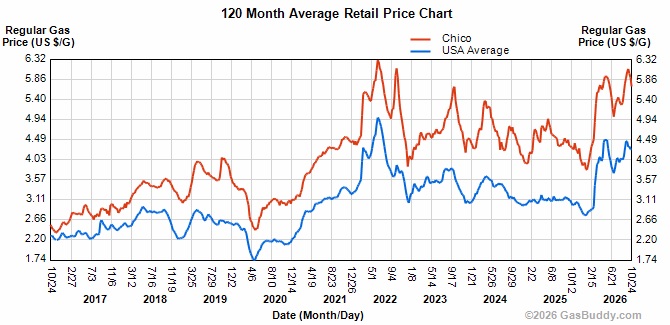
This fall, gas prices in Chico climbed to historic highs, approaching a 10-year record, according to GasBuddy, a fuel price tracking company. During the last two months, gas prices climbed above $6.
ChicoSol interviewed dozens of people at gas stations across the city to understand how this increase affects day-to-day life.
Ceasar Garcia, an industrial laundry equipment mechanic filling up at Downtown Chico Arco, said the cost of fueling his work truck forced him to reconsider the scale of his business.
Under normal circumstances, Garcia would repair machines that involved commuting as far as Pittsburg, a Contra Costa County city that is 150 miles from Chico. Garcia says the cost of fuel may not justify the distances he needs to travel.
“When it doesn’t really pay out,” he said, “you’re kinda stuck cause people aren’t really paying [enough].”
Gas prices have remained elevated since this spring, when a U.S. and Israeli-initiated conflict with Iran shuttered the Strait of Hormuz, a critical transport artery for crude oil, petroleum, and natural gas production from the Persian Gulf.
Over the summer, the average price of a gallon dipped to roughly $5 as American and Iranian representatives pursued a short-lived 14-point peace plan. As peace talks stalled and sparring resumed, gas prices have seen a slow but uninterrupted climb.
“We do not totally [know] what stabilization of prices would look like,” said Jacob Jennings, professor of economics at Chico State. “If there were a credible and durable end to the conflict, I’d expect downward pressure on oil and subsequently gasoline (and diesel) prices.”
Jennings says that increasing domestic oil production is not a silver bullet.
“Even though the United States is the world’s largest oil producer, we are not completely insulated from global prices,” Jennings said. “American producers also sell into a market influenced by international supply and demand. When oil becomes more expensive globally, American-produced oil (gas and diesel) becomes more valuable as well.”
Across the nation, concern over the cost of living has become central in November’s approaching midterms. According to a recent poll by the Public Policy Institute of California, roughly half of Californians see growing unaffordability as the most pressing issue facing the state today. The poll also indicated that similarly, a majority of Californians say increased gas prices have hurt their financial situations, according to the poll.
To many voters ChicoSol spoke to at local gas stations, rising unaffordability will be an issue in the Nov. 3 General Election.
“Everything’s high: groceries, bills, utilities, gas, everything,” said Randy, a commercial painter who had commuted to Chico from his home in Yuba City. (Randy declined to give his last name.)
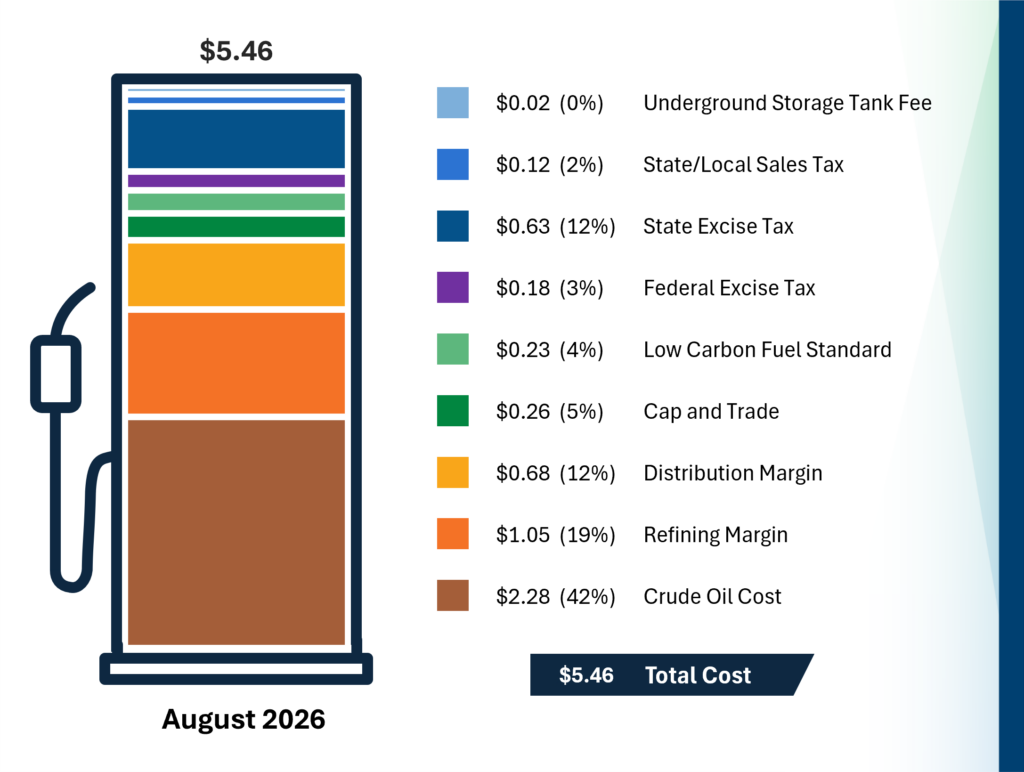
Randy faults California’s high gas taxes for high prices. “We’re the highest [taxed] state in the country,” he said. He doesn’t fault the war in Iran, a conflict that is inching toward its eight-month mark.
“It was inevitable that (the war) was going to happen. I’m okay with that,” he said.
Gas in California is more expensive than any other state, according to data from GasBuddy. Historically, California has led the nation in gas prices, in part due to environmental regulations requiring a California-specific, low-carbon fuel blend, according to the California Energy Commission.
However Californians arrived at paying six bucks a gallon, Jennings doesn’t expect these rates to go away any time soon.
“Even after (the Iranian) conflict stops, shipping routes must normalize, insurance and transportation costs must decline, inventories may need rebuilding, and damaged infrastructure may need repairs,” he said. “Markets can adjust quickly through prices, but the physical rebuilding of the supply infrastructure often takes longer.”
Jennings referred to an old expression, saying that gas prices “rise like a rocket and fall like a feather.”
And for now, that feather has yet to land.
Elias S. Myers is a contributor to ChicoSol.