
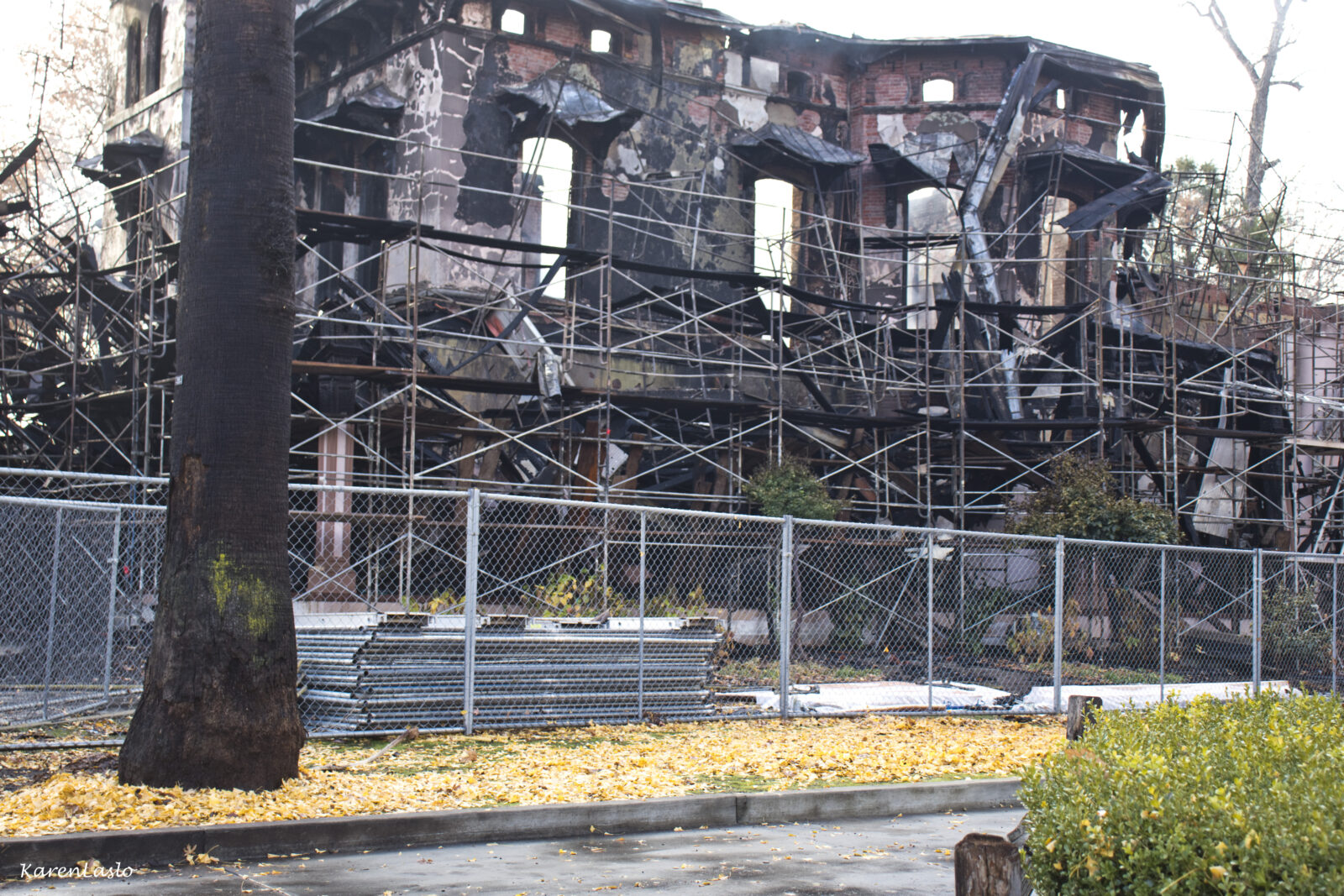
The memory of Bidwell Mansion is burned into Chicoans’ minds, but He-Lo Ramirez knows the grounds by another name. Otaki.
For decades before the historic, 26-room Victorian Mansion was built and then named for John Bidwell, the person commonly regarded as Chico’s founder, a Mechoopda village thrived there, Ramirez says.
“The fact that people don’t know that that’s the name of that place is a result of history being erased,” he adds.
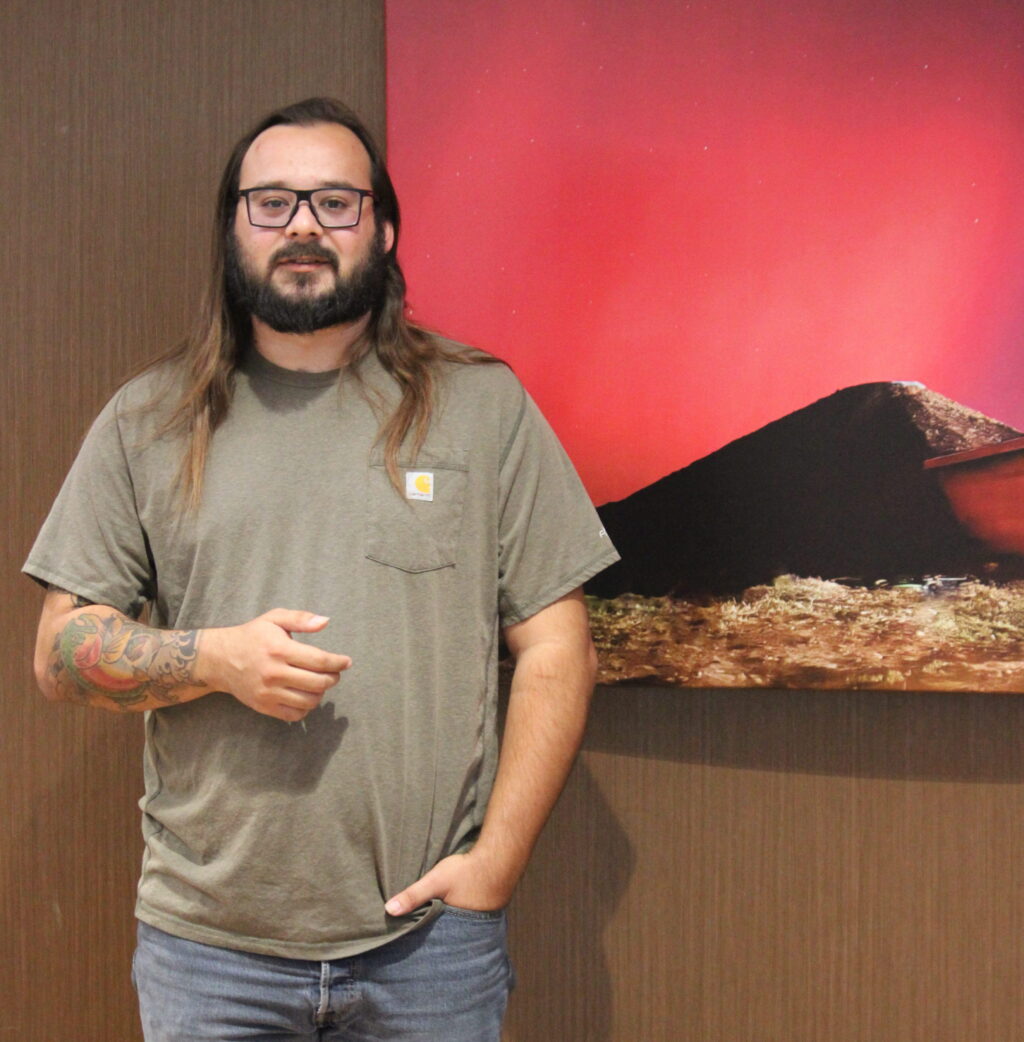
Ramirez is chairman of the Mechoopda Indian Tribe of Chico Rancheria. He also works at Chico State as a land use specialist in the Chico State University Office of Tribal Relations, assisting in stewarding land and teaching about Mechoopda culture.
The Mechoopda people have long sought greater recognition of their history and the opportunity to share their culture. But for decades those efforts have met resistance, Ramirez says. Now, as the community debates the future of the Mansion site, a historic opportunity to have their story told has emerged.
“When I went through the school system, Native American education was a trip to the Bidwell Mansion,” he said. Born and raised in Chico, he said the history of this area was “romanticized” and has excluded much of the tribe’s role.
This was a stark contrast to his own life — he grew up partaking in cultural ceremonies and hearing his ancestral history through oral teachings from family or other tribe members. He recalls learning to hunt and fish with his father and how the tribe sustained itself on those lands.
Ramirez says Bidwell Mansion State Historic Park — as it was presented before a 2024 fire — was not consistent with the 1984 Master Plan. The plan states that the secondary theme should be to tell the “complicated” history of the Bidwells and the Mechoopda.
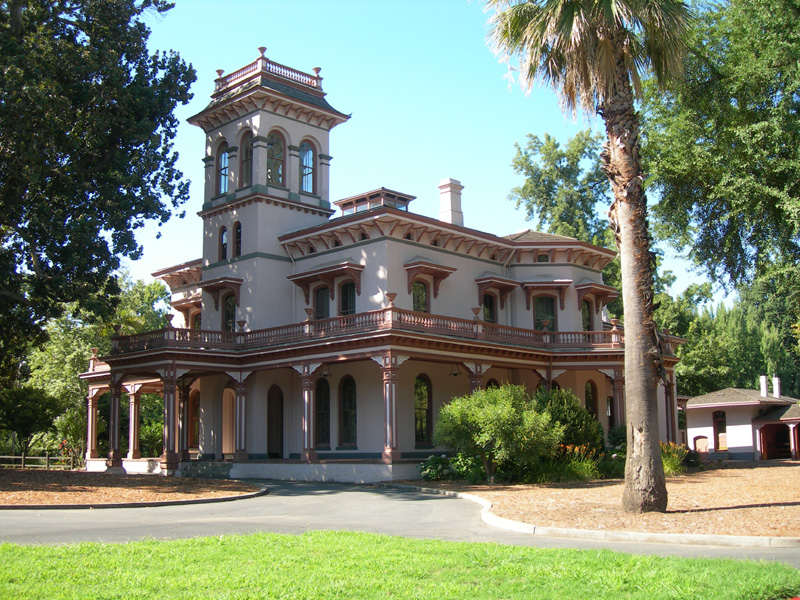
In a letter to State Parks, the Mechoopda shared its vision for the site that has been largely closed since the three-story mansion was burned down by an arsonist in December 2024. The proposal asks to replace the remaining charred structure with a Maidu village. That was something many attendees at an Oct. 25 open house in the park’s visitor center asked about.
Each time Ramirez was asked, he responded with, “It’s not up to me.”
That decision instead will be made by the state Legislature. State Parks will use the stakeholder and community feedback it gathered to form a proposal, according to Jared Zucker, district services manager. The outreach period has concluded and State Parks is in the process of developing the proposal.
The Mechoopda’s proposal — as well as general discussion on what should be done with the site — have faced contentious debate in the greater Chico community. Some people support the concept of a Maidu village while others want to rebuild the Italian villa-style mansion that holds sentimental value for the town.
Ramirez says he wants the Mechoopda’s proposals considered alongside those of other stakeholders. He says the tribe wants to expand and enrich this region’s history, not remove the story of Bidwell.
“When Bidwell Mansion was still there, no one ever heard the Mechoopda saying, ‘Let’s burn it to the ground. Let’s wipe it out,’” Ramirez said. “You can’t tell Mechoopda history without telling Bidwell history.”
Ramirez notes that he and some other tribe members are descendants of Bidwell.
“Mechoopda isn’t saying, nuke the horse and carriage and get rid of everything” — He-Lo Ramirez
“Why not actually take this opportunity to reimagine what that state park can look like,” he says, comparing the tribe’s vision for the grounds to Sue-Meg State Park. (Patrick’s Point State Park was renamed “Sue-Meg” in 2021 to honor the Yurok Tribe’s name for its ancestral land. The renaming was part of the Reexamining Our Past Initiative, which seeks to reevaluate “contested place names, monuments, and interpretation in California’s State Park System,” states the State Parks website.)
“Mechoopda isn’t saying, nuke the horse and carriage and get rid of everything,” he says, explaining that the remaining structures should stay. “We’re just saying, ‘You know what? More information about this place needs to happen.’”
Ramirez said the tribe also wants an expanded visitor center to display more cultural resources and oral histories from the Mechoopda and other tribes.
Bidwell arrived in the Chico area in the late 1840s, and with the help of Native workers made a fortune on gold mining. He purchased a Mexican land grant, Rancho Arroyo Chico, according to the Mechoopda website. Soon after he married a Mechoopda woman, Nupanni. He fathered several Native children, but never had children with Annie Kennedy Bidwell, whom he married in 1868.
Much of the tribe moved onto the ranch, where the Mechoopda “worked for Bidwell, clearing the land for plantings of wheat and oats, working with livestock, harvesting and packing fruit from the orchards,” according to tribal and other historians.
But Ramirez says there is more to that history, and said that oral history passed down tells of Bidwell sexually assaulting women and treating the Mechoopda with cruelty.
Bidwell, a politician, general and philanthropist, provided security for the Mechoopda at a time when violent attacks on Native people were ongoing, according to historical accounts on the Mechoopda website and elsewhere. But whether he was progressively benevolent, abusive and self-interested, or a mixture all that remains a topic of debate.
In 1851, the Mechoopda signed a treaty with the federal government at Bidwell Ranch. The treaty promised goods, a college and a reservation, Ramirez says. But this never came to fruition, and Bidwell lobbied the Senate to prevent its ratification.
Bidwell died in 1900. Between then and 1919, Annie Bidwell placed the 26 acres the tribe resided on into a private trust with the Presbyterian Church. But the Church couldn’t pay the taxes and fees for the land and handed it over to the Bureau of Indian Affairs in 1939.
Those 26 acres spanned from what is now the south side of Chico State’s campus to the neighborhood behind Safeway.
In the 1950s Congress began terminating tribes, shifting toward a focus on assimilating tribes into urban life. During this time, Chico State’s former president Glenn Kendall sent a letter to the government stating a desire to expand the campus onto the Mechoopda’s Rancheria.
In June 1967, the Mechoopda Tribe was one of 109 tribes across the country that lost federal recognition. Losing recognition dissolved the land trust. Ramirez says the tribal housing lacked plumbing, so the City began issuing fines. That forced out many of the Mechoopda people and kicked off a long, grueling fight.
“It was a very unnerving time,” Ramirez says. “The rancheria was terminated. People were homeless. A lot of people left Chico to find jobs.”
Out of the 700 members the tribe has now, approximately 300 live in Butte County and the surrounding areas, Ramirez says,
On the tribe’s website, the words “You have to know who you are” are on the header. They are attributed to Henry Azbill, a cultural bearer who lived from 1899 to 1973.
Ramirez says Azbill was integral to keeping the culture alive and passed on sentiments such as “you have to know your sacred sites. You have to keep the culture alive.” Azbill taught younger generations traditional dances and how to make dance regalia. His disciples went on to become renowned artists and advocates spreading Mechoopda culture.
Others preserved the Mechoopda’s oral history. Tribe member Thelma Wilson, who moved to Chico at the age of 6 to be closer to her Mechoopda ties, gave several public presentations about her ancestors and about the tribe’s culture.
It wasn’t until 1992 that the tribe’s federal recognition was restored via a settlement agreement. But by then its land had been lost, aside from a cemetery, and what once belonged to the Mechoopda had been subdivided and developed, Ramirez says.
Over the next few years, the Mechoopda acquired 645 acres of land between Chico and Oroville. The U.S. Secretary of the Interior approved the operation of a casino but, a lengthy battle ensued as Butte County fought the project.
The county argued that the tribe had no stake in the land, and that the modern tribe “was not the same tribe as the historic tribe that had allegedly occupied the gaming site,” stated a U.S. Court of Appeals majority opinion.
The 16-year battle finally came to an end, but it cost the taxpayers nearly $1 million, according to an editorial by the Chico Enterprise-Record.
A living culture under assault
Inside a Chico coffee shop near the Mechoopda tribal office, Ramirez reflects on a moment from the open house that kept him up that night.
A woman approached the table and asked him to recite his lineage.
He listed his ancestors. They all had Anglo-Saxon names because, as Ramirez later explained, the tribe was forced to assimilate.
“There was no American Indian in there,” she said.
Ramirez again explained his Mechoopda heritage, but she interrupted him and said, “I didn’t get that from how you presented it.”
She then looked at the ChicoSol reporter and asked, “Did you?”
Despite this direction in the conversation, he continued to explain Mechoopda culture including the religious importance of roundhouses and the distinctions between tribes across California.
In the coffee shop the day after, he says that the encounter felt like he was being asked to justify his right to speak on behalf of the tribe, that he felt attacked.
“We’ve been experiencing this for decades, and it’s just kind of hard, of course, whether it’s literally the Butte County government saying that we’re not Indian or it’s an individual at the mansion,” he says. “It’s what we’ve been experiencing for literally decades.”
Reclaiming land
In 2022, Chico State returned 93 acres of land to the tribe. But Ramirez said there was still pushback, with some saying the tribe would “kill the salmon” or “mine for gold.”
“There’s just this thought process that we’re greedy, all we care about is casinos,” he said. “We’re not real Indians.”
The Mechoopda Tribe continues to negotiate for land reclamation. In June, the tribe reclaimed 450 acres of the Big Chico Creek watershed in an agreement with Chico State to steward the land and conduct creek restoration and salmon rehabilitation.
“Salmon and oaks are really high up there on our cultural resources that we want to protect; they sustained us for millions of years,” he said. “Part of us, and part of our religion and part of our culture is to steward them in return.”
Ramirez said it’s the Mechoopda’s “living culture” that he wants to show the public at Bidwell Mansion State Historic Park.

At the open house, Ramirez poured elderberry syrup for attendees and answered questions about an instrument made from elderberry wood. Gambling games were strewn around the table.
Beside Ramirez, attendees knelt on a blue tarp as another Native man, Shane Noel, explained the importance of acorns, a food that could be stored for about a year and helped sustain people through cold, wet winters.
Noel gestured to mortars on the tarp and demonstrated the process of grinding and leaching acorns to make food.
Ramirez and Noel visit schools, hauling 50-pound mortars they keep in their garages so they can share their cultural traditions with North State students. But Ramirez said it would be nice to keep those mortars on the grounds of their ancestral village, Otaki.
“Oftentimes we’re only put in museums, old photographs, cultural resources that are behind glass. And it’s the Mechoopda ‘were.’ Indians ‘were.’
We are a living people with a living culture,” Ramirez said.
Chris Hutton is a contributing writer to ChicoSol.