
The Chico Police Department, alongside the city attorney and city manager’s office, are conducting an internal investigation into the sharing of data produced by the automated license plate reader (ALPR) system, ChicoSol learned today.
Chico PD is searching for instances where federal agencies received information from its ALPR data collection. It’s investigating how and why MOUs were signed with federal and out-of-state agencies, giving access to data that may have been prohibited under state law.
Erik Gustafson, interim city manager, said results from the audit will be shared publicly when they become available.
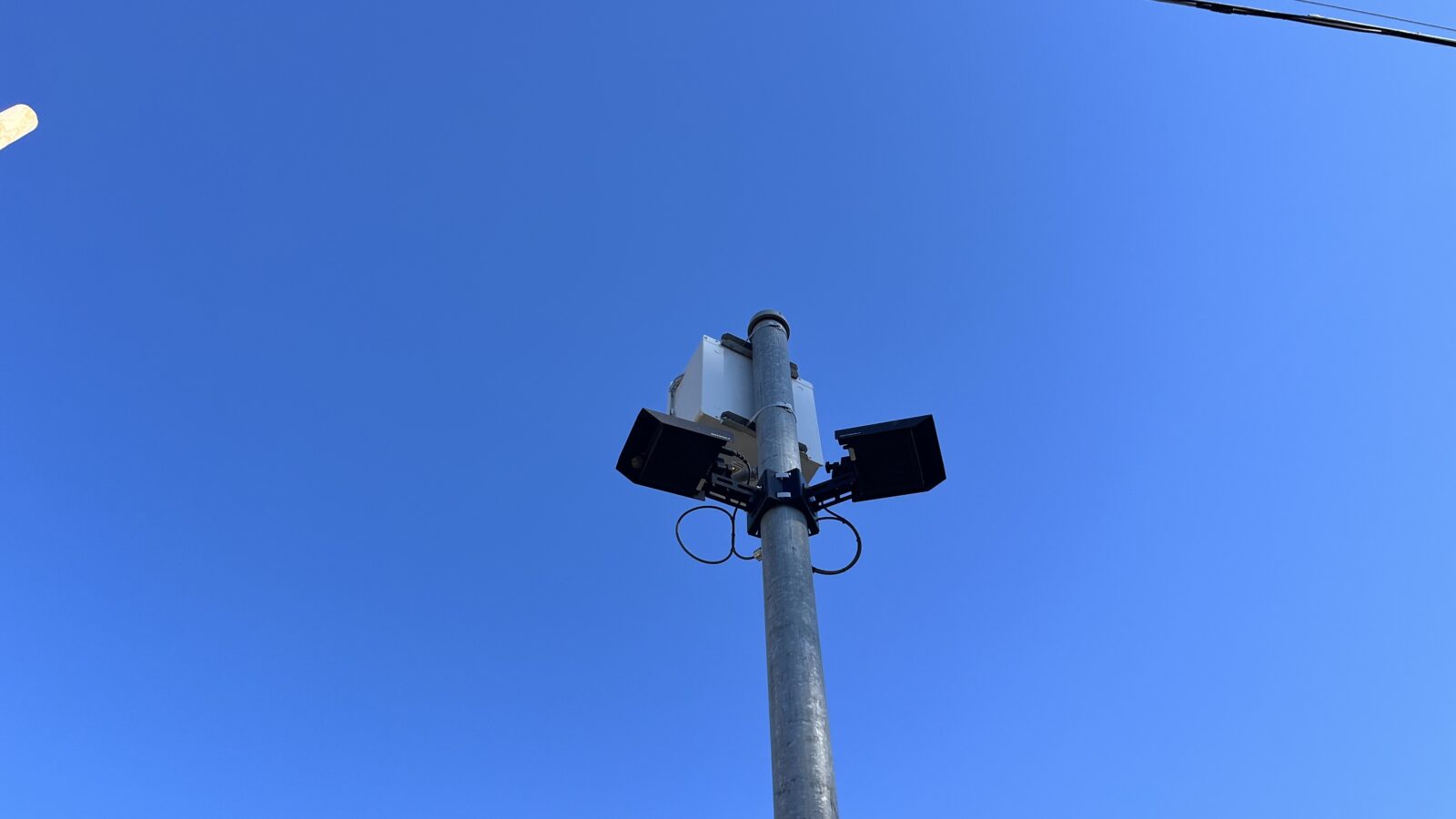
The Chico Police Department maintains 27 ALPR cameras across the city, and two more are expected to be installed.
Some 20 federal agencies and more than 80 out-of-state law enforcement agencies had access to Chico’s ALPR data, a ChicoSol investigation has found. Agencies that were able to access Chico’s data as recently as July 7 include ICE Enforcement and Removal and Homeland Security Investigations.
Civil rights attorneys say that this type of out-of-state data sharing violates SB 34 and in some cases may violate SB 54, the California Values Act.
In a July 21 interview, Police Chief Billy Aldridge said the department shut off federal and out-of-state data sharing on July 8 — immediately after a ChicoSol records request shined light on the practice. ChicoSol has been unable to verify that the sharing has stopped; Chico PD hasn’t responded to multiple requests for documentation verifying the shutoff.
A dozen MOUs more than three years ago
Chico PD signed memorandums of understanding (MOUs) with agencies in California and beyond, granting access to its ALPR data as early as Feb. 23, 2023. Twelve sharing agreements were approved in 2023 with federal agencies, including the U.S. Marshals Service and a branch of the U.S. Border Patrol.
The MOUs state that the agencies were not allowed to use the data for anything other than “criminal investigations;” they could not be used for immigration enforcement.
ChicoSol received MOUs for 16 out of the 20 federal agencies that were granted access to Chico ALPR data as recently as July 8.
Four agencies — the U.S. Secret Service, the national office of the U.S. Border Patrol, the U.S. Postal Inspection Service and the Department of Veterans Affairs Police — had access to the ALPR data, according to the Motorola Vehicle Manager dashboard on July 8. However, MOUs for those four agencies were not provided when other memos were released to ChicoSol.
The 16 federal MOUs obtained by ChicoSol were approved by now-retired police Capt. Greg Keeney.
According to the MOUs, only authorized users within an agency or department were allowed access to Chico’s data, and audits were required to track compliance, according to the Chico Police policy manual. “ALPR system audits should be conducted bi-anually,” it states.
Where are the audits?
ChicoSol has requested reports of internal audits several times over the past week; today, Chico PD spokesperson Kayla Gates responded that she had no “additional information to provide at this time.”
Chico PD is a member of the Northern California Regional Intelligence Center (NCRIC), a law enforcement intelligence sharing network that performs regular audits on its members’ ALPR systems. NCRIC told ChicoSol that “no records were located” for audits of Chico PD’s system.
This newspaper also requested records documenting instances of access to Chico’s ALPR data by agencies that had MOUs with Chico PD. The police department denied that June 22 public records request. Chico PD responded: “The public interest in creating the requested records would cause a substantial burden on limited public agency staff resources which outweighs any public interest … This determination has been made by Chief of Police Billy Aldridge.”
Another records request that was narrower in scope was submitted July 13.
Aldridge, in a July 21 interview with ChicoSol, commented on the beginnings of the MOU process.
“When we initiated the ALPR system, we started allowing access to it. It was through an MOU process,” Aldridge said. “Within that memorandum of understanding, when we would share to Oregon, Nevada, Arizona, and federal agencies, it was an agreement that they would only use it for criminal investigations, no immigration enforcement at all.”
Debate over the reach of state law
“So far it looks like we followed the law,” Gustafson said. “There was no malicious intent at all. Technology like this is important and really helpful for criminal investigations.”
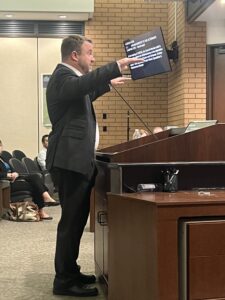
A senior staff attorney for the ACLU of Northern California disagrees. Attorney Nick Hidalgo said the state has been clear that there is “no carve-out in the law for criminal investigations.”
“Sharing automatic license plate reader information with a federal law enforcement agency is a violation of SB 34,” Hidalgo said. “It doesn’t matter if you’re sharing for fun or to help with a criminal investigation — you can’t do it.”
In California, alleged violations of laws governing out-of-state data sharing has led to lawsuits filed by Attorney General Rob Bonta and civil rights organizations.
Councilmembers react
Privacy advocates have sued ALPR providers through class action lawsuits as communities push back against ALPR systems such as Motorola and Flock Safety. The ALPR providers have been criticized for building systems of mass surveillance. However, proponents of the systems argue they aid criminal investigations.
Chico city councilmembers Addison Winslow, Bryce Goldstein and Katie Hawley took to social media after the publication of ChicoSol’s investigation to criticize the police department. The three councilmembers said they had previously asked the police department about data sharing, and were each told that sharing with federal agencies was not taking place.
In a phone interview, Councilmember Tom van Overbeek said he doesn’t see the data sharing as a “big deal;” he trusts the police department. He said it’s a “silly question” to ask whether the department might have violated the law. But he also said he would withhold judgement until the audit’s results are available.

The Butte County Sheriff’s Office and Oroville Police Department use Flock as their ALPR provider. Open-source data provided by Flock shows the sheriff’s office is not sharing data with federal or out-of-state agencies. ChicoSol is awaiting results from a public records request submitted to Oroville Police Department for records related to its ALPR data sharing.
Gustafson noted the success of the technology in aiding in investigations, but said “there’s a balance to ensure these technologies adhere to state and federal law.”
Elias S. Myers and Chris Hutton are freelance journalists who are participating in ChicoSol’s New Generation reporting project.
9 Comments
Is it time for Overbeek to retire? In a phone interview with ChicoSol journalists, Council member Tom van Overbeek said he doesn’t see the data sharing as a “big deal” and that he trusts the police department. He called it a “silly question” to ask whether the department might have violated the law. This troubling response says a lot about Overbeek. He seems to trust his “good ole boy” Chief Billy even when there is clear evidence of incompetence. Remember: In God We Trust; all others must verify.
The Chico City Council should support creating a civilian board to review Chico PD policies and procedures. People in our community deserve transparency.
Thank you for this in-depth follow up to your exclusive breaking earlier story. An internal investigation is not acceptable and part of the on-going problems. I reported it to CA Attorney General Bonta today.
Who is investigating? Are they investigating themselves ? An independent review needs to be involved.
It is time for the CA Attorney General to step in and investigate.
An Affirmative recommendation, thank you, Ms. Harberts!
Please send a personal letter to AG Bonta with your CV and a request for an independent and impartial investigation by his DOJ staff who have NO connection with the ‘good ole boys’ (Ramsey, Honea, Aldridge, et al.) of Butte County law enforcement.
This is excellent investigative reporting in the public interest, in OUR interest as Chico residents and U.S. citizens. When is our Police Department going to choose transparency, honesty and plain-speaking? Thank you, Chico Sol and your reporters.
So the police department is investigating itself? That is not very comforting. This should be an external investigation. And one big question is: Who has the prper authority to sign MOU’s with other government agencies? Certainly not a police captain. And what does that say about his supervision? and the need for oversite of the department? Sounds like its time for a citizens commission to make sure the actions of the department are legal and in the best interest of the citizeens of Chico.
Chico Unified needs to be included in this investigation because the board voted to allow the new AI-surveillance system to use ALPR technology – the same AI tech that Chico PD is in trouble for using!
Many readers will know that Chico is just one of a number of cities who have been inappropriately sharing ALPR and other data with outside agencies in violation of CA law and without the permission or knowledge of their citizens. Thank you to Elias Myers and Chris Hutton for an excellent expose on this issue.