
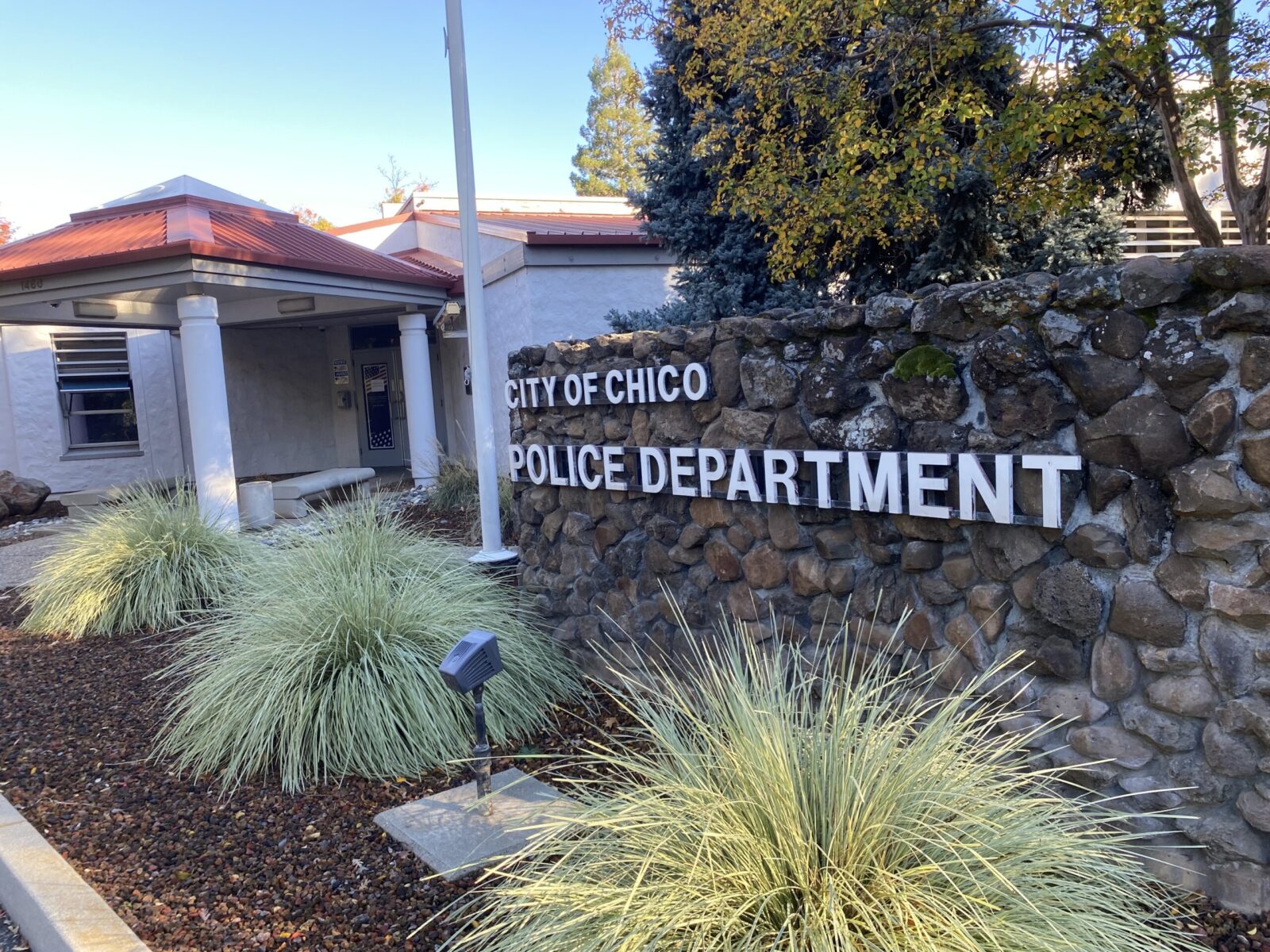
The City Council, with guidance from the City Attorney, will decide the fate of Chico Police Department’s automated license plate reader (ALPR) data sharing program, Chief Billy Aldridge said in a press release today.
“Throughout this evaluation process, access will remain restricted until further guidance is given by legal counsel and leadership of the city,” Aldridge said in a press statement that was the department’s first public response to the publication of a ChicoSol investigation into ALPR data sharing.
ChicoSol’s July 25 story reported the results of a public records request that showed Chico PD sharing ALPR data with dozens of out-of-state and federal agencies. Aldridge said that sharing — following this newspaper’s investigation — had been shut off as of July 8.
Two California laws restrict or prohibit the sharing of such data with out-of-state agencies, and two civil rights attorneys told ChicoSol they believe Chico PD is out of compliance with state law.
In the department’s Aug. 5 statement, Aldridge discussed the difficulty of navigating state and federal laws relating to ALPR data sharing. “Interpretations surrounding LPR technology and interagency data sharing continue to evolve, and questions regarding the application of California law remain unsettled,” the police chief said.
Aldridge said the police department is working with the City Attorney’s office to ensure policies are in line with current legal interpretations.
“We are currently working with the City Attorney’s office to review our LPR policy, practices, and sharing agreements,” Aldridge said. “I am committed to ensuring our written policy clearly reflects our operational practices and remains consistent with … emerging legal guidance, and the expectations of the community we serve.”
“To be clear I have not heard any evidence to date that we (City) have violated state law” — Councilmember Mike O’Brien
In a July 25 story, ChicoSol reported that Chico PD and city officials were engaged in an internal investigation related to the data sharing. An internal audit of Chico PD’s ALPR data sharing system is ongoing.
Since those stories appeared, some City Council members have called for transparency and public input into the use of these cameras. Council members have also called for the discontinued use of these cameras in Chico.

Councilmember and former police Chief Mike O’Brien called out the need for updated policies and transparency in government.
“Technology is clearly outpacing legal interpretation, and there will be gaps until that legal interpretation occurs, which is where we (and other California cities) find ourselves at the moment,” O’Brien said.
“I thought Chief Aldridge was up front and honest as to the situation, as well as the steps he took,” O’Brien said. “And to be clear I have not heard any evidence to date that we (City) have violated state law.”
O’Brien reiterated the importance of these technologies in Chico’s law enforcement tool belt, stating that the ALPR networks are “critically important.”
“That does not diminish the important conversations we are having on this issue, locally and nationally,” O’Brien told ChicoSol. “However, we do need to understand all the dynamics involved, at every level, so informed, thoughtful and legally compliant decisions are made moving forward.”
Councilmember Katie Hawley indicated she has trust in Chief Billy Aldridge and Captain Jeramie Struthers, who oversees the department’s ALPR system. However, Hawley does not trust the city’s ability to successfully manage these systems.
“There are so many unknowns,” Hawley said. “If there’s a lack of understanding of what’s legal and what isn’t, why even use them?”
Councilmember Addison Winslow also indicated he has confidence in the police department, but is concerned that the complexity of ALPR systems opens the city to the possibility of future problems.
“I do trust that the police employees have been candid in regard to everything that’s been going on,” Winslow said. “I don’t think anyone at the police department has a full enough understanding of these technologies. I think it’s important to step back and make sure we have a full enough understanding. The people at the department are not specialists of this technology.”
“I had a much higher level of trust until a few weeks ago” — Bryce Goldstein
Winslow called for the city’s IT department to be involved with ALPR cybersecurity going forward. “I want us to be on the cutting edge — not lagging behind,” Winslow said.
Councilmember Bryce Goldstein said she has lost trust in the police department following ChicoSol’s investigation. “I had a much higher level of trust until a few weeks ago,” Goldstein said. “If something like this slips through the cracks, then how can I be confident that nothing else is going to happen?”
Goldstein is a proponent of discontinuing use of ALPRs in Chico. “I don’t have a high enough level of trust that people’s information is secure,” Goldstein said.
Today’s press release follows an Aug. 3 closed session briefing of members of Chico City Council into Chico PD’s reported sharing of ALPR data with federal agencies — including immigration agencies — and out-of-state law enforcement.
Present at the briefing were members of the police department, interim City Manager Erik Gustafson, and city attorney Ryan Jones.
ChicoSol has been unable to independently verify that Chico PD has restricted access to its ALPR network despite multiple requests for documentation.
Council members are seeking to agendize a public discussion about the city’s use of ALPR cameras. The next City Council meeting is scheduled for Aug. 18.
“I think it is good we are having these conversations,” O’Brien said. “With technology moving at light speed, this won’t be the last.”
ChicoSol contributing reporter Elias S. Myers will join Northern California Public Media’s North Bay 101 at 5:30 p.m. Aug. 7 to discuss ChicoSol’s investigation.
4 Comments
Concerned community for Justice plans to be in attendance at the August 18 City Council Meeting expressing dismay over the violations of California state laws SB 34 and SB 54 by Chico PD This is no light matter, data was shared with feds, including ICE
Leading to possible immigratnts rights
Being violated Thank you Chico sol for keeping track of this important civil liberties issue.
I am also concerned just about how much of my personal information Chico Pd is giving from this system. It’s one thing for them to be informed if the driver of a car is involved with a traffic violation. Seems like that should be the extent of the information they derive from any system.
Wow: “I do trust that the police employees have been candid in regard to everything that’s been going on,” Winslow said. “I don’t think anyone at the police department has a full enough understanding of these technologies.
If they don’t have a full understanding of the tech, then why are you qualified to use it? Why, then, does Winslow say he trusts the department? Does he trust that they don’t know how to use their tech? That would make sense.
Thank you, Chico Sol and reporter Myers, for bringing the use and misuse of this technology to light. This is not just a Chico issue. See the emerging news nationwide, like the front page article in the New York Times today, “Cameras to track any US car are spreading.”