Why did Big Chico Creek turn chocolate?

Runoff brings up the sediment "problem"
by Leslie Layton | Posted May 15, 2025

photo by Karen Laslo

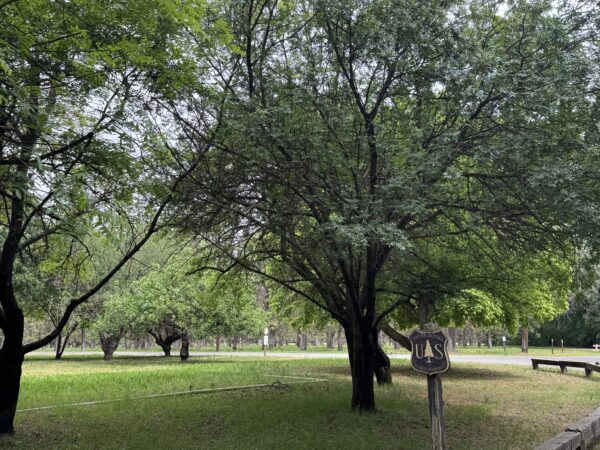
Sycamore Pool in the One Mile Recreation Area, which was built around Big Chico Creek, turned brown early this week.

Big Chico Creek turned chocolate brown earlier this week after a light May 12 rain washed vegetation and eroding bank sediment from the Park Fire burn scar into the water. Today the water look somewhat clearer.

Environmental studies professor Mark Stemen said the wash-off has environmental benefits, but also poses potential danger.

“We should be seeing this happen for a while,” Stemen said. The dry weather that followed rain “freed up much more sedimentation.” read more

Endangered Species Faire celebration a call to action

At City Plaza, information on everything environmental
by Yucheng Tang | Posted April 26, 2025

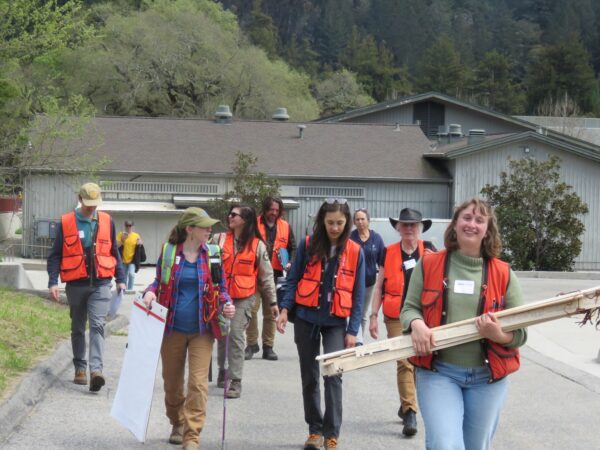
The 46th annual Endangered Species Faire was celebrated today with a downtown parade that featured axolotls, giraffes, owls and salmon puppets — and served as a call to action on climate change and species preservation.

“Animals cannot speak up for themselves, so we speak up for them,” a host on the plaza stage told about 250 attendees after the parade. The fair was organized by the Butte Environmental Council (BEC) and began at 10 a.m., with around 20 booths representing a wide range of organizations, including nonprofits, for-profits and government agencies.

A parade participant who identified herself as Amanda — she asked that her last name not be used for personal reasons — joined the event with her daughter. With a few other participants, she carried a puppet that represented the river ecosystem, and her daughter carried a Monarch butterfly puppet they had constructed. Amanda said she was from Santa Cruz, where there used to be many Monarchs, but their numbers have declined significantly.

Erik Lopez represented the Butte Fire Safe Council at a fair booth.

“We want people to use us as a resource in fire resilience, like fire defensible space efforts,” Lopez said. “We provide resources for homeowners and landowners. We do grazing programs as well, where we contract with grazers around Butte County and systematically put goats on the ground to graze the land and mitigate any fuels mitigation.

“Wildfire in any situation is a scary situation. People are, in that scenario, panicked and maybe unprepared,” Lopez added. “I’m glad people are coming up to the booth and willing to learn about what we do and how they can stay safe against wildfires.”

Fair booths provided information on waste reduction, composting, energy and water conservation, disaster preparedness and more.

“We hold this event to let people know we really have to take care of our environment, we really have to be serious about climate change, we really need to take care of our creatures,” said Susan Tchudi, a BEC board member and the fair coordinator. “One of the things that we’re emphasizing is we need to be involved in climate action, in doing things to protect ourselves, to be resilient, to try to do whatever we can to slow the change in the climate.”

Yucheng Tang is a California Local News fellow reporting for ChicoSol.

Tuscan Water District to levy fee that will finance operations

Large landowners who favored fee had more voting clout
by Leslie Layton | Posted February 13, 2025

photo courtesy of Tuscan Water District
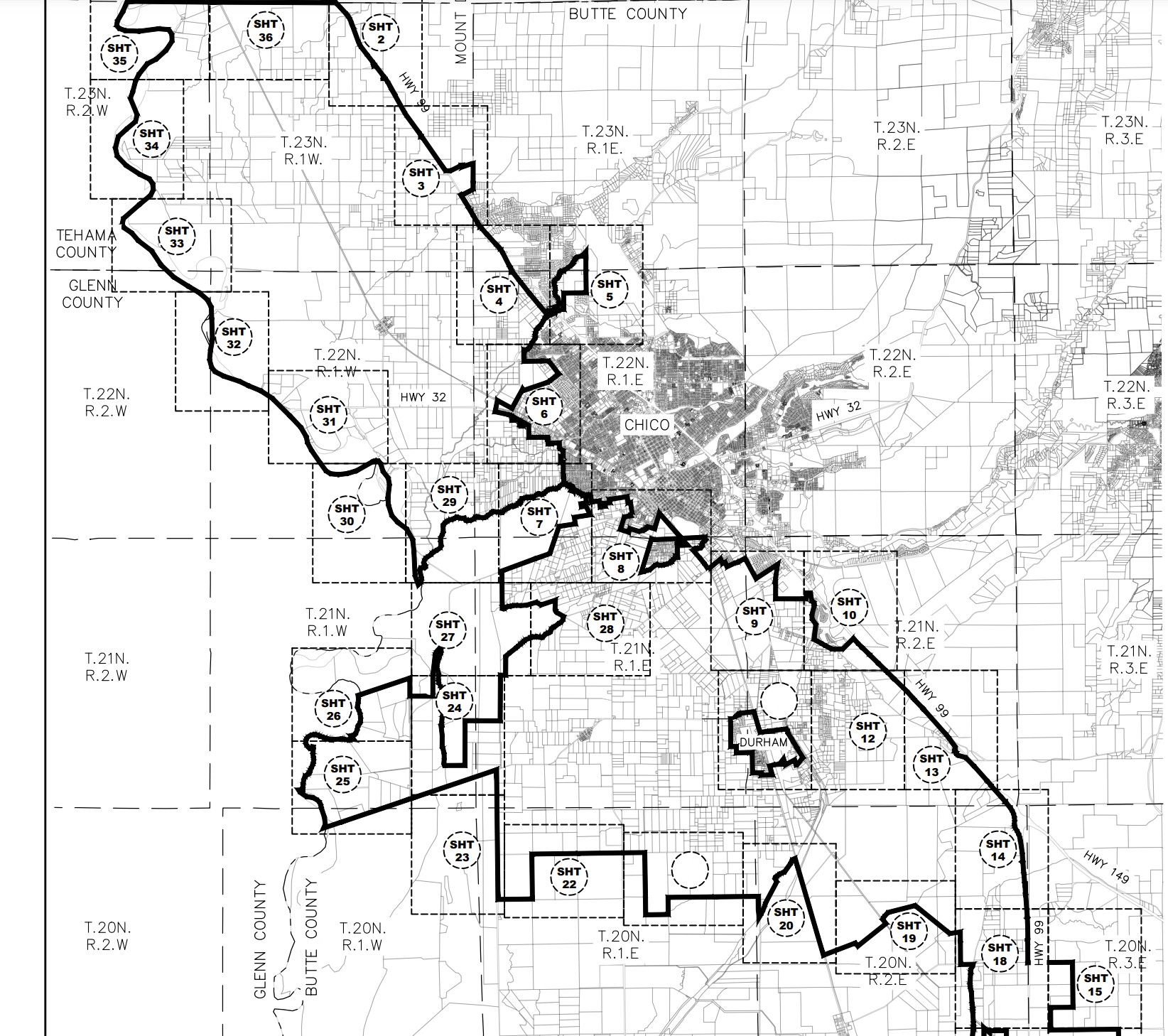
Approved TWD map

The recently-formed Tuscan Water District (TWD) is now in the budget planning stage after winning the right to levy a special assessment fee on landowners within district boundaries.

In an election held last month, TWD won the support it sought for a fee of up to $6.46/acre to be paid by landowners whose votes were weighted based on the number of acres owned. That was in accordance with California law that allows weighted voting in special districts, said TWD General Manager Tovey Giezentanner.

Giezentanner said the fee could raise up to about $620,000 a year that would pay for “general expenses, not around a specific project, but to fulfill the mission of the district.”

Giezentanner said TWD will “pursue service supply” and undertake both recharge and conservation projects to reduce groundwater overdraft. TWD must win approval for any new fees that would fund special projects.

Whether the election was the overwhelming win claimed by TWD is a matter of perspective. TWD critics say the voting mechanism – even though it’s allowed under state law – is undemocratic.

Groundwater for Butte, a local activist organization, points out that had it been one vote per ballot, the fee would not have won approval. Outgoing coordinator at Groundwater, Emily Alma, said the vote was 422 opposed to 404 in favor.

But each ballot was weighted by the number of acres owned by that voter and multiplied by what is the possible assessment fee. When votes were weighted by the number of acres owned, the fee passed with almost 88 percent approval.

If only the weighted vote is considered, “it looks like we, the opposition, were slaughtered,” Alma wrote in an email. Alma said “it took more than two weeks for us to get access to the ballots” to count them on a one person-one vote basis.

TWD held a Jan. 15 pulic hearing where landowners had a last chance to vote. The meeting, according to a report by North State Public Radio, was contentious, with some objecting to the weighted voting and others complaining that public notice was inadequate.

TWD debates
Durham attorney Jim McCabe, a TWD critic, told ChicoSol this week that he believes the election wasn’t conducted properly. McCabe was one of several people who worked successfully to stop a TWD formation vote in September 2022 because it didn’t meet state requirements for noticing and other issues.

“This is an effort to give large farmers — the largest farmers, really — a leg up in deciding how that water is exploited,” he said at the time.

McCabe argues that the fee is really a special tax that requires, under California’s Proposition 13, a two-thirds vote for approval.

Giezentanner responded to the special tax argument.

“There’s an argument out there for that,” Giezentanner said. “I don’t think it’s legally sound. You’ve got hundreds of special districts that are funded [this] way.”

Giezentanner described to ChicoSol the process TWD followed to hold the most recent election, noting that the district “hired a third party election consultant to handle the mechanics” who has conducted such elections in other special districts.

The weighted voting is a piece of the framework set up by the Legislature for special districts, he said, which can address irrigation, mosquito control, or in this case groundwater management. Landowners can say, ‘There’s an issue we want to deal with here,’” Giezentanner said. “In our case we want to bring more surface water into the area and reduce our use of groundwater.”

The certified election results show that 831 ballots out of the 2,057 that were sent out were returned. (Some 63 were returned as undeliverable.) That means so-called “turnout” was only slightly above 40% in a count of individual ballots returned. But Giezentanner says ballots returned represented about 60% of the district’s acreage.

The weighted voting matter has proved controversial and been used by TWD critics as an example of the problem inherent in forming the special district: It gives too much control over the aquifer, they say, to a small group of large landowners, not all of whom are locally-based.

TWD prepares to move forward
Giezentanner said TWD was thrilled with the special assessment election results, even though there were a few more ballots cast in opposition than in favor. From the start, he said, TWD expected that the “bigger parcels would get us over the goal line.”

The number of ballots returned -– and returned in favor of the fee — was a “big deal in an acreage-based landowner election,” he said. “We were thrilled with that. That’s a huge turnout to self-assess in a bad economy.”

The district was formed in 2024 in response to long-term worry over groundwater overdraft and a changing climate that increasingly delivers unusually wet and dry seasons in an alternating cycle.

In addition and more recently, Giezentanner said, walnut and almond prices have been down due to “oversupply, issues with transportation, all these other macro issues. We’re hoping we come out of it. It’s cyclical.”

The district is comprised of between 96,000 and 97,000 acres, stretching from Butte’s northern border with Tehama County, west to the Sacramento River, east to Highway 99 and south to the Durham area. It bypasses most of the City of Chico.

TWD says it will work to reduce reliance on groundwater through conservation, by delivering more surface water and through recharge projects. Recharge involves the placement of water on the ground’s surface; the water is allowed to seep downward to replenish the aquifer.

In a natural process, water flows from the mountains to the valley, Giezentanner noted. “We want to slow it down to enhance the natural recharge process,” he said.

That worries environmentalists who say that recharge has troubling legal implications for water ownership. Environmentalists say that the replenishment that takes place in artificial recharge projects may not offset the groundwater pumping that was required, and the projects are often more detrimental than beneficial.

Leslie Layton is editor of ChicoSol.

Controversial Tuscan Ridge rolls forward

County supes vote in favor of Skyway housing project
by Yucheng Tang | Posted January 3, 2025

photo by Yucheng Tang
Butte County’s Board of Supervisors voted 4-1 to move forward with Tuscan Ridge, but developer Mark West still has to meet conditions of approval.

Butte County’s supervisors have approved the controversial Tuscan Ridge housing project on the south side of Skyway, but the developer must still jump hurdles related to water, sewer and drainage.

The supervisors voted 4-1 Dec. 10 to move a project forward that will plant 165 single-family homes where the Tuscan Ridge Golf Course was once located between Chico and Paradise. After the Camp Fire, the site housed the PG&E base camp. The entire 163-acre project area will include six commercial lots and houses that are between 3,000 and 20,000 square feet in size.

Almost 16 acres of commercial lots will house facilities including a gas station, convenience store and a mini-storage facility.

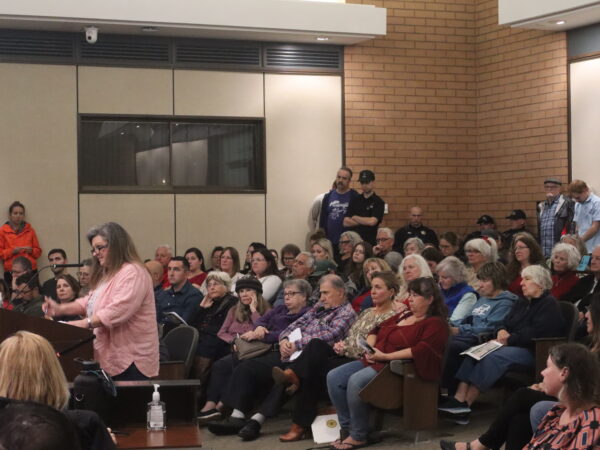
Some of the people who filled the board’s chambers for last month’s meeting – including a few supervisors – were concerned about water and sewer service for the project. Some members of the public, speaking during the public hearing, opposed it because of fire hazard, effects on Paradise reconstruction or other impacts.

District 3 Supervisor Tami Ritter, who cast the lone dissenting vote, told ChicoSol she was concerned about the esthetic impact, cost of fire insurance coverage for residents, air quality issues caused by more car trips, and lack of public services.

The board majority certified the final Environmental Impact Report (EIR) and approved the Tuscan Ridge Planned Development Rezone, the tentative subdivision map and took other steps required for the project.

“The next step is for them (the developer) to work on completing their site improvement plans and conditions of approval to record their first phase of the subdivision,” said Mark Michelena, senior planner at Butte County Development Services.

Michelena said that are steps that have to be taken before development can begin, like “a lot of improvement plans for drainage, road improvements.” Different county departments will be involved, he said.

The project, proposed by Tuscan Ridge Associates, LLC, has been in the works for years.

According to the EIR, the proposed maintenance of the project’s water and sewer lines would require an extraterritorial service agreement or annexation of the project site into the Paradise Irrigation District service area, which would be subject to Butte County Local Agency Formation Commission (LAFCo) approval.

District 1 Supervisor Bill Connelly addressed fellow supervisors and the audience, indicating he’s worried about water and sewer services that still have to be worked out.

“I’m not against the project,” he said. “I’m nervous about approving anything that doesn’t have proven water and sewer; I’ll leave it at that. Just saying that you’re going to provide service, or maybe you’re going to provide service, puts a burden on LAFCo.”

Ritter said she was concerned about the potential impact on groundwater and groundwater-dependent ecosystems caused by drilling a second well.

Board Chair Tod Kimmelshue, the District 4 supervisor, said at the end of the meeting that he has concerns about putting large developments in unincorporated parts of the county.

“I would much rather have developments like this in an incorporated city where they can provide sewers, where they can provide police and fire protection,” Kimmelshue said. “In saying that, this has been on our radar since the 2001 General Plan, this is what is allowed in this area.”

District 2 Supervisor Peter Durfee talked about the housing crisis that exists in California, suggesting that was a reason to support a project that would bring additional housing to Butte County.

Durfee compared the controversy around Tuscan Ridge to the contentious discussion of Valley’s Edge in Chico. “Realistically, what we have here is another Valley’s Edge,” Durfee said. “It’s people that say they want housing, but ‘we just don’t want that type of housing,’ and ‘we don’t want it there,’ which I don’t think is fair. So I will support this project,” Durfee said.

Ritter acknowledged the housing crisis but disagreed. “We are in dire need of housing in Butte County,” she said. “Yes, I agree we need housing, but I’m not sure this location is the spot. This is our foothills. We know from our water conservation department that is our primary recharge for the Tuscan Aquifer.

“I think we need to have the water and sewer information completely mapped out before we even bring this forward,” Ritter added.

In comments later to ChicoSol, Ritter said: “Usually before a project would come before the board, they would already have contracts in place. We would know where the water was coming from. We would know what entity was going to be supplying that water. We do not have any information about that (this time).

“I don’t feel like all of the costs are going to be borne by the developer,” she added. “I feel that the residents of Butte County are going to be the ones who end up bearing the cost of this, not just financially, but in terms of the environmental impacts, the air quality impacts.”

Doug Teeter, District 5 supervisor, supported the project during the meeting, arguing that most impacts could be mitigated.

“I do have a belief this is someone’s land. Even though we say it’s our foothills, someone owns that land and I think they have a right to develop it per the county zoning rules,” he said.

Teeter said one of the reasons he wanted to be a supervisor was because of the potential for development in unincorporated spaces. “I thought that was an exciting place to be. And it’s taken so long to finally get some things in front of not just us, but other communities,” he said.

Allen Harthorn, executive director of Friends of Butte Creek, opposed the project, discussing recent fire behavior.

Said Harthorn: “I just can’t emphasize enough how poorly placed this is. The Humboldt Fire in 2008 left Humboldt Road, went through the Valley’s Edge subdivision area, and then on across Butte Creek, up the Skyway, over the Skyway, right through this development area. 2018, the Camp Fire came from the opposite direction. Same thing, right through this development in a matter of hours.”

The Butte County Planning Commission also voted 4-1 in favor of the project when it met in November. Henry Schleiger, vice chair, cast the dissenting vote.

“What I’m concerned about is that there’s 15,000 or so vacant, undeveloped parcels above this, in Paradise, in Magalia,” Schleiger said. “What does this do for their property values? Those property values have plummeted since the fire … I just kind of feel like that’s an irresponsible approach from the county when we have such a huge problem above us.”

Yucheng Tang is a California Local News Fellow reporting for ChicoSol.

Safe Space works to overcome hurdles to intake

Unhoused people may be stranded during storm
by Leslie Layton and Natalie Hanson | Posted November 20, 2024

photo by Karen Laslo
Safe Space volunteers checked in people who needed shelter during an intake held near the municipal center last winter.

The nonprofit organization Safe Space is working to get emergency night-time sheltering available by Christmas Day as unhoused people struggle with this week’s downpour.

Forecasts were indicating that up to 10 inches of rain were possible in Chico between today and the end of the week, as well as localized flooding. Safe Space Executive Director Hilary Crosby said outreach teams were on the streets handing out tarps and making sure homeless community members “knew about the storm coming through.”

“I don’t have anything [at this point] to provide people so they can get warm or dry off,” Crosby said early today. “We’re checking on people to make sure they have what they need.”

Safe Space wants to open an office at 1909 Esplanade but faces hurdles. The office would be used for intake during the winter, with people gathering in the parking lot for about two and a half hours each evening. After volunteers check in unhoused people, they would be shuttled to one of five participating churches for the night. Crosby said there would likely be between 35 to 50 homeless people seeking shelter, and a half dozen volunteers.

The City, however, indicated earlier that Safe Space needs a land use permit that requires several months to process and costs some $14,000.

Safe Space balked at both the time it would take to get the permit and the cost, noting that it had worked for 18 months reviewing more than 20 potential locations. “It’s crucial that we move forward quickly to open this shelter for the upcoming winter season,” Crosby said. “This building has a parking lot off the street. It has a wheelchair ramp. It’s really conducive to intake for the season.”

By the end of this week, Crosby said she plans to present a “rock-solid argument” that the building Safe Space wants is, in fact, an office — not something that requires the expensive land-use permit. “Every person who has looked at the coding and zoning has said this qualifies as an office,” Crosby said, noting that she has been working with local and state leadership.

The City, she said, is just very “gun shy.”

ChicoSol last month contacted City Manager Mark Sorensen to ask whether the permit could be expedited, but Sorensen said no application had been received.

“There is no permit application to expedite,” Sorensen said in an email. “The Council cannot prejudge a potential future land use decision, as that would be grounds to challenge a future land use decision.”

Crosby said the City “keeps trying to put us in the same category as the Jesus Center or Catalyst” that house people. “We’re not doing any of that.”

During a Chico winter, night-time temperatures often drop to the mid-30s and sometimes lower. Safe Space has struggled in the past to find a location that’s acceptable for intake and approved by the City. Crosby said the nonprofit needs a permanent office, but needs to “baby step” its way to that solution.

Meanwhile, Safe Space said it’s looking for volunteers to help with the winter program and urges interested community members to sign up on its website.

Where to go in a storm
The availability of beds in congregate shelters can vary with weather patterns. Today, for example, there were only five available beds in the Jesus Center’s men’s shelter and none in the women’s. There were 19 open beds at the Torres Shelter and 15 pallet shelters available at the village called Genesis.

But some homeless people are ineligible for those shelter options or unwilling to comply with the rules that are imposed. District 4 City Councilmember Addison Winslow released a statement in October, arguing that in practical terms, shelter availability isn’t as “abundant” as the City suggests.

“The Torres Shelter is a congregate shelter with triple bunks and a curfew of 6pm,” Winslow wrote, noting that some unhoused people may not feel comfortable with or able and willing to accept that environment. Winslow said the pallet shelters are “highly desirable,” but getting the required referral is difficult. He added that the “units are almost never rejected by people camping outside.”

Winslow said the phone line used by people interested in pallet shelter housing produces “hundreds of unanswered calls.”

Amber Abney-Bass, executive director of the Jesus Center that runs the pallet shelter emergency housing, said a response plan was developed during discussions with the court in the Warren v. Chico lawsuit. Abney-Bass said it was agreed that 5 to 10 callers from the Shelter Interest List would be contacted each week.

The number depends on whether the City is in an “enforcement period” — meaning that it is enforcing City ordinances by evicting campers from public spaces.

Abney-Bass said her Outreach & Engagement team receives, logs and returns the calls from people inquiring about Genesis at this pace. The team had “cleared” nearly 1,700 calls at the time of her fall statement to ChicoSol.

“The most challenging part of this process has been that the phone numbers provided are very frequently disconnected, phone numbers may now belong to somebody other than the original caller, or voicemails are never returned,” Abney-Bass said. “I would also like to point out that these are calls logged and do not represent the number of callers. For instance, when somebody has a location change or a new phone number, they often call back to update their previous contact.”

Abney-Bass acknowledged that the Jesus Center’s Renewal Center facilities have been “functionally full” since opening in September 2023, with typically only 1-2 open beds.

“I just want to assure our community that the availability of units at the [pallet] shelter is based on typical challenges that shelter providers face,” Abney-Bass said. “It is a simple reflection of the number of intakes and departures occurring at the site.”

Leslie Layton is editor of ChicoSol. Natalie Hanson is a contributing editor.
This story was corrected at 1:30 p.m. Nov. 20 to state that calls to the Shelter Interest line are returned weekly, not daily. We apologize for the error.

Policy critics: Chico’s Climate Action Plan neglected

Given weather-related disasters, does the City focus enough on climate change?
by Natalie Hanson | Posted August 13, 2024

photo by Leslie Layton
The City’s updated Climate Action Plan.

Butte County, facing the Camp Fire, the Dixie Fire, the Park Fire and extreme heat, has been on the frontlines of climate change in recent years. But the City of Chico has not made policies reflecting the urgency of these crises, some say.

Chico’s Climate Action Commission’s role has over time been cut dramatically, and the plans staff put together over years to help plan for a future of climate change have not been properly implemented, say some Chico residents. In their view, a lack of planning for climate change is symptomatic of the City’s unwillingness to make climate change the focus of policy or even fund the work to do so.

Community Development Director Brendan Vieg disagrees with this view, pointing to progress on plans like the Urban Forest Master Plan. “Combatting climate change provides an opportunity to build a healthy, equitable and resilient community,” Vieg states on the Climate Action Plan update (CAP) website page.

Climate Action Commission chair a critic
Climate Action Commission Chair Brian Scott Kress said that he doesn’t think the City’s strategies, as they stand today, properly incorporate an understanding of how to mitigate climate change or that the City prioritizes his panel’s work. “Our policies and approach to governing should reflect the immediacy of these challenges,” Kress said.

The Commission helped craft the CAP, which was completed in 2018 and updated in 2020. It contains measures to ensure the City meets the state goal of a 40% reduction in greenhouse gasses by 2030 and eliminates them by 2045.

While the City’s master plans for managing its urban forest, wildland vegetation and heat risks acknowledge climate’s role in past wildfires, the plans don’t contain a strong connection with climate change as a cause, Kress said. He finds that alarming because Chico is required to align with state targets for reducing greenhouse gas emissions to get certain kinds of state funding. Those funds cannot only help lower energy bills, improve transportation networks and electrify homes and businesses, but aid in mitigating dire climate consequences already underway in the region, Kress said.

“We should be adamant about integrating a climate lens into our actions – the consequences of inaction are already here,” Kress added. “Chico has the responsibility to become a model for resilience and proactive climate action, demonstrating effective strategies that can be replicated across the region, if not the country.”

The City Council changed the Commission from holding standing monthly meetings to meeting “as needed” in November 2023. City staff last called the Commission to meet in April with a limited agenda. Fewer meetings have limited the Commission’s ability to guide efforts to address climate change and keep the City on target to accomplish the CAP goals, he said.

Kress is a founder and principal at a Chico venture studio called Dayani that designs digital services to address climate change. He worries that many local elected officials do not discuss climate change or propose ways to address it within official strategies. The City Council has a lot of influence, as those elected leaders set the priorities and direction for staff.

“When we see local climate action, vulnerability, and scenario planning largely missing from crucial plans like our wildfire mitigation strategy, it’s clear that those plans are leaving our community members vulnerable to climate risks,” Kress said. “We need all our city leaders to be vocal, clear-eyed, and proactive about climate action.”

City official disagrees
Vieg, though, vouched for his team, noting that staff work hard to incorporate the Commission’s work — with consideration of the changing climate — into master plans.

Vieg said the City followed the CAP’s recommendation to implement an Urban Forest Master Plan to maintain a healthy urban forest for the next 40 years. The plan includes work to add to the City’s forest canopy, manage open spaces and natural resources and keep a public tree inventory. He also noted that the City’s Fire Department developed a Community Wildfire Protection Plan in 2022 to “assess wildfire threats, community preparedness, defensibility, and potential hazard mitigation measures.”

The City’s 2018 Climate Change Vulnerability Assessment contains lots of information about extreme heat and increased wildfire risks, and cites Bidwell Park’s woodland and savanna ecosystems as being most at risk of suffering the effects of climate change.

“Many of these areas are biologically rich in species and can be easily be disturbed by changes in the number of extreme heat days, heat waves, and overall increased temperatures,” according to the assessment.

Stemen: Climate not a City focus
However, Chico State professor of geology and environmental studies Mark Stemen says that mentioning climate change in City plans is not as effective as making it the focus of official policy.

Stemen has spent a lot of time with City staff to craft official plans. But he told ChicoSol that he’s worried that City leaders don’t take climate change seriously enough to use those plans to proactively handle the impacts of drought and extreme heat on the city and parks.

Stemen formerly sat on the Climate Action Commission. He said that since the pandemic began, the City has not financially supported efforts to reach stated climate goals. The City also hasn’t been completing reports on efforts to reduce greenhouse gas emissions, despite being required to do so under its CAP procedures. And the parks division does not file reports on any efforts to sequester carbon in its plans for managing public lands, he added.

Stemen said these problems point to an unwillingness to make climate change the center issue around which strategies revolve. For example, he said that Chico and Butte County officials do not name conditions arising from climate change — including hotter, longer, drier summers — as the real driver of catastrophic fires. The City hasn’t touched the Commission’s plan to handle extreme heat due to climate change, which has sat in Internal Affairs since 2021, he said.

Stemen also said the City has not made enough movement toward transitioning from fossil fuels and planning around vehicles and taking action on cutting greenhouse gas emissions.

“It’s easier to blame someone else than admit we’re the ones that are doing it,” Stemen said, referring to human-induced climate change.

Progress at the County
There’s some progress on the way, as Butte County this month announced that it will partner with a Rocklin firm to restart its own Community Choice Aggregation (CCA). The CCA is a program that allows cities, counties and other qualifying governmental entities to purchase and/or generate electricity for residents and businesses, Stemen said. (Chico hasn’t been sending its representative to the county’s CCA meetings, he said.)

That countywide effort will be crucial to stop taking a reactive approach to climate crises, and instead start learning from other cities’ work.

The City’s Climate Action Commission took notes from the city of Albany, Calif.’s work on issues like carbon sequestration, Stemen said. There’s no reason why the City can’t do as well, if not better, he added.

Although discussions locally in recent weeks have revolved around controlled burns as a method of wildfire prevention, efforts to address climate change require many types of proactive work, Stemen said. “We can’t just control burn our way out of climate change,” he added.

Natalie Hanson is a contributing editor to ChicoSol.