Butte County Mental Health Diversion court brightens futures; challenges remain

Mental health diversion underused, some attorneys say
by Yucheng Tang | Posted October 5, 2025
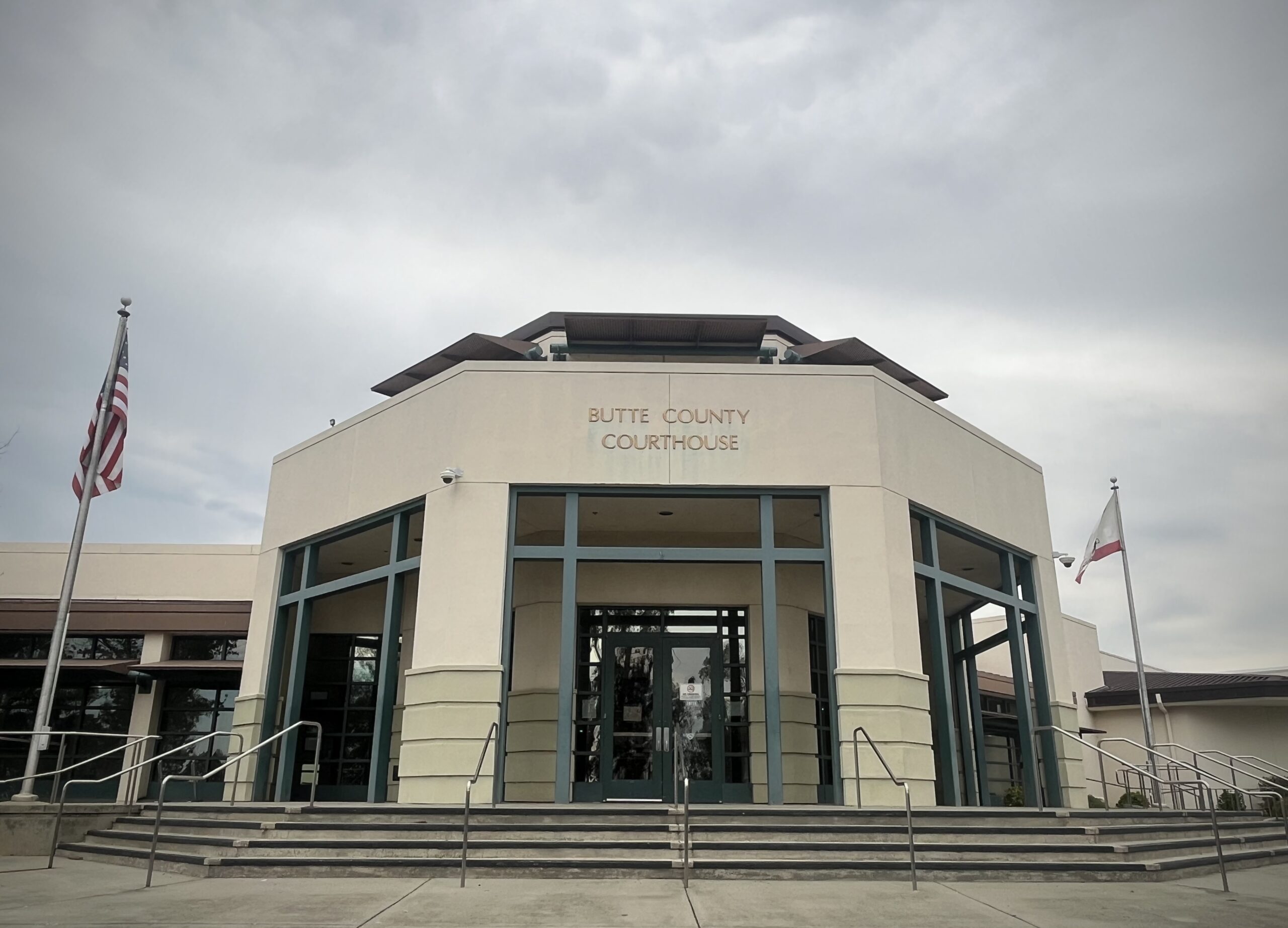
Mental Health Diversion court takes place at Butte County Superior Court monthly. (ChicoSol was unable to get permission to take photos of the proceedings.) Image by AI.

ChicoSol reporter Yucheng Tang attended sessions of Mental Health Diversion court on Aug. 5 and Sept. 2 to learn more about how the program is working in Butte County. Only first names of defendants — who sometimes have charges dismissed — are used in this story.

Michael, then a defendant in a Butte County Superior Court vandalism case, was standing at what a judge called the “finish line.”

“How do you feel?” Judge Jesus Rodriguez asked him. read more

Happiness is in giving, says local attorney

Changemaker: Ron Reed takes on problems from East Africa to Butte County
by Yucheng Tang | Posted September 23, 2025
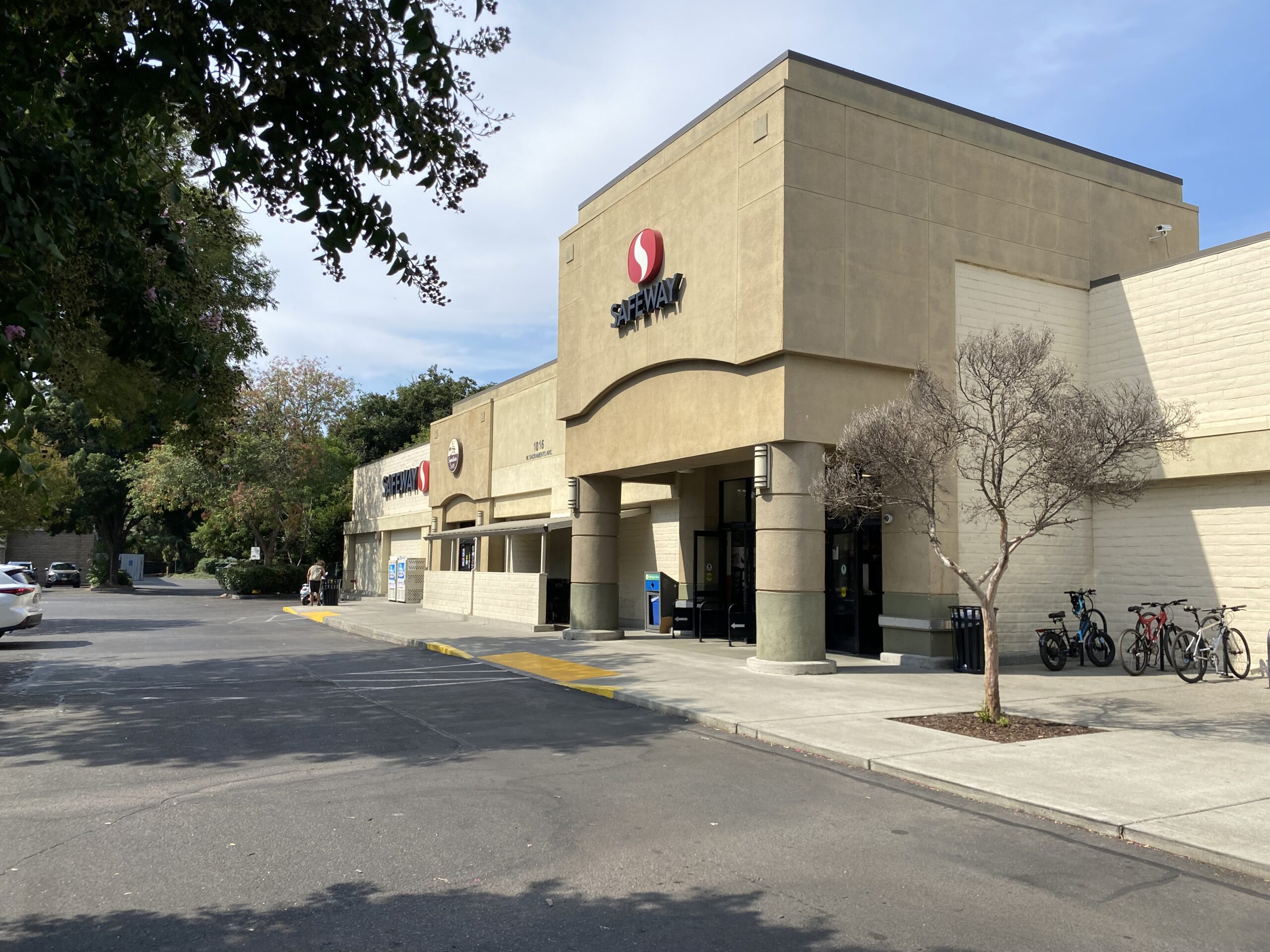
Attorney Ron Reed. Photo by Yucheng Tang.

Changemaker is an occasional series that highlights community members contributing interesting work. Submit ideas for the series to chicosolnews@gmail.com.

Chico attorney Ron Reed’s life falls into two distinct chapters: One of getting, and one of giving.

Before turning 47, he was a land developer in Wyoming, trying to earn enough money so he could do nothing after retirement. After 47, he retired, sold out everything in Wyoming, and moved to Chico, but then attended McGeorge School of Law in Sacramento, beginning a busy second half of his life. read more

Butte County police-shooting probes stall

After decades of rapid reviews, DA Ramsey hasn't issued a report in years
by Dave Waddell | Posted August 31, 2025
The CHP report for the 2022 shooting is still not finalized.

Butte County’s system for investigating officer-involved shootings has stalled without explanation, leaving several cases unresolved and marking a sharp departure from a pattern of rapid exonerations stretching back decades.

District Attorney Mike Ramsey, who oversees such investigations, has issued no reports on police killings since 2020 or on non-fatal police shootings since 2017, according to an extensive review of county records.

A number of cases remain open as a result. read more

Seven years after fatal bike crash, a Chico doctor is still missed

It was the driver's second collision with a bike; was county, too, at fault?
by Yucheng Tang | Posted July 28, 2025
Doherty was participating in Cycle Oregon. Photo courtesy of Jennifer Whipple.

On the morning of a windless Saturday in late July 2018, Chico surgeon William Doherty parked his car at the Chico airport, unloaded his Trek Domane road bike, and rode northeast along Cohasset Road.

Cycle Oregon—a weeklong ride Doherty had participated in for many years—was around the corner. Doherty was training on Cohasset, where the road climbs up to the town on the ridge, to get ready for the Oregon trip.

He rode on the narrow bike lane at the beginning of the route. After about 7 miles, the road narrows and the lane on the shoulder disappears. Cyclists consider this part of the road dangerous, and Doherty had even created a term for it—“Paranoia Alley.” read more

Viewing the world with empathy

A first-hand experience with Point-in-Time
by Yucheng Tang | Posted February 4, 2025

photo by Yucheng Tang
Elvert Richardson checks for homeless people or encampments under a bridge near the Chico State campus.

It was not a normal stroll.

“We need to check the lower part of the slope next to the creek. The homeless always set up their camps there,” Elvert Richardson said to me on a recent sunny Wednesday morning, while we were walking along Big Chico Creek on the north side of Chico State campus.

I was one of the 280 registered volunteers for the Point-in-Time count in Butte County on Jan. 29, there to learn about homelessness as a reporter. Every team, usually consisting of three to four people, was sent out by the Butte County Homeless Continuum of Care (CoC), a local planning body, to count unsheltered people and conduct the survey in an assigned area.

The Point-in-Time survey, required by the U.S. Department of Housing and Urban Development (HUD), conducted by local CoCs annually, provides the data for calculating funding allocations for homeless services.

I was intrigued when Richardson diverted me from the normal path to the bushes next to the creek. My understanding about what we were going to do changed — it was not only about walking the streets, but also looking into the corners and byways of the city.

Richardson walked ahead of me toward the edge of the road, where the slope down to the creek began. He craned forward slightly to look down. I imitated him. A few bushes blocked our view, so we walked down to make sure we didn’t miss camps or humans. Nothing was there.

Then, we checked beneath a nearby bridge — Richardson said the homeless often sleep there for shelter from the rain and sun. Under there, we saw plastic bags and leftover food. People may have slept there, but they were gone now.

Richardson said that, sometimes, the homeless have excavated a flat spot on the sloping embankment and slept there.

“Excavating such a platform seems to require a lot of work,” I said, surprised.

Then, a heavy weight settled in my heart — finding a place for uninterrupted sleep, a basic human right, is so difficult for the unsheltered. They struggle just to find a place to rest, even if it is a muddy, bushy, damp and bacteria-infested riverside.

Excavation has a dangerous side — Richardson told me it could damage the embankment and the top could collapse and hurt people. It could take their lives.

Locating members of a dispersed population
We kept walking, but still found no one. Richardson, my teammate, a 41-year-old Chicoan, had participated in the Point-in-Time survey four times in Colusa County, where he worked previously. Now he is a housing analyst in Chico’s housing department.

“How could you tell if a person on the street is homeless or not?” I asked him.

He said there are always little details — for example, the style of their walking. “Some of them walk barefoot, some walk very slowly while muttering to themselves,” said Richardson. “Also, you can look at the clothes they wear and their hair.”

“I am not being judgmental,” he added. This is just what he has learned about identifying unsheltered people during the past few years.

When I almost gave up the belief that we would find someone, Richardson changed the strategy. “We should check more alleyways rather than big streets,” he said. “Sometimes they hide there.”

Then, he swiftly jumped into a narrow alley next to us.

We had already walked for almost three hours. I was feeling uncomfortable because of a recent injury to my knee, but Richardson was so dedicated and focused that I didn’t want to complain.

Also, I knew the importance of the survey. Butte County’s 2023 Point-in-Time executive summary introduced its purpose: “Service providers use the Community Report to … develop timely and effective housing and services … Community members access the findings to gain insights into local homelessness and establish a baseline of common knowledge with their community leaders.”

But locating the people who need to be surveyed can be challenging.

“I feel like we are playing hide and seek,” I said.

“Oh yeah, definitely,” Richardson said while looking around both sides of the alley.

Richardson was a bit surprised that there were so few unsheltered people left in the area. “This area used to be very popular,” he said. “Maybe the anti-camping ordinances have changed everything.”

On the City’s website, there are 12 notices of planned enforcement of camping ordinances that have been published since February 2024. The targeted locations included Lindo Channel, City Plaza, Martin Luther King, Jr. Parkway, and more. (Civil rights advocates say the enforcement of anti-camping ordinances restrict the actions of homeless people by threatening fines, misdemeanor charges or jail time.)

“Maybe they just sleep in those corners, bushes, and under bridges at night, and flee when the sun rises,” Richardson said.

The word “flee” stung me. It reminded me of mice. Why do humans need to flee during the daytime like mice that everyone hates? Invisibility doesn’t mean they don’t exist, and doesn’t mean the problems have been solved.

Instead, the number of people experiencing homelessness nationwide is growing. As of January 2024, there are 771,800 people experiencing homelessness in the country, an 18% increase from 2023, and more than 187,000 in California, a 3% increase, according to HUD.

The number of homeless people counted in Butte County in January 2023 was 1,237.

After this year’s surveying, ChicoSol tried to reach the Butte County Employment and Social Service Department’s public information officer, Kristi Olio, as well survey program manager Erin Murray, but neither responded to multiple phone calls over several days requesting answers to a few basic questions.

Misfortune comes and goes
Immediately after we entered another alley, I saw a woman in a purple sweater. She was walking a tiny puppy, holding a cane, and picking up litter from the ground, placing it into a big trash bag.

Richardson had told me that the first question we asked someone should be, “Have you seen any unsheltered people around this area?” This, he explained, would be more polite than asking someone directly if they’re homeless.

As we approached the woman, she said that other volunteers had asked her if she had seen any homeless people around, but no one had asked her to participate in the survey herself.

“Are you unsheltered currently?” Richardson asked.

“Yes,” she said.

Richardson and I exchanged a glance, as if saying, “Finally.” Then, Richardson started to ask her questions.

The survey questions include demographic information, the length of time the person has been unsheltered, the cause of homelessness, the services they would like to receive, and others.

The woman said it was not her first time experiencing homelessness. She entered a shelter back in 2017 and later found housing in Paradise. But in 2018, the Camp Fire destroyed her home, leaving her homeless again. She returned to a shelter, and subsequently landed in another apartment. However, during the pandemic – “maybe in 2022,” she recalled – she was evicted by the landlord after losing her job and facing a rent hike.

Since then, she has been homeless living in her truck.

Her voice was soft and her eyes looked sullen. There were several bruises on her face. Richardson told me later that this is common among the homeless. “They might be subject to some violence,” he said.

As she recounted her story, I could see the tides in the lives of unhoused people, and hear the sound of those tides rising and falling . Just as waves ebb and flow, misfortune comes and goes, leaving them alone for a while only to engulf them again.

Some are lucky, managing to survive after being swept under, and others are not. Think of those who died in the cold winters in public spaces and who were commemorated last December in front of the Our Hands sculpture.

As the conversation went on, her barking dog turned quiet. The woman also let her guard down gradually and shared more of her story.

She said she didn’t like living in the congregate shelter because she doesn’t “feel comfortable” living and showering with so many people.

What she wants most is a job. “That’s the most important thing,” she said. She thinks having a job is the first step to jumping out of the vicious loop she is caught in.

She hopes there will be some resources to help her register her truck so that she can drive around the county to look for a job.

After asking the questions and giving her a $10 gift card, we said goodbye and left in separate directions. “Good luck on your job hunt,” I shouted to her, looking at her slim back and the heavy bag she carried in her hand. She turned around and said “Thank you,” giving us a friendly smile.

I will not forget her bruised face and sullen eyes.

Meeting community members
That afternoon, I went to another survey hub in Chico on 765 East Ave., and met Scott Cronk there, a volunteer from Durham.

“I have just gotten tired of seeing all the homeless folks on the street. And I figure – I’m saying I’m retired — so, what? Instead of talking about it, you do something about it,” Cronk explained.

The 66-year-old volunteer had talked to eight unhoused people by 3 p.m. that day. He said he saw a lot of similarities in their experiences.

“Shockingly, almost all of them, both men and women, had some kind of domestic violence,” he said. “And then they have a problem keeping housing or getting housing because it’s so expensive. And then they got some mental issues going.”

Cronk was shocked when one man said he was living on the street and had been homeless for five years or more. “His spirit is a little weathered, but he is trying to hold his own. He doesn’t really look like he’s homeless. He’s taking care of himself,” Cronk said.

I guess that for both Cronk and me, the volunteer experience is not just about helping others but also about giving ourselves an opportunity to learn more about the people who live almost invisibly around us. When we talk to them and learn more about their stories, they are no longer “others”; they become community members.

Earlier that day, when Richardson and I walked back to the City Council Chambers after the survey, we passed City Plaza.

The ice rink at City Plaza was removed a day earlier, and more homeless people appeared there than usual, sitting on the benches and chatting under the sunshine. They looked relaxed, maybe because the weather was getting warmer and spring was around the corner.

When I first saw the rink last November, I stood there for a while, staring at those young people skating as freely as swallows gliding over a lake.

A few weeks later, during the march on Homeless Persons’ Memorial Day, someone told me the rink prevents the homeless from living in the plaza, making the plaza exclusive. “We hate that rink,” that person told me.

It occurred to me that the ice rink can represent freedom and beauty, but it can also be a barrier to access for the homeless and symbolize a lack of empathy.

Our joyful experiences can be built upon others’ suffering and pain. Learning the story behind the story matters to seeing the world empathetically.

Yucheng Tang is a California Local News Fellow reporting for ChicoSol.

Hmong elders may face isolation, animosity

California hotline and Oroville's cultural center offer assistance
by Yucheng Tang | Posted January 21, 2025

photo by Yucheng Tang
Seng Yang, director of Butte County’s Hmong Cultural Center.

Among more than a thousand reports received by the California vs Hate hotline in the first year, the most commonly cited form of hate was based on race and ethnicity.

Anti-Black bias was the most common, followed by anti-Latino and anti-Asian, said Kevin Kish, director of the California Civil Rights Department, during a Jan. 17 briefing organized by Ethnic Media Services (EMS).

The Civil Rights Department launched the hotline in May 2023, and connects victims and witnesses of hate incidents and hate crimes with the resources they may need, including legal services, counseling, mental health services and financial assistance. People can report online in 15 languages, including English, Spanish, Hmong, Filipino and Chinese, or by phone in 200 languages.

In its first year, the hotline was used by nearly 80% of California’s counties, Kish said, including Butte County.

Seng Yang, the director of the Hmong Cultural Center in Oroville, in an interview with ChicoSol discussed a couple of incidents that his clients encountered last year that he believes were related to their ethnicity.

In one case, a woman told Yang that some people tried to destroy pots of herbs surrounding her house and threatened her with violence. The woman is in her 70s, barely speaks English and was saddened by the confrontation, Yang said.

Another Hmong elder was attacked and bitten by a dog in Oroville’s Southside while the homeowner failed to intervene, he said.

“It’s incredibly important to have services created like the California vs Hate hotline that helps spotlight and make mainstream our community’s issues,” said Gaonou Vang, who spoke at the EMS briefing and is communications and narrative manager at Hmong Innovating Politics.

However, Vang noted that it requires foundational and intimate trust in order for the hotline to succeed and minimize under-reporting, especially when Hmong and Southeast Asian American people are tightly wound within their community systems, such as the Hmong 18-clan system. (Hmong-Americans are organized into an 18-clan structure; all members of a clan recognize that they are related by a common ancestor.)

Kish said there are various reasons for the under-reporting of hate incidents, including lack of confidence in the government due to previous disappointing experiences, lack of legal knowledge, language barriers, fear of contacting law enforcement among immigrants, and jurisdictional issues between tribal, local, state and federal authorities for indigenous communities.

The purpose of launching this hotline is to overcome all those barriers, Kish said.

“It’s designed to help everyone who experiences hate, no matter who they are, no matter where they are in our state, and no matter whether what they experienced was in fact a crime,” Kish said. “You can report anonymously if that’s what you choose to do. You don’t have to disclose immigration status.”

“What you get out of the hotline is driven by what you want, what you identify as needing,” Kish added.

At the Hmong Cultural Center in Oroville, Yang noted that the elderly face especially tough circumstances. He said some of the Hmong elders suffer from mental health issues including depression. They often cannot speak English, have no social life and feel isolated, some of them having nightmares about the war they went through when they were young and the journey of escape from their hometowns.

The Center organizes in-person meetings for the elderly three times every month and conducts home visits to senior clients. “We’ve been here to share, to talk about social life, and also help them, educate them about the kind of resources that might be provided for them,” Yang said.

At the EMS briefing, Vang said that some Hmong in California worry about being deported, which might discourage them from reporting hate incidents to the government.

Kish said rural counties are among those that haven’t produced calls to the hotline. He said the lack of reporting from rural California is reflected in the Attorney General’s hate crime report. “Many of these (rural) counties are reporting zero or very few hate crimes,” he noted.

(A hate crime — not just a hate incident — refers to a criminal offense driven by a bias against a race, religion, disability, sexual orientation, ethnicity, gender, or gender identity.)

According to the Attorney General’s 2023 hate crime report, Butte County reported 19 hate crime offenses; the Civil Rights Department says the hotline was used by county residents fewer than 10 times in its first year.

The Attorney General’s report says Shasta County reported 15 offenses, while rural Glenn County west of Butte reported zero hate crimes.

Report a hate incident or hate crime by phone at 833-866-4283. Report online here.

Yucheng Tang is a California Local News Fellow reporting for ChicoSol.