
Reporter Yucheng Tang honored for story that shows Chinese-Mexican connection
by Lindajoy Fenley | Posted November 11, 2025
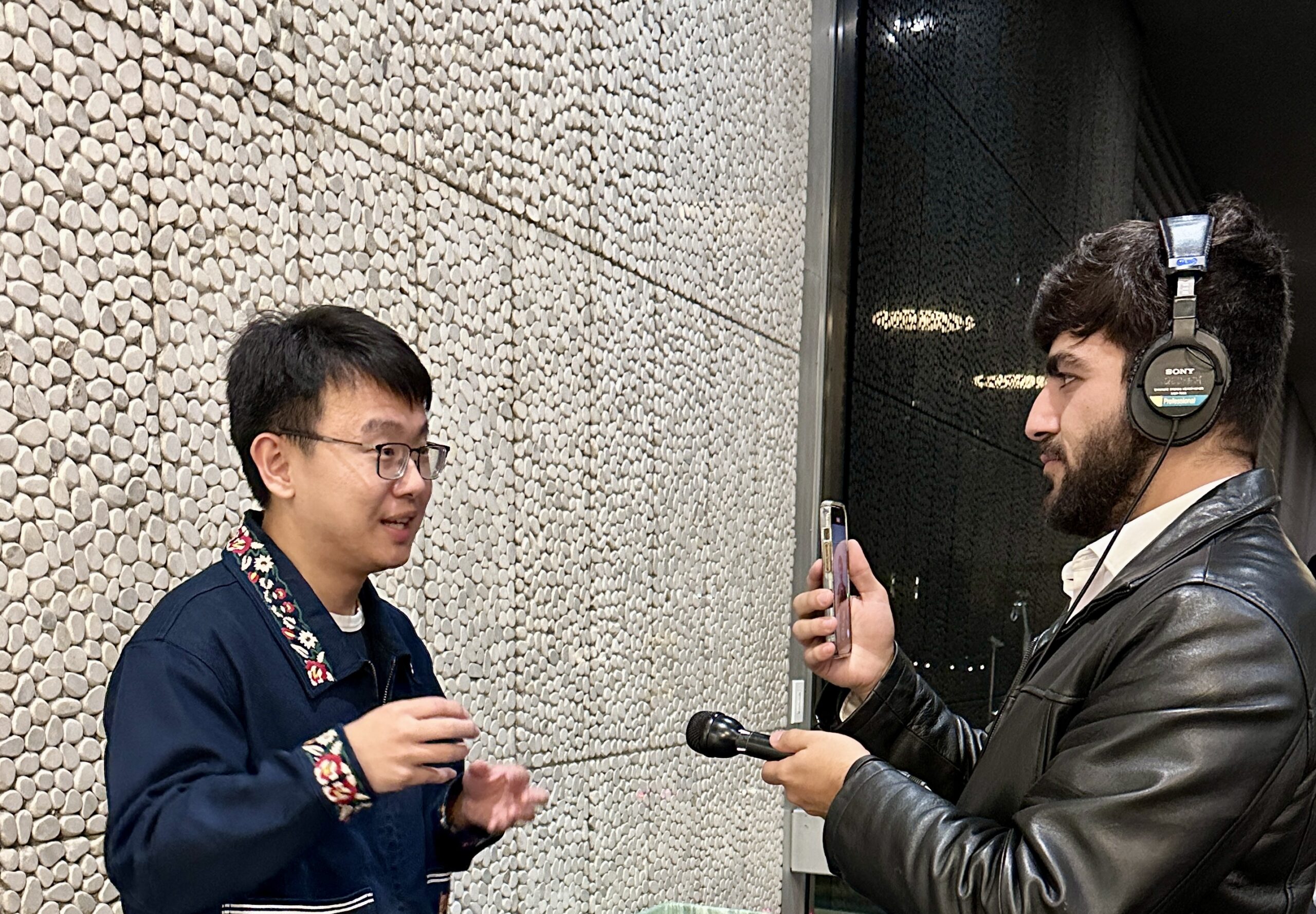
Writer/editor Anthony Advincula presents Yucheng Tang with the top award for culture reporting at the Nov. 7 ACoM Expo in Oakland.
Shortly after Yucheng Tang moved to Chico a year ago to report for ChicoSol, he connected the traditional Chinese Tomb Sweeping Day with Mexico’s Day of the Dead tradition. On. Nov. 7, his story of cultural rediscovery that showcased those traditions side-by-side won a first place at American Community Media’s (ACoM’s) annual award ceremony.
In his acceptance speech, Tang noted he was able to bring two different cultures together through “good storytelling … sincerity and curiosity.” He also expressed his gratitude for the opportunity to introduce people in “a small town like Chico” to Asian culture and heritage.read more
Understanding better the Chinese tradition that was part of my childhood
by Yucheng Tang | Posted November 13, 2024
photo by Yucheng Tang
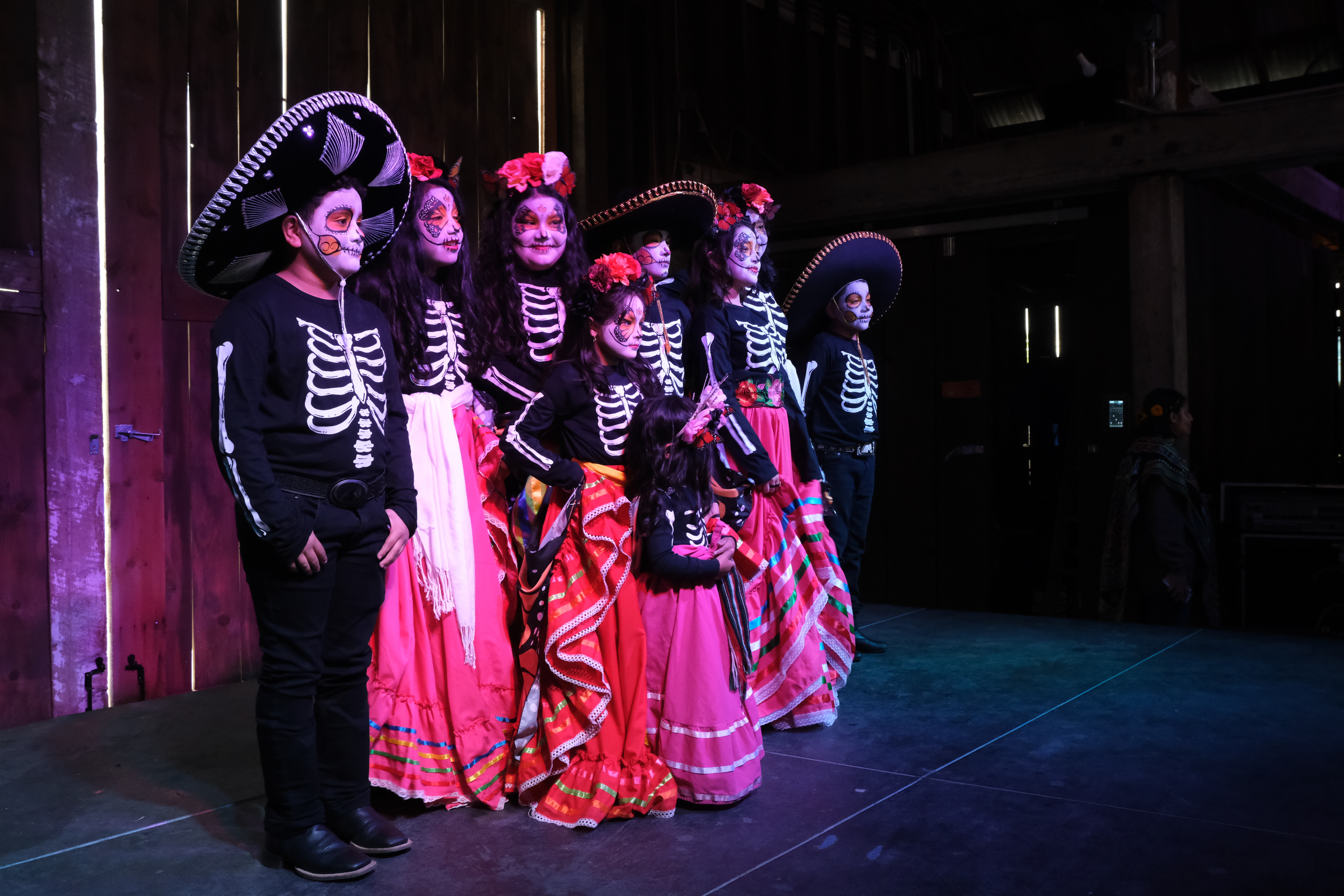
Folkloric dancers recently celebrated a lively and colorful Day of the Dead at Meriam Park.
How can a day that’s about death feel like a huge party?
When I joined the crowd at The Barn at Meriam Park for a Nov. 2 celebration of Day of the Dead — a Mexican tradition called Día de los Muertos in Spanish — I didn’t expect it to lead me to reconsideration of a Chinese festival, Tomb Sweeping Day, that was part of my own childhood.
Latin music played loudly in the background. On stage, children whose faces were painted like skeletons danced and sang joyfully. Next to the stage stood a community altar, adorned with photos of deceased loved ones, candles, and marigolds — the flower that is believed to guide spirits back home.
Nearby, a table offered marigold-shaped stickers where attendees could write the names of their departed loved ones as well as messages for them.
I wrote down my grandfathers’ names and the words, “I miss you.” They have both passed away, one in 2016, the other in 2022.
My paternal grandpa’s name is Yongchao, meaning “permanent wave” in Mandarin. When I was in primary school, I liked to pretend that I was a teacher and I was teaching Yongchao how to write journals and recite poems. Yongchao always cooperated with me, spending hours listening to my class attentively and finishing the homework I assigned.
My maternal grandpa’s name is Huanhua, which means “brighten China.” He was a dancer, and people always said I inherited his artistic talent. Years of dance training gave him perfect posture — he always stood upright and couldn’t resist dancing whenever music played.
Thinking of them brought tears to my eyes, but my sadness was soon interrupted by the lively music, performances, and the beautifully decorated skulls surrounding me. Skulls, often considered terrifying in China, had become a symbol of death and rebirth here. I even bought a sugar skull that can be painted with edible paint and a small brush.
I could not help but think about a similar festival back in my hometown across the Pacific: Tomb Sweeping Day.
In China, everyone returns to their hometown in early April to honor their deceased relatives and ancestors. Family members visit the graves in the springtime, clean the tombs, make food offerings and remember the deceased.
After learning about Day of the Dead, I was surprised by how similar the two festivals are. Just as people celebrating Day of the Dead will leave the favorite dishes of their late loved ones out, we place chopsticks, plates and bowls filled with food and alcohol in front of the tombs. The belief is that our loved ones will return to enjoy the offerings.
My grandmother would mutter a series of prayers, asking them to bless our family with luck and fortune. The atmosphere was always serious and solemn. Sometimes, a mischievous child, unaware of the rules, would sneak food from the plate while my grandmother was still praying. This was considered a disrespect to ancestors, and the child would be sternly scolded, withdrawing their small, guilty hands.
We would keep refilling the plates and cups, assuming our ancestors were consuming the offerings. To avoid overflowing the cups, we would pour only a little alcohol at first, saving room for more. As a child, I always found this scene funny and even ridiculous, not understanding the spiritual significance.
My memories of Tomb Sweeping Day are mostly shrouded in sadness, under dark skies and constant rain. Chinese poetry often captures this melancholy. One famous poem, recited by nearly every Chinese person, goes: “A drizzling rain falls on Tomb Sweeping Day; the travelers on the road look like lost souls.” The poem sounds even more depressing in Mandarin.
We burned “paper money” – the beige papers that represent the currency our ancestors need in the afterlife – and hoped our departed relatives would have enough money to spend there. I didn’t like this part; the black smoke smelled bad, stung my eyes, and caused them to water. The world around me felt like it was caught in a vast, dark whirlpool.
Justina Sotelo, a vendor I met at the event, painted an orange monarch butterfly – the “butterfly of immigration” – on her face, and wore wings on her back.
“There is sadness about Day of the Dead,” she said. “But that’s not the focal point. The idea is that there is a celebration, there’s this acknowledgment of death, there’s this recognition of death.”
Celebration? I never thought of Tomb Sweeping Day in those terms. I never thought it could be as joyful as Day of the Dead. But as I reflected and pushed myself to ponder on it after hearing what Sotelo said, I recalled moments of laughter and joy from our festivities.
As an only child, I often felt lonely while growing up, but during the festival, I looked forward to spending time with my cousins. My great-grandparents’ tombs were on a small mountain near a creek. After paying our respects, the whole family would gather by the creek, set up a grill, and barbecue. Adults prepared food, children splashed in the cool water. The adults would gossip and share stories, some of them about the deceased and some about the living. The air was filled with chatter, laughter, and the aroma of delicious food.
The dishes we brought were always special. Qingtuan, a jade-colored Chinese dumpling made of glutinous rice mixed with Chinese mugwort, was a must-have. It usually has two flavors, sweet and savory. I was a big fan of sweet Qingtuan, whose filling is made of red beans, but gradually became more into the savory version as I grew up.
Stir-fried snails were another staple. Family members would often debate whose recipe was best, and the winner would be tasked with cooking them the following year. My youngest aunt was always the winner, and apparently, she was proud of that.
I wondered: Isn’t cherishing time with loved ones and enjoying delicious food a form of celebration? I think one of my grandfather’s wishes would have been to see his family happy, even after his passing.
“There’s a normalcy in recognizing they’re gone but still with us,” Sotelo had told me. “It helps us understand death and how loved ones live on through our practices, stories, and memories.”
Her words resonated with me. After our loved ones pass away, we must move forward, but we also need to carry them with us in our heart or memories; it’s a journey of internalization. It’s a process, with the tension between forgetting and remembering.
I would not say the Day of the Dead changed my attitude toward death, but its seemingly exaggerated forms of celebration provided me with an opportunity to rediscover Tomb Sweeping Day, a tradition that I belong to and is deeply rooted in my heritage.
For example, adding alcohol to a cup no one drinks from isn’t ridiculous anymore — it’s a tradition, practice and story that helps us feel connected to those we’ve lost. For example, Tomb Sweeping Day wasn’t all about heavy sadness; there was joy and celebration, too.
Perhaps I never truly understood the essence of the festival as a child. Perhaps I’m only recently beginning to grasp what it means to grieve and honor the past.
Before leaving the Barn, another vendor, Justin Stier, said that when he came to Chico 20 years ago, there were not many people outside the Spanish-speaking community celebrating Day of the Dead, but it has become more and more popular. I guess it might take more time and a larger community to make Tomb Sweeping Day more popular and well-known on this continent.
The marigold-shaped sticker I wrote on during the event now sits in the corner of my work desk. As I gaze at the gray sky outside my apartment window, I wonder: Does that other world also have national borders and cultural divisions? Guided by the marigold, could my Chinese grandfathers, Yongchao and Huanhua, find their way to my new home in California — a place they never could have imagined — to visit me?
I miss them.
Yucheng Tang is a California Local News Fellow reporting for ChicoSol. Growing up, Yucheng spent much of his time with his grandparents in China and says Chico reminds him of his hometown.
Families gather to honor a Latin American tradition
by Ulises Duenas | Posted October 29, 2023
photo by Ulises Duenas
An altar at the Chico Cemetery.
Death is universal and inevitable. It’s almost impossible to prevent a loved one’s death from being emotionally painful when it happens. But how a culture or family views death and the passing of a loved one is far from universal.
Día de los Muertos, or “Day of the Dead,” is a Mexican holiday that came from combining Aztec and Spanish traditions. The focus is on celebrating the lives of those we lost and using food and music to give them a good time before their souls return to rest. The holiday is all about associating death with feelings of joy and thankfulness rather than with reopening old wounds.
Chico is a town full of Mexican influence; the name “Chico” itself is a Spanish word, and the bounties of Mexican culture are shared through the entire community. That includes a Día de Los Muertos event that’s been happening at the Chico Cemetery on Mangrove Avenue, a celebration that’s in its third year. The organizers, Amber Rodriguez, Josiah Anaya and Jessy Maice wanted to highlight the beautiful symbols, vibrant culture and positive emotions that the holiday evokes.
“In the cemetery community we realized, in serving all faiths and families, that every culture has different needs, and this is our way of addressing the needs and desires of the culture that we serve,” said Josiah Anaya. He added that, as someone who works in funeral services and sees death every day, the holiday is “an outward expression and reminder that every day is a gift, and the story and legacy of those who passed lives on as long as we memorialize them.”
Families gathered at the Chico Cemetery Oct. 28 to enjoy free tamales, horchata-flavored cotton candy and a live mariachi band. There was an irony in seeing so many smiling faces at a cemetery, and that’s a testament to what the holiday can do for people. Nothing can take the pain away from death, but having just one day where a community can come together to celebrate those they lost can have powerful effects. There was also a traditional ofrenda, which is an altar decorated with sugar skulls, candles and food for the spirits to enjoy.
“We want to just bring more awareness to what the culture has and what it means,” said Rodriguez. “Every year we hope to grow and get the community out here to teach them more about the Day of the Dead.”
The organizers already have a good number of people who show up for the event, but there’s no reason it can’t grow.
Death will always carry with it a mystique. It’s a reality of life that death is as ethereal as it is natural, and as we navigate our own feelings on mortality, it’s important to remember that even death is not final. Whether you believe in an afterlife or not, you still have to deal with death in some way. Día de los Muertos helps us remember that our dead loved ones were more than people who aren’t around anymore — they were people with lives worth remembering and celebrating.
Ulises Duenas describes himself as “the son of two Mexican immigrants who has a passion for writing.”