
Changemaker is an occasional series on people who have contributed to the community.
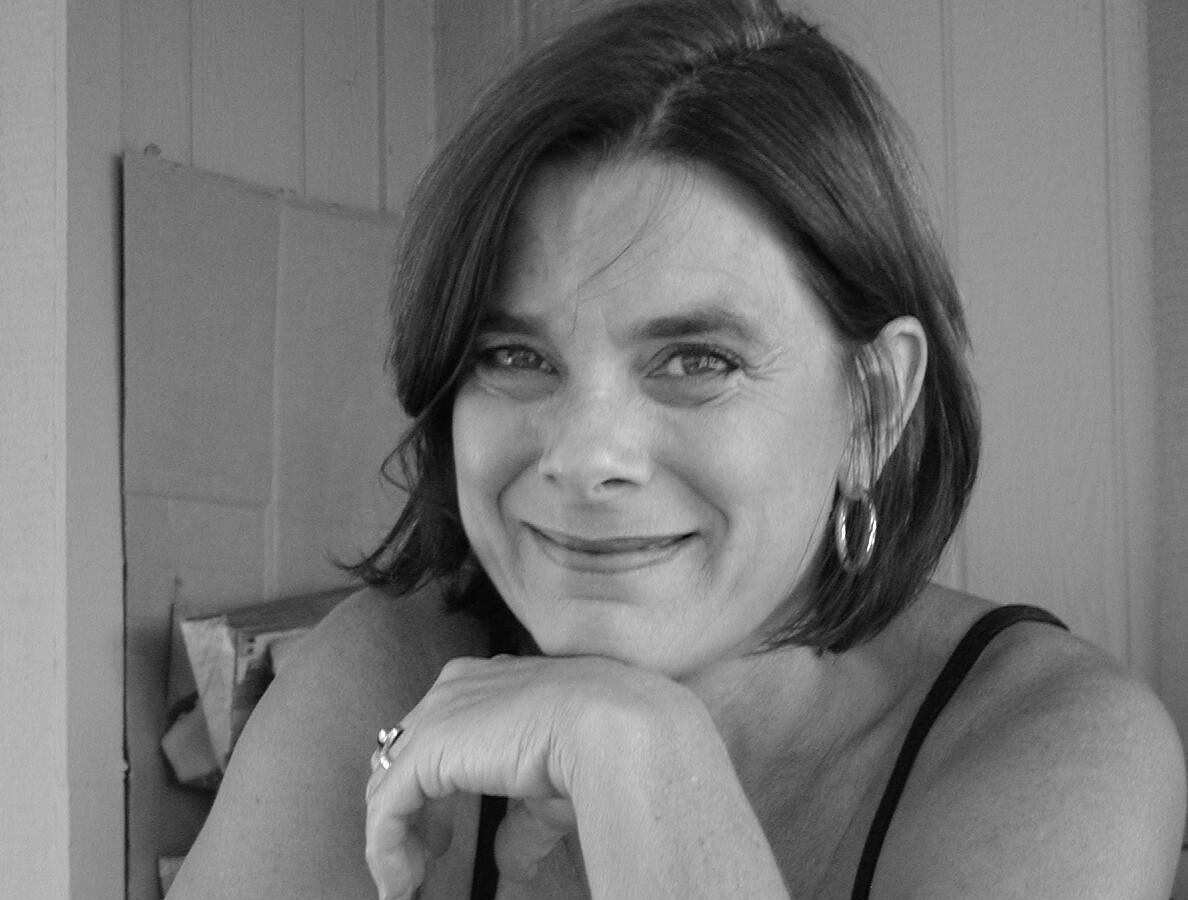
Retired Chico State history professor Kate Transchel has devoted years to investigating and advocating against human trafficking in Butte County and abroad.
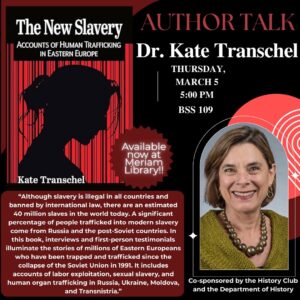
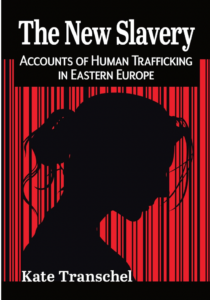
Now she’s published a book, “The New Slavery: Accounts of Human Slavery in Eastern Europe,” that details her international research on trafficking. Transchel will speak on her work at 5 p.m. March 5 in the Behavioral and Social Sciences building on Chico State’s campus and at 11 a.m. March 7 at Barnes & Noble at 2031 Dr Martin Luther King Pkwy.
Transchel’s path to educational leadership hasn’t been linear. She was raised in Concord, Calif., describing her younger self as “a mess.” From an early age, she started abusing alcohol and eventually heroin, ending up briefly homeless in the Santa Cruz mountains.
Transchel managed to get enough money together to move to Hawaii, where she found a place to live and a job working at a bar. Though she was actively seeking help from a 12-step alcohol recovery program, she was still drinking heavily.
But a tragedy became, for her, a turning point.
She returned home from work one night to find her roommate, who also struggled with substance abuse, dead from a drug overdose. In a state of distress, she struggled with the idea of calling the police, afraid that they would find drugs in the home.
“I just didn’t know what to do, so I sat down on the floor and I willed myself to die,” she said.
She recalls a “spiritual encounter” that changed her life. She recalls a warmth that “surrounded my body” and a voice in her mind telling her that this wasn’t her end. Transchel said that it wasn’t a “Christian thing,” but rather a call to continue living.
She called the police and her roommates’ parents to report the death.
That tragic event persuaded her to “go to AA and get honest for the first time and sober,” she said. “I got off the floor and I was different. And I can’t explain that, but it was just different. That experience changed my life.”
She committed to attending an Alcoholics Anonymous program, where a woman mentored her in her journey to sobriety and education. Heeding the woman’s advice, Transchel enrolled in a few community college classes.
After taking a class on Russian history and loving it, she ended up obtaining her BA in Russian studies. One of her history professors was granted a position at the University of North Carolina at Chapel Hill and was able to take his two best students with him, one with full funding, and he chose Transchel. She completed her doctorate in Soviet history.
Transchel grew up in the Cold War 50s and 60s, and had been influenced by the predominant cultural narrative about the region. But she was curious about what the people – not their government – were really like.
After completing her doctoral program in 1997, Transchel received a grant to spend a summer in Moscow as research for a book she wanted to write on the 1970s hippie movement in the Soviet Union. She spent months interviewing recovered drug addicts and alcoholics about their lives on the streets, and eventually met a woman who claimed to have been trafficked during the Balkan War.
Transchel initially didn’t believe the woman’s trafficking story. “We weren’t talking about trafficking at that time,” Transchel points out, referring to society in general.
But Transchel said “there was something about her that was really fragile and broken,” and “something about her that struck me as sincere.”
Transchel had accepted a teaching position at Chico State, and began researching the topic of trafficking. She found dozens of articles to back up claims the woman had made — stories of women, men and children who had been victims.
“I just couldn’t avert my gaze — I had to follow that story,” Transchel said.
Her concentration on trafficking seemed to be contained as an issue that happens solely to people “over there” — until she met a trafficking victim in Chico.
She received another grant, this time from Chico State, to return to Russia to research human trafficking. She spent time in Russia, Ukraine and Maldova interviewing people who had been rescued out of the slave trade whose “minds and bodies had been broken,” along with “the people who had done the rescuing.”
Transchel and her husband spent years traveling back and forth between Chico and Russia, each trip giving her more context and material for her research on trafficking abroad.
“What interests me is the tragedy and the way [the Russian people are] able to emerge from the tragedy,” she said. “I think that there’s a lot of lessons that we can draw from their society — not their government – their society.”
Her concentration on trafficking seemed to be contained as an issue that happens solely to people “over there,” she said — until she met a trafficking victim in Chico.
Transchel began leading a team to errotic massage parlors – massage businesses that might be offering sexual services – in Chico on Sundays for research purposes. During visits, she talked to the employed women through Google Translate, slowly building confidence and trust. After two years of visitations, some women started to open up about their experiences being trafficked.
She recalls a visit where one of the women handed her a piece of paper with a Chinese address on it. Confused, she asked the woman why she had given it to her. The woman responded that it was her parents’ address, used by the owner of the massage parlor as blackmail. He was threatening to harm her parents should the woman speak out about what was happening to her.
“We took that information and fed it back to the FBI and ICE — don’t hate me for that, ICE wasn’t the militia that it is now,” she said.
None of the women asked for help from the team, even when it was offered. But Transchel said that later, in 2018, there was a “big bust,” and many trafficking victims were rescued. Transchel believes the raid was based on information her team had fed the FBI.
The City Council recently approved an ordinance to prevent trafficking in massage parlors that Transchel believes is a step in the right direction.
Transchel believes there’s “a lot of trafficking in Chico” that can involve unhoused women, students or others. When she was active locally, Transchel said Chico PD had only two detectives and wasn’t equipped in terms of resources to make human trafficking an investigative priority.
“We have not decided that human trafficking merits attention and resources,” she said. “We’re more interested in fraternities burning couches than in 13-year-old girls coerced to have sex.”
The onslaught of stories related to Jeffrey Epstein has shown that trafficking can seem to be both lucrative and glamorous. “We’re all sort of horrified, but we can’t turn away,” she said.
Transchel said the Epstein case isn’t reflective of the day-to-day reality. A trafficking victim is more likely to be the “13-year-old girl who runs away” and meets a man who offers her care and support, she said.
As secretary of state, Transchel said Hillary Clinton was proactive by encouraging annual reporting and attention to the issue. “We as a society have gone backwards in terms of thinking [about the need to be] supportive of girls and women,” she said.
Transchel worked as a professor for 24 years before stepping down into semi-retirement in 2022. Her teaching included European history, Russian and Soviet history, world history, gender and sexuality in European history, and graduate seminars. In 2012, she co-founded the campus S.T.O.P club — which stands for Stop Trafficking of Persons — to hold annual conferences and raise awareness of trafficking in this area.
In fall semester 2025, she taught a class called “Extreme Politics: The Rise of Authoritarian, Fascism and Socialism” that she describes as “important” given the current political climate.
Her newest book represents the culmination of her research on modern-day slavery during her time abroad. The book is narrated in three parts: The accounts of victims, the accounts of those who rescued them and Transchel’s own accounts of what she witnessed. The book is available for purchase on Amazon and Barnes and Noble and available for checkout at Chico State’s Meriam Library.
Transchel’s passion for teaching, advocacy and empowerment has established a firm sense of purpose for her. She said this means to “live in a way that benefits others, as much as I possibly can.”
Lexi Lynn is a journalism major at Chico State. Leslie Layton is editor of ChicoSol.
4 Comments
Excellent article. Thanks
A badass
Kate Transchell is a force. She has really educated so many people about trafficking! Great job Kate! See you soon!!!!
Nice work, Lexi Lynn! I’ve known Kate Transchel since 1998 and this article taught me things I didn’t know about her. Kate truly is a force and an inspiration. Go listen to her speak! And buy her book!