
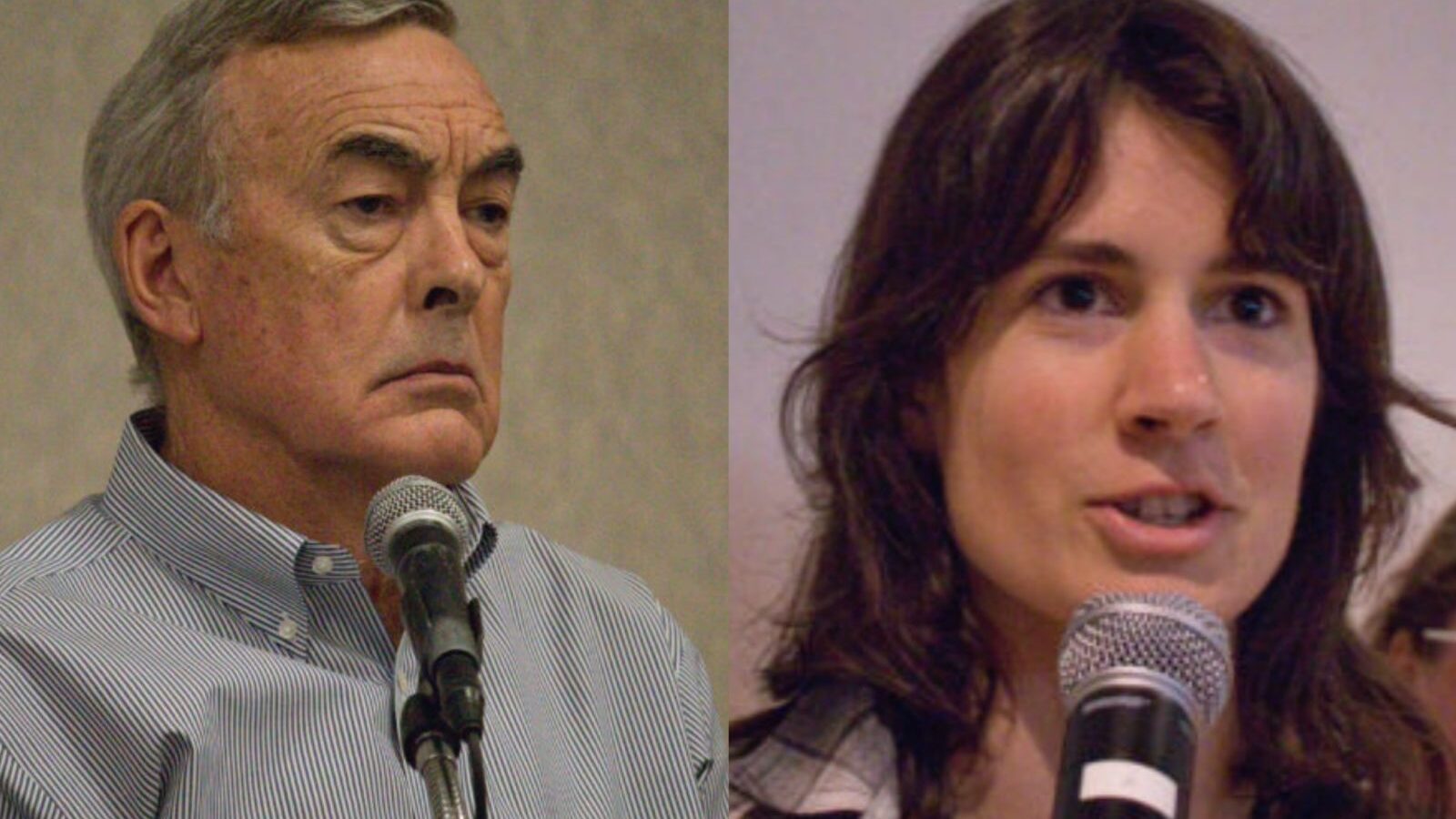
A moment during the May 19 Chico City Council meeting took many observers by surprise.
That moment came after Councilmember Katie Hawley proposed a sewer rate assistance program for low-income residents that might help them as sewer rates climb during the coming years. Hawley also suggested the program might use the PG&E rate assistance eligibility criteria.
And then Councilmember Tom van Overbeek raised a question: Would Hawley herself benefit from the program, and if so, would it be a conflict of interest for her to participate in the decision-making?
“Don’t you think it’s a conflict of interest? You are low-income, right?” van Overbeek asked Hawley. “This is going to put money in your pocket.”
Hawley responded: “I actually don’t qualify for the PG&E rate assistance program. So, the answer is no.”
“That’s wonderful,” van Overbeek then said. “Okay. Well, that’s good.”
Van Overbeek’s question became a social media moment as people posted video clips of the exchange, with some comments reflecting surprise and others indicating van Overbeek’s question was rude or inappropriate. After the meeting, Hawley also posted the video clip of the exchange on her Instagram account with this question: “Should low-income Councilors recuse themselves from forming a Need-based Rate Assistance Program?”
The Council voted 5-2 to refer the matter back to city staff for exploration. In opposition were van Overbeek and Vice Mayor Dale Bennett.
“The reality is, if we allow a certain group of people to pay less, that means there’s another group of people that has to pay more,” van Overbeek said during the Council discussion. “That’s the simple arithmetic of it, and there’s no free lunch.”
In the last couple of months, three out of the seven council members have been the subject of conflict-of-interest complaints or questions, including Mayor Kasey Reynolds, Councilmember Bryce Goldstein and Hawley.
What is a conflict of interest?
Typically, councilmembers face a potential conflict of interest in land use, contracting, permitting, and other regulatory decisions that would affect their private financial interests.
The conflict of interest laws, according to the California Fair Political Practices Commission, state that “a public official has a disqualifying conflict of interest in a governmental decision” if it seems likely the decision will affect that person’s financial interests.
The FPPC says the law is designed to prevent public officials from placing their financial interests above the public interest and protects them from even an appearance of impropriety.
Hawley told ChicoSol that she feels van Overbeek was “putting on full display his classism and his values as a councilmember.”
“I think it’s important for the community to see that this is the priority of our current Council majority,” Hawley said. “It’s not protecting the financial stability of the residents of Chico, many of whom are low-income, such as myself.”
In a phone interview, van Overbeek told ChicoSol that he raised the issue because FPPC regulations state that when an official belongs to a group affected by a proposed policy, that group must generally comprise at least 25% of the jurisdiction’s population for the official to avoid recusal.
In other words, the FPPC’s “General Rule” says that if the decision affects a “significant segment” of the community — at least 25% — then the official isn’t disqualified from voting even if that official is among those who are affected.
“That’s why I asked [Hawley] what percentage of the rate payers would be subject to this discounted rate that she’s proposing,” van Overbeek told Chicosol.
Van Overbeek said the conflict of interest laws should be applied equally to everyone, regardless of wealth, and denied that he was acting in a narrowly partisan manner in retaliation for recent conflict-of-interest complaints against the mayor, with whom he has often aligned on conservative-leaning votes.
A political scientist weighs in
Chico State political science professor Charles Turner said the notion that someone should be prohibited from proposing policies benefiting low-income residents simply because they are not wealthy themselves seems “not the intent of the regulation.”
Turner said the 25% can be “somewhat arbitrary” depending on the issue involved; he also said the conflict-of-interest policy at the local level should not be broadly construed.
“I can’t imagine, for example, that this is applied to legislators who vote for changes to tax laws that will benefit them,” Turner said. “Legislatures seem to do that all of the time — usually in ways that benefit the wealthy.
“The idea that someone would be barred from proposing a policy that would help low-income folks, just because they themselves are not wealthy, seems very misguided and likely not the intent of this regulation,” Turner added.
Yucheng Tang covers city government for ChicoSol.
4 Comments
Overbeek needs to be voted out.
I was at that meeting.
The comment itself was inappropriate and unnecessary. These are supposed to be nonpartisan council seats, and we should be discussing the issues our city is facing.
As for recusal, I generally disagree with requiring city council elected officials to step aside simply because a policy affects them personally. Councilmembers are residents too. In many cases, the people most impacted by an issue are exactly the people who bring valuable real-world perspective to the discussion. If someone was low-income and we’re discussing affordability, that’s not a reason to silence their voice—that’s a reason to listen carefully to their experience.
Recusal makes sense when there’s a direct, unique financial benefit to that individual. But on broad community issues that affect thousands of residents, I want my representatives participating and representing the people who elected them.
Tired of wealthy white privileged old men ruling your life? Time to step up and vote them out this November!
I’m not 100 percent sure, but I imagine at least 25 percent of the population in Chico qualifies for the PG & E rate assistance programs which supports “medium to low-income” folks. It would have been good to include this in the reporting to shut Van Overbeek”s totally inappropriate and personal comment, down. Heaven forbid we actually try to help the economically disadvantaged reach more stability instead of always making the wealthy wealthier.