
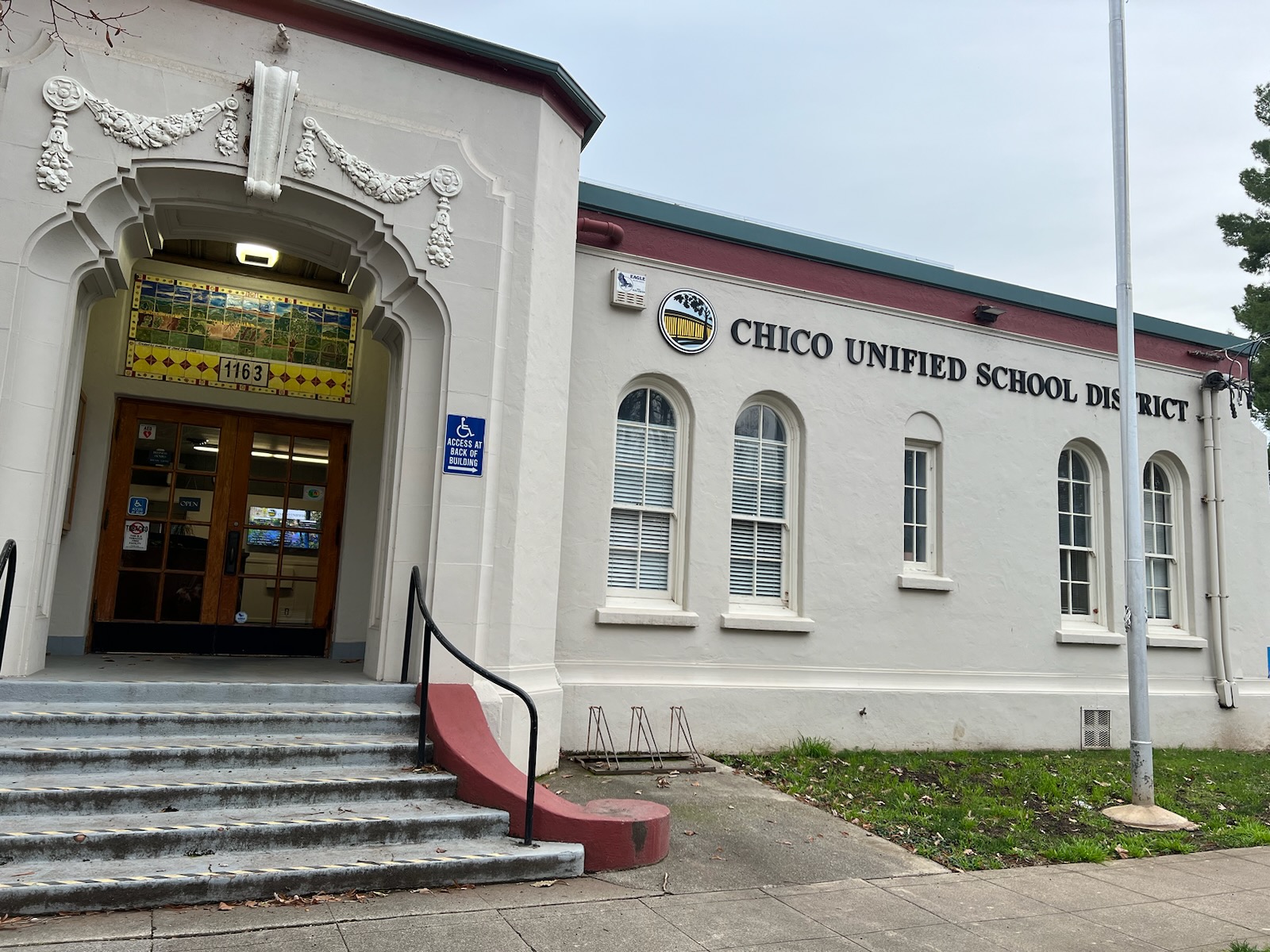
The Chico Unified School District (CUSD) Board of Trustees has approved what it says is a balanced budget for the 2026-27 fiscal year pending the governor’s final decision on statewide education spending.
District staff heralded the $240 million budget as one that addresses financial challenges, and trustees voted unanimously to approve it at the June 24 meeting.
CUSD, with about 12,000 students across 22 schools and programs, faces declining enrollment, which could contribute to future financial issues.
Jaclyn Kruger, deputy superintendent of business services, said in her report to the board earlier this month that other factors include uncertainty about the federal government’s contributions, volatility in the stock market and increasing inflation.
This year, the district avoided closing schools, cutting staff or setting a hiring freeze – steps that other California school districts of comparable size have had to take. But Kruger flagged the declining enrollment in March, when she told trustees the district will “break even” next year with an unrestricted general funds budget of $58.3 million.
District spokesperson Erica Smith said the fiscal services department’s approach to reviewing budget trends and demographic data has helped prevent budget-related layoffs for the 2026–27 school year.
Smith noted the declining birth rate in Butte County. She said staff will “proactively” manage impacts from this trend, while closely monitoring the state and federal budgets for the year.
“Work is done year-round to monitor and maintain a responsible and operational budget,” Smith said. “Additionally, Chico Unified is continually seeking competitive grant funding to maximize the impact of taxpayer dollars.”
The final budget decision arrives as schools across the Golden State wait for Gov. Gavin Newsom to determine California’s financial plan for K-12 schools. While Newsom has, in past years, made many investments in public education, looming budget concerns mean school officials are bracing for potential cuts – including to programs impacting students in underserved communities.
CUSD’s final budget, according to agenda materials prepared for the recent Board of Trustees meeting, shows the general fund balance as of June 30 at about $92 million, including $62.5 in unrestricted funds and about $29.7 million in restricted funds. Unrestricted funds can be used for anything; restricted funds must be used for specific programs.
Revenue expected for the 2026-27 fiscal year drops by $4 million, Kruger said. At this time next year, the general fund will show a decline of about $5 million.
This is in part because CUSD is in a second year of declining enrollment, and is expected to lose 131 children next year and about 160 the next. Schools across the state have for years faced declining enrollment, according to EdSource, a nonprofit newsroom that covers equity in education. State officials largely attribute this to a declining birth rate and other demographic factors.
The Local Control and Accountability Plan (LCAP) helps shape budget decision-making. This is the mandated plan that requires that California school districts set goals and leverage funding to improve student outcomes, focusing on equity for high-needs students, including foster youth, English learners and low-income students.
District staff on June 17 presented the draft LCAP for the coming year, projecting it will receive $19.7 million based on the enrollment of foster youth, English learner and low-income students. In addition, CUSD will spend about $21 million to increase or improve services for high-need students, such as to staff schools with registered and licensed vocational nurses and elementary and secondary alternative education counselors.
The school district will likely make revisions by August based on the finalized state budget. The governor’s draft budget earlier this year signaled an unexpected boon for schools, such as raising the total spent per student to at least $27,000 — 61% higher than the $17,014 spent per student in 2018-19.
The most recent budget proposal included $151.6 billion for TK-12 education, featuring a 4.31% cost-of-living adjustment and targeted investments in special education and teacher recruitment.
The budget which state legislators passed on to the governor for approval on June 15 added several billion dollars in additional spending for TK-12. It includes hundreds of millions in assistance for homeless students and for refugees through 2032, and for stipends for student teachers in priority areas including STEM and special education.
Newsom has until June 30 to approve the budget sent by the state legislature in full, veto some parts of the budget or send it back to lawmakers for further negotiation. Afterward, CUSD and all other school districts typically return to the drawing board in August to revise their spending plans for the coming year.
Natalie Hanson is a contributing writer to ChicoSol.