
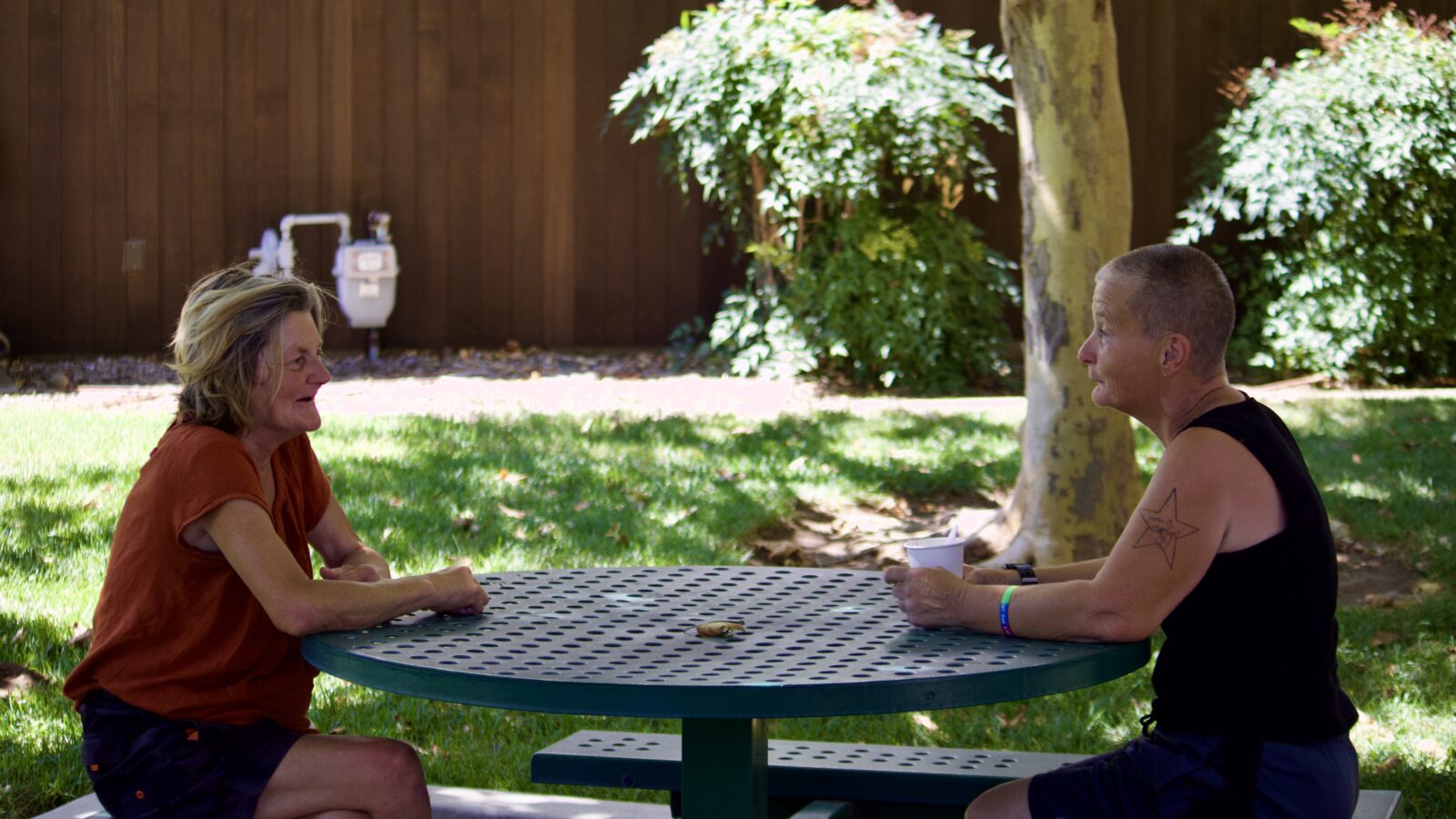
Robyn Brown and her best friend, Terry Jowaller, departed in the early morning on a late July day from their camp at One Mile Recreation Area, beginning a 3-mile trek in the rising heat to a small, air-conditioned room at St. John’s Episcopal Church.
When they arrived at what was the Safe Space cooling center around noon, volunteers greeted them with donated food, water and coffee before the pair settled in with others resting at tables or on the floor. The room was 87 degrees and the temperature outside was creeping toward triple digits.
Cooling centers like this one can be life-saving for people living without a roof. Chico temperatures sometimes exceed 100 degrees, posing dire risk of heat-related illness, which disproportionately affect the unhoused population. Without the opportunity to cool down during the warmer months, extreme heat can exacerbate chronic illness and cause heat stroke, dehydration and other issues. It can also be fatal.
“We wake up and it’s 99 degrees. It is hot out there” — Robyn Brown
Brown said she’s suffered from a heat stroke before, and cooling down is a common problem faced by the unhoused population. “We wake up and it’s 99 degrees,” Brown said. “Our bodies are still at 103. It is hot out there.”
Safe Space, a non-profit organization, operates cooling centers nearly every day for those who need to escape the heat. The centers are open from 1-8 p.m. The Safe Space office at 1909 Esplanade Ave. acts as a cooling center, but with a capacity of 60 it fills up quickly.
Safe Space reserves space from community partners — typically churches — on a weekly, rolling basis to service more guests than its office allows. The second cooling center opened Aug. 9 at Hope Commons Church will be available until Aug. 22. The organization is still seeking a partner from Aug. 22 to Sept. 5.
In 2019, Chico City Council directed staff to open warming and cooling centers. The city opened centers at Depot Park, but those efforts were stopped because of “significant impacts to the park,” said Public Works Director Skylar Lipski.
Two years later, the city contracted with Safe Space. The organization has offered warming centers as well, which are overnight shelters for cold winter nights, since 2013. It began offering cooling centers in 2021.
Community members pitch in for cooling
However, cooling centers are costly and rely on community donations and support. Safe Space receives an allotment of money for both the warming and cooling centers — capped at $10,000 per month or $50,000 yearly — from the City of Chico. But that funding is just a drop in the bucket, said Safe Space Executive Director Larry Graf, who has served in the position since early June.
Safe Space typically budgets just over $100,000 for the cooling centers; that cost is about a third of what is allotted for warming centers. The organization designates $20,000 of the city funds for the cooling center. Grants, other funding and community donations make up the difference.
“We’re grateful for the [city] funding, but it only covered a fraction of our costs, because we were being available to our unhoused population for a much greater period of time,” Graf said. “We see that even if it’s not 100 degrees, the impact of heat promotes special care in Chico.”
The community, donating volunteer time and money, helps supplement the cost. The organization accepts donations at its office or online on its website.
“I sit here homeless and thinking, ‘God, if PG&E, or whatever, didn’t happen up there, I’d be in my pool” — Robyn Brown
The cooling center provides programming for guests, such as regular art classes and recent presentations on urban first aid and healthy movement and stretching. It distributes food and clothing, much of which is gathered through donations. It also runs a shuttle service that picks up and drops off guests at City Plaza.
Unhoused Chico residents also beat the heat by plunging in creeks and the Sacramento River or finding refuge inside air-conditioned businesses.
Red Earth, another guest at the center, said the river contains trash and harmful contaminants; Sycamore Pool on Big Chico Creek also has faced ‘no swim’ advisories numerous times because of hazardous E. coli levels. Regardless, he noted it is sometimes the only option.
He said the heat exacerbates the already damaging effects of malnutrition and lack of sleep, conditions many of the guests experience.
Red Earth recalled walking on the road during a hot day when he began feeling dizzy and sick. He stopped in the shade to rest.
“I decided to just do the smart thing, stop, and say ‘OK, two hours ’til sundown. I can deal with this,’” he said.
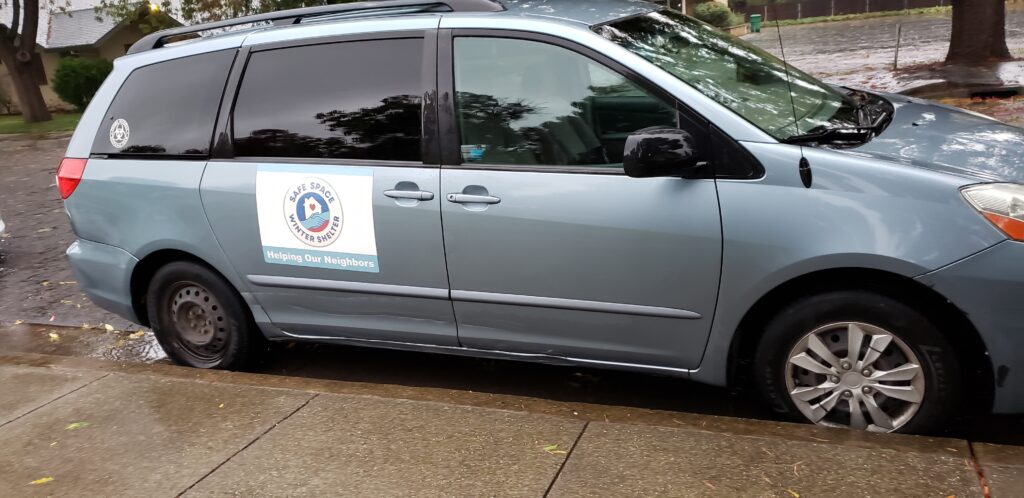
But he said people who passed by gave him dirty looks as he lay in the shade. The cooling centers also provide a private place to cool off.
To maintain a comfortable environment for guests and neighbors, Safe Space has implemented rules. For many of the guests, those rules keep centers a safe, comfortable place to escape extreme temperatures. But some note occasional issues related to messiness or disorderly conduct.
“We have to be respectful of others,” Graf said. “We ask people not to show up early and camp outside our doors, or camp in the neighborhood, because of the impact to our neighbors.”
Black Rose, a coordinator for Safe Space, said neighbors in adjacent residential neighborhoods sometimes complain. She said staff regularly conduct perimeter checks and keep an open channel of communication with neighbors.
But for Rose, the main stakeholder is the guests.
“The guests are part of my community, and so we advance based on their communication, because they’ll complain about this or say this about that.”
Safe Space staff provides more than just ‘cooling’
Many guests return this respect to the staff.
“They make sure we’re good — I’d die for these people,” Brown said. “They made me feel like I can maybe move forward. They are the ones that made me feel confident, competent, [that] made me want to get up and go and volunteer and sweep or whatever.”
Safe Space support has empowered Brown to feel like she can return to the lifestyle she had before the Camp Fire when she owned a home and business. The memories of the fire, she said, have made her feel trapped.
“I sit here homeless and thinking, ‘God, if PG&E, or whatever, didn’t happen up there, I’d be in my pool,’” she said.
In the meantime, for Brown and many others, Safe Space cooling centers provide one of the only avenues to maintain a tolerable temperature in summer. Without support, those centers would likely shut down, leaving one of the most vulnerable communities without an acceptable option for managing stifling heat.
This story is one in a series on extreme heat. Chris Hutton is a Chico State journalism grad and a freelance contributor to ChicoSol.
1 Comment
I am surprised that there are not more “Christian” churches in Chico stepping up to participate with Safe Space to provide a cool room for a week! There are so few paticipating churches. That raises some serious questions.