
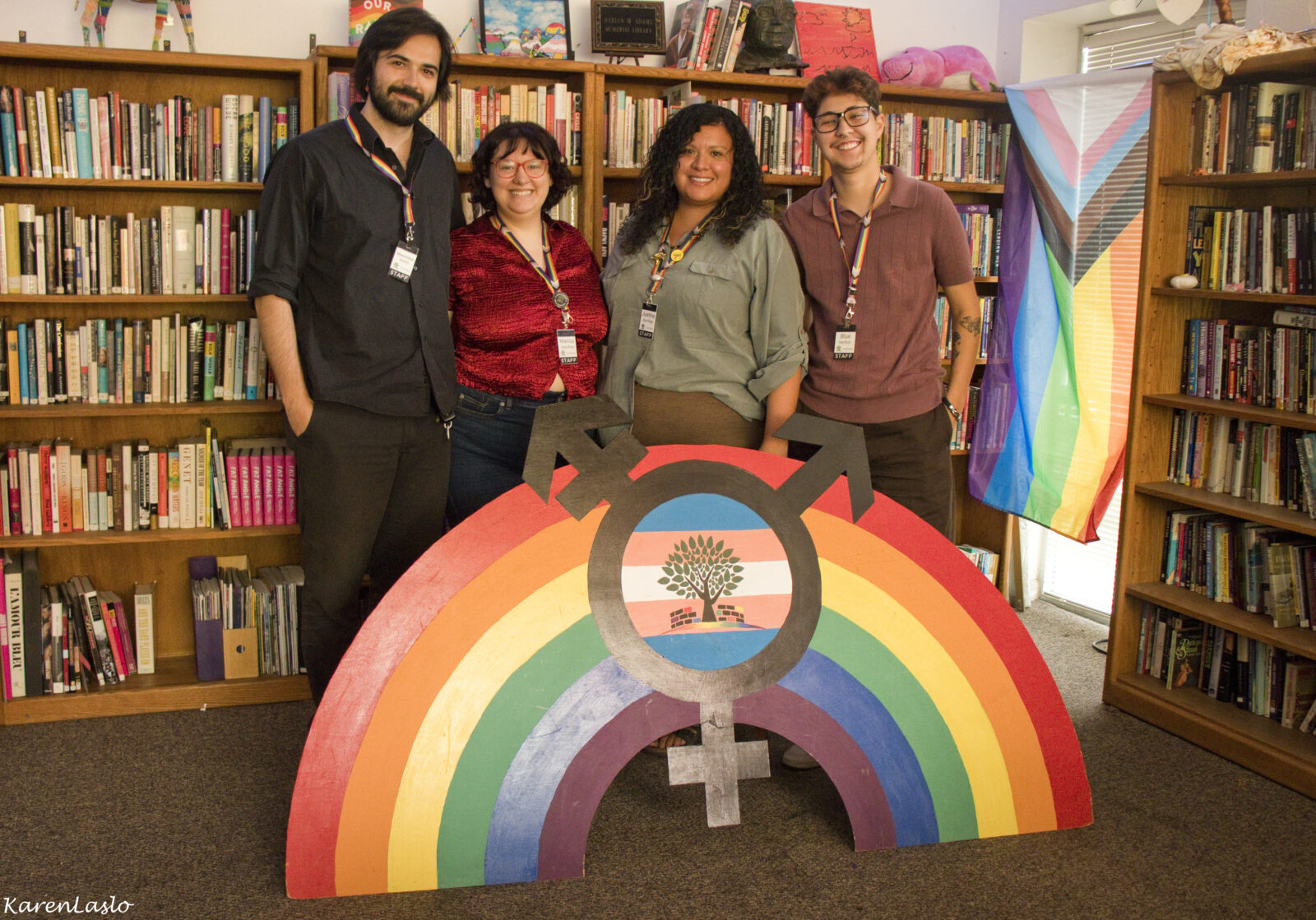
Stonewall Alliance Center, the nonprofit that provides a crucial lifeline for LGBTQ+ people in the North State, is one of many local organizations that have lost a significant funding source after the 2024 passage of Proposition 1.
Stonewall Alliance no longer has a contract to receive state funding for services through Butte County Behavioral Health. Justina Sotelo, executive director, said the organization has enough funding to operate through the end of the year and is scrambling to replace what has been lost.
Stonewall is a crucial source of support for many youth and adults within and beyond Butte County. The organization has for decades offered numerous support services, including bullying and suicide prevention workshops for children and gender-affirming resources for adults.
Stonewall is one of 15 local organizations affected by Proposition 1, said Tami Ritter, who represents District 3 on the Butte County Board of Supervisors and sits on the Behavioral Health Advisory Board. Others include the African American Family and Cultural Center, Northern Valley Catholic Social Services’ Promotores and the 6th Street Center for Youth.
Proposition 1 created the Behavioral Health Services Act, requiring the state to shift funds to organizations that focus on severe mental illness, substance use disorders and homelessness. (Read reprint “Newsom’s mental health overhaul is real” for an analysis of how the Act has performed.)
But to make that shift, funding moved from the nonprofits providing prevention and early intervention services. Proposition 1 included the Behavioral Health Services Act, which the state says was designed to to “prioritize services for people with the most significant mental health needs.”
“We lost local control with Prop. 1” — District 3 Supervisor Tami Ritter
In Butte County, that meant many local groups could no longer receive mental health services funding, and their contracts with Butte County Behavioral Health expired at the end of the fiscal year after the passage of Prop. 1 — although some were “absorbed into other programs,” Ritter said.
In the lead-up to the narrow statewide passage of Prop. 1, the emphasis was on housing and homelessness. “That’s why it passed,” Ritter said, noting that some California voters probably didn’t understand that funds for prevention would disappear.
Locally, Ritter said the advisory board was vocal in opposing Prop. 1, and the ballot measure in fact failed in Butte County. “We did public outreach, everything we could, to inform voters of what these changes would mean,” Ritter said. “We lost local control with Prop. 1.”
Sam Casale, Mental Health Services Act coordinator and the public information officer at Butte County Department of Behavioral Health, said the county alerted local organizations about the funding shift that was about to take place under Prop. 1 more than one year ago. A county memo announced the changes that were coming, and said, “None of these changes are due to dissatisfaction with the services provided by the programs.”
The county discontinued several internal programs because of the lack of funding, including the Gridley/Oroville/Paradise Butte County Wellness Centers.
The programs that will continue on county contracts qualify for funding under Prop 1, such as Youth For Change’s Transitional Housing program.
6th Street Youth Center eyes future
The 6th Street Center for Youth says it’s pivoting to work with the new focus on severe mental illness and homelessness.
The Center, managed by nonprofit Youth for Change, has for 18 years served Butte County youth between the ages of 14 and 24, providing support services like employment, education, meals, showers, laundry, clothing and mail delivery. The Center served about 230 youth annually.
Youth for Change, which serves clients in Butte, Sutter-Yuba, Glenn and Shasta counties, said it will maintain supportive housing services and the Homeless Emergency Action Response Team, but is seeking funding to support homeless and runaway youth in Butte County.
Nancy Jorth, director of homeless youth services at Youth for Change, said the impacts of Prop. 1 did not fully hit until July 1. “We were hoping to shore up funds to keep up drop-in services, but were unable to do that,” Jorth told ChicoSol.
About two years ago, Youth for Change purchased a building at Flume and Third streets. Jorth said staff are working with the city on zoning-related issues so they can operate homeless youth services at the site.
“Youth for Change is totally committed to still providing services to the homeless youth population,” she said. “We’ve had a lot of community members and foundations reach out, and the support has been very heartening.”
Stonewall Chico looks to future
Sotelo said in August that along with the end of the contract with the county, many grants Stonewall relied on as revenue streams were federally administered and are no longer available.

She said her team is preparing to continue services by billing clients through MediCal – a complex process for nonprofits that requires registering with the state and enrolling with California Medicaid.
“We never wanted funding restrictions to be the reason why we closed services,” Sotelo said.
Sotelo said it is paramount to have a robust rural support system as political attacks on LGBTQ+ people have increased. “We are not immune to what’s going on at the federal level in California.
“I can sit and wallow in what I don’t have control over, or I can work with what I can and keep moving forward,” Sotelo said.
“We will have to engage the community in grassroots efforts to make sure our perspectives are heard. It’s been silenced by censorship [before], and we’re not leaning back into that. We’re community members, and we want to make sure this lasting resource is available for folks.”
Natalie Hanson is a contributing writer to ChicoSol. Leslie Layton is editor.