
Immigration authorities used Chico’s automated license plate readers (ALPR) as recently as this past summer, the Chico Police Department states in a 19-page report released today.
Chico PD revealed that Immigration and Customs Enforcement (ICE) used the city’s ALPR network to track six vehicles between May 29 and July 8. The department shut off federal and out-of-state data sharing two weeks after ChicoSol requested the department’s sharing agreements.
The report presents findings from an internal audit, led by Capt. Jeramie Struthers, into the department’s sharing of ALPR data with federal and out-of-state agencies. The report is one of two documents released by Chico PD today that are attached to the Sept. 21 special City Council agenda. At that meeting, Chico PD will discuss its internal audit.
When Chico PD paused sharing with 22 federal and 88 out-of-state agencies, the department lost records showing when and why its camera network was accessed.
For what the report calls “unknown technical reasons,” the department is now limited in its ability to access transaction logs; data loss stifled the capability to audit external use of the city’s ALPR network.
Chico PD’s report recommends winding down its audit of ALPR data sharing because of the difficulty and redundancy of accessing the information.
“There seems to be no additional value knowing if the data shared was one (1) record or 100 records. Any additional audit efforts will undoubtably return a number greater than one (1) record,” the report states.
The department manually restored 40 days of ICE access logs, according to the report.
Producing records, after the sharing was stopped, proved tedious. Retrieving one day of an agency’s search queries took approximately 30 minutes, and those queries did not necessarily relate to Chico. The system has been active for about three years.
“Ultimately, obtaining every record ever shared still established a fact CPD already knows,” the report states. “CPD records were shared with ICE, which is a strong indication data was shared with other agencies as well.”
“It is not feasible to manually attempt to process three years of data regarding 88 out-of-state agencies and 22 federal agencies,” the report states.
Chico PD also adds that “Motorola is under no obligation to provide data retrieval for agencies that CPD discontinued sharing relationships.”
Report shows city’s legal framework for data sharing
The report references Senate Bills 34 and 54. SB 34 restricts California law enforcement agencies from sharing ALPR data with federal or out-of-state agencies. SB 54, the California Values Act, says that no state or local resources should be used for federal immigration enforcement.
However, the report also references the federal supremacy doctrine, which states that federal law supersedes state law if the two conflict.
In 2023, California Attorney General Rob Bonta sent a bulletin to California police departments stating that ALPR data sharing with out-of-state or federal agencies violates state law. Bonta is suing the City of El Cajon for sharing ALPR data with federal and out-of-state agencies. The lawsuit was filed October 2025 and is still in litigation.
“The Attorney General’s opinions are advisory and persuasive, but aren’t legally binding on courts or agencies,” the report states.
Chico PD contracts with Lexipol, the company that produces the Chico PD policy manual. In early 2026, Lexipol edited its policy relating to data sharing to be compliant with SB 34.
“Lexipol’s changes for the ALPR policy were in stark contrast to CPD’s existing policy, especially as it related to SB 34,” the report states. “This did result in a contradiction between the SB 34 section and our data sharing.”
The report says Chico PD, over the next few months, “consulted the City Attorney’s Office for legal analysis of the policy edits and SB 34.”
Two weeks before the department stopped sharing with federal and out-of-state agencies, ChicoSol filed its public records request seeking information on with whom the department had sharing agreements.
ChicoSol reporters interviewed police Chief Billy Aldridge after Chico PD released public records that showed sharing with agencies outside of California.
“As we started producing the information for the PRA, we found out, holy cow, we’re sharing with these people and actually when it was set up we shouldn’t have been sharing outside of California or with the federal agencies,” Aldridge said in a July 22 Zoom interview.
The report states: “As of July 8th, CPD is unquestionably in compliance with SB 34 requirements.”
Chico PD can still access data from out-of-state and federal agencies, but those same agencies can no longer access the department’s data, according to the report.
How much the ALPRs have cost
As of Aug. 31, more than $624,000 in capital project funds had been spent on the program, according to the report.
The ALPR program first came to Chico through a 2013 donation by the Chico Police Officer Business Support Team. The Chico Police Officer Business Support Team is comprised of community members, and the fund is hosted by North Valley Community Foundation.
In 2019 City Council approved a portion of the Camp Fire mitigation funds for the ALPR program, according to the report.
Police Chief Matt Madden, who retired in September 2022, initiated the ALPR program, “but the project was finalized and activated under current Chief Aldridge,” the report states.
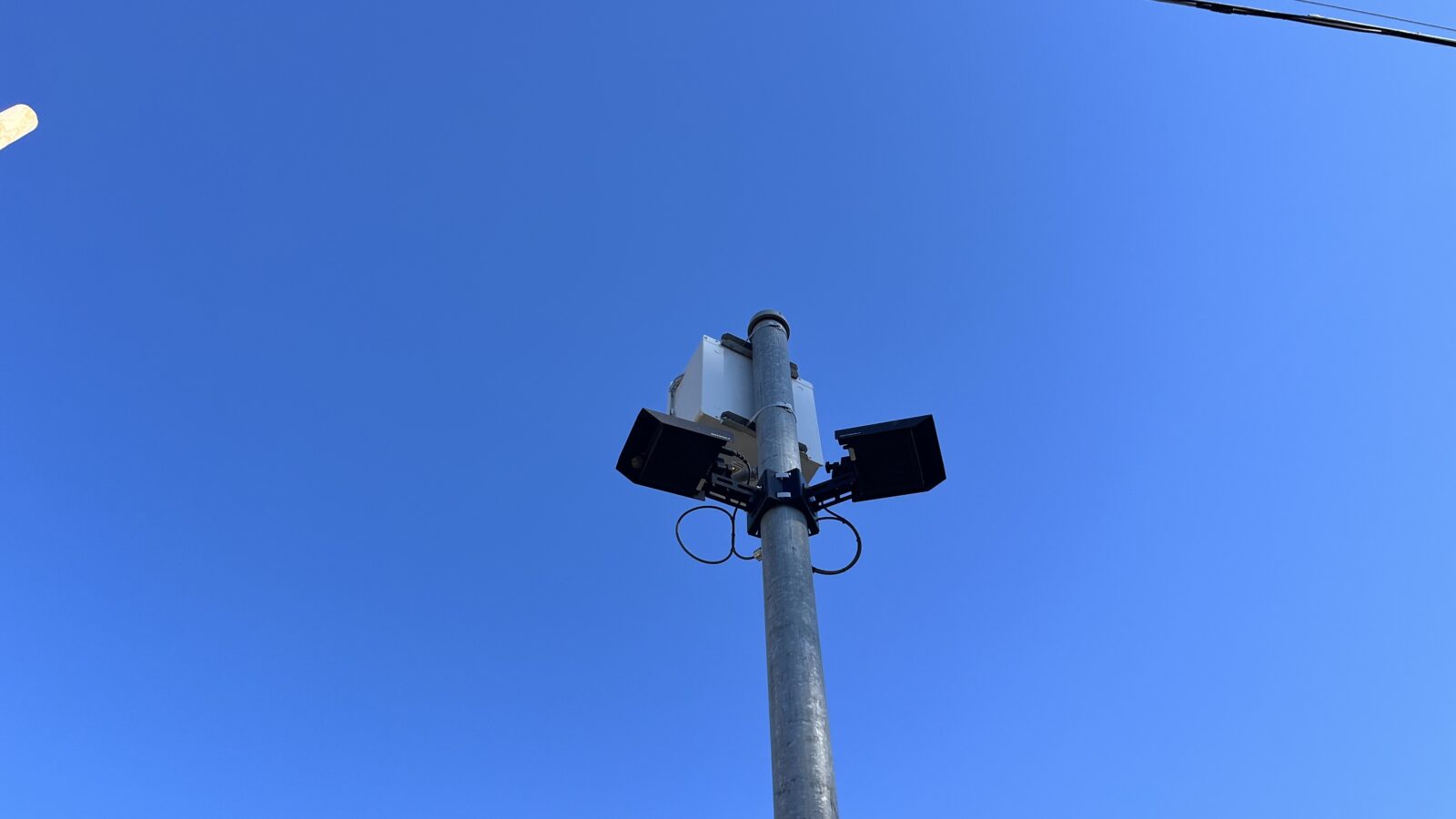
The department intends to add seven cameras across three locations. “If all planned installations are completed, CPD will have 53 cameras covering 13 locations citywide,” the report states.
The program will continue to cost Chico taxpayers if the proposed city budget is approved.
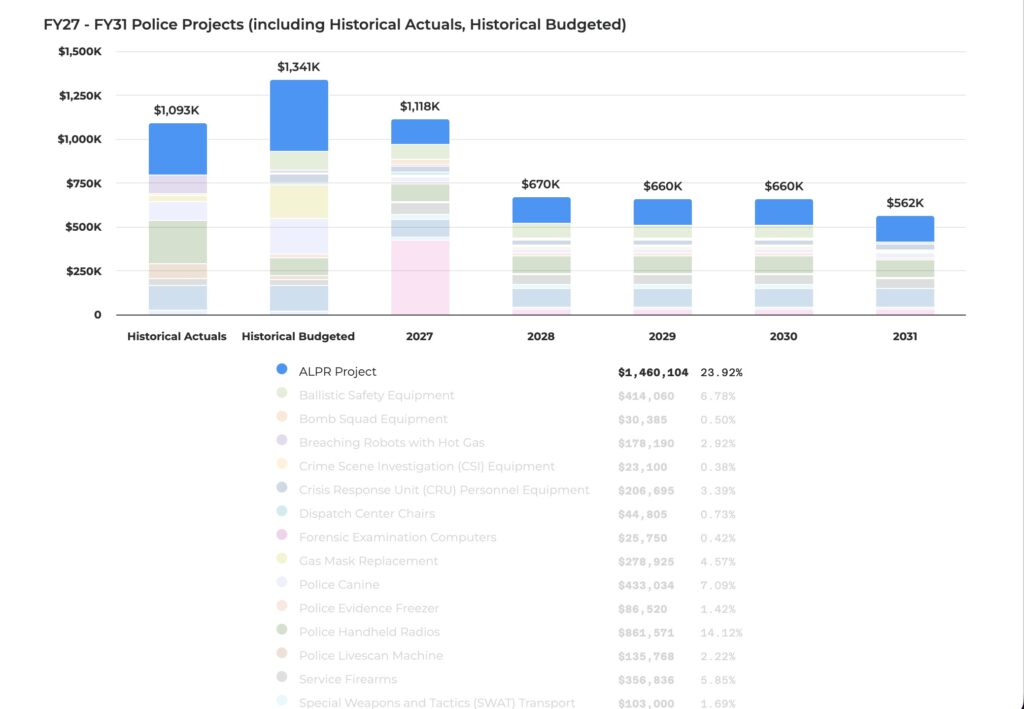
According to the city’s proposed budget, from fiscal year 2027-31, the ALPR program is anticipated to cost almost $1.5 million, comprising almost 24% of the police department’s capital projects funding.
The Motorola fixed cameras are not related to the red-light cameras the City recently installed, according to the second document released by Chico PD.
Audits
Chico PD began auditing its ALPR system in 2023 on a bi-annual basis. However, the amount of data staff had to parse through was too “cumbersome, tedious and allowed too much time to transpire between inspection of records,” the report states.
In 2025, the department began conducting monthly audits, and began “spot-checking,” where staff select approximately 10 random case numbers and ensure the license plates requested correspond with the case.
The report states the monthly audit and spot checking “drastically increased the oversight of ALPR usage.” But the report later adds the department didn’t maintain a record of cases audited or spot checked, except in instances when clarification was needed.
ChicoSol has been unable to access public records related to the audits.
“Overall, extensive internal auditing have been continuous and no misuse have ever been determined,” the report states.
There is no system for Chico PD to audit how its data is being used by other agencies, the report states. Furthermore, Chico PD has never been told by an outside agency that its data had been misused, according to the report.
The report discloses that 124 people within the department have user accounts. Everyone with access to the system must meet FBI standards for handling confidential information.
On Sept. 21, Chico City Council members will discuss the audit in a public meeting. Also on the agenda is the consideration of an ad hoc committee to hire an independent auditor.