
Two clashing philosophies on homelessness raised tensions during the Oct. 6 Chico City Council meeting as the city prepares for a Post-Warren Settlement Age.
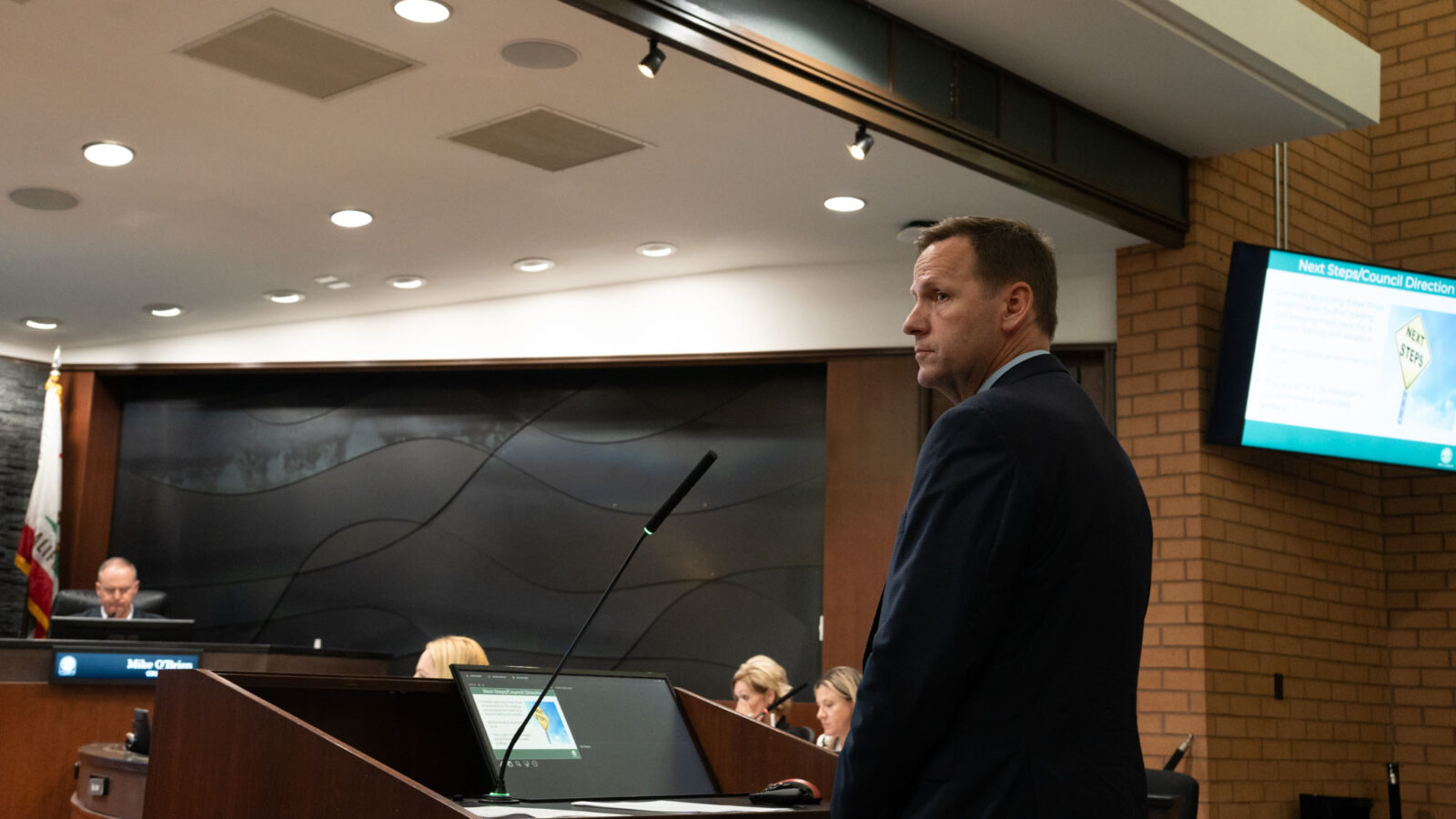
City Attorney Ryan Jones presented a proposed overhaul to the City’s anti-camping ordinances, with some amendments shifting the city to the same path it was on prior to the city being sued.
The result of that lawsuit was the Warren Settlement, which is set to expire Jan. 14, 2027.
For almost five years, the City has faced challenges enforcing anti-camping ordinances after it was sued for carrying out camping sweeps while there was not enough shelter space during the pandemic.
The settlement requires the City to perform outreach and offer case management, along with issuing several notices in the week before performing sweeps. The City was also required to establish the Alternative Site.
Councilmember Addison Winslow was quick to voice his disapproval of the amendments and referenced a letter the council received from the Legal Services of Northern California. The email warned the city that these code changes would likely disqualify it from millions of dollars in state funding for the Genesis pallet shelter.
The city funds the pallet shelter mainly through grants. The Encampment Resolution Funding Program has already granted the City nearly $3 million in funding, and the city is applying for about $4 million more.
To qualify for the grant, the city is required to meet certain criteria, such as 48-hour notice before removing public property. The code amendments would allow the city to give only 24 hours notice.
Councilmember Mike O’Brien said enacting ordinances based on state-wide grant criteria is nearly equivalent to being subject to settlement.

“I do not want us to be burdened with any artificial restrictions on our ability to clear encampments from our public spaces like we have been for the last almost five years,” O’Brien said.
He said he was confident the city would “remain compassionate,” but that it needs to address a “community starving for accountability.”
Winslow pointed to another code amendment that would let the city enforce anti-camping ordinances even if there was no shelter space available.
“It would be stupid to reject that (grant money) for some principal you can’t even explain,” Winslow said. “There is no compassion in this at all, this is setting us up for a situation where we are running people out of areas with nowhere to go.”
O’Brien said the city has shelter space open. He further argued that if the time came that the city ran out of shelter space, it could “suspend” its ordinances.
Winslow pushed back: “Who adopts laws in order to plan to suspend them if something that is entirely predictable happens? That is not how laws work.”
Winslow called for having these discussions now rather than “suspending laws” at a later date.
“It’s like you’re looking for the opportunity to reject money,” Winslow said. “The idea that we would reject best practices that you give a 48-hour notice unless there is some exigent circumstances is just ridiculous.”
O’Brien disagreed, saying: “What is ridiculous is bringing us back into another settlement agreement, and that’s what this grant does. That’s ridiculous.”
He said that when he read the grant requirements, there were other criteria that would hinder the city from enforcing its anti-camping ordinances, but did not provide specifics.
Mayor Kasey Reynolds redirected the discussion, telling the clashing Council members that others needed time to speak.
Councilmember Tom van Overbeek backed O’Brien and said the Council should adopt the city attorney’s recommendations.
Van Overbeek, who has previously said he ran for Council because of the Warren Settlement, argued that weak enforcement is not yielding results.
“Allowing people to camp is the farthest thing from compassion, that is allowing them to die,” he said.
He sided with O’Brien on not wanting to align with the grant criteria, stating that California’s homeless “policy has been a disaster.”
Councilmember Bryce Goldstein said grants are how the city funds shelters, and “we are at risk of severely exacerbating our homelessness crisis” if it doesn’t receive those grants.
Councilmember Katie Hawley tried to bring the two sides together to find a compromise. “Our job is not to vote across political lines, especially during times of campaign season,” Hawley said.
Hawley asked to eliminate proposed amendments that would give officers the option to charge violations of the anti-camping ordinances as misdemeanors rather than infractions.
She also criticized another draft amendment that would reduce the number of days someone can live in a vehicle as a guest of the property owner from seven to three.
Her efforts to bridge the gap failed, and the conversation quickly shifted back to the initial debate.

Winslow called out the city attorney for returning with something that was not what the Council previously directed.
“This tells me this is some sloppy governing going on right now,” Winslow said. “And this is done hastily for no purpose. It’s performative.”
Van Overbeek then called out Winslow. “This is all smokescreen, we are not throwing out funding. I have great faith in what the city attorney has crafted.”
Reynolds and Vice Mayor Dale Bennett both said they wanted to see staff return with the amendments to the camping section of the City’s municipal code broken up rather than grouped into one package.
The rest of the amendments, which saw little to no pushback, involved changing language to strengthen anti-camping ordinances on or near waterways and levees.
The Council voted down the entire package, with only van Overbeek and O’Brien voting to approve the first reading. The city attorney is expected to return to Council at a later date with the items separated and with information on how grants would be affected.
Chris Hutton covers city government for ChicoSol
1 Comment
Addison made the City Attorney look unprepared! The way the lawyer back peddled was entertaining. More laughs at a CCC meeting than I had had in a long time. Many comments from the pubic were like they had not heard a word.