
ChicoSol runs guest commentary on Mondays. Submit your idea to ch**********@***il.com.
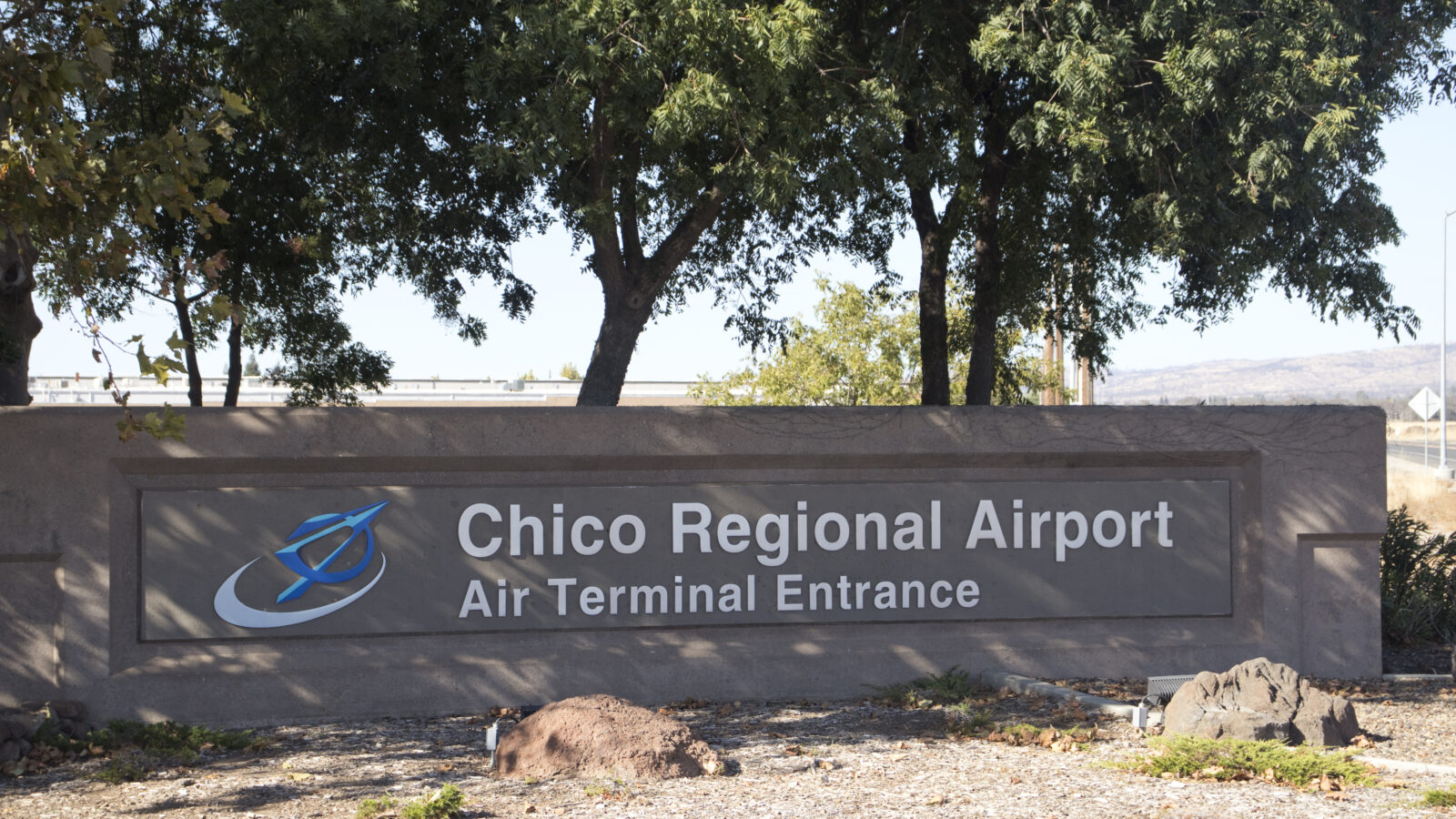
For nearly 12 years, Chico has been a city without commercial air service. When SkyWest ended its flights from Chico Regional Airport in December 2014, those of us who wanted to fly somewhere became accustomed to the routine: drive to Sacramento or Redding.
We Chicoans are used to the idea that this isn’t a big deal. After all, Sacramento airport is only about an hour and a half away, and Redding airport is a few minutes closer.
I’m a geographer, and a while back I was wondering: How normal is this “75-minute drive to the airport” for an American city the size of Chico?
I started looking at maps.
I searched California and then the rest of the country, trying to find another city with more than 100,000 people as far from scheduled commercial air service as Chico. I checked places from Visalia to San Angelo, Texas, and kept looking.
I wasn’t trying to prove Chico was unique. I was trying to find another Chico.
So far, I haven’t.
Our nearest airport with scheduled commercial passenger service is roughly 65 miles away by road, in Redding. Sacramento International, the airport most Chico residents use, is about 90 miles away. As far as I have been able to determine, there is no other U.S. city with more than 100,000 residents that is so geographically isolated from scheduled commercial passenger air service.
For years I’ve described Chico to my geography students as an urban “transportation desert”—my own term for our unusual isolation from the country’s major transportation networks. Chico isn’t connected to the Interstate Highway System by a continuous freeway, and for nearly 12 years we haven’t had scheduled commercial air service either.
There is no other American urban area of similar size that is so, well, “disconnected.”
And this isn’t simply about making air travel more convenient for Chico residents. Chico is the economic, educational and medical center of a much larger region. Chico State is here. Enloe Health is here.
Think about what our lack of passenger flights means when Chico State recruits a faculty member, Enloe recruits a physician, or a local business wants to bring a prospective employee or client to town. “Come visit Chico” frequently means: Fly to Sacramento, rent a car and drive another hour and a half. Then do it again on the way home.
We’ve lived with that for so long that perhaps it doesn’t strike us as unusual anymore.
It should.
I’m thinking about all of this again because we’ve recently heard encouraging news. City officials say Chico is closer than ever to reaching a deal with an airline to restore passenger service.
I hope they’re right.
Those of us who have lived here for a while, though, have heard hopeful reports before. In the nearly 12 years since SkyWest left, there have been several moments when it seemed passenger flights might finally be coming back. They haven’t.
That’s not a criticism of the people who have worked hard to restore them. Attracting an airline to a smaller market isn’t easy. And this time there are good reasons for optimism: the City and community partners have assembled nearly $2 million to help reduce an airline’s financial risk, and the city reports that it is in active discussions with several airlines.
I hope this time really is the charm.
Because Chico merits commercial passenger flights.
We’re a city of more than 100,000 people, the center of a much larger region, and — by my best determination — more isolated from commercial passenger air service than any comparable city in the country.

Restoring flights wouldn’t just make vacations easier. It would make Chico more accessible to the rest of the country, help Chico State and Enloe recruit people, help local businesses compete and make it easier for people to visit our region.
We’ve spent nearly 12 years getting used to doing without passenger flights.
It’s time to bring them back.
Steve Herman is a retired middle school teacher and a longtime lecturer in geography at Chico State.
6 Comments
Excellent article…well thought out and researched.
I do not like them. Crammed into a tin can with a bunch of people is not my idea of living life to its fullest. I do not like living under their flight paths. What would be cool is reliable shuttle services (or dedicated bike paths) to both Redding and the Sacramento Airport. Save that two million dollars for a couple robo taxi shuttles. They would likely serve way more more travelers while burning way less public money and fossil fuels.
I’ve only lived in Chico for six years and often wondered why there wasn’t a viable shuttle service to either Sacramento or Redding Airports. Truth be told, most people would still end up driving to Sacramento anyway. Less expensive and better connections.
I am 1000% in agreement with Mr. Herman. I would underscore that the economic benefits to our city are very real.
Chico received a grant to start airline service and there is a deadline to use those funds so the clocks ticking. I know United does a lot of intra California flights like to Santa Barbara or San Luis Obispo so they’d be a good option. Personally I hope they start flights to LA.
Steve, the “transportation desert” framing is a smart way to put numbers behind what most Chico residents just shrug off as routine. The 65-mile/90-mile figures really drive home how unusual this isolation is for a city your size.
One parallel worth noting from a different angle: infrastructure neglect compounds on itself. Here in New Orleans our humidity and heat cycles tear up pavement fast, and once a road or runway surface starts deteriorating without steady investment, the cost to bring it back up to standard jumps considerably. A regional airport that’s sat without scheduled service for 12 years likely needs more than a handshake deal with an airline — the physical infrastructure itself probably needs real reinvestment too. Has that side of it come up in the city’s discussions?