What happens when the two agencies responsible for managing groundwater in the Vina Subbasin can’t agree? That’s a question now facing local water officials for the first time.
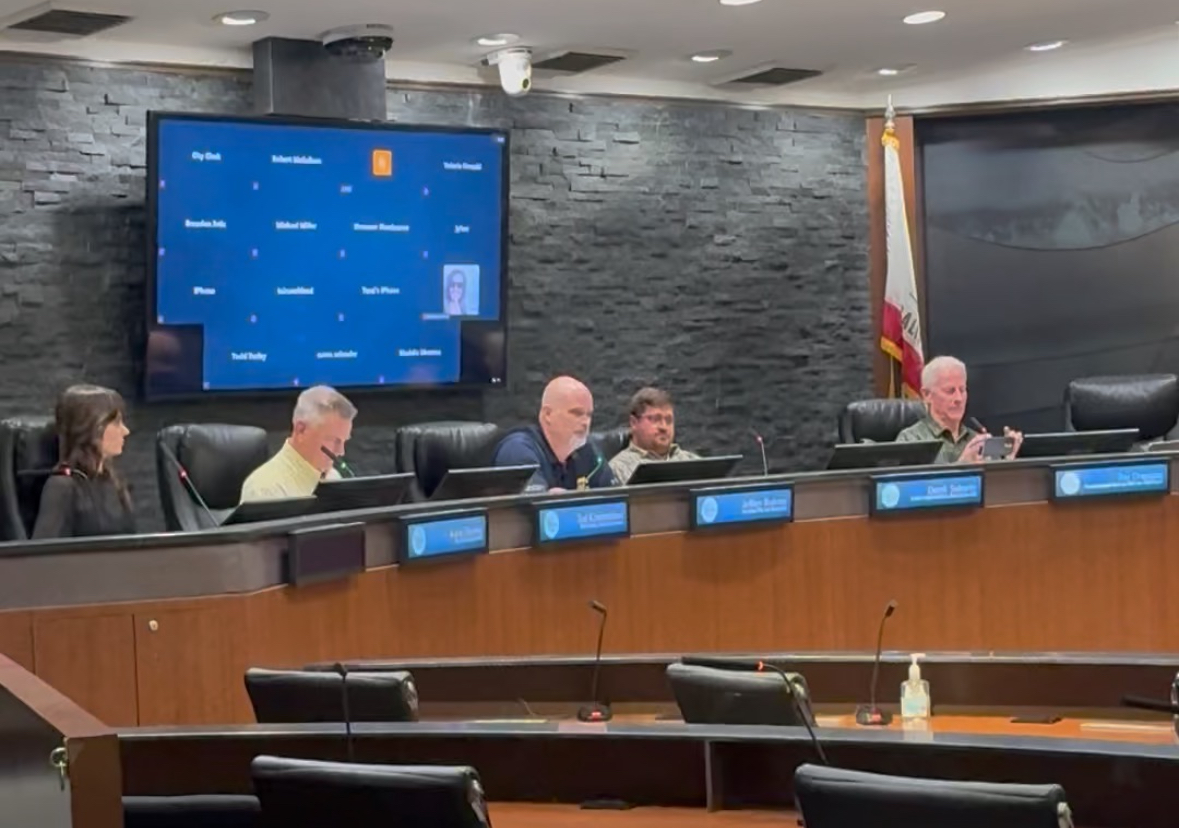
The Vina Groundwater Sustainability Agency (Vina GSA) and Rock Creek Reclamation District (RCRD) clashed over two key issues at their Nov. 4 joint board meeting.
One issue: at what point must the water table drop to trigger a closer eye from Vina staff. The second concerns the criteria that would prevent regulatory action by the state in dry and drought years.
The two issues have been contentious for months. Critics of both boards argue that stricter measures would better protect people who rely on shallow wells for their drinking water and the ecosystem in general.
They say that the Vina GSA and RCRD are influenced by large agricultural interests that operate with wells that run deeper into the aquifer and aren’t as affected by dry years.
The boards are nearing the January deadline for a state-required evaluation of the Groundwater Sustainability Plan, which must be done at least every five years. Revisions to the plan can also be done at this time. Then, it’s submitted to the state’s Department of Water Resources (DWR).
The Vina GSA and RCRD each have equal voting rights over what goes into the plan — even though RCRD, established in 1985, manages only 2.5 percent of the subbasin. So, if the board disagrees, which hadn’t happened until the Nov. 4 meeting, they have to enter a mediation period.
Vina GSA’s formation was spurred by the Sustainability Groundwater Management Act. In 2019, at the time of the board’s formation, the City of Chico, Butte County and Durham Irrigation District agreed to jointly manage the district. RCRD opted to remain independent.
Vina GSA’s board includes two seats for agricultural representatives and one seat for a non-ag domestic well representative.
The original plan, submitted in 2021, has been a subject of dispute since it was approved. It was almost immediately challenged by a lawsuit filed by AquAlliance, a nonprofit that advocates for the integrity of the Northern Sacramento watershed. The lawsuit alleges the plan doesn’t adequately protect the aquifer from long-term harm.
For the past five years, critics have attacked the board’s direction and reluctance to change criteria that they say would better protect groundwater-dependent ecosystems and people who rely on shallow wells for their water.
Part of the dispute centers around what measures are necessary to protect the aquifer in dry years, which, historically, are countered by wet years.
A 5-foot difference creates impasse
The first disagreement concerns newly proposed warning lines called “local management levels.” The warning lines would identify where the subbasin needs extra attention once the water table falls below those lines for two consecutive years.
Warning lines were introduced as a compromise measure, a way to satisfy critics who want a far lower regulatory line that, if reached, would potentially lead to state intervention.
But many members of the audience continued to push for raising the regulatory line. Chico’s Kathy Kaiser has a well, and said if the water table reached the regulatory line her well would be dry.
“If it were to drop 20 feet there is no way we would have any water,” Kaiser said.
But the boards have already voted to not raise the regulatory line, and are now seeking out the non-regulatory warning lines.
The debate between the boards is over a 5-foot difference. The boards initially agreed until public outcry prompted the Vina GSA to reconsider its decision.
The Vina GSA, along with its stakeholder advisory committee, voted for the warning lines to be drawn at 15 feet below what is considered by staff an acceptable water table stabilization point.
RCRD wants the warning lines 5 feet lower; board members believe the 15-foot line could trigger unnecessary investigations.
The RCRD board tried meeting the Vina GSA in the middle at 17.5 feet.
Councilmember Katie Hawley, who sits on the Vina GSA as the City of Chico’s representative, didn’t go for the compromise.

“I’m not willing to let a board that represents about 2.5 percent of the acreage of the aquifer in the Vina GSA subbasin dictate where these levels get set,” Hawley said.
Later in the meeting she argued that the boards’ cooperation agreement should be reconsidered.
Should dry years provoke state action?
The second disagreement concerns language — the “non-dry condition” — in the plan that would prevent the state from taking action in dry and drought years if the water table falls below the regulatory line.
DWR recommended removing the language, and in August the boards decided to reject DWR’s recommendation and instead work around it.
Community members objected, protesting on social media and at board meetings. Critics argued the language does not protect shallow well users and prevents the state from forcing action while those shallow wells run dry.
The Vina GSA revisited the decision in October and voted 3-2 to remove it; RCRD maintained the language should stay in the plan.
Vina GSA Chair Jeff Rohwer said that the language in fact came from DWR. “So folks who think this was some back room engineering thing by ag, it isn’t,” Rohwer said.
Rohwer explained that the subbasin sees very wet and dry years, and the non-dry year language was meant to account for that. He motioned to suspend the non-dry year language and have it reinstated if they decide to raise the regulatory line at a future date.
Some on RCRD expressed frustrations that the issue came back to the joint board.
RCRD Chair Darren Rice said DWR instructed them to explain or revise the language. He said Vina can maintain “drought flexibility” while providing a “defensible management framework.”
Rice recommended preserving the language while working on sustainability projects, implementing triggers and gathering more data.
“These steps would respond directly to DWR’s corrective actions while retaining the distinction between short-term drought and the impacts of long-term groundwater sustainability,” Rice said.
Hawley pushed to have the language removed. She said staff identified it as “low hanging fruit” and hard to justify.
The GSP specifies that when the two boards disagree, each will send two representatives to deliberate and come to a unanimous agreement. This deliberation is expected in the next few weeks.
From Vina GSA, the two board members are expected to be Butte County Supervisor Tod Kimmelshue, who represents Butte County on the board, and Jim Graydon, who represents non-ag domestic well owners.
Graydon spent much of the meeting pushing for stronger protections for shallow wells in Chico, something the board suggested to revisit at a later date. Kimmelshue left the meeting early, explaining he had a time conflict.
RCRD hasn’t made a determination yet on who will be on the ad hoc committee.
The boards agreed upon five other changes to the GSP:
- To add two monitoring wells.
- To conduct an urban forest vulnerability assessment.
- To add warning lines to 25 monitoring wells in the northern and southern part of the district; none added to the Chico Management District.
- To take fall measurements to check if the water table is below the warning line for two consecutive years.
- RCRD to monitor monthly and provide notices if the warning line is reached.
Chris Hutton is a contributor to ChicoSol.