
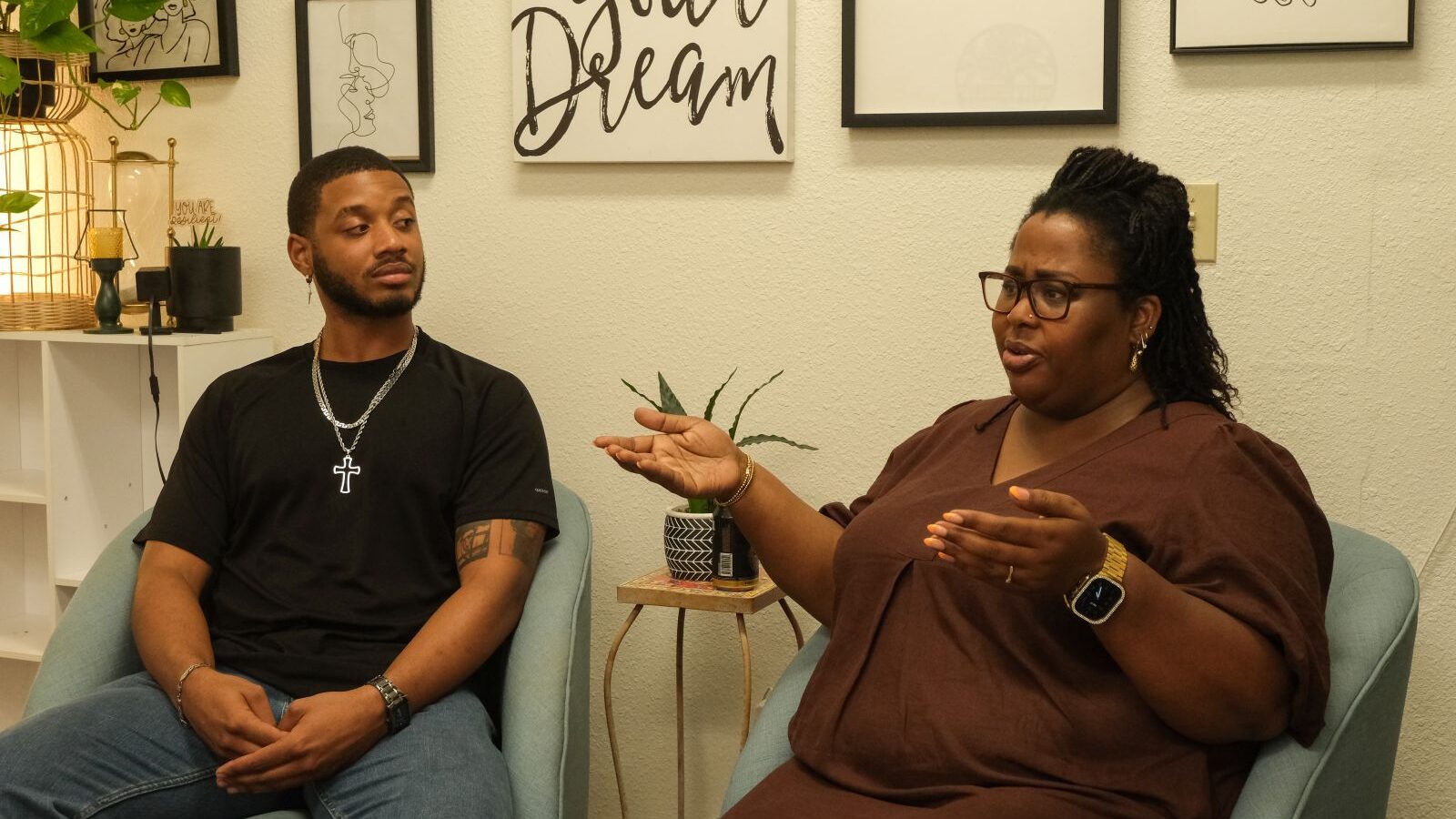
Changemaker is an occasional ChicoSol series about community members working for the betterment of others. We’re running this story for the Fourth of July and the nation’s 250th anniversary to honor the contributions made by African American organizations.
As an African American woman who has lived in rural Butte County, Rachel Morton knows what it means to be a person of color in the North State.
As an 8th grader, Morton was admitted to a private school in Chico – with administrators explaining that it was because her adoptive mother was white.
Decades later, she saw people of color, displaced by the Camp Fire, facing more obstacles than their white neighbors when they asked for relief they were qualified to receive.
But the turning point came two years later. In the days following the murder of George Floyd in Minneapolis, Morton went online. She wanted meaningful conversation about police violence in Black communities. Instead she found heated arguments and comments that were “deeply racist.”
Morton created a group, “Black in Butte,” and invited 10 friends for what would be “healthy conversation.” To her surprise, response came in a tidal wave as people asked to join. In a matter of weeks, her group of 10 had expanded to include 940 Butte County residents, as well as people from outside the county.
“I was like, ‘Where are all these people coming from?’ They were all Black people from Northern California,” Morton said.
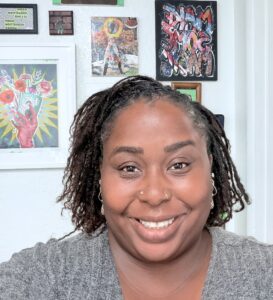
Now – and as a direct result of her experience with Black in Butte — Morton is a founder and executive director of the Chico-based Black Resiliency Project, running a nonprofit organization that supports Black families and tackles issues that affect all demographics.
Civil rights & democracy
One of those issues is civic engagement. The Black RP’s civic website, “The People’s Civic Hub,” provides tools for engaging locally and beyond.
African Americans comprise less than 3 percent of Butte County’s population. That figure may sound tiny, but in fact that’s about 5,000 people living in communities that often have a legacy of racism.
Chico, for example, is listed as an unofficial sundown town – a town where Blacks were expected to be out by nightfall in the 1800s and first part of the 20th century. California’s sundown towns generally operated openly prior to the 1950s, and yet Paradise was known for hostility toward African Americans in the 1950s and 60s.
Because the Black population in the North State grew slowly and has remained small, it’s overlooked at many levels, says Robert Morton, Rachel’s husband who serves as The Black RP’s director of civic engagement and pastors a church in Oroville.
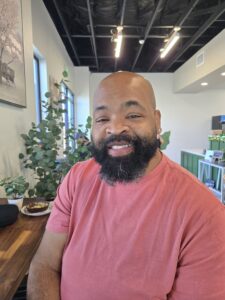
“The Black experience in Northern California is rich, layered, and often invisible in national narratives,” the website states, adding that there are “rural communities in Butte, Shasta, and Siskiyou Counties that are rarely counted in statewide policy conversations.”
Robert Morton writes in a column that it’s because of — and in spite of — oppression that African Americans constructed a civil rights movement that became the foundation for this nation’s liberal democracy.
“Black folks built a floor that everybody else is standing on,” Robert Morton writes in his column, “Who benefits?”
“We did not just march for ourselves. We were building infrastructure for a democracy that had not yet decided whether it wanted us in it.”
A Community Hub that welcomes
At The Black Resiliency’s new Community Hub near downtown on the Esplanade, it oversees food distribution, resource sharing and provides a space where the organization’s case managers can connect with community members. In the fall, it will be open for students on their way to school who want a hot chocolate or other snack and to leave with what Rachel Morton says will be “a little encouragement in a pocket.” A series of AI workshops will be offered soon.
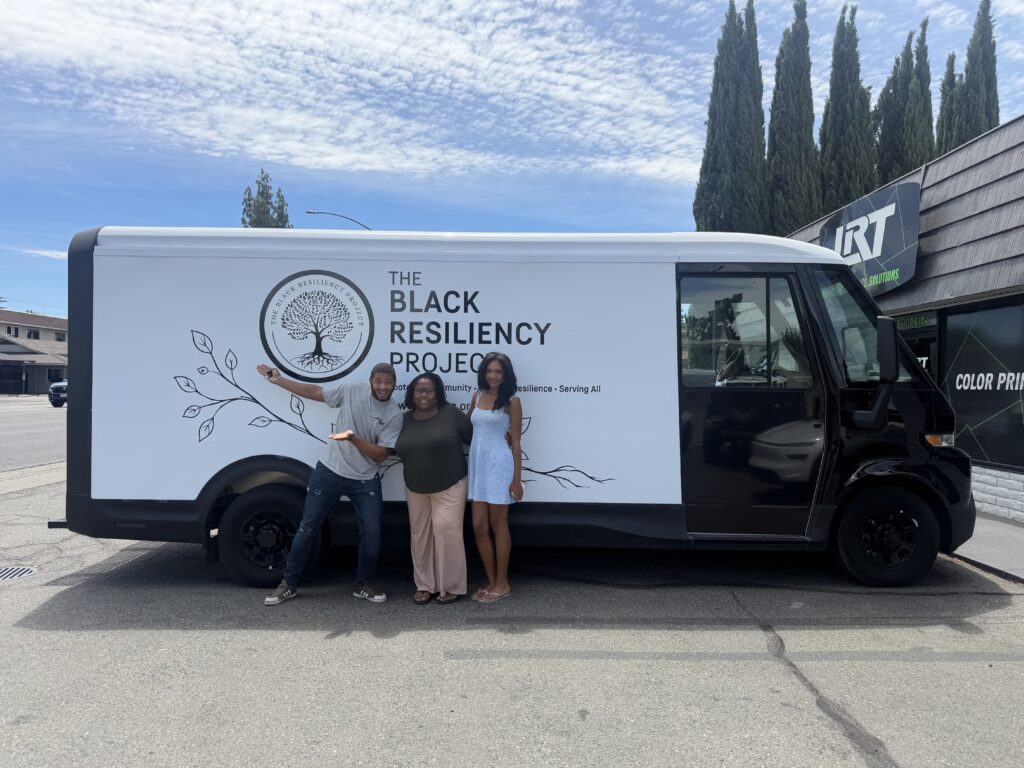
“There’s harm in our community, hurt in our community,” says Outreach Coordinator Ife Sainte, who makes Tuesday food deliveries to immigrant and other families. “A lot of people suffer from low interaction.”
Sainte also delivers packages to unhoused people to supply them with products – handwarmers, flashlights, gloves, scarves — that may help them survive cold winters.
The Black RP calls that “harm reduction” – and that’s one of the organization’s mantras as it works with people who are unhoused or in trouble with opiods or other drugs.
As part of its school advocacy program, The Black RP has helped parents who have children with special needs request what are known as 504 plans from school districts.
“We’re not just giving you the information,” says Rachel Morton. “It’s about accompaniment. We walk alongside you. Maybe [the parents] have never been to the school system with their child before. It’s not just, ‘Here’s the number.’
“There are so many barriers — I wish a phone book was enough for our community, but it’s not.”
Rachel Morton says the organization supports Black families “because representation is important.” But the problems the organization wrestles with affect all demographics, and that’s why, she says, “We show up for everybody.”
From ‘Mother Rachel’ to executive director
Rachel Morton has been showing up with her warm, gregarious personality for a long time. Prior to founding The Black Resiliency Project, she had a house full of children, including her own and nine foster kids. She worked at Axiom, an after-school program for at-risk youth in Oroville.
That’s where 26-year-old Sainte knew her as “Mother Rachel.”
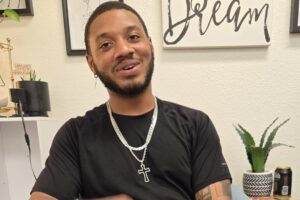
“There’s a community of kids in Oroville, who called her Mother Rachel,” Sainte said. “It seemed like that was her name, that Mother was her first name.
“There would be a meal after school, we’d make coffees in the blender, it felt like you almost didn’t want to go home for the weekend because you wanted to go to school so that you could go to Axiom afterwards.
“The Axiom was the place to be,” Sainte continued. “It was a huge help and a huge inspiration to many people.
“People kind of revere her.”
Rachel Morton said her Master’s degree in psychology didn’t prepare her for some of the kids who came to Axiom, but she developed her own love-based approach. She remembers a boy who showed up with a shank (a homemade knife or stabbing object.)
“He was about this close,” Morton said, holding the palm of her hand about an inch from her face. “And I’m thinking, ‘If you’re going to shank anyone, it’s about to be me.’”
Years later – after he was released from juvenile hall — he ran into Morton and told her how she had helped him. “He saw me and went in for a big hug, and I’m thinking, ‘I was just hoping you wouldn’t shank me.’”
Ife and a new generation
Sainte says that he and his mother’s move to Oroville was serendipitous. They were living in Olivehurst when his mother “found Oroville out of nowhere.”
“She got on the highway one day and drove until she found a house in a nice town,” Sainte says. “We found a lot of opportunity here, and a community here, that we wouldn’t have found otherwise.”
Sainte left Oroville after high school to spend time in Albuquerque with his grandparents and work as a plumber. When he came back to attend Butte College, he noticed that “the Axiom lady” – Rachel Morton – seemed to be everywhere — tabling at Oroville’s salmon festival, at Chico’s Thursday Night Market. It was always a different cause.
“She was the boss, she knew how to help if you wanted to be a volunteer,” Sainte says.
Sainte began volunteering, which he found surprisingly satisfying. “Who knows who we’re helping today that in 10 years will have the same story as me?” he says. Sainte was hired in January, assuming one of The Black RP’s five paid positions.
As part of his job, Sainte attends Black Student Union meetings at two high schools in Oroville, where he says the Black RP explores opportunities to help racially-diverse groups of students reach their goals. It might be helping a student publish her writing or polish a resume.
Sainte is also encouraging young people to become involved in civic affairs. “Most people,” he says, “are fatigued.”
But he says that if “young people become the future, we need to be informed.”
“We all understand we’re eventually going to grow into our positions in the world,” Sainte says. “But we’re not given a lot of opportunities to be on the inside.”
A ChicoSol reporter first met Sainte at the Southside Oroville Community Center, where in February a town hall was held to meet District 1 congressional candidate and Sen. Mike McGuire.
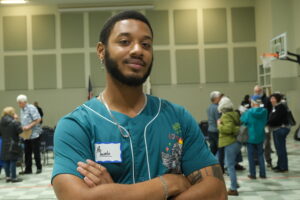
Sainte says he’s learning the importance of events like that one if young people want their voices heard.
“People my age don’t feel like there’s opportunity out here,” Sainte says. “It’s like a dead-end area.”
That’s why Sainte helped shape features of Robert Morton’s civic website, which he calls a “one-stop shop for how power works.”
The civic hub directs people to the website for voter registration. It tells stories that give historical context, allows viewers to track legislation and provides educational tests.
“It’s not just Black civics, it’s for anybody wanting to learn more about how to get engaged,” says Rachel, “so that people can vote informed.”
“A lot of us aren’t from Northern California. We came from farther away, so our family is farther” — Rachel Morton
After President Trump took office in January 2025, the Black RP was forced to regroup.
“Some of our dollars were tied to DEI work, and it was like ‘cease and desist’,” Rachel says. “It was scary. We had been saying, ‘We’re going to be here,’ and consistency is a big thing in our community, and trust.”
The Black RP moved forward in spite of losing some funding; with partners, it launched BLOC, the Black Led Organizations Coalition to offer family support from north of Sacramento through Siskiyou County.
When immigration enforcement ramped up, the Black RP became increasingly concerned about immigrant and mixed-status families, and “made intentional reach out to organizations supporting those communities.”
Soon after, staff met Haitian immigrant families who needed emotional and other support.
An “unction from God”
In the days after the 2018 Camp Fire, Rachel Morton saw the suffering of people who had lost their living quarters, and some of them were people of color who had nowhere to turn.
“A lot of us aren’t from Northern California,” she noted. “We came from farther away, so our family is farther.”
She had an administrative job at the courthouse but longed to do something directly meaningful. “I felt like this unction from God: Quit your job,” Morton says.
She did, and soon she was working in disaster relief.
Now, in an era that’s been scarred by mass deportations, rising prices, homelessness and violence, Rachel and Robert Morton, Ife Sainte and the rest of their team continue to follow that divine direction, working in what could still be called “disaster relief.”
Leslie Layton is editor of ChicoSol.
4 Comments
We serve ALL FAMILIES.
What an uplifting article!! Thank you, merci beaucoup, mesi ampil (Haitian Creole “Thanks a lot”) for highlighting this phenomenal organization and their diligent crew!
The work that they do is essential to members of Butte county, surrounding Counties and extended communities too.
I have known Mother Rachel for years but did not the extent of her greatness in service and love for our community. In her humility she continues on and with latest endeavor of the Community Hub folks have a safe space to gather. Thank you for highlighting her and her teams She definitely is a change maker in our community. May all that they do thrive, support and enliven our community forever.
Spelling ☝correction: “Mesi Anpil”….Thanks a lot in Haitian Creole.