

The Chico City Council voted 4-3 at its June 16 meeting to consider amendments to the city code that will permit and regulate commercial cannabis cultivation. The proposed regulatory changes would cover all three cultivation types: outdoor, mixed-light and indoor.
Mayor Kasey Reynolds sided with the three young councilmembers — Katie Hawley, Addison Winslow and Bryce Goldstein — on the item, voting in favor, while councilmembers Tom van Overbeek, Mike O’Brien and Dale Bennett voted against moving forward.
Reynolds voted against legalizing cannabis sales in Chico in August 2020.
Hawley proposed the regulation of commercial cannabis cultivation at an April Council meeting. Chico already allows for commercial cannabis distribution, manufacturing, testing and retail activities.

O’Brien, who is also commander of Butte Interagency Narcotics Task Force, was the only vocal opponent on the dais during the discussion, expressing concern about the marijuana black market.
“Everywhere marijuana is legalized, the illegal marijuana black market thrives,” O’Brien said. “That black market profits through cartels and other foreign national crime organizations. That money funds violence, human trafficking, and the production of fentanyl and methamphetamine that kills thousands of people in our country every year.
“The lines between legal and illegal cannabis have been blurred,” O’Brien continued. “The systems to separate both are ineffective. Dangerous chemicals have been found in the legal cannabis supply.”
O’Brien also expressed his concerns about the mental health impacts of high frequency use of marijuana on the developing brain.
“I, myself, I can’t ignore those impacts for any reason, to include financial,” O’Brien stated.
Hawley responded to O’Brien’s concern.

“I don’t know what to say to that,” Hawley said. “I included a councilmember report the first time we spoke about this on the dais, and honestly, most of the academic research I found was pretty much contrary to that.”
Hawley added that creating legal and ethical pathways that are competitive with those illegal markets can help get dollars back into local communities.
Later, O’Brien responded to a chuckle from Hawley.
“I hope you didn’t find that funny, because I would be very disappointed in you if you did, but I saw you chuckle at that, as if that was something funny,” O’Brien said. “This is something that is real and impactful, and we just can’t ignore that data that’s out there.”
Hawley said she would appreciate talking further about the studies that concern O’Brien. Hawley told ChicoSol today that she was questioning O’Brien’s argument that legalization would lead to adverse effects such as criminal activity, pesticide use and waterway pollution.
Tracy Vincent, a local farmer, who spoke during the public comment session, said she supports a limited pilot program for cultivation within city limits. But she also stresses protecting water, infrastructure and resources.
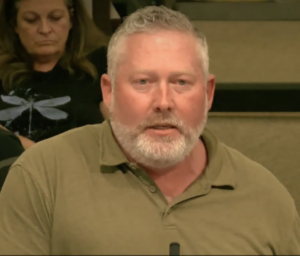
David Petersen, owner of Chico Cannabis Company (C4), along with a few other speakers, called on the City to consider adopting microbusiness licenses from the Department of Cannabis Control to combine several activities under one license, reducing administrative burden and cost.
A cannabis microbusiness license allows a company to combine multiple activities, such as cultivation, manufacturing, and distribution, under a single state license. Chico’s local cannabis regulations do not now include a permitting pathway for that license type.
Because Hawley did not include the discussion of microbusiness licenses when she agendized the item, the City Council was unable to take any action on the issue during the meeting.
City staff will draft an amended ordinance and report outlining the proposed regulations. The Planning Commission will then hold a public hearing and make a recommendation before the proposed ordinance returns to City Council for consideration.
Yucheng Tang covers city government for ChicoSol.