
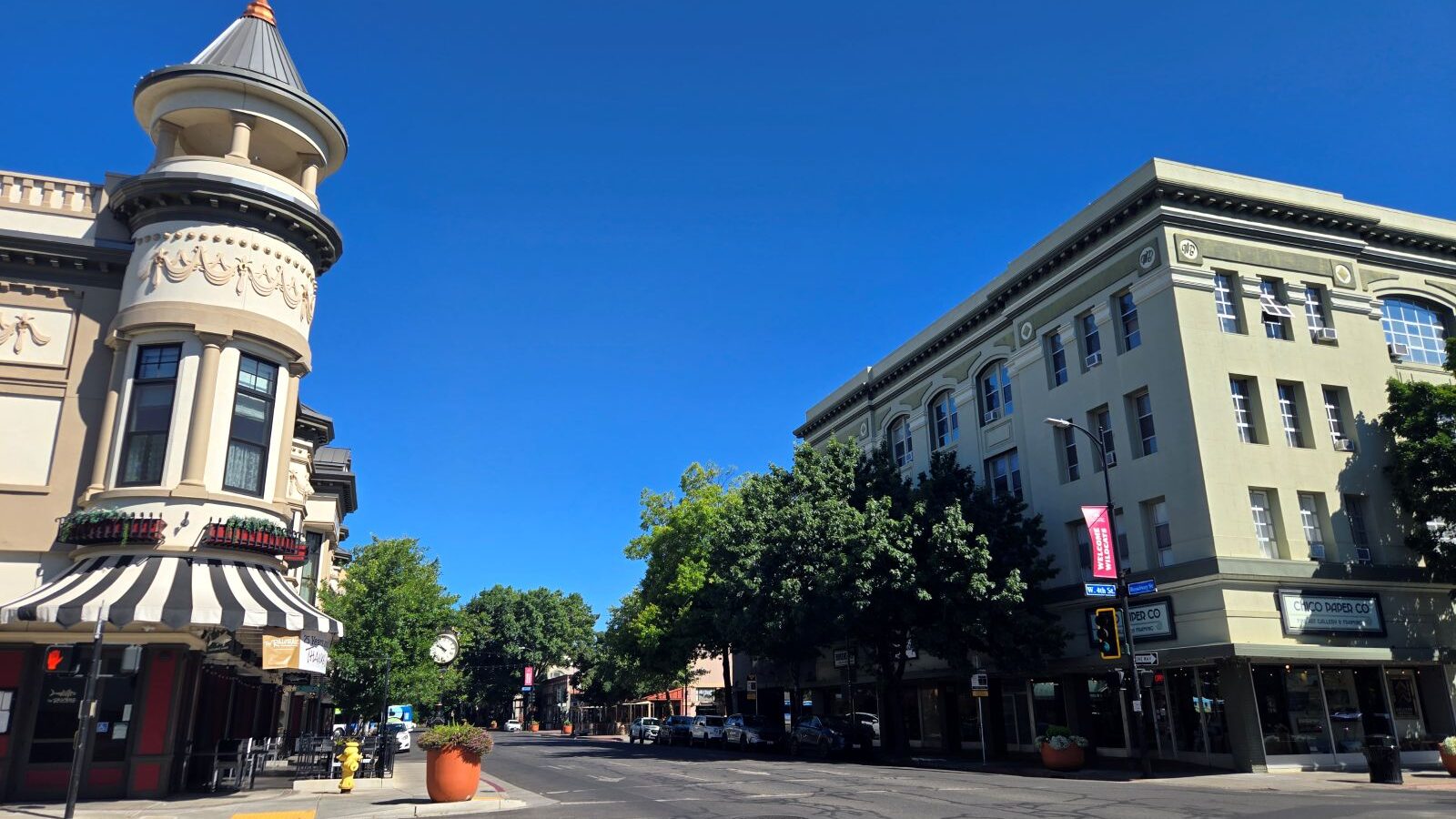
When Chico Mayor Kasey Reynolds cast her two votes at City Council meetings against the Downtown Revitalization Project, she didn’t anticipate the amount of pushback she would face.
What followed the votes was a lawsuit by former Mayor Ann Schwab and seven other plaintiffs, as well as an investigation by the Fair Political Practices Commission (FPPC). The conflict of interest investigation was launched April 29 after more than 80 people complained about the participation of Reynolds in voting.
Reynolds called the lawsuit and complaints “harassment” and efforts to “bully” her out of a decision. She said she worried that the community hadn’t had enough time to critique the project and wasn’t ready for implementation.
The project was discussed at community meetings and the public was given opportunities to provide feedback over the course of two years. But Reynolds said she didn’t see some concerns — especially those of downtown business owners — addressed. This, she said, led her to vote no on the project twice, much to the frustration of many community members who were pushing for the Downtown Revitalization to go through.
By mid-May, the project had led to even more FPPC complaints. Rob Berry, a local attorney and critic of the project, filed complaints against councilmembers Bryce Goldstein and Addison Winslow, alleging a conflict of interest over their office space on Second Street.
The FPPC extended its 14-day deadline to decide whether to open an investigation into the complaints against Goldstein and Winslow, according to all three parties.
The FPPC, established in 1974, is tasked with overseeing California public officials in adherence to campaign and candidacy rules and potential conflicts of interest. Investigations can take months to years.
There are 959 investigations open in California as of May, according to FPPC Communications Director Shery Yang.
The FPPC can fine up to $5,000 for each violation of the Political Reform Act. Reynolds, Winslow and Goldstein each voted twice. The FPPC determines the punitive action based on a variety of factors, such as harm to the community and intent.
Reynolds’ alleged conflict revolves around her co-ownership of Shubert’s Ice Cream and Candy, which is located on East 7th Street and is within the project map boundaries. But the changes, such as adding protected bike lanes, widening sidewalks and removing a lane from Broadway and Main streets, would occur about 200 feet away from her business.
Many of the complaints against Reynolds allege the project would have a financial effect on her business.
Councilmember Tom van Overbeek had recused himself because of his ownership of several buildings downtown. Conflict of interest rules are applied differently to building and business owners.
The Political Reform Act says there must be a 5 percent or more change in gross revenue. But exemptions within the Act make it harder to discern whether or not someone has a conflict. Reynolds believes she has an exemption.
The FPPC asks officials to request advice letters, which are typically provided within 21 days, Yang said. Reynolds said she never requested one because there wasn’t enough time after the issue came up.
“I was confident in what the rules are on ownership and the fact that I’m a lessee not a [building] owner,” she said.
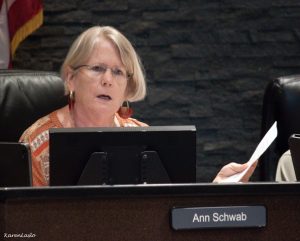
Schwab, the former mayor, requested numerous opinion letters from the FPPC over potential conflicts of interest. She co-owned a business on Main Street called Campus Bicycles, and this, she said, kept her from voting on issues related to downtown.
Reynolds believes Schwab recused herself even when she didn’t need to.
A storm of complaints
More than 80 complaints related to Reynolds’ voting participation were filed to the FPPC from March 20 through May 27, each time triggering an email notice to her. Those complaints made up about 22% of all FPPC complaints filed in California during March and April, according to documents provided by the FPPC.
The largest uptick in the flow of complaints came after Matt Johnston, co-owner of Stoble Coffee, launched a website in favor of the project. It also provided a template for people to file FPPC complaints against Reynolds, something he said he was hesitant about adding.
Complaints against Reynolds made up about 22% of all FPPC complaints filed in California during March and April, according to agency documents.
Reynolds said the majority of complaints were similar, with about 10 offering something unique.
“Once the FPPC has decided to investigate, getting 40 more of the same thing doesn’t make them investigate even more,” she said. “To me, it just feels like intimidation and harassment — that’s essentially what it is at that point.”
Johnston said he knew the FPPC wouldn’t be able to act in time to change the vote, but he wanted to ensure the rules were being followed and precedent was set.
But it was over a published phone number — which is publicly listed — that led to much of the harassment Reynolds said she faced. Reynolds said she received calls from people at all hours of the night, and some of those callers were crude. Reynolds declined to go further into the content of those calls.
Johnston said it wasn’t his intention to make Reynolds a target of harassment.
“At the end of the day, we’re all human beings,” Johnston said, noting that he then removed the phone number from the website.
But Reynolds saw it differently: “Let’s face it, I’m up for election next. So it was a pre-election hit. They think this is going to take me down. In my belief, I think that’s what it was, because, let’s be honest, my vote didn’t kill this — three votes killed this.”
Johnston said it was his understanding that the two other councilors, Michael O’Brien and Dale Bennett, were definite no votes and Reynolds was the only person who seemed like she might flip.
Reynolds acknowledged that she was on the fence during Council meetings, but still felt like it was unfair for those in support of the project to focus their criticism on her to the exclusion of the other two councilmembers who voted no.
The Goldstein and Winslow complaints
In Berry’s complaints against Goldstein and Winslow, he alleged that both had a conflict of interest because of their office space downtown.
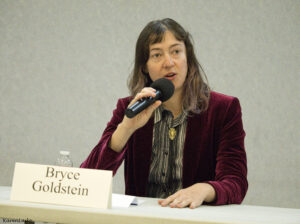
Both councilmembers said they don’t receive revenue from their office rental, which might create a conflict of interest.
As of June 9, the FPPC hadn’t opened or rejected an investigation into Winslow or Goldstein, according to its portal.
Berry said he filed the complaints to get clarification from the FPPC on when and if councilmembers should recuse themselves.
“If you’re going to use this logic to force the mayor into making a decision that you favor, then let’s see if the same logic applies to Bryce or Addison,” Berry said.
Goldstein and Winslow both said their situation and Reynolds’ differ. Winslow said Berry was trying to “muddy the waters.”
“It’s very different,” Goldstein said. “I rented an office, so that I have a private space to do work or have meetings. I don’t make any money off of it. The rent amount is very low because it’s shared between three people. The mayor owns a business that she profits from and [that] depends on customer access.”
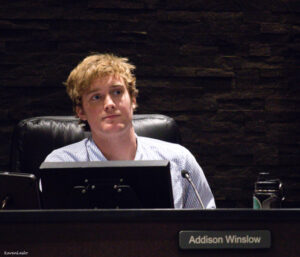
Goldstein and Winslow said the complaint was frivolous, an attempt at retaliation.
“Rob Berry has a history of making frivolous complaints and even lawsuits against members of our community,” Goldstein said. She said he was also rallying people on Facebook to “intimidate people out of political roles.”
Berry has a Substack page and maintains a Facebook group, Chico First, where he often criticizes Winslow and Goldstein.
In the complaint filed against Goldstein, Berry noted her employment with CalTrans, which provides the Active Transportation Grant that was crucial for the revitalization project.
Goldstein said her work on passenger rail planning for CalTrans has nothing to do with the ATP grant.
“Maybe that’s the truth, and maybe that’s all good,” Berry said. But he questioned whether Goldstein’s vote on the revitalization could affect her employment. “So that potentially could be a conflict. It’s up to her to explain how it’s not.”
Winslow said it was typical for public officials to receive complaints during election season.
“It’s nothing new, it’s just the way that it’s been since I’ve been in politics,” Winslow said. “The FPPC is weaponized.”
Yet, the FPPC is one of the only resources for members of the community to remedy perceived conflicts. Earlier, Schwab told ChicoSol: “It’s important to me to be able to trust my representatives to make decisions that adhere to the rules of the FPPC. I want the court or FPPC to give guidance and rule on this.”
Chris Hutton is a contributor to ChicoSol.
1 Comment
As downtown Chico continues to die, the mayor adds nails to the coffin.