
The City Council approved cancer screenings for public works employees in a split vote Jan. 20. Councilmembers Addison Winslow, Katie Hawley and Bryce Goldstein were opposed to the Galleri cancer screenings that will be available every three years.
The disagreement centered on whether a technology not approved by the FDA — a blood-based multi-cancer early detection test — should be available to more city employees, and whether the matter should be handled by the city’s Human Resources Office.
According to Erik Gustafson, assistant city manager, the screening is not mandatory but would cost around $66,000 if all 103 public works employees participate.
Gustafson said there is broad agreement that the carcinogens public works employees are exposed to during work activities place them at a significantly higher risk of cancer. But he conceded that “cancer incidence rates for public works employees have not been quantified through large national studies.”
Councilmember Michael O’Brien supported the proposal, saying he believed it was a small but worthwhile investment in employee health.
“There’s some controversy, because this is new and cutting-edge technology,” O’Brien said. “I get that, and no, we don’t have a full body of testing and studies that maybe we would like. But remember, this is minimally invasive and provides early detection, and I have read a positive study on the merits of this type of testing.”
Councilmember Tom van Overbeek commented that “the only harm” caused by the test is false positive results, which can cause anxiety. Van Overbeek also said that FDA approval usually takes a long time, and the technology being discussed isn’t that old, so “the fact that it doesn’t have an approval doesn’t mean it’s not valid.”
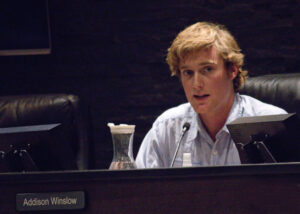
But Winslow questioned the effectiveness of the cancer screening and argued that the test produces both false positives and false negatives.
Winslow said that false negatives cause people to get fewer of the more established cancer tests.
Last summer, the City considered providing police department employees with the screening that was also available to fire department employees. Hawley asked to include public works employees because she wanted to “see equity among all departments.”
But Hawley then re-thought her position.
“I originally had looked at it through a lens of seeing a pattern of certain departments having favoritism when it came to funding, among other benefits, and I thought it was important to see equity among all departments,” Hawley explained.
“I still hold that value,” she added.
Hawley indicated she doesn’t have the expertise to discuss the validity of specific health tests, but agrees with the argument that these decisions are best made by Human Resources in closed session as part of labor negotiations.
“That’s the more appropriate place for it to be held,” Hawley said. “I believe that [previously] I was looking through the incorrect lens.”
Goldstein also agreed that the topic should be discussed with HR in closed session, “like we do every other employee benefit.”
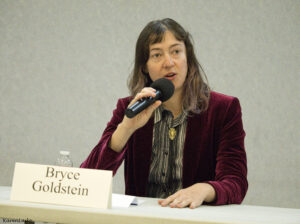
“Discussing something on the dais like this opens up the opportunity for politicization,” Goldstein said. “I’m bummed to be in a position like that, because we have to really prioritize things, like, are we going to spend money on something that’s perhaps less proven to be helpful than other benefits that we could be providing? And I would really like to be better informed.”
Winslow made a motion to have the City’s Human Resources department conduct further assessment and research and return to the Council during labor negotiations in closed session. Goldstein seconded the motion.
O’Brien made a substitute motion to approve the testing cost in the 2026–2027 budget and to offer the screening every three years. The substitute motion passed, with Mayor Kasey Reynolds, Vice Mayor Dale Bennett, van Overbeek, and O’Brien voting in favor.
“I know people personally very well that are in this field of research who believe this is very, very good technology,” van Overbeek said.
Winslow said he did not think the issue was only about protecting Public Works employees.
“If it was just about the exposure to carcinogens, we would have given this to the public works employees in the first place,” Winslow said. “We wouldn’t have waited for this to come back around and have some new recommendation.
Winslow said he views the decision as “performative equity” and added that no one appears to have consulted the public works employees. “A lot of employees would prefer to just get paid more money and make their own decisions about experimental health care procedures,” he said.
Yucheng Tang covers city government for ChicoSol.