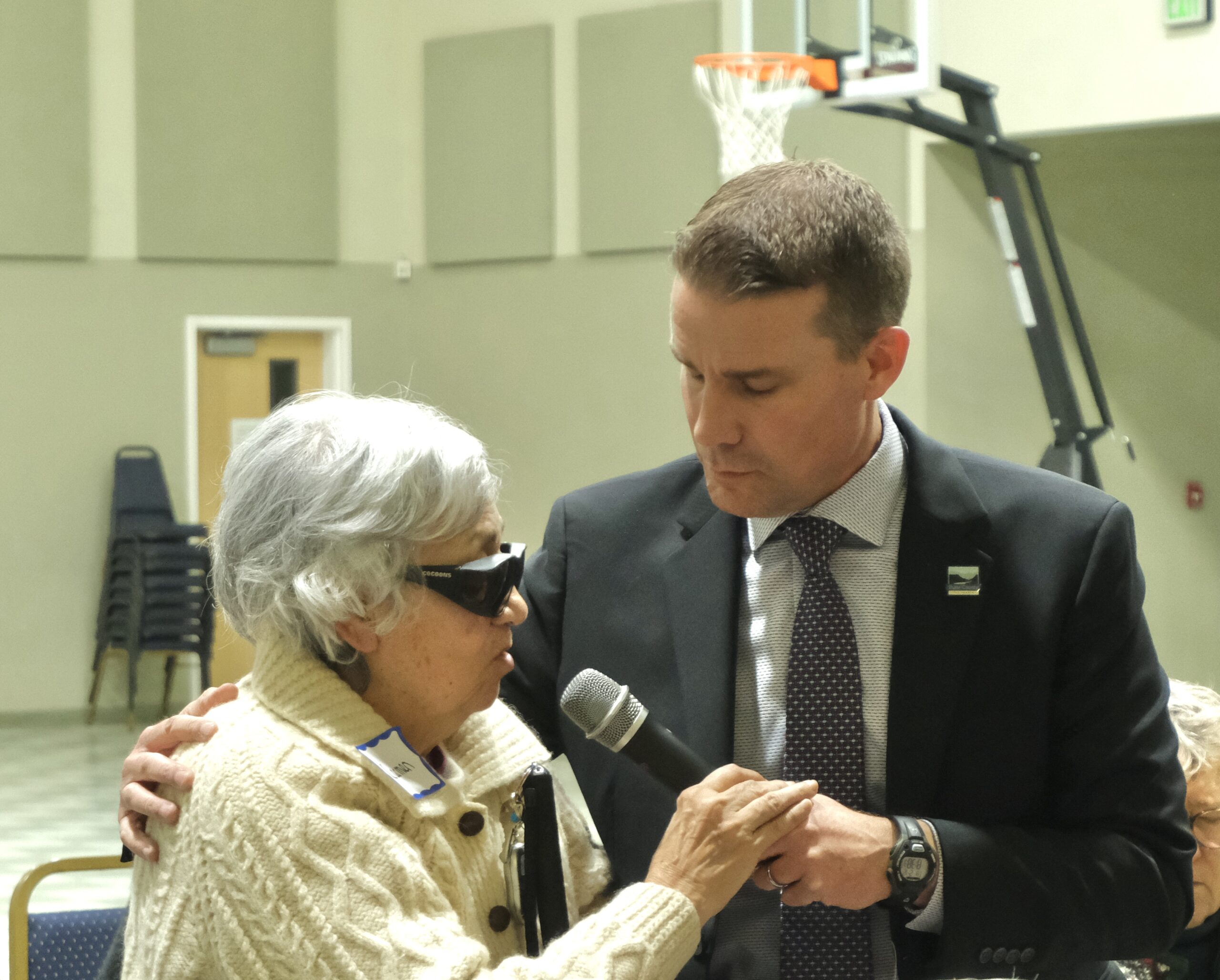
Update: Candidate Mike McGuire (pictured above at a recent Southside Oroville town hall) has announced he will also run in the special election for District 1. Earlier this month, the California Democratic Party endorsed McGuire with 74% of the regional delegate vote.
Lee en español aqui.
A vacant seat in California’s 1st Congressional District — caused by the passing of former congressman Doug LaMalfa, as well as recently approved redistricting — have set up an unusual and potentially confusing election year for voters in Butte County.
Butte County voters will receive two separate ballots for two June 2 primary elections.
One is the primary for a special election to fill LaMalfa’s seat for the remainder of his term.
The other is the statewide primary which will determine two top candidates who will run for the District 1 seat under the new voting map in the November general election, explained Keaton Denlay, Butte County clerk-recorder, in a recent phone interview with ChicoSol. The winner of the general election will take office in the beginning of 2027.
That means voters will vote in these upcoming District 1 elections:
- June 2 primary for the special election to fill LaMalfa’s term, which ends at the beginning of 2027;
- June 2 primary to choose a candidate to run for District 1 in the November election;
- Aug. 4 special vacancy election may be held (see explanation below);
- Nov. 3 general election giving voters the chance to choose between two top candidates. The new District 1 representative will serve a two-year term in the House that begins January 2027.
The Supreme Court ruled earlier this month that California can use the new congressional map that was approved by voters in the November general election and is intended to create a more liberal voter majority in District 1.
Return two ballots in respective envelopes
The special election to fill LaMalfa’s seat and the general election are not consolidated, Denlay said.
“Elections are being done completely separately, because they’re on completely different timelines,” Denlay added. “All of the certification deadlines are different. So that’s why they are separate elections.”
Denlay said that if the top candidate in the June 2 special vacancy primary receives 50 percent plus one vote, that candidate will become the outright winner and there will be no need for the Aug. 4 special vacancy election.
“Right now we are planning that the August election will take place, but it could be canceled, given those kinds of scenarios we just laid out,” Denlay said.
Denlay said Butte County voters will get two complete voter packets from the county about the first week in May.
Each packet is “going to have a ballot, a voter information guide and a return envelope,” Denlay explained. “They(voters) are going to get that for the special vacancy election, and they’re also going to get that for the statewide primary.”
“They’ll even be different colors, so they’re going to stand out as being separate,” Denlay said.
“Ballots will be mailed out 29 days before those elections, and if voters want to participate in both elections, they will have to return those ballots in their respective envelopes, either through the mail in person or one of our ballot drop boxes,” Denlay added.
Candidates for each race
Denlay said candidate filing started on Feb. 9 for the statewide primary, and will open on March 23 for the special vacancy election.
In the special vacancy election, Assemblyman James Gallagher of Nicolaus will run and was quickly endorsed by President Donald Trump. Audrey Denney of Chico has announced she will also run.
In the June 2 statewide primary, three Democratic candidates have announced they will run for the new District 1 seat. They are Denney of Chico, Michael McGuire of Healdsburg and Kyle Wilson of Santa Rosa.
The balance of the district has changed
David Welch, secretary of the Butte County Democratic Party, said that the quickest way for Gov. Gavin Newsom to fill the vacancy would be to hold a special election alongside the statewide primary in June. But that would have required a special primary election around March 31.
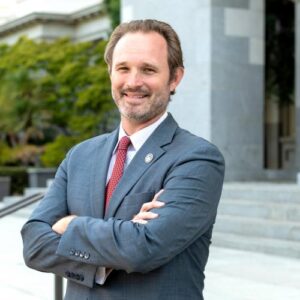
“Having a special primary — just for getting out ballots and all the mechanisms of doing that in time — would have been a challenge, plus substantial expense for all of the counties involved,” Welch said. “So that’s sort of the non-partisan case for doing this, by combining the primary for the special election with the June primary election.
“If somebody gets 50% plus one– which is actually quite likely given the balance of the district — then there will be no need to have a runoff,” Welch said.
Prop. 50 — the ballot initiative that passed in November — redrew district boundaries so that it is now as “solidly Democratic” as the old District 1 was “solidly Republican,” Welch said.
Welch also explained why he believes Newsom may have had a partisan reason for choosing the August special election date. He suggested that the governor may have wanted to leave the seat unfilled as long as possible, which would reduce the already very narrow lead the Republicans have in the House.
Yucheng Tang is a California Local News fellow reporting for ChicoSol.