by Lindajoy Fenley and ChicoSol staff | Posted November 3, 2025
Eighteen years ago, we founded ChicoSol as a bold, extraordinary experiment. We wanted to provide a platform for local news that would be online, nonprofit and bilingual, with information available in both English and Spanish.
Throughout the country, print newspapers were being swallowed up by corporations that were cutting their resources and eating their profits. We had very few models for something different.
But our readers proved the experiment could work, joining a subscriber list and later a small-donor base. Now we run stories that are viewed by thousands of readers, and nonprofit digital news sites are thriving in communities across the country.
Today, we’re poised for more growth as we launch our second NewsMatch fundraising campaign. We’re asking you to partner with us during an annual fundraising drive that will match your donations dollar-for-dollar.read more
First-place award from CNPA recognizes coverage of gender-identity lawsuit
by ChicoSol staff | Posted July 15, 2024
photo by Leslie Layton
A mom at a 2023 meeting of CUSD’s Board of Education.
posted July 15
ChicoSol has been awarded a first place in the prestigious Community Focus category in the statewide newspaper contest run by California News Publishers Association (CNPA).
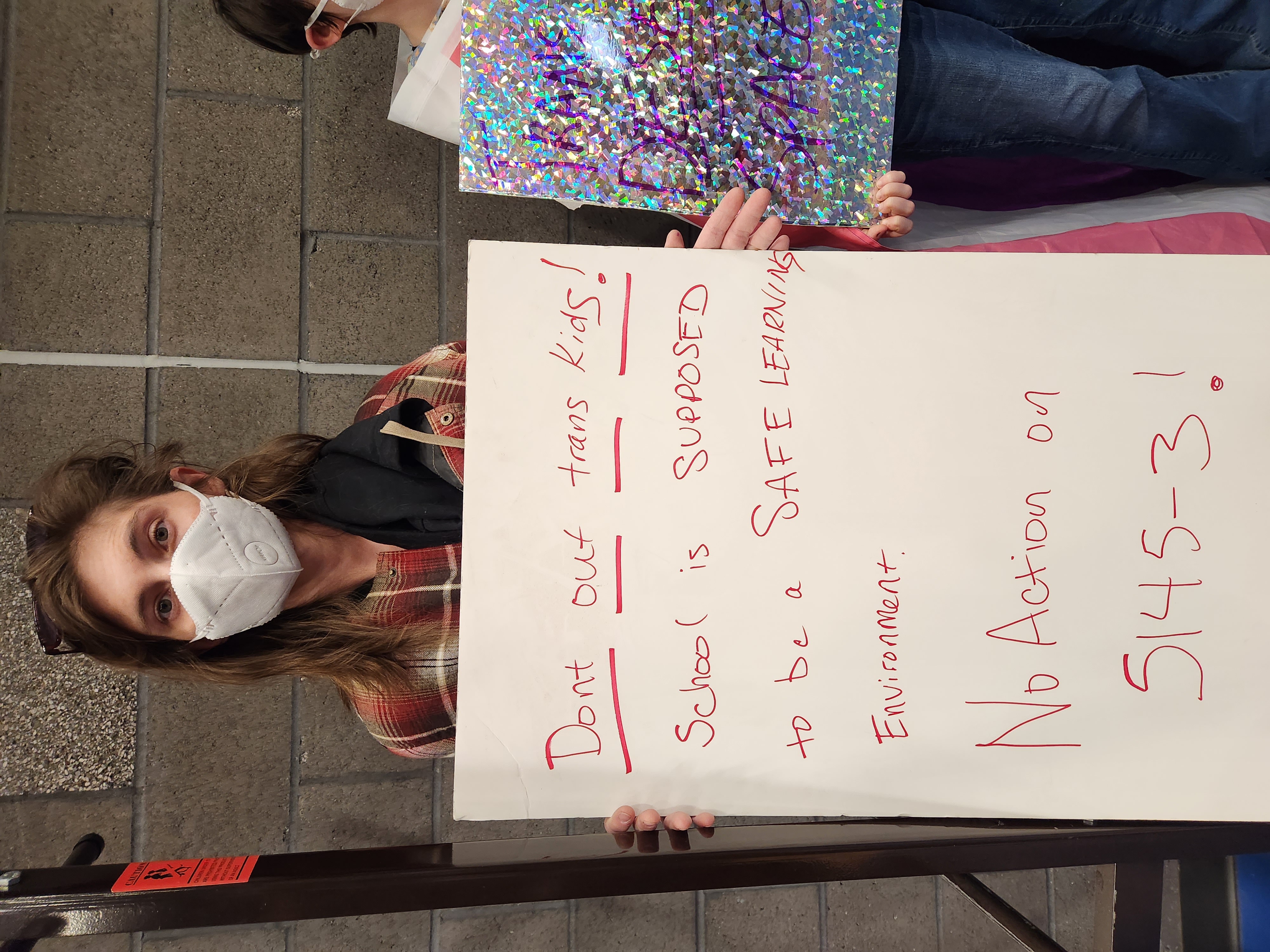
The award, announced July 14, recognizes the stories last year by Natalie Hanson and Leslie Layton on the gender identity lawsuit that was filed against Chico Unified School District by a local mom.
ChicoSol competed for the first place with the Bay Area Reporter, the San Diego Union-Tribune, the Santa Barbara Independent and the San Francisco Chronicle, all of whom were named as finalists in May. A judge wrote that our coverage of the lawsuit produced a “strong series that shows how a community paper can be fair – and still expose bigotry and transphobia and offer the true facts.”
The lawsuit stories also won a third place in the Youth and Education category.
ChicoSol placed fourth in Investigative Reporting, fourth in Health Reporting, and fifth in Housing and Land-Use Reporting. The investigative reporting award recognized a video story by Dave Waddell and Julian Mendoza, “The checkered history of Mark Bass,” which a judge said “packs a wallop.”
ChicoSol placed fourth in Health Reporting for Hanson’s essay. “When the truth won’t set them free,” which a judge said was a “powerful personal tale.”
Announcement reflects recognition for community focus and investigative reporting
by ChicoSol staff | Posted May 29, 2024
photo by Leslie Layton
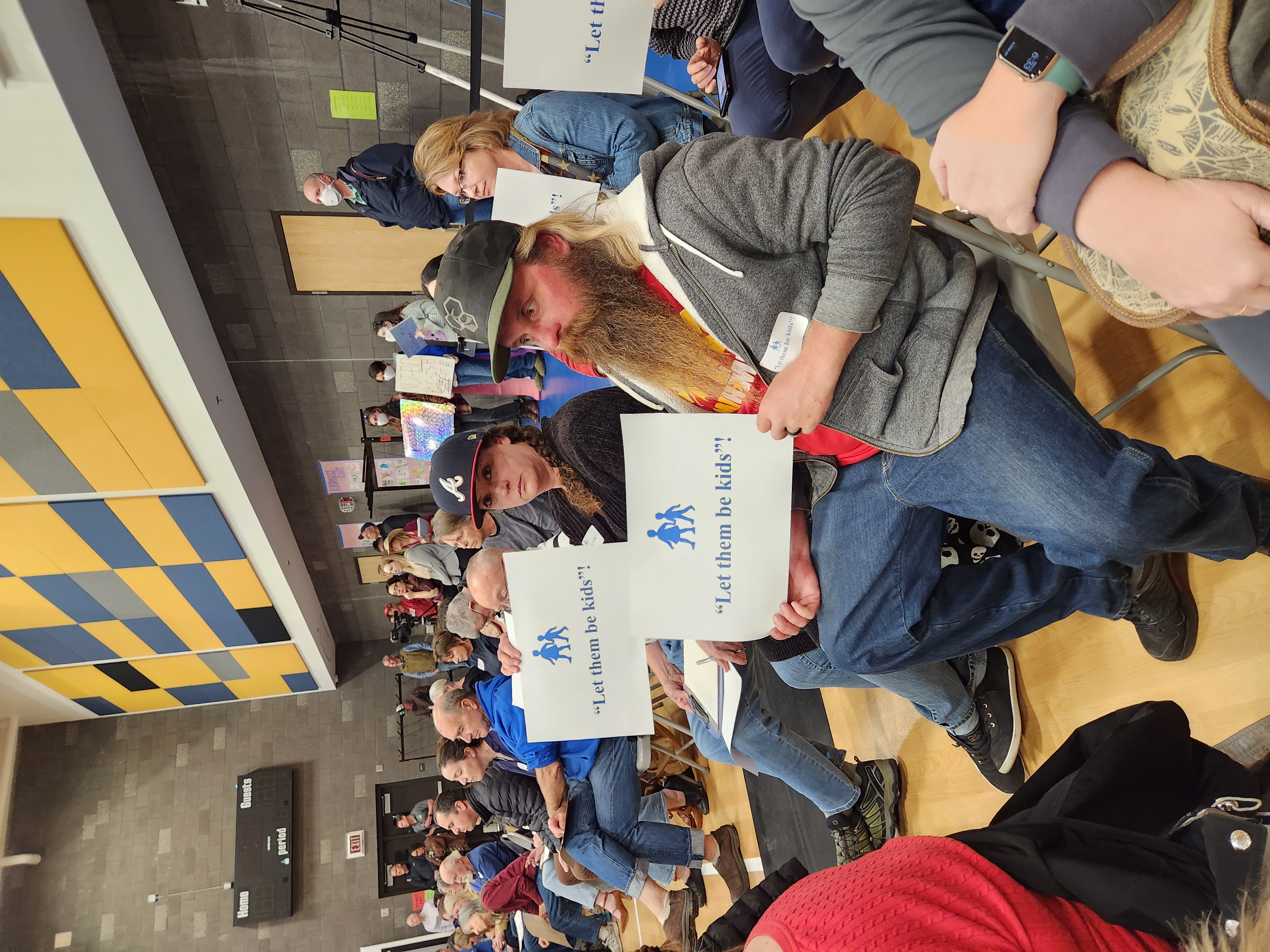
Several rows in the Marigold Elementary gym were occupied by protesting parents during a school board discussion on gender identity.
ChicoSol has been named a finalist in five categories in the prestigious annual journalism competition run by the California News Publishers Association (CNPA) for its 2023 coverage.
CNPA announced today that ChicoSol’s Natalie Hanson and Leslie Layton are finalists in the special Community Focus category across all divisions, placing this publication in competition with the San Francisco Chronicle, Bay Area Reporter, Santa Barbara Independent, and the San Diego Union-Tribune.
Contributors Dave Waddell and Julian Mendoza are finalists in the California Journalism Awards investigative reporting category for the coverage provided by the video report, “The checkered history of police Sgt. Mark Bass.”
Editor Layton and Contributing Editor Hanson are finalists in Housing and Land-Use Reporting. ChicoSol entered stories on affordable housing and on the proposed Valley’s Edge subdivision project in the Housing and Land-Use category.
The CNPA annual journalism contest is highly competitive, reflecting the hard work of journalists across California to report on their communities. The category winners will be announced in July.
(ChicoSol coverage of the nationwide local news crisis has received support from an Ethnic Media Services fellowship.)
The rapid erosion of local news across the country is nothing short of a five-alarm emergency for democracy — and it will take creativity and commitment to keep democracy’s fourth pillar standing.
Butte County affairs are covered by only a few news outlets that employ a handful of journalists. Research shows reduced local news coverage is linked to less government transparency and reduced civic engagement. Most citizens do not have time to carefully monitor the use of their tax dollars and attend public meetings that reporters once watched closely.
Most of the newsroom positions that fueled news production at the daily Chico Enterprise-Record several decades ago have been gradually eliminated. (The ER is owned by Media NewsGroup.) We’ve also seen the move to digital-only reporting for the weekly Chico News & Review because of advertising revenue losses.
We’re here to state that it’s time for news professionals who still believe in news over profit to move beyond the old business models that rely on advertising revenue and are owned by distant corporations and billionaire hedge funds. The Enterprise-Record is one of those newsrooms; Alden Global Capital owns MediaNews Group. Many of those funds have ruthlessly culled newsrooms around the country.
We believe that ChicoSol is well-positioned to thrive with its record of hyperlocal and deeply-researched journalism. ChicoSol was founded 17 years ago as a not-for-profit digital publication that would mentor young journalists, cover the Latinx community and provide investigative reporting. Since then, we’ve run on reader donations complemented by fellowships, covering stories that would otherwise have been untold.
Now, publishers, editors and media researchers around the country are working to produce new solutions to save local news, and many if not most are experimenting with similar models — digital-only and/or nonprofit.
The donor-based model used by ChicoSol has been used elsewhere with success. Martha Diaz Aszkenazy owns and publishes the San Fernando Valley Sun/el Sol that runs on donations, with only a small portion of its revenue coming from advertising and online revenue.
Diaz Aszkenazy participated in a recent news briefing sponsored by Ethnic Media Services (EMS), and also on the panel was Steven Waldman, founder and president of Rebuild Local News. Waldman referred to the problem of “news deserts,” noting they’re emerging even in areas where not all local news outlets are gone: “There’s just way less actual coverage. This is a moment where ethnic media can have a very big impact on public policy discussion.”
Waldman thinks there are several ways that public policy can help the fight to ensure that local news outlets survive. Government advertising dollars funneled toward news coverage is one way; tax credits, such as those the Community News and Small Business Support Act would provide for local papers that retain reporters could be another. Also under discussion is a tax credit for small businesses that advertise with local news outlets.
Press Forward is an initiative led by two foundations with more than 20 funders to spend $500 million over five years as a new pool of money for local news. It is still unclear how news outlets will apply and qualify for what funding, Waldman said.
Ryan Adam of Canada’s Toronto Star said that the paper has survived since 1892 by changing its business model several times. Canada is currently working on legislation to compel Google and other companies to pay news organizations to use their content, and the Star already has similar deals with Google and Meta.
“I strongly encourage tech leaders to acknowledge the impact that real, fact-based journalism has in local communities in terms of bringing us together as a society,” Adam said. “In the absence of real journalism, all we’re going to get is pseudo journalists … and folks who don’t go through the rigorous fact checking we do in our newsrooms.”
Of course, reader donations must be supplemented by grants, tax credits and other revenue sources. But the bottom line is this: It’s become clearer than ever that we can only preserve democracy by preserving independent news outlets. There is a future for journalism that speaks truth to power in this country — and that future is being built.
Natalie Hanson is a contributing editor to ChicoSol.
Waddell honored for police shooting, Sites stories
by ChicoSol staff | Posted April 1, 2020
photo courtesy of Sites Project Authority
A conceptual rendering of the Sites reservoir west of Maxwell. Dave Waddell’s first-place story was supported by an Ethnic Media Services fellowship.
ChicoSol contributor Dave Waddell has won four honors, including two first-place awards, and ChicoSol Editor Leslie Layton was named a second-place winner in the 2019 California Journalism Awards competition.
The results were announced Tuesday by the sponsoring California News Publishers Association, which cancelled its planned spring awards gala because of coronavirus risks.
Waddell captured top honors in the in-depth reporting category for a series of stories on law enforcement killings in Butte County. He also placed first in land-use reporting for an extensive story on the proposed Sites reservoir.
A judge in the land-use category lauded the depth of the Sites article: “One story tells you everything. Strong reporting, great quotes and you linked nearly the whole state with one topic.”
Layton’s runner-up award came in the feature-writing category for a story about Chico attorney Sergio Garcia’s 25-year journey to U.S. citizenship. A contest judge praised the story’s relevance, clarity and organization.
Two other of Waddell’s entries – in the investigative reporting and public service categories – garnered fourth-place awards for several stories in 2019 related to law enforcement shootings.
In the public service competition, a judge wrote that “ChicoSol went above and beyond an initial news story. The ongoing nature of the story and keeping the issue in the public’s eye is at the very heart of great journalism.”