
Hispanic Resource Council & other groups answer call to action
by Leslie Layton | Posted July 29, 2025
Hispanic Resource Council flier letting immigrant workers know that they can find out if they qualify for a grocery gift card by calling 530-519-3118.
This story was updated on July 30 with a statement from Butte County Superior Court.
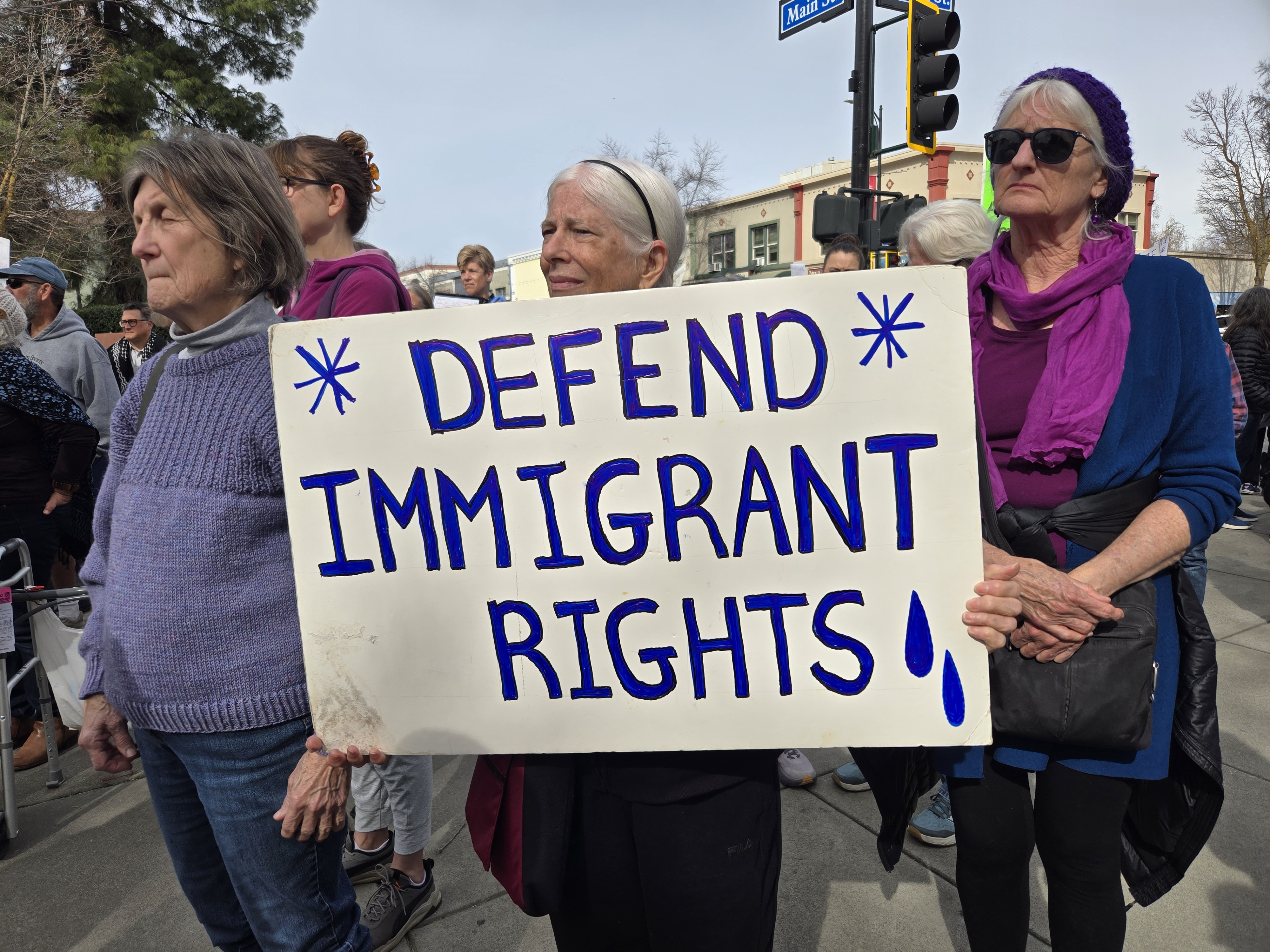
Officers from Immigration & Customs Enforcement (ICE) made a July 28 appearance at Butte County Superior Court and may have arrested as many as six people.
Action News Now reported that six people were arrested after ICE arrived, quoting an “unnamed source.” The advocacy organization NorCal Resist said it had confirmed one arrest when that person’s companion connected with its Rapid Response Network. ICE agents have been taking immigrants at courthouses throughout the state, but it was the first confirmed ICE sweep at a courthouse in Butte County.
NorCal Resist will offer a July 30 court watch training for interested citizens.read more
In the Northern Sacramento Valley, immigration attorneys are hard to find
by Natalie Hanson | Posted April 9, 2025
photo by Karen Laslo
Sergio Garcia
Immigrant advocacy organizations are racing to block the Trump Administration’s attempts to enforce the campaign promise of “mass deportations” that could potentially affect millions of people.
But in the North State, many people live far away from immigration attorneys who could help them with their existing cases or new threats from ICE, said Chico attorney Sergio Garcia, who practices personal injury law, and in 2014, became the nation’s first undocumented person to obtain a law license. Garcia is now an American citizen.
Garcia regularly directs immigrants needing legal help to attorneys practicing in Sacramento.
In recent weeks, the federal government has revoked green cards and student visas — sometimes because of political views — and is pressuring the IRS to provide tax information that will help detain and deport people.
Legal experts joined an American Community Media panel March 28 to explain how the administration, through these actions, has circumvented due process – particularly by deporting hundreds of people to detention centers in Panama or El Savador.
Zenobia Lai, executive director of Houston Immigration Legal Services Collaborative, said there are two approaches within the administration’s strategy. The administration has first focused on “let no one in” — making the border crossing process more difficult, for one — and then moving to “kick everyone out,” she said.
“The process begins with (accusing people) of an unlawful presence, denying birthright citizenship and then shutting the door behind people … by creating a situation where young people are also denied a future after removal of the older generations,” Lai said.
Todd Schulte, president of FWD.us, a bipartisan political organization focused on immigration and criminal justice reform using the FWD.us Education Fund, said Trump will not stop expanding the definition of who he determines cannot live in America.
Schulte said the president will seek to remove people who secured legal entry from under many violent regimes, such as Ukrainians fleeing Russia’s invasion of their country and people fleeing Afghanistan under the Taliban regime. That will exacerbate pressure at the border and in the overwhelmed court system, he said.
“We heard so much during the campaign — to go back nine and a half years — about Mexicans and Muslims. We’ve seen an effort to expand this effort of criminalizing folks,” Schulte said.
David Leopold, former president and general counsel of the American Immigration Lawyers Association, emphasized how Trump’s use of the Alien Enemies Act is the first such example since the federal government employed it during World War II to incarcerate Japanese Americans in internment camps. He said the goal is to remove Venezuelans from America, establishing a dangerous “policy by rhetoric” practice to bypass the country’s well-established courtroom processes and rules protecting due process for immigrants.
“This is about due process, and taking all of these complicated laws together is an abridgement and an encroachment,” Leopold said.
He added: “A majority of people held in ICE jails and prisons are in privately operated facilities — many of these are in the South, and Louisiana has many of them.”
Garcia, the Chico attorney, emphasized how crucial Trump’s rhetoric has been to not only make people fearful, but embolden people who are prejudiced against migrants.
“The reality is that the rhetoric is frankly what’s most harmful because it emboldens others to no longer hide their racism,” Garcia said. “The fact remains (while) Trump has deported less people than Biden and Obama, what’s truly harmful are his terror tactics that affect the most vulnerable.
“In the end, his economic policies will sink us all,” Garcia added, “but I guess the philosophy of some is, ‘That’s ok as long as he gets rid of immigrants first.’”
Garcia was approved for his green card soon after coming to the United States, but then waited in the so-called “line” for the actual card for more than 20 years.
There are a few resources available for people living in rural Northern California. Chico State’s DREAM Center offers support for undocumented students and those from mixed-status immigrant families, including consultations with its immigration legal services provider, the Coalition for Humane Immigrant Rights (CHIRLA).
NorCal Resist – an immigrant advocacy organization – posts regularly about potential ICE raids in the Sacramento Valley.
“Please remember many people are terrified right now,” NorCal Resist said in an April 6 Facebook post. “Sharing unverified rumors causes harm and distress to people who we all care about. We will immediately post information once verified. If you are a student who has had a visa revocation you are also welcome to reach out to us for assistance connecting with legal and other resources.”
Natalie Hanson is a contributing editor at ChicoSol.
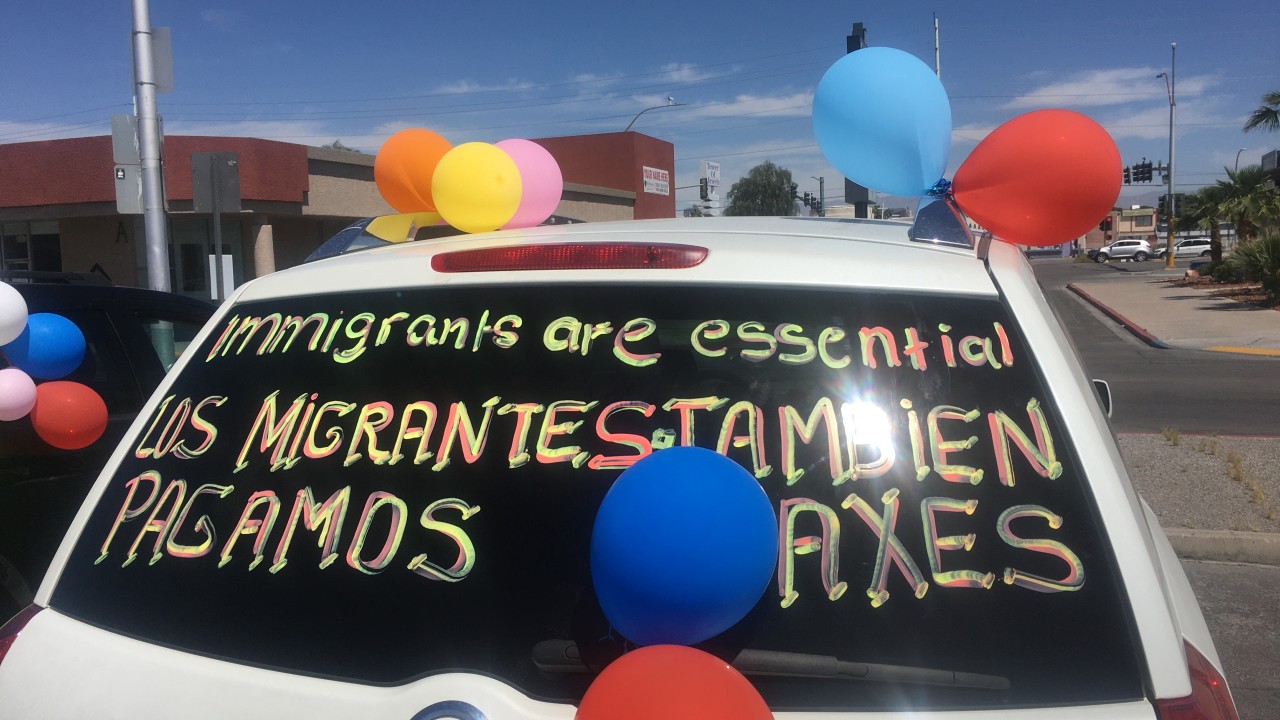
Sacramento-based NorCal Resist is asking for food and cash donations and gift cards for its May 16 Car Caravan to Butte County that will provide emergency pandemic assistance to immigrant families ineligible for government aid.
NorCal Resist organizer Autumn Gonzalez said many of the immigrant families that will be assisted with cash for rent or in other ways are Camp Fire survivors who contacted the organization’s hotline.
“We’ve had a lot of calls from Butte County,” Gonzalez said today. “It’s really sad because so many work all the time and pay into unemployment, and now aren’t working and aren’t able to collect unemployment. We’ve heard from people who say, ‘We have no food left and we’re down to our last $10.’”
Some of the Camp Fire survivors have needs even greater than those of people who are struggling in the Sacramento area, she added.
ChicoSol recently posted an Ethnic Media Services story explaining that millions of people in this country have received no relief, not even a stimulus check — including American citizens who have an undocumented person in their family.
NorCal Resist, a grass-roots immigrant aid organization, raised more than $100,000 to assist undocumented and asylum-seeking immigrants in the Sacramento area in recent weeks. However, the fund is almost depleted and donations are needed for the Butte County caravan.
Cash donations can be made here. Gift cards for grocery stores, Walmart, Target, or other places can be mailed to NorCal Resist, P.O. Box 188331, Sacramento, CA 95818.
The organization is not taking more requests for assistance at this time, but has about 2 dozen families in this area awaiting emergency relief. — Leslie Layton
SAN FRANCISCO — The Coronavirus Aid, Relief, and Economic Security Act, signed into law last month, offers little relief to millions of vulnerable immigrants and low-wage workers, said panelists during a media briefing here.
The CARES Act was signed into law by President Donald Trump March 27. It was intended to help millions of workers who have lost their jobs as shelter-in-place orders are implemented around the nation to mitigate the community spread of the novel coronavirus. The relief package also provides small businesses with the Paycheck Protection Program, allowing them to keep employees on payroll for up to eight weeks.
But millions of people — including the undocumented, and those who have no social security number — will receive no relief, said panelists at the briefing, organized by Ethnic Media Services and supported by the Blue Shield of California Foundation.
“The bills that have passed Congress so far have not provided enough economic support or health coverage for immigrants, including those who have protection under Deferred Action for Childhood Arrivals and Temporary Protected Status and others,” said Kerri Talbot, director of federal advocacy at the Immigration Hub. “We’re really concerned that during this crisis people are not going to be able to access the health care that they need because they are not covered by emergency Medicaid,” she said, noting that denying aid to vulnerable immigrants puts all communities at risk.
Individuals in “mixed households” — in which one or more persons are undocumented, but living with U.S. citizens, such as children or spouses — will not receive a one-time $1,200 relief check, said Talbot.
“At the very least Congress needs to make sure that people who were born here should have access to cash payments, and we believe undocumented individuals should as well. So many are are doing essential services,” she said.
Immigration Hub is advocating for relief for undocumented people, including DACA and TPS recipients, to be included in the proposed fourth stimulus package.
Some safety nets have been beefed up, said Talbot, noting that more than $3 billion has been allocated for community health clinics, and $450 million has been allotted to food banks.
Sunita Lough, the Internal Revenue Services deputy commissioner for services and enforcement, said the one-time $1,200 stimulus package checks will be deposited into bank accounts on April 17, if the IRS has direct deposit information for the eligible recipient. Each individual with a social security number, who cannot be claimed as a dependent on anyone else’s tax return, is eligible for a stimulus check, she said.
Those who have not provided direct deposit information to the IRS will get a paper check instead, which will take much longer, said Lough. She advised taxpayers to go online to fill in direct deposit information. The website, which goes live on April 17, will also allow users to track their stimulus checks and when they will receive them.
Lough cautioned against the many imposter scams that have emerged in the wake of the pandemic. “Do not give your private information to anyone who says I can get your check for you,” she stated.
If an individual owes back taxes, the IRS will not take out money from the stimulus check, clarified Lough.
Sebastian Sanchez, staff attorney of the employment rights project at the law firm Bet Tzedek, told reporters at the briefing that “gig workers” — contract workers, who now make up one-third of employees in several states — are eligible for unemployment benefits under the CARES Act. Normally, gig workers would not be eligible, because they had not left or been laid off by an employer, a mandate for unemployment benefits. Sanchez said that though they are eligible, there will be some delays, as states attempt to restructure their programs to meet new federal guidelines.
The stimulus package also provides an additional benefit of $600 per week to unemployed workers, but this too has not yet been implemented, said Sanchez, adding that laid-off workers and employees furloughed without pay can expect to see those additional benefits by the week beginning April 13.
California workers can claim up to 38 weeks of unemployment through the state’s Employment Development Department.
State disability insurance may be available to undocumented workers, if they have been paying into the system by deductions on their paychecks, said Sanchez. Undocumented workers with fake social security numbers should not perjure themselves to get benefits, he said, advising instead that they file paper forms and leave that information blank to later clarify with the EDD.
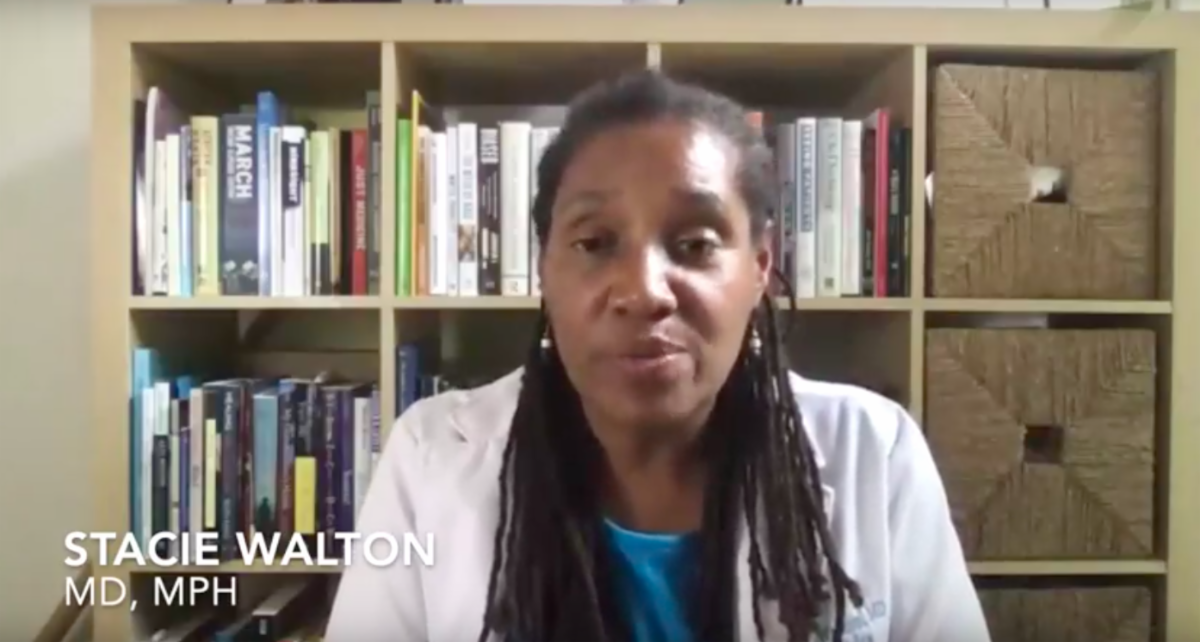
Medical experts at the briefing discussed the disproportionate impact of the pandemic on African American and Latino communities. Pediatrician Stacie Walton said: “When COVID-19 came on the scene, I knew we were going to have disproportionate numbers of African Americans affected; they are already experiencing an epidemic of deaths from other diseases.”
Walton said that many social determinants of health, including an unconscious bias by health workers, make African Americans more vulnerable.
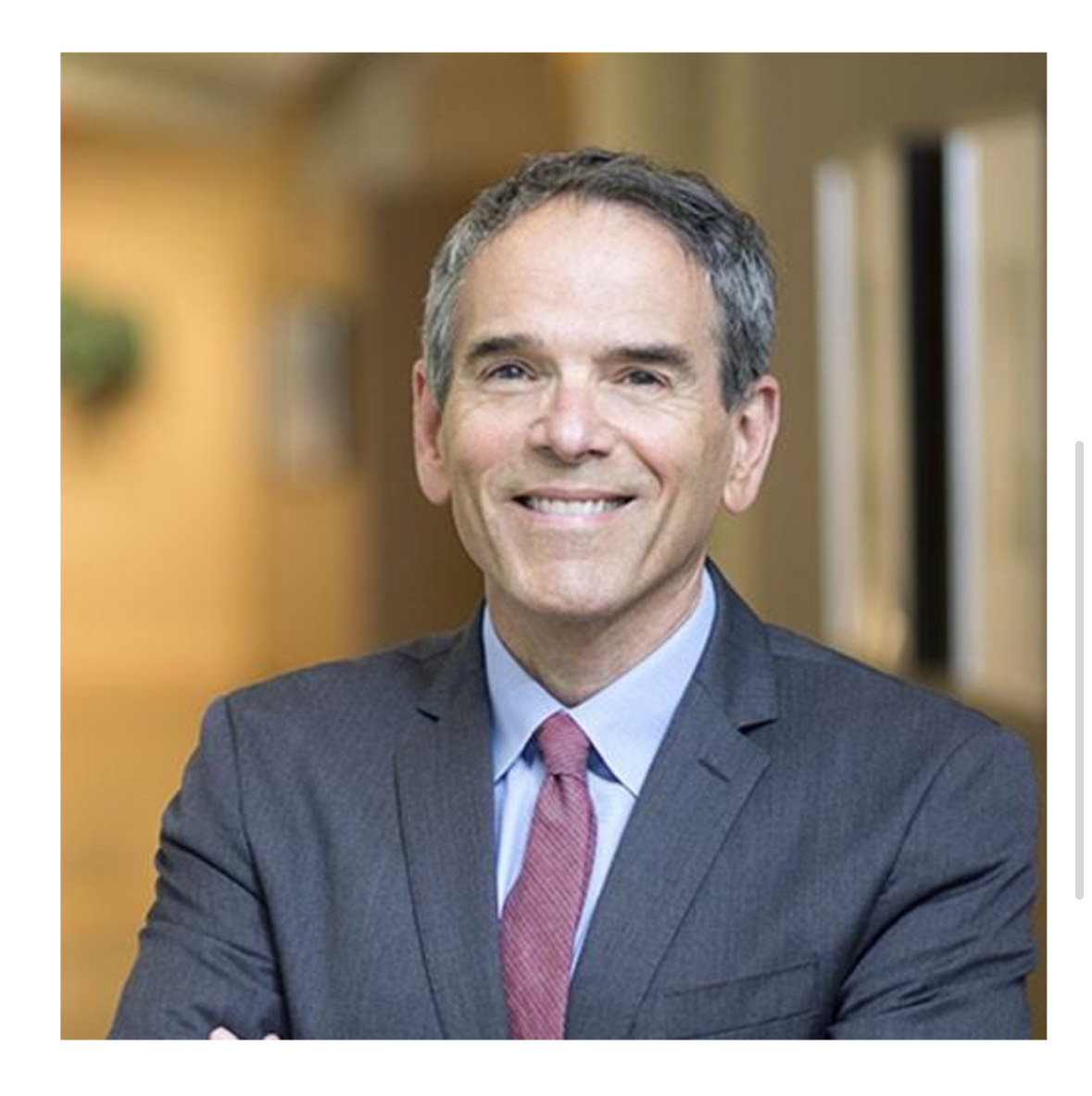
Walton’s statements were borne out by University of California physician Tung Nguyen. “Stark and alarming disparities are emerging in places that are reporting Covid-19 data by race,” he said.
In Chicago, 52 percent of the Covid-19 cases are among black residents who make up only 30 percent of the City’s population.
Only 14 percent of Michigan’s population is black, but 33 percent of the COVID-19 cases are African Americans, said Nguyen. In Louisiana, 70 percent of deaths statewide are among black residents, though they only make up 32 percent of the state’s population, said Nguyen, noting that similar disparities are coming out of North Carolina, Washington D.C. and Milwaukee.
He advocated for all public health departments to track COVID-19 information by race and ethnicity and urged all readers of ethnic media to write their members of Congress to also ask for such data. (See ChicoSol sidebar on Butte County Public Health data here.)
Nguyen also sternly advocated for a nationwide shelter-in-place order. “It is criminal that some governors are not doing this. They are killing people. It is bad leadership.”
This story was produced and distributed by Ethnic Media Services.