Seven years after Camp Fire, McKay’s work continues

Changemaker: Former school bus driver portrayed in Hollywood film is still rescuing kids
by Yucheng Tang | Posted November 7, 2025
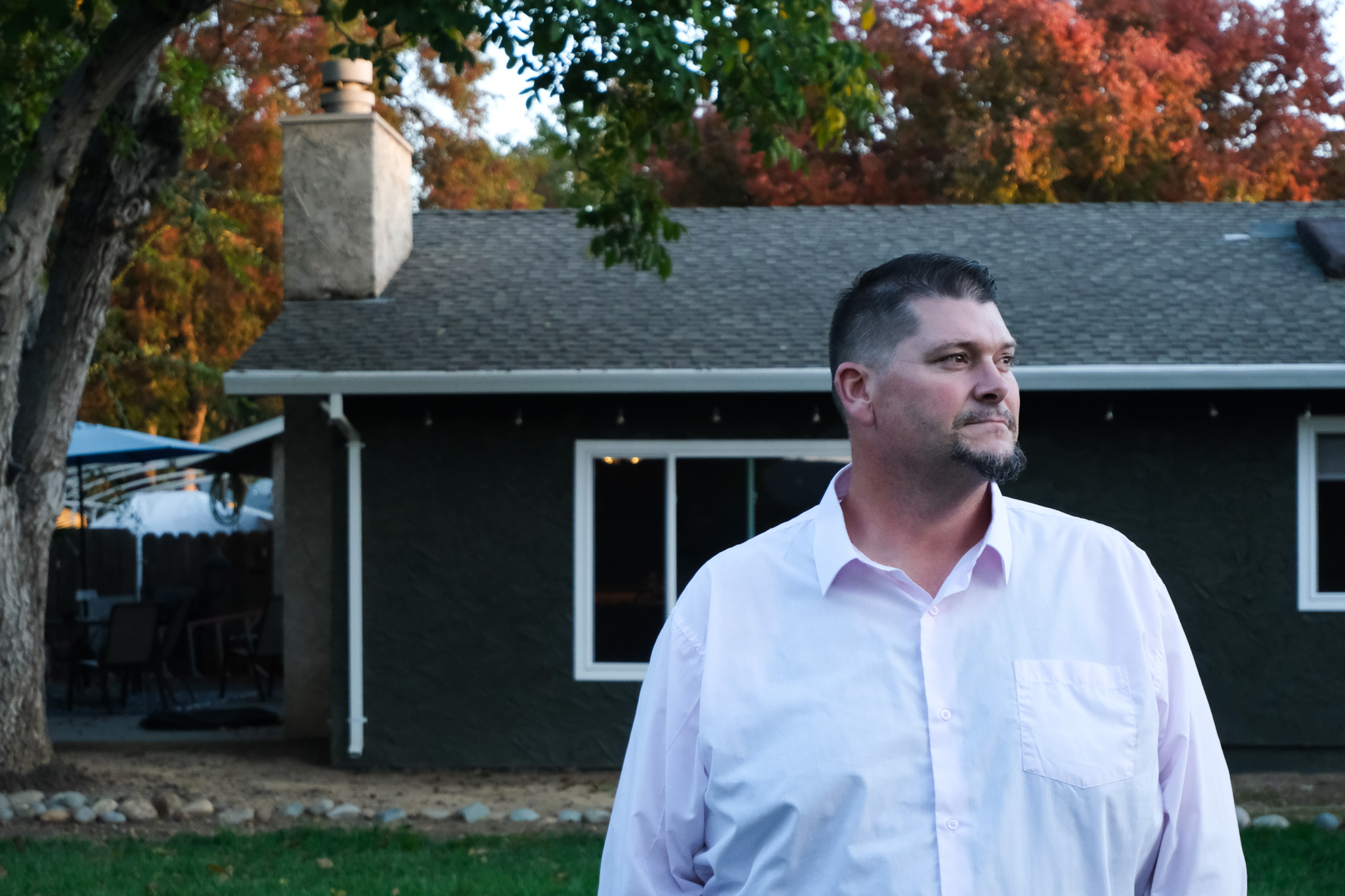
Former school bus driver Kevin McKay keeps the list of children who were on his bus in the Camp Fire in a drawer at home. Photo by Yucheng Tang.

This story is part of ChicoSol’s Changemaker profile series.

Kevin McKay was driving school bus #963 to his Paradise home when he was radioed — just as the film “The Lost Bus” shows — that an empty bus was needed for stranded students at Ponderosa Elementary.

That was the morning of Nov. 8, 2018, when the flames of the Camp Fire that ultimately would claim 85 lives and destroy 11,000 homes were raging through Feather River Canyon toward Paradise. McKay was about to make a decision that would make him one of the most famous school bus drivers in the country.  

Part of him wanted to rush home, to alert his mother and son, Shaun, to leave for Chico to escape the fire. But another part of him knew the kids at school were waiting — and they needed him, too. read more

Paradise symphony rehearsal moves Ukrainians to tears

Ukrainian delegation visits to learn about Camp Fire recovery
by Yucheng Tang | Posted March 15, 2025

On a rainy afternoon, the Paradise Symphony Orchestra and dancers from Northern California Ballet performed for six Ukrainians who were visiting this past week to learn about Camp Fire recovery.

At the end of the March 14 performance, the orchestra played the Ukrainian National Anthem. Most people watching in the Paradise Performing Arts Center stood while the song played, and the Ukrainian guests placed their right hands over their hearts. After the song finished, some of them wiped tears from their cheeks.

Trudi Angel, the former artistic director of Northern California Ballet, is hosting three Ukrainians and invited the group to the symphony rehearsal.

“They wanted to know if the arts were still alive and if there were still artistic things going on … they can see even after the fire, we are still working on the arts and we are still working together,” she said.

According to Angel, the Ukrainians work in different professions at home and are delegates of the Open World program that is designed to enhance mutual cooperation between Ukraine and the United States by offering Ukrainian leaders an opportunity to meet with their American counterparts and exchange ideas.

In the past few days, Angel added, they talked to various officials in Paradise, including those who lead the water and fire departments and the schools, to see how the town has managed its recovery from the devastating 2018 fire.

“It’s an emotional and wonderful experience to know what these people have gone through,” Angel said. “It’s not politics, it’s people to people. We all love each other. We are one big group with love.”

Svitlana Blinova, one of the six guests, told ChicoSol that she cried when she recognized the melody of the Ukrainian National Anthem. She thought of her family members who were “under rockets and drones” in Ukraine.

“Between this place and my home place, there are more than 10,000 kilometers, and my husband, at that moment, is a soldier in the army. I have two daughters, 9 and 1 year (old) … Here, I am safe, but at that moment, my husband and my daughters cannot feel the same,” Blinova said.

“I really dream that [the war] will end soon.”

Blinova said the performance was mental rehabilitation for her, and the week in Paradise was the best week she had spent in a long time.

Roman Oleksenko, also a member of the group, said: “It was hard to contain my emotions, my tears. I am still choked up.”

He said he was grateful to see people in Paradise “stand with UKraine,” and grateful that they “took time, cared enough to learn to play our national anthem.”

An event flier states: “We believe that the task of rebuilding our community has taught us that only acting together can we achieve our greatest potential. The coming of Roman Oleksenko, Yurii Kushnir, Tetania Kochkva, Yuliia Golovinova, Svitlana Blinova, and Serhii Kutiev from Ukraine to our community is a reminder that the entire world community of people of good will must stand together or we shall all perish separately.”

Yucheng Tang is a California Local News Fellow reporting for ChicoSol. You can support ChicoSol reporting and our efforts to include a diversity of voices here.

Camp Fire survivor reflects on “levels of loss”

"We are all refugees from this fire"
by Jessica Lewis | Posted March 10, 2019

photo by Jessica Lewis
Paula Edgar

At about 8:30 a.m. Nov. 8, former Paradise resident Paula Edgar received a call from a friend on the other side of town, warning her that a fire had broken out.

“We didn’t even think we were in danger at first, but we thought we would start packing — just in case,” Edgar said.

When Edgar took her first load of items to her vehicle, she saw the flames making their way up the street toward her house. She realized then that this was something unlike anything the town had gone through before.

“I told my husband, we have to leave now, but he wouldn’t leave until he found the cats,” Edgar recalled. “If I went out one side of my driveway, there was fire, so I turned onto Skyway. There were already towers of flames on both sides of the road. I didn’t know if me or my husband were going to make it out alive, but we both did, thankfully.

“I’ve lived in Paradise for 36 years,” Edgar added, “but nothing had ever swept all the way through town like the Camp Fire did.”

The Camp Fire became known as the sixth deadliest wildfire in the United States after raging on for 17 days before reaching 100 percent containment and taking 86 lives. Edgar calls herself a “climate refugee” because the Camp Fire is considered a climate-fueled fire. Climatic changes helped make the fire particularly explosive, scientists say.

(video by Jessica Lewis)

“That was an unusual fire,” Edgar noted. “Those huge, merciless monster fires are happening more and more, and will continue to happen. The heat and the drought are what make things spread so quickly.

“There are people sleeping in tents and cars,” Edgar pointed out. “We are all refugees from this fire, and there are refugees from these types of disasters globally.”

Currently, Edgar, her husband, and one of her two cats that survived the Camp Fire have relocated to a temporary place in Grass Valley while they figure out where they would like to go from there. They have already chosen not to move back to Paradise even after rebuilding is underway.

“We raised three kids there,” said Edgar, who is 63. “My youngest was born there. We were going to live there forever until the end, and now we have to figure out where else we want to live. I know other people our ages are into the idea of going and rebuilding, but it’s going to be such a massive project that’s going to take so much time.

“I’m concerned about the toxicity and I’m concerned about the fire risk. I don’t want to live anywhere with a fire risk anymore. I don’t want to do that again.”

Edgar and her husband are exploring if they want to reside in the Chico area, where there are many more friends, family, and places they’re familiar with.

“We’ve always liked the Pacific Northwest, and it’s like, well, now’s our opportunity, we could go. We just don’t know if we want to be that far from family,” Edgar said.

According to a map created by the Camp Fire Survivors Facebook group, while many refugees have remained in parts of California, others have scattered to places throughout the United States.

“There are many levels of loss,” Edgar said. “Loss of community and loss of friends is one of the great losses. There’s the loss of our house, loss of everything that was in it, and then there’s the loss of our community. It’s something that needs to be grieved…”

Edgar was active in environmental organizations before the Camp Fire, but now it’s “personal,” she said. She points out that there are several different groups in Chico that are addressing the climate issue, including Chico 350 and Climate Uprising. She also believes there are other things that people can do to help stop the effects of global warming.

“We can try to reduce our own carbon footprint,” Edgar said. “We can get involved in some of these groups. There’s legislation right now that can help advocate for the cause, so contact your representatives. There’s so many different ways you can become involved, on many different levels, and as long as you’re doing something, it’s going to help.”

Jessica Lewis is a fourth-year journalism student at California State University, Chico, interning with ChicoSol. She will graduate in May with a BA in journalism, a specialty in public relations and a minor in photographic arts. This story is the first in a series on Camp Fire survivors.

“My former neighborhood feels like a cemetery”

Fear of fire did not prepare Paradise residents
by Leslie Layton | Posted December 15, 2018

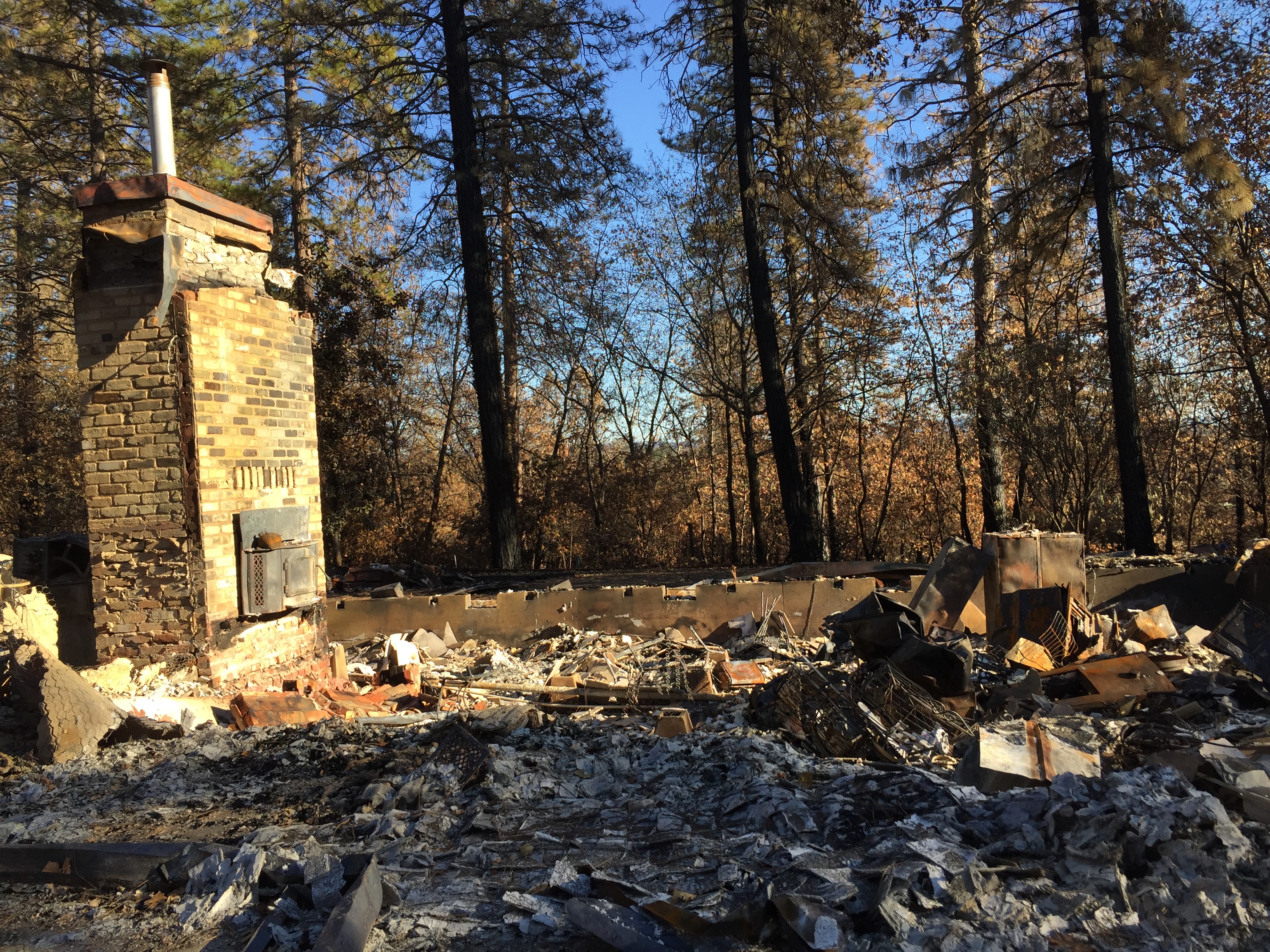
My childhood home is a pool of ashes contained by a cement foundation. The air in this once-Edenesque place smells almost acrid. The barn my father built from oak planks is a pile of rubble, with trickling aluminum melted into place on the ground.

At some point during the Nov. 8 Camp Fire that destroyed my hometown of Paradise, Calif., the white aluminum streams were trickling downhill as if headed toward the creek. No longer. There are almost no signs of movement on this still Sunday, Dec. 9. My former neighborhood feels like a cemetery.

I’m one of the fortunate in Butte County, unscathed in most ways by a fire that killed 86 people and displaced thousands. I haven’t lived in Paradise in many years, but for more than two decades, I’ve been within 12 miles of my childhood address that has names – Eden Road, for example — that have mythological dimensions.

Part of living at this address was living with a fear of fire. Every spring, we spent several weeks clearing brush and raking pine needles from around the house on the wooded ridge lot.

But we did not understand then what it was we feared, and I’m certain that the couple who bought the house 20 years ago didn’t know, either, what they should fear. None of us foresaw a fire that would float like a cloud and rain burning embers, leaving garden hoses and a sprinkler-timer intact, devouring or melting most of what was struck by those embers.

We failed to foresee that the climatic alterations underway would create a fire so swift that driven by high winds, it could move the distance of 80 football fields a minute. None of us foresaw what scientists call a “climate disaster” right in our neighborhood.

On TV news shows, reporters and anchors talk about how a changing climate created the conditions for California’s deadliest fire. But rarely have I heard them invert the words “changing climate” and say “climate change” – a phrase that would suggest that this is explicable, that humans have something to do with the fact that California’s fires are growing ever more deadly.

By coincidence, I visited my childhood home just a few weeks before the Camp Fire. The property owner had cleared out dead trees and brush and created a wide belt of so-called “defensible space.” She had done far more to protect the home from fire than we had ever done, and still she worried. This is how she’d evacuate if necessary, she said, explaining a plan for her and her dogs.

She promised to invite me for tea at this place we both considered sacred.

Those of us who lived in Paradise feared wildfire, but we presumed we had a good chance of saving both our lives and our homes — just as Americans assume they can survive hurricanes and tornadoes with preparation. We had fire hydrants and hoses at the ready, swimming pools and belts of cleared land, corps of rugged, skilled firefighters nearby.

Then came the Camp Fire like a mythic force, exploding in a parched forest, destroying most homes like a napalm bomb. The billions of dollars in insurance claims that will be processed do not fully measure what has been lost. The newspaper columns that described the town as “quaint” and “sleepy” do not capture the complexity of Paradise.

In the 1950s and ‘60s, when I was growing up, Paradise was an unincorporated community of mostly white, middle-class retirees and working-class families. For some residents, it was a refuge from what they viewed as an intrusive government. Town politics could be contentious and very conservative, and it wasn’t known as a welcoming place for people of color.

By the 1970s, liberal church groups were leading tolerance workshops and Paradise was struggling to adapt in a country transformed by the civil rights movement. Paradise itself underwent demographic change in recent decades, becoming a bedroom community for Chico and attracting artists, musicians and immigrant workers.

It still surprised me, though, when last summer a group of Paradise residents that included some of my former classmates held a weekly protest on the main thoroughfare, the Skyway — up to 80 people sometimes came — to oppose the Trump administration’s immigration policy and family separations at the border.

We had grown up in a town that lacked sidewalks or sewers, things you need government to do. But the freedom to roam, explore and imagine surely helped the town’s evolution.

Our winters were a series of storms that produced howling winds and beating rain, and our dry, warm summers perfect for lounging on rocks at swimming holes. I remember going to sleep on summer nights to the chirping of crickets. In the years since I’ve left Paradise, I’ve sought consolation in nature, places that are still and quiet, trees that are tall and sturdy, and I’ve noticed that my hometown friends share this connection to the natural world.

On this post-Camp Fire Sunday, as I wander through my former neighborhood, I feel like a visitor gazing at the remains of a civilization purged from the Garden of Eden. A China teapot peeks out from a pile of rubble. An empty lawn chair sits undisturbed by a house turned to ashes. A jacuzzi is a melted plastic rectangle.

I suddenly realize I have come to pay my respects: To mourn with the land, to grieve with the rumpled manzanita, to stare at 3 and 4-foot-diameter holes in the ground where for decades mighty oaks buried their roots until they were incinerated by the Camp Fire.

The towering pines that I’ve loved and that survived are brown and thirsty, and many with burned trunks and roots are being removed. Something new will grow in their place, but what that will be is open to question; California’s “Fourth Climate Change Assessment” report for the Sierra Nevada warns of a shifting “forest composition” underway as climate change raises temperatures, reduces snowpack and produces droughts and flooding.

Life continues in corners of Paradise and will renew itself in a revised form. PG&E employees work to restore power, acorn woodpeckers chirp from the bars of an empty clothesline and blades of meadow grass shoot up from a patch of earth.

There’s much to grieve now – lives lost, homes destroyed, a community dispersed. But if we forget to grieve the natural world we’ve already lost, we fail to grasp the entirety of this disaster and we’ll fail to change the shape of our footprint on this corner of Earth.

Leslie Layton is editor of ChicoSol.