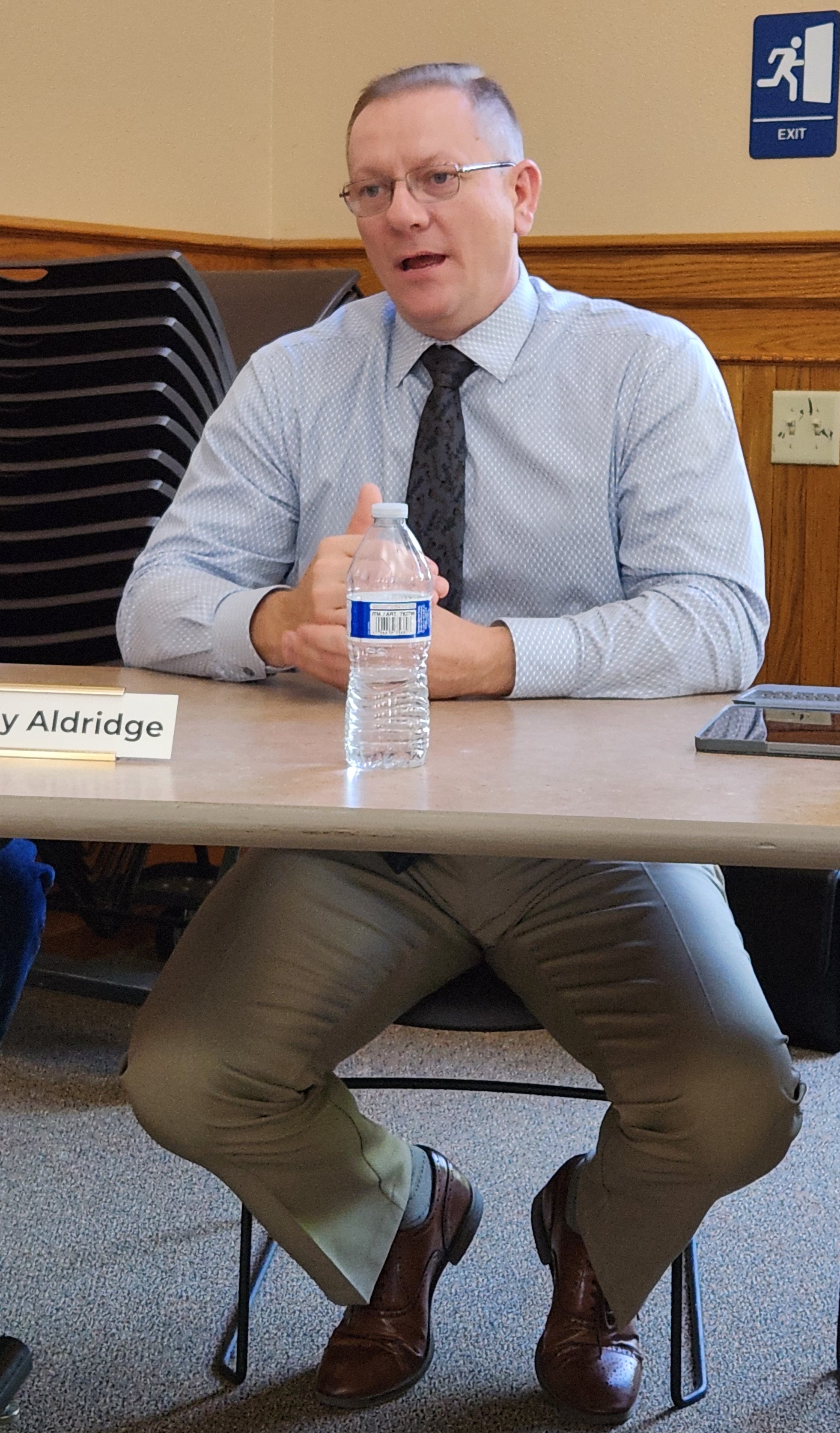
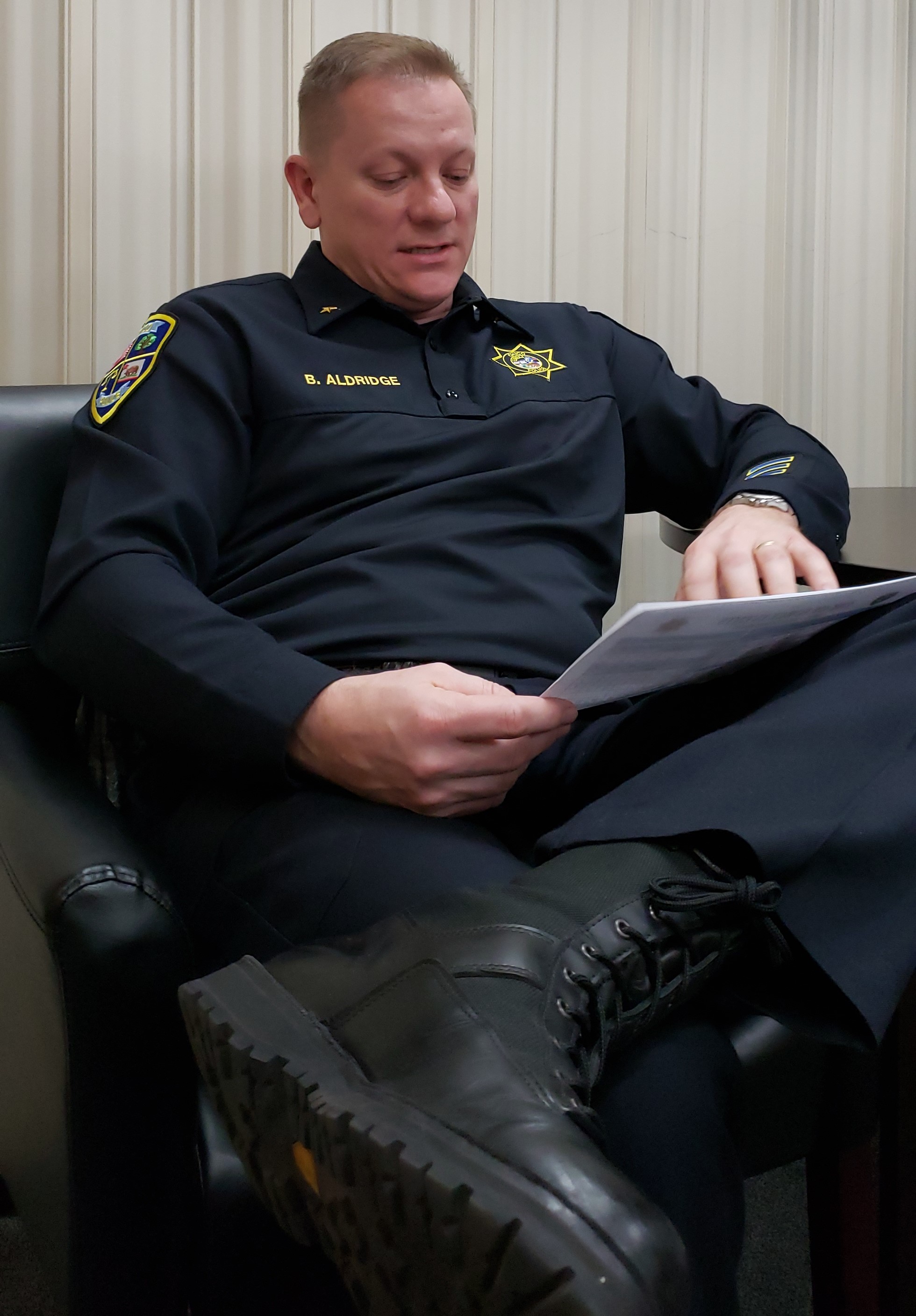
In this memo, Chief Aldridge adjusts the “final discipline” to a suspension without pay for eight “duty days.”
A Chico police officer received only a two-week suspension in 2024 for having on-duty sex in his patrol vehicle in the parking lot of a church, according to newly released records.
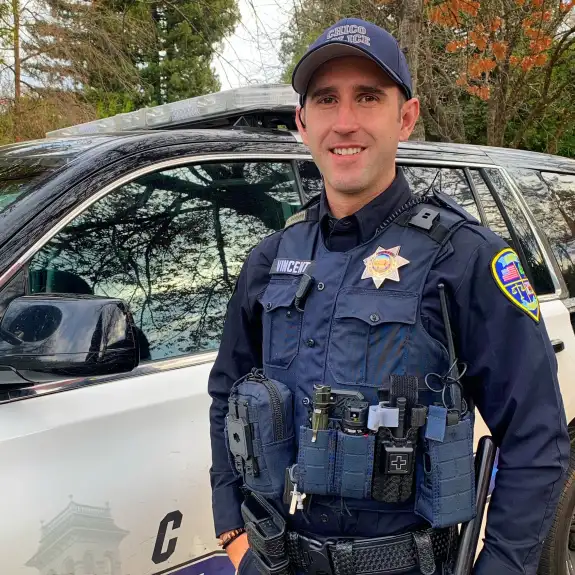
The officer, Michael Vincent, was disciplined for receiving oral sex from a woman on multiple occasions while in uniform, records show.
Vincent did not respond to a message seeking comment on his suspension.
Police Chief Billy Aldridge reduced Vincent’s proposed punishment in a Feb. 26, 2024, “notice of final discipline” memorandum. Capt. Jeramie Struthers had recommended a four-week suspension without pay, but Aldridge halved that time, saying Vincent accepted responsibility for his actions and lacked previous disciplinary issues.read more
Testimony from ‘cottage industry of exoneration’ aided Chico police
by Dave Waddell | Posted October 29, 2024
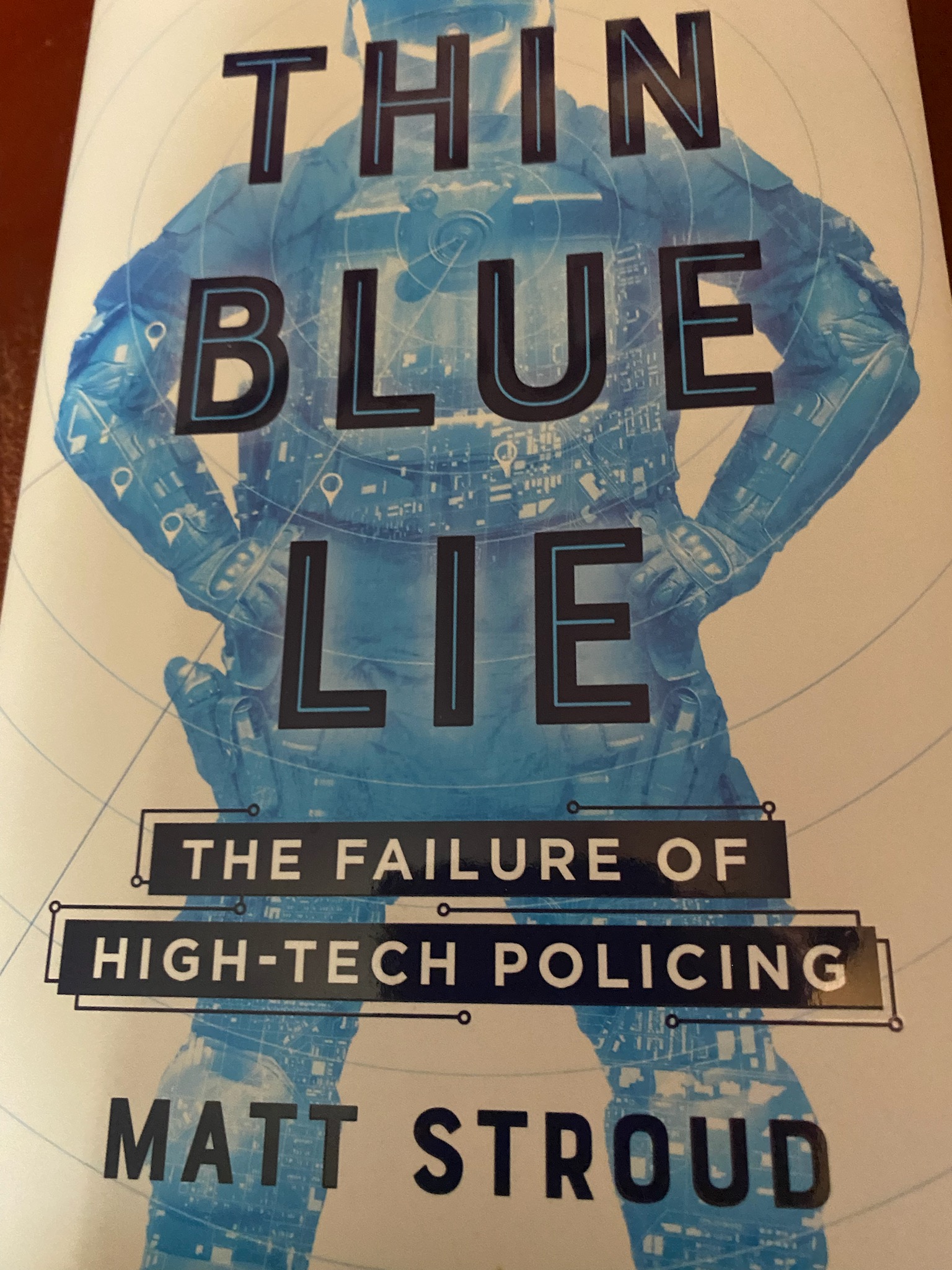
Matt Stroud’s book
The pain of the taser was “searing … like a baseball bat swung hard and squarely into the small of your back. That sensation, which is actually two sharp steel barbs piercing your skin and shooting electricity into your central nervous system, is followed by the harshest, most violent spasm you can imagine coursing through your entire body.” – Journalist Matt Stroud in his book “Thin Blue Lie.”
SACRAMENTO — Three years ago, the New York Times published a deeply reported story on how paid experts help exonerate police in killing cases. This month, that “cottage industry of exoneration,” including one expert who has made a fortune minimizing the dangers of tasers, operated at full gear on the 15th floor of the Robert T. Matsui Federal Courthouse.
Several experts with long and lucrative ties to that exoneration industry testified in support of Chico police in a civil suit brought by the parents of Tyler Rushing. After an eight-day trial in the U.S. District Court for the Eastern District of California, an eight-person jury decided Oct. 17 that officer Alex Fliehr did not use excessive force when he tased the thrice-shot, motionless Rushing in 2017.
Chico Police Chief Billy Aldridge declined to comment on the verdict. The City recently released — under pressure of a court order — this PowerPoint analysis of Rushing’s killing.
The N.Y. Times story reported that critics of the exoneration consultants accuse them of “slanting science, ignoring inconvenient facts and dangerously emboldening police officers to act aggressively.”
Multiple experts testifying at the Rushing trial have deep ties to Force Science Institute, which has promoted some dubious research conclusions, according to Seth Stoughton, an ex-cop, professor of law at the University of South Carolina, and one of the nation’s foremost experts on police uses of force.
“Force Science research is not very highly regarded by most traditional academic researchers,” Stoughton said in 2021 while discussing the Chico police killing of Stephen Vest. “It is very well regarded with police … because it almost always works to the benefit of the officers.”
Even though Chico PD policy describes the pain from a taser stun gun as “intense,” a softer phrase was oft repeated by police at the Rushing trial: “momentary discomfort.” Chico officer Jeremy Gagnebin, who observed Rushing’s tasing, testified to being tased before he became a cop, claiming the pain was not that big of a deal.
“It essentially immobilizes you,” Gagnebin told the court. “Will lock up all of your muscles. … I would not say that it’s a pain. I will just say it’s uncomfortable. … Five seconds of just being uncomfortable and not being able to move.”
Stoughton, the police practices expert, said Gagnebin is wrong — as a matter of law.
“(Tasers) are quite painful,” Stoughton said. “The electrical discharge is intensely painful and typically causes burn-like pain and swelling at the point of contact, in addition to the puncture injuries from the barbed darts.”
The U.S. Court of Appeals for the Fourth Circuit has determined that a taser “inflicts a painful and frightening blow” and causes “excruciating pain,” said Stoughton, adding that other circuit courts have made similar statements.
In his 2019 book “Thin Blue Lie: The Failure of High-Tech Policing,” journalist Matt Stroud described his tasing as a sensation of “Needles everywhere, overwhelming you. … You lose control of almost everything and the only place you can go is down, face first to the floor. The whole thing lasted five seconds – but it felt like an eternity.”
“Taking a ride”
But jurors at the Rushing trial got a very different story from officers Gagnebin, Fliehr and Cedric Schwyzer, as well as from expert defense witness Mark Kroll. In his testimony, Kroll, who has a Ph.D. in electrical engineering but is not a medical doctor, continually minimized the pain of a taser.
In 2021, Stoughton testified as an expert witness for the prosecution at the trial of Derek Chauvin, George Floyd’s murderer. Kroll did not testify at the Chauvin trial, but Kroll’s research was cited by a defense witness “as proof that putting body weight on someone facedown does not cause asphyxia,” according to the N.Y. Times story.
Kroll testifies frequently. In fact, in his Rushing case testimony, he blurted out that Tyler had been under the influence of methamphetamine when tased. The falsehood brought his testimony briefly to a halt, with the judge telling the jury Kroll was “totally mistaken.” Kroll apologized, saying he mixed up his cases.
Clad in bow tie, Kroll turned chatty with the jury at times, claiming that muscle stimulators “to get your six-pack going” deliver more electrical current than tasers.
“You really feel that,” Kroll said of the stimulators. “I’ve tried them. I don’t like them at all.”
One of the Rushings’ attorneys, Robert Chalfant, pressed Kroll on his ties to Axon Enterprise Inc., the company that provides ever-evolving models of tasers and body-worn cameras to law enforcement agencies. Kroll previously headed up Axon’s scientific and medical advisory board.
Chalfant: And am I correct that for that job you were paid approximately $267,000 per year from Axon?
Kroll: I’ll take your word for it. I’m sure you’re reading off the printout.
Chalfant: Is it true you currently own $1 million worth of Axon stock?
Kroll: It’s probably more than that. … When I first started advising them … they paid me in stock, and since then it’s become extremely valuable … It was a windfall, but I don’t think I need to apologize for it …
It wasn’t Kroll’s first such windfall, according to Stroud’s book.
In 2004, after “elbowing” his way to becoming Axon’s top science adviser, Kroll made about $2.8 million from the company’s stock, Stroud reported. Indeed, it was Kroll’s credentials and research that Axon has used for decades to downplay taser dangers, his critics contend.
When interviewed by investigators after the Rushing tasing, Fliehr described his taser shot as giving Rushing “a ride.” In his closing argument to the jury, plaintiff’s attorney Mark Merin said Fliehr’s “jargon is repulsive.”
It’s also common language promoted at Axon headquarters, where Stroud said he was encouraged “to take a ride,” resulting in the description of his painful experience quoted above.
When tased, Rushing was jolted noticeably from his semi-prone position. That Tyler might have been dead or near-death and not felt the taser’s pain did not lessen the “cruelty” of Fliehr’s act, argued attorney Merin.
Desmond Phillips, who was shot dead by Chico police four months before Rushing’s killing, could first be heard on a 911 call moaning from the lash of a taser. Seconds later, Fliehr and Gagnebin unleashed a barrage of bullets from their Glocks, killing Phillips, a 25-year-old Black man in mental crisis.
Dave Waddell is a contributing writer to ChicoSol who is working on a book about Butte County law enforcement killings.
Jury finds tasing of motionless Tyler Rushing not excessive force
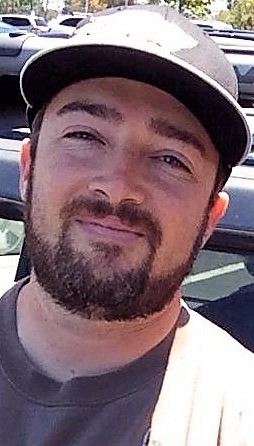
by Dave Waddell | Posted October 17, 2024
photo courtesy of Rushing family
Tyler Rushing
SACRAMENTO – An eight-person jury decided today that the tasing seven years ago of the thrice-shot, motionless Tyler Rushing by a Chico police officer was not excessive force.
Jurors did find negligence in the incident by police, but attached no monetary award to that judgment, said Mark Merin, attorney for Tyler’s parents, Scott and Paula Rushing.
The decision was a victory for the City of Chico and defendant officers Alex Fliehr, Jeremy Gagnebin and Cedric Schwyzer in a civil rights lawsuit brought by the Rushings.
The family is “pretty devastated, as you might imagine,” Scott Rushing said shortly after the verdict. “My anger level is pretty much off the charts.”
Merin and Rushing both said they were perplexed by the jurors’ verdict.
“They looked like another day at the office,” Rushing said. “They were staring like robots. We just don’t understand what they were thinking.”
More coverage of the civil rights trial will follow.
Civil rights trial continues with more testimony in federal court
by Dave Waddell | Posted October 10, 2024
photo courtesy of Rushing family
Tyler Rushing
SACRAMENTO – Jurors on Wednesday (Oct. 9) viewed video clips from Chico police officers’ body-worn cameras that captured the last instants of Tyler Rushing’s life.
A dominant color in the scene was the bright red of Rushing’s blood framing his semi-prone body. After bleeding out for the better part of an hour following a serious gunshot wound to his chest from a private security guard, Rushing was shot twice more by a Chico police sergeant and lay on the floor of a title company’s women’s restroom.
Rushing’s buttocks were exposed, his shorts apparently having been pulled down by a biting police dog during a slippery, chaotic struggle with several officers.
In those videos from July 23, 2017, three officers have their Glocks trained on the seemingly motionless Rushing for a minute or so when officer Alex Fliehr suddenly begins shouting that Rushing was alive and moving.
Asked whether Rushing was resisting arrest when the taser was used, Fliehr said he was “passively resisting” and “not giving up.”
Fliehr then tased Rushing, his body bouncing from the jolt of electricity before returning to its motionless state.
The necessity and effect of that taser blast are the focus of a civil rights lawsuit brought by Tyler’s parents, Scott and Paula Rushing of Ventura, that is playing out this week in federal court.
The trial continues today (Oct. 10) with Scott Ruppel due to resume his testimony in U.S. District Court for the Eastern District of California at the Robert T. Matsui Federal Courthouse, 501 “I” St., in Sacramento. Ruppel is the now-retired Chico PD sergeant who shot Rushing to his death.
On the night he was killed, Tyler Rushing was observed behaving strangely before attacking and cutting the security guard, Edgar Sanchez, with a glass flowerpot at Mid-Valley Title & Escrow at Sixth and Main streets in Chico. Ruppel had tried without success for about 40 minutes to talk Rushing out of the restroom, before police rammed into the room with the biting canine. After Rushing hit officer Cedric Schwyzer in the head with a piece of porcelain from a broken toilet, Ruppel grabbed Rushing by the throat with one hand. Rushing then stabbed Ruppel in the neck with a pen he had pulled from an officer’s shirt pocket, prompting Ruppel to unholster his handgun and fire twice from close range, sending Rushing to the restroom’s bloody floor.
Schwyzer’s head wound required six stitches, while Ruppel’s neck wound was minor and treated only with glue, according to Wednesday’s testimony.
Preceding Ruppel to the witness stand were Fliehr, Schwyzer, and Jeremy Gagnebin – the three Chico officers in the restroom after Ruppel departed. They all contended under questioning that Rushing, even after being shot three times, remained a threat to them.
“Our safety is our No. 1 priority,” Gagnebin told the court.
The officers testified that at one point during the standoff Rushing told them: “You’re all going to fucking die. I love it.”
The officers claimed that they were worried that if they tried to handcuff Rushing, he might ambush them, and they would be forced to shoot him again. They spoke of the possibility that Rushing, despite being on the floor and turned away from them, might be “lying in wait” and “playing possum.” The taser, they said, was a “less-than-lethal” way of getting Rushing under control so that he could be attended to medically.
“You were fearful he would jump up when there were two other officers standing right beside you?” Rushing attorney Mark Merin of Sacramento asked Fliehr.
Later, in questioning Gagnebin, another of the Rushings’ attorneys, Robert Chalfant of Sacramento, noted that the three officers in the room with Tyler had all been trained in going “hands on” with suspects and that Schwyzer had experience as a mixed martial arts fighter.
“And there was only one of him?” Chalant asked Gagnebin.
“He was trying to harm and kill us still,” replied Gagnebin.
“You thought he could somehow get past you?”
“Yep.”
Attorneys for the Rushings questioned the officers on why they didn’t use pepper spray or various police holds to subdue Tyler or properly warn him that he was about to be shot by the taser.
The jury is being asked to determine whether the tasing by Fliehr was excessive force, and, if so, whether Gagnebin and Schwyzer should have intervened to prevent it from occurring.
Dave Waddell is a contributing writer to ChicoSol covering the civil rights trial.
Rushings seek verdict that Chico police violated son’s constitutional rights
by Dave Waddell | Posted October 6, 2024
photo by Leslie Layton
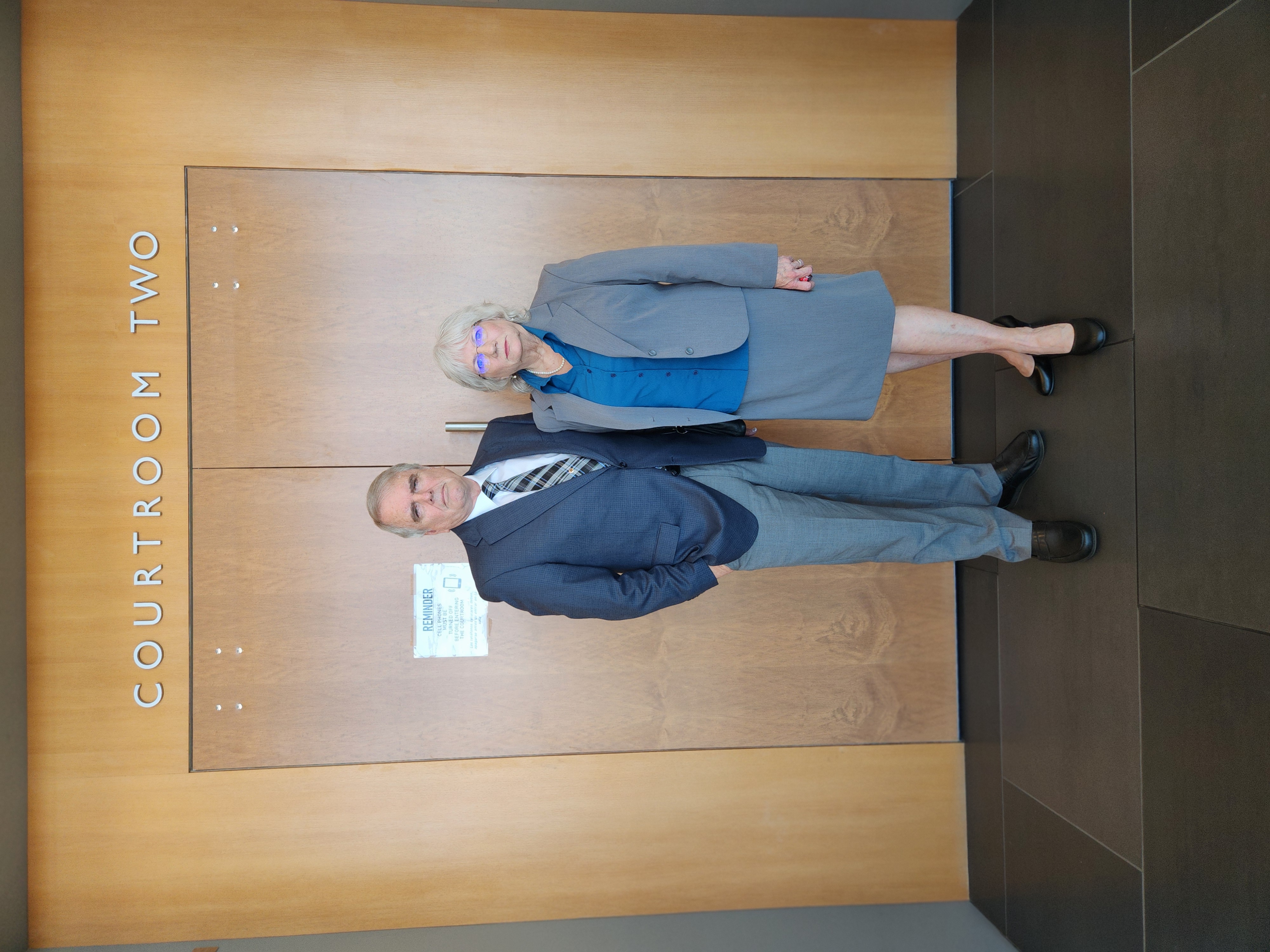
Scott & Paula Rushing after their July hearing at the North Butte County Courthouse.
On the eve of a long-awaited civil rights trial over their late son’s tasing by Chico police, Scott and Paula Rushing are “cautiously optimistic” about getting justice for Tyler.
The Estate of Tyler Rushing v. City of Chico will be tried beginning at 9 a.m. Monday (Oct. 7) in Courtroom 4 on the 15th floor of the Robert T. Matsui Federal Courthouse, 501 “I” Street, in Sacramento. Judge Dale A. Drozd of the U.S. District Court for the Eastern District of California will preside.
On Oct. 4, Drozd issued a tentative decision on various motions. Scott Rushing characterized the overall ruling as “about the best we could get” given previous court decisions. Critically, from the Rushings’ standpoint, Drozd will permit the jury to learn what Rushing called “the totality of circumstances” that led up to Tyler’s tasing. The City wanted testimony restricted to the tasing itself.
Scott Rushing said he expects Monday’s (Oct. 7) court time to be taken up with the selection of an eight-person jury, as well as having Drozd hear any final disputes over what evidence the jury will be permitted to consider. After a day off Tuesday, Rushing expects the trial to resume Wednesday with opening statements and the plaintiff’s experts’ testimonies.
Drozd took over the case from the now-retired Morris England, who, in 2020, without a court hearing, granted the City’s motion to dismiss the Rushing lawsuit in its entirety.
However, a three-judge panel for the U.S. Court of Appeals for the Ninth Circuit partly reversed England, ordering unanimously that the trial proceed, but only on the tasing portion of the incident and not Tyler’s killing. The appellate court declined to grant qualified immunity from civil damages to Alex Fliehr, the officer who tased Tyler after he was shot to the floor and lay prone in his own blood. Qualified immunity is a legal doctrine that shields government officials from lawsuits unless the plaintiff can prove the official clearly violated a constitutional right.
In his ruling, Drozd summarized the trial’s purpose: “In short … this trial will focus on Fliehr’s deployment of the taser under the circumstances and, if found to be an excessive use of force, whether any other defendant is also liable for failure to adequately supervise Fliehr in that specific regard or by failing to prevent his taser shot.”
Omar Peña, then a sergeant and now a captain, provided the taser used by Fliehr, and Billy Aldridge, then a lieutenant and now police chief, was the on-scene watch commander the night Tyler died.
Scott Rushing said he was surprised to learn that Fliehr was recently promoted to sergeant by Chico PD. Fliehr, along with Jeremy Gagnebin, killed Desmond Phillips, a 25-year-old Black and Miwok Native man in mental crisis, four months before he tased Tyler.
“I think it’s an attempt to make Fliehr look good to the jury,” Scott Rushing said. “It’s a ploy.”
On the night of his death, July 23, 2017, Tyler Rushing attacked and cut private security guard Edgar Sanchez with a glass flowerpot. Sanchez then shot Tyler in the chest, sending him fleeing into the women’s restroom at Mid Valley Title & Escrow at Sixth and Main streets in Chico. During the police’s subsequent siege on the restroom, Rushing stabbed Sgt. Ruppel in the neck with a pen he had pulled from another officer’s shirt pocket. Though his injury was minor, Ruppel shot Tyler while he was being held by two other officers. Rushing fell to the floor motionless, and Fliehr tased him about 70 second later.
It’s been a long and winding road to trial for the Rushings – seven years and three months since Tyler’s killing — with the City of Chico even trying and failing at one point to get the U.S. Supreme Court to kill their lawsuit.
“Paula and I are cautiously optimistic about the trial,” Scott Rushing said. “We believe we have a compelling case. We are appreciative that the legal system has allowed us to show a jury of everyday people that the violence inflicted on Tyler by the Chico Police Department and others was unethical, shocking, and immoral.”
Aldridge has told ChicoSol in the past that the City “does not allow any employee to speak on cases with pending litigation.”
Pursuing their lawsuit has come at a price — emotionally and financially – for the Rushings, who reside in Ventura, as did Tyler. Scott Rushing is a realtor and property manager. Paula Rushing was a longtime public elementary school teacher until the trauma of Tyler’s death forced her into early retirement.
“The emotional struggle has been tough, but the financial expenses have been an investment, not a cost, to expose the violent culture within the Chico Police Department,” Scott Rushing said.
Tyler Rushing was 34 when killed. His father called him “a good man, a kind and peaceful soul.” He operated a window-washing business and helped his dad manage properties. According to his parents, when leaving someone’s company, Tyler would often part with the message “peace, love and positivity,” or “PLP,” as he abbreviated it.
“He was treated worse than a wild animal who is shot with a tranquilizer dart when they are not where they are supposed to be,” Scott Rushing said. “We believe Tyler would want Paula and I to do everything in our power to prevent another person from suffering and dying as he did. That belief has sustained us.”
Dave Waddell is a contributor to ChicoSol and will cover the federal court trial.
In-house analysis: Sgt. Ruppel made string of mistakes in Rushing death
by Dave Waddell | Posted September 12, 2024
The PowerPoint review of the 2017 Tyler Rushing killing that the City of Chico refused to release until ordered by a judge to do so.
A veteran Chico police sergeant did almost everything wrong on the night seven years ago when he gunned Tyler Rushing down, according to Chico PD’s own analysis of the incident.
The recently disclosed in-house review, which the Chico City Council spent many tax dollars trying unsuccessfully to suppress, also criticizes that sergeant, Scott Ruppel, for “dangerously” shooting the critically wounded Rushing while he was in the grasp of two other officers.
Escaping criticism in the analysis was Billy Aldridge, now Chico’s police chief and then a lieutenant and the department’s on-duty watch commander during the incident. Aldridge never took command until after Rushing was shot. The PowerPoint criticizes Ruppel for his failure to “relinquish” control before authorizing a siege on a restroom that ended in Tyler being shot to his death and then tased while incapacitated.
“Did Aldridge approve Ruppel’s plan?” asked Scott Rushing of Ventura, Tyler’s father. “The PowerPoint implies ‘No.’ Why not? Why didn’t Aldridge intervene? There was ample time for cooler heads to prevail.”
Seth Stoughton, an ex-cop, law professor at the University of South Carolina, and top expert on police uses of force, has said that he would have expected “a lieutenant to be calling the tactical shots” in the Rushing situation and that Tyler was not a threat to anyone when tased. The outcome, Stoughton said, was reminiscent “of the Vietnam-era saying, ‘It was necessary to destroy the village in order to save it.’ … If the goal was to get the guy some help, they totally failed.”
Scott Rushing last year filed a Public Records Act (PRA) petition in Butte County Superior Court to obtain the analysis, titled “Supervisory and Leadership Review” of the shooting of his son on July 23, 2017, inside a title company at Sixth and Main streets. The review was contained in a PowerPoint presentation prepared by a police administrator several months after Tyler’s death.
On July 8 of this year, Rushing’s petition was “granted in its entirety” by Judge Stephen Benson, who ordered the PowerPoint’s release within 60 days. The City provided online access to the report late last month.
In a court stipulation filed Sept. 10, the City of Chico agreed to reimburse Scott Rushing’s attorney fees of $92,548. It is not yet known how much the city spent on its own lawyers in trying to keep the PowerPoint secret.
On the night he died, Tyler Rushing, who was acting strangely but had no illegal drugs in his system, attacked and cut private security guard Edgar Sanchez with a glass flowerpot. Sanchez, while investigating an alarm at Mid Valley Title & Escrow, shot Tyler in the chest, sending him fleeing into the women’s restroom. Eventually, police broke into the restroom with a biting police dog, and the flailing Rushing stabbed Sgt. Ruppel in the neck with a pen he had pulled from officer Cedric Schwyzer’s shirt pocket. Though his injury was nothing more than a skin tear, Ruppel responded with two gunshots at nearly point-blank range.
Three weeks after the shooting, Ruppel was caught on body camera choking a handcuffed suspect for eight seconds. He had retired by the time the PowerPoint was prepared.
Over and over, the review faults Ruppel for his hands-on involvement instead of directing subordinate officers to do those tasks. Ruppel’s actions, according to the review, reduced his ability to plan, coordinate and think objectively. They included:
–Participating in an unnecessarily hurried search for Tyler.
–Conducting all negotiations for 40 minutes in trying to talk Tyler out of the restroom.
–Relinquishing control of the plan to apprehend Tyler to a Butte County sheriff’s deputy canine handler.
–Authorizing a plan that was unnecessarily dangerous to officers because police lacked proof that Tyler’s false claim of having a gun wasn’t true.
–Ramming open the door and entering the restroom as the “lethal option.”
–Shooting while Tyler was being held by deputy Ian Dickerson and officer Schwyzer.
“The K9 was there to support our patrol efforts and Sgt. Ruppel’s plan,” says the PowerPoint. “Sgt. Ruppel relinquished control of the entry team [make-up] to a deputy who likely did not know all the officers on scene and their specific capabilities like Sgt. Ruppel would have known. …
“Without having the intelligence to confirm the suspect was NOT armed with a gun the entry into the bathroom to ‘save’ the suspect’s life would have possibly ended in a gun battle between the suspect and several officers – in complete conflict with the intent to enter. This act unnecessarily placed the entering officers at risk. Again, what’s the rush to send officers in.”
In addition to the PowerPoint, Scott Rushing received through his PRA lawsuit the names of the members of the department’s crisis negotiation team in 2017. One name on the list of nine members jumped out at Rushing: Omar Peña, a second sergeant inside the title company. Like Aldridge, Peña has since been promoted and is currently a captain.
“It appears to me (Peña) used none of his specialized training to help Tyler,” Rushing said. “It made me sick.”
It also was Peña who, without hesitation, provided the Taser called for by officer Alex Fliehr, who yelled out that the prone, thrice-shot Tyler was “moving.”
Just 70 seconds after the shooting, Fliehr tased Tyler. That tasing, not the killing, will be the primary focus of the Rushings’ long-awaited civil trial starting Oct. 7 in the U.S. District Court for the Eastern District of California in Sacramento.
Chico PD’s Internal Affairs investigation into the incident reported that Tyler never moved once he was shot to the floor. That finding was based on a review of officers’ body-worn camera videos.
Police body-cam videos also show that Aldridge, Chico’s chief of police since December 2022, arrived at the corner of Sixth and Main at about 6:30 p.m., about 20 minutes before Tyler was killed and tased. After learning the basic details of the situation from officers Darrin Brown and Marcelo Escobedo, Aldridge headed to the rear entrance of Mid Valley Title & Escrow in search of Sgt. Peña.
According to the PowerPoint, “Lt. Aldridge required a briefing before the transfer of command could take place. Sgt. Peña was an obvious choice to provide that briefing. … A complete brief from Sgt. Ruppel to Sgt. Peña should have occurred for an accurate and complete brief to Lt. Aldridge. … Even after a brief was conducted, Lt. Aldridge would have had to either agree with the current plans made by Sgt. Ruppel or alternate plans would have had to be delivered via the radio, cell phone or face to face with Sgt. Ruppel. … Transfer of command never takes place. Knowing Lt. Aldridge was on scene and being briefed, could Sgt. Ruppel have waited to transfer command before making the decision to enter? Again, what was the immediate rush to enter?”
The tasing is not mentioned until the final page of the PowerPoint review: “Officers that were left in the bathroom with the suspect were without a designated officer to take charge in the absence of the sergeant.”
Scott Rushing commented on the reimbursement of his legal fees by the City.
“I am excited to get my money back, but I am angry that I had to risk so much of my money,” Rushing said. “City officials should have known better, but they flaunted the rules, and the taxpayers of Chico suffered the loss. I am grateful to the court for ruling in my favor. I found the records very revealing.”
Scott Rushing said the PowerPoint was rumored to have been written for training purposes by Ted McKinnon, a since-retired Chico PD lieutenant. Rushing said the review’s conclusions may help his family’s civil rights lawsuit.
“The PowerPoint,” said Rushing, “supports my theory that Aldridge and Peña were guilty of nonintervention, which diminished leadership and, as a result, lessened Tyler’s chances of surviving and getting the medical help he needed.”
Aldridge and Peña did not respond to a request for comment on the PowerPoint’s content or about Scott Rushing’s claims regarding their failure to intervene.
To aid Chico’s defense in Scott Rushing’s PRA case, Matt Madden, Aldridge’s predecessor as chief, recently submitted a written declaration to the court. In it, Madden said the “PowerPoint presentation was created in or around November 2017 … by a now-retired member of the Department … Said retired member took it upon himself to create the PowerPoint and was not directed to prepare the PowerPoint by me or any members of the Command Staff. … The PowerPoint amounts to one person’s personal opinion regarding how he would have handled the situation, including recommendations and conclusions not adopted by the Department.”
Judge Benson, in his ruling, was dismissive of Madden’s claims, writing that “it is almost impossible to imagine how this was not done within the scope of employment. … The fact that recommendations and conclusions were made evidence the fact that it was … more than just an incidental reference to agency business.”
Tyler Rushing was the third of three fatal officer-involved shootings by Chico PD within a 19-month period that included the killings of Eddie “Gabe” Sanchez in November 2015 and Desmond Phillips in March 2017. Mike O’Brien, currently a candidate for Chico City Council, was police chief during that deadly stretch.
Dave Waddell is a contributing writer who specializes in policing.