

As Medicaid Turns 60, Rollbacks Threaten Millions

by Selen Octurk, ACoM | Posted August 8, 2025
Image via Canva, courtesy of American Community Media

As Medicaid turns 60, the U.S. faces the largest federal health care subsidy rollback in its history.

The One Big Beautiful Act, signed by President Trump last July 4, slashes federal Medicaid spending by 15%. Over the next decade, it will eliminate over $1 trillion from federal health care and food aid, largely by imposing work verification requirements on recipients and shifting cost burdens onto states.

Massive Coverage Losses Projected

The Congressional Budget Office estimates the law will leave 11.8 million Americans uninsured by 2034, with another 5.1 million losing coverage due to other changes — including the expiration of Affordable Care Act (ACA) premium tax credits at the end of this year. read more

Protest outside congressman’s office grows

Federal workers brace for downsizing; infrastructure cutbacks will affect District 1
by ChicoSol staff | Posted March 25, 2025

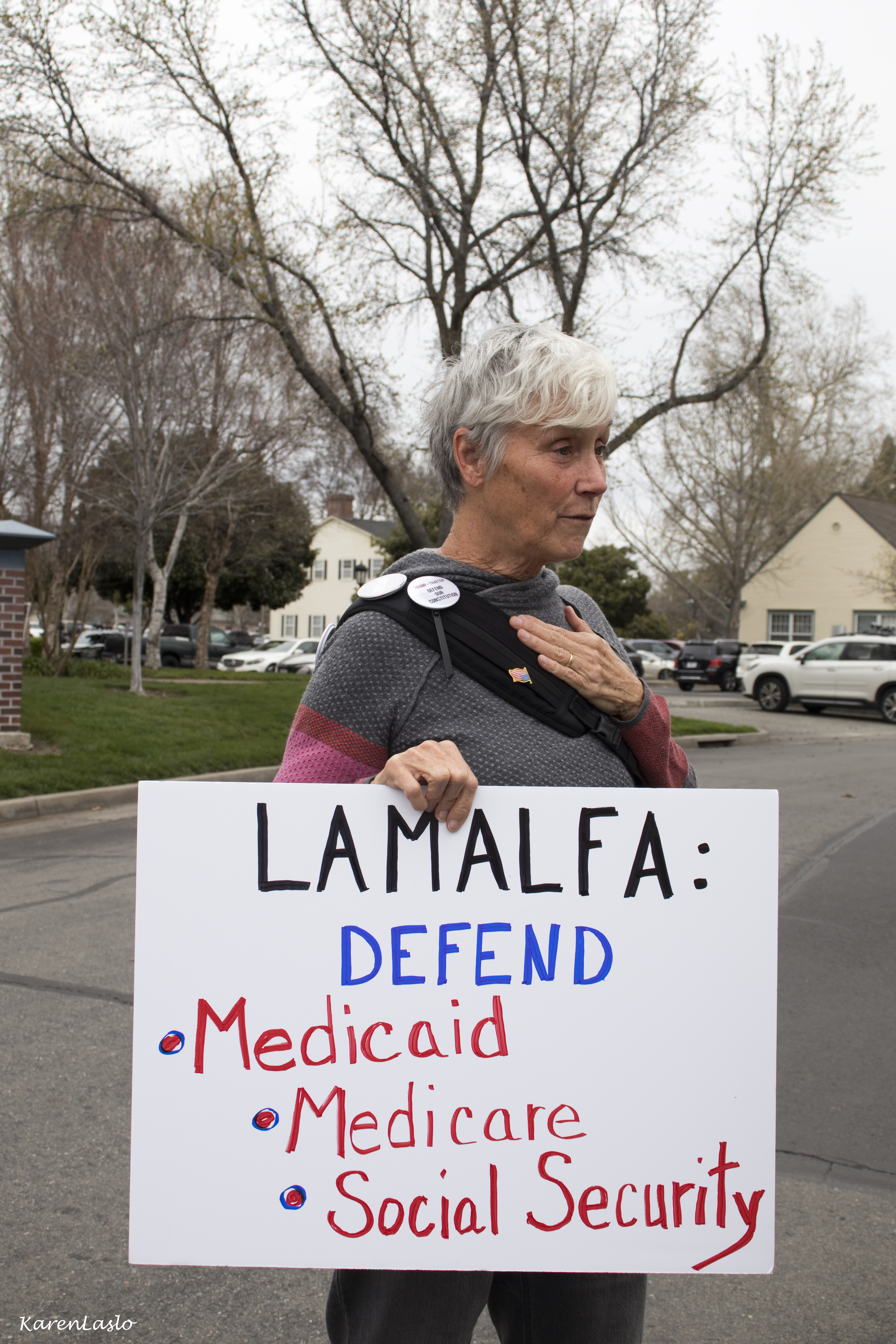
photo by Karen Laslo
Lyndall Ellingson

More than 200 people attended a weekly protest near 1st District Rep. Doug LaMalfa’s Chico office on March 21, demanding in-person town halls that haven’t taken place since 2017 and urging the Republican congressman to defend federal programs threatened with huge funding cutbacks.

The turnout was more than twice that of the protest a week earlier. Some passing cars honked in response to show support. There were few young people participating in what has been dubbed in some social media posts as the #FindLaMalfa protest, and has been organized by a coalition of activists from several groups.

(LaMalfa has since announced a “telephone town hall” to be held at 6 p.m. March 26. His office has told reporters that a phone conversation with the congressman will be open to registered voters with valid phone numbers in Butte, Glenn, Yuba, Sutter and Colusa counties, but there will be no call-in.)

Lyndall Ellingson, 66, a retired public health professor at Chico State, joined the protest to “demand that our elected representative Doug LaMalfa have a town hall [and] listen to his constituents about defending Medicaid, Medicare and Social Security.”

The Social Security Administration has said it will close some regional offices, cut positions and eliminate a system that allowed beneficiaries and applicants the chance to prove their identity by phone. As of March 31, it will be necessary to apply online or report to a local office.

In a March 23 interview with Chico’s Enterprise-Record, the congressman addressed reports there will be cuts to services and/or benefits. “It’s all nonsense,” he told the ER.
“…there is no Medicaid cuts. There is no Social Security cuts. There is no cuts to the VA system; the employee stuff, we’ve still got more work to do with that.”

But Ellingson said that although the funding for Social Security benefits has not yet been touched, the infrastructure that makes it possible for many recipients to apply and receive guidance is being undermined.

“They’ve shut down phone service, so people can no longer talk to a phone representative at Social Security about their benefits,” Ellingson said. “So that means if you can’t get through online — it could be your system, it could be your weak WiFi, it could be that you’re an elder and you’re not very digitally skilled — you have to actually go into an office — but they’re closing down the offices.”

Possible cuts to Medicaid worrisome
Ellingson also mentioned the controversial budget resolution recently passed by the House with LaMalfa’s vote in favor. It includes a proposed $880-billion cut in spending over the next 10 years.

Such a deep cut to spending by the committee that oversees Medicaid, analysts say, would impact that program, which provides health insurance to disabled and low-income people. In California, that program is known as Medi-Cal and covers more than one-third of the state’s population.

In a statement on his website, LaMalfa says: “This budget resolution is a critical step toward restoring fiscal responsibility and reining in Washington’s out-of-control spending.”

“The magnitude of the cuts is just extraordinary, and nothing in American history has been remotely this size,” said Stan Dorn, director of the Health Policy Project at UnidosUS, a Hispanic civil rights and advocacy organization, at a briefing hosted by Ethnic Media Services. “The closest previous cut … in 1981 … resulted in a 13% drop in Medicaid enrollment, and that would translate into a 9 million person loss today.”

Dorn said people of all races and ethnicities will be at risk, but “communities of color are especially vulnerable.” Over 20 million Latinos and 13 million African Americans have Medicaid as their source of health insurance today, he said.

“That includes almost 60% of all Black children, and more than one-third of all African American adults aged 65 and older. So these are folks who rely on Medicaid for nursing home care. And if Medicaid gets cut, where will they be?”

Ellingson, the public health professor, said low-income groups in general are more vulnerable and susceptible to these kinds of federal funding cuts. The 1st congressional district has a poverty rate of slightly more than 15 percent.

Chico VA workers on edge
Reports that the Department of Veterans Affairs (VA) plans major staff cutbacks — AP reports that an internal memo discusses plans to cut some 80,000 positions — have staff on edge in Chico.

“Everybody’s on pins and needles — even our leadership,” a local VA staffer, who asked not to be identified, told ChicoSol in a telephone interview. The staffer said she is less than two years from retirement and didn’t want to jeopardize her position by being identified in a news story. “We’re all pretty stressed out, and we all work beyond 40 hours a week.”

Some VA staffers working remotely have been ordered to return working at their workplaces by May 5, she said, but the Chico locale is already short on office space. They’ve been asked to send weekly emails explaining what they’ve accomplished. Some are “wondering if it’s worth working for the federal government,” she said.

“I believe we do really good work,” she said, “and people who don’t wash out, they don’t last. All of us are worried about our veterans, and we deal with many high-risk veterans.”

At Friday’s protest, Chico’s Margret Valdes, 56, focused on the Department of Government Efficiency (DOGE).

“I’m deeply upset and saddened and angry about the sweeping attack against our federal agencies in terms of all of the layoffs and firings and quote unquote reduction,” Valdes said.

“If we’re saving money, if we’re supposedly taking bloat out of the government, then we should be able to see an itemized tally list as to where these monies are going to be going and what services that they would be providing for the citizens.”

Valdes said her 88-year-old mother is not capable of getting on the internet to “figure out Social Security.” Instead, she wants to make a phone call to someone or visit the office to ask relevant questions. “When they start shutting down the infrastructure that would allow these services to flow effectively, then it’s effectively cutting Social Security,” Valdes said.

Valdes hopes LaMalfa can address issues “that are going to make an everyday impact on people’s lives.”

“That is why we would need a town hall so that we could voice our concerns,” Valdes said. “As we’ve seen in town halls across the country, when representatives have to face listening to what people really have to say, it’s pretty undeniable that what they’re trying to purport is the truth, or not.”

ChicoSol reached out to LaMalfa’s office for comment on whether an in-person town hall is in the works, and for a response to protesters, but the congressman couldn’t be reached by deadline.

Protest organizers say they’ll continue to congregate between 11 a.m. and 12 p.m. every Friday near LaMalfa’s Chico office at 20 Independence Circle.

Social workers on the frontline of Medi-Cal campaign

Work underway to get expanded services to low-income and homeless people
by Natalie Hanson | Posted July 1, 2024

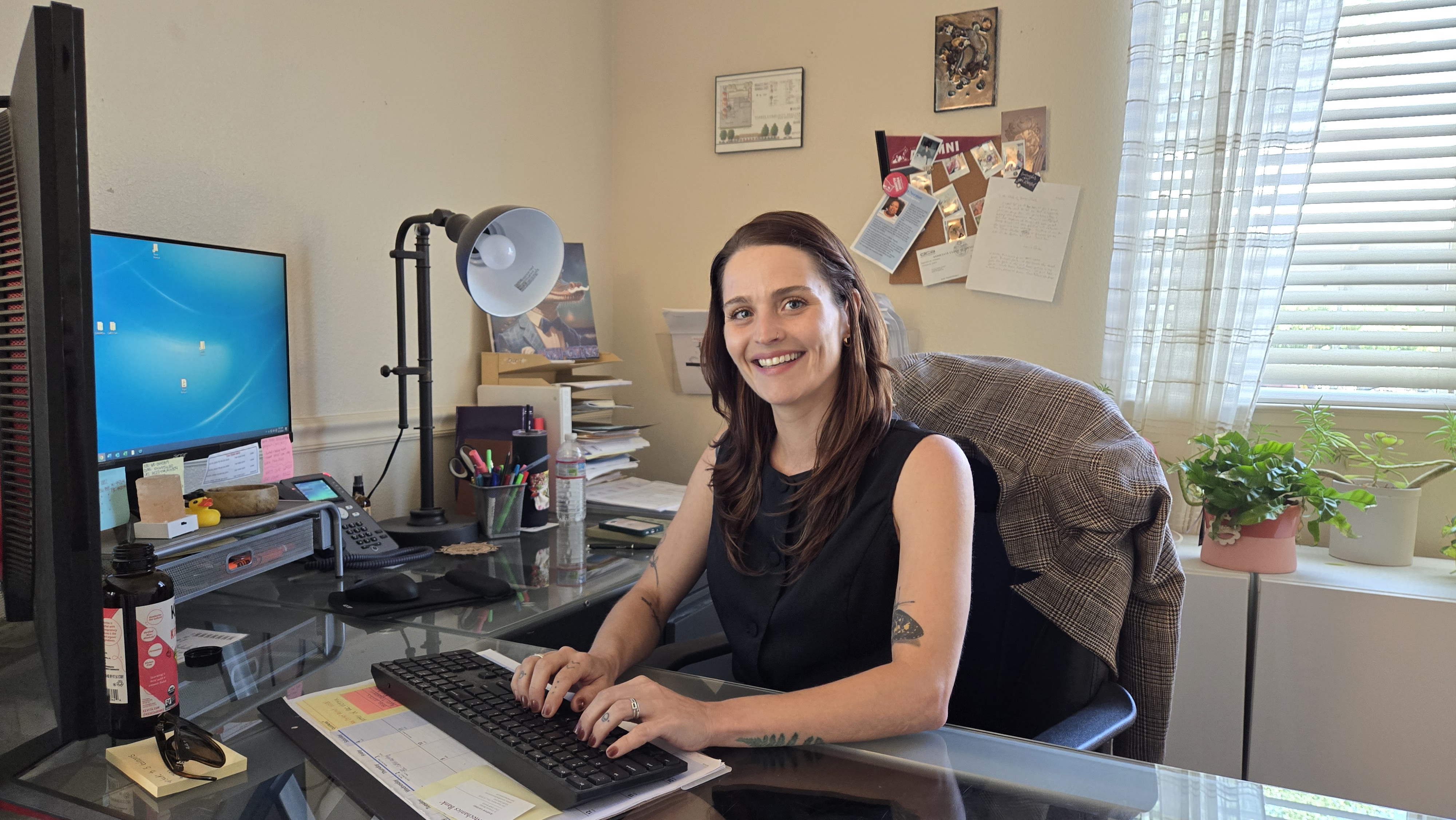
photo by Karen Laslo
Pallet shelters

Daniel Reinhard, a Butte County social worker, regularly visits unhoused people at Genesis, a pallet shelter village in Chico.

Each week, he talks to people who are either renewing their Medi-Cal, California’s version of Medicaid, or need help accessing expanded Medi-Cal services. In January 2024, Medi-Cal, which already served one-third of all Californians, expanded services to all state residents who qualify regardless of immigration status, as well as to people already enrolled.

“The reason I go out to the shelter to talk to people [is] so they have that option to do everything the old-fashioned way,” Reinhard said. “You tend to run into people in that situation who don’t like to go into the county services building. Some of it is just transportation. Some people don’t like doing it online.”

On the bright side, Reinhard said, the state’s efforts to improve online access have helped people sort through what was once a deeply confusing process.

Nearly one year since California officials announced Medi-Cal recipients must renew their coverage to keep it, social workers in rural counties — like Reinhard — are working to reach at-risk communities.

Medicaid recipients typically confirm their qualifications every year to stay on their state health care plan in a process called “redetermination.” However, the federal government paused redetermination for several years during the COVID-19 pandemic, resuming it in April 2023. Medi-Cal launched a year-long redetermination outreach campaign that ended in June 2024.

State and county public health officials have continued to scramble to bridge challenges to accessing these new services — challenges that have been particularly great in more rural areas like Butte County that have many unhoused people.

Ken MacKell, an assistant director at the Butte County Department of Employment & Social Services (DESS), told ChicoSol that it takes different kinds of outreach work to make sure that all recipients are located. Every person’s renewal deadline depends upon which month the state opened their case.

People tend to apply when they make a low enough yearly income to qualify or don’t have employment-based insurance, MacKell also pointed out. “If the economy gets worse, our numbers tend to increase and people come in more.”

Chico’s True North Housing Alliance runs several programs, including the Torres Community Shelter that provides shelter beds and services to unhoused people. True North staff helps clients enroll in Medi-Cal or connect with advocates to help them access new benefits.

True North Executive Director Taylor Bunch credits CalAIM, the state’s recent program to transform Medi-Cal services to reach people in their homes and communities. CalAIM, passed in 2021 under Gov. Gavin Newsom, is designed to connect people directly with enhanced management in high-risk cases like extreme substance abuse disorder.

“About 70% of shelter attendees are Medi-Cal beneficiaries, but nearly 100% are Medi-Cal eligible,” Bunch said. “Most unhoused people have limited to no incomes.”

However, True North staffers often face statewide challenges that are exacerbated in rural areas, such as a lack of reliable Internet and phone access. That’s particularly troublesome for people who are unemployed or have complex medical needs.

Butte County’s access problem
Butte County also has limited medical providers and long wait lists, particularly for specialists. Some providers have different contracts covering reimbursement for some services and not others, which has limited Medi-Cal coverage for many people, Bunch added.

To address the ongoing access problem, True North is seeking funding for a new project: Chico’s first navigation center, designed to help people quickly connect with different services in one place.

Bunch noted that True North already has a local grant for the project and private donations, but is seeking to raise about $1.3 million to finish what would be a 4,000 square-foot expansion on the existing Torres Shelter parcel.

“If you lose access to a medical provider, then maybe there could be a telehealth option. But if you don’t have access to broadband or reliable Internet service, how can you get that?” Bunch said.

Given those challenges, Bunch hopes that a navigation center could start to fill those gaps, while the state works to improve other access options for the most vulnerable.

The struggle to help people access those services while living in historically marginalized areas remains a daily concern for case workers in Butte County.

Maria Gonzalez-Krueger, an eligibility specialist with the county, said that as she works with unhoused people in Chico at Torres Shelter and elderly adults at the senior living complex Creekside Place to determine their eligibility for Medi-Cal, clients continue to have questions about the services they qualify for.

Many older adults may qualify for both Medi-Cal and Medicare, the federal program for people with disabilities and those aged 65 and over. While Medicare covers only 80% of all health care expenses, Medi-Cal can often cover the rest. However, many local doctors only accept Medicare.

“We can’t tell them what to do, and we can’t give them advice because we don’t know their medical history,” she explained. “It’s difficult for people that age being in a rural area. The access to specialists and certain doctors is more limited than what someone would have access to in a larger city.”

Many unhoused people tend to only seek help when they need emergency care, and most often need help determining which doctors can help them with physicals and dental care, Gonzalez-Krueger said.

“Sometimes we do come across people who do see a doctor that doesn’t accept Medi-Cal and they didn’t know, and unfortunately they’re stuck with that bill,” she added. “And a lot of the time, people won’t sign up until there’s an emergency.”

Rural communities require creative solutions
State officials say that it will take creative options from organizations statewide like True North to fit the needs of every unique community.

Pamela Riley, chief health equity officer and assistant deputy director for Quality and Population Health Management at the state’s Department of Health Care Services, summed up the goal in a June 18 panel, convened by Ethnic Media Services: “We need all of you as part of the mix.”

“We need to understand how to meet people in the languages they are best served, and we have a lot more to do in engaging different segments of your population and people all over the state,” she continued.

Although California reached its lowest uninsured rate in 2022, access barriers to timely, quality, and equitable health care are still widespread — resulting in health disparities for underserved communities, particularly low-income individuals and people of color.

MacKell, the DESS assistant director in Butte, praised the state’s work during the pandemic to make it simpler to apply for services online or by phone with a case worker, rather than having to make trips to the county offices. This greatly reduces the time spent on paperwork and office processes for people.

That’s particularly important now — as the state works to expand eligibility and access and to meet ambitious goals that would eliminate disparities. Case workers like Reinhard and Gonzalez-Krueger are on the frontline of the rural California effort.

This story was supported by a fellowship funded through the Department of Health Care Services (DHCS) to increase awareness of initiatives that are expanding health care services.

Natalie Hanson is a contributing editor to ChicoSol.