
Mason speaks at the City Council meeting. Screenshot photo by Yucheng Tang.
The disagreement around tiny homes for the unhoused, at the end of the Oct. 8 City Council meeting, centered on whether to limit the number that will be allowed on a church parking lot.
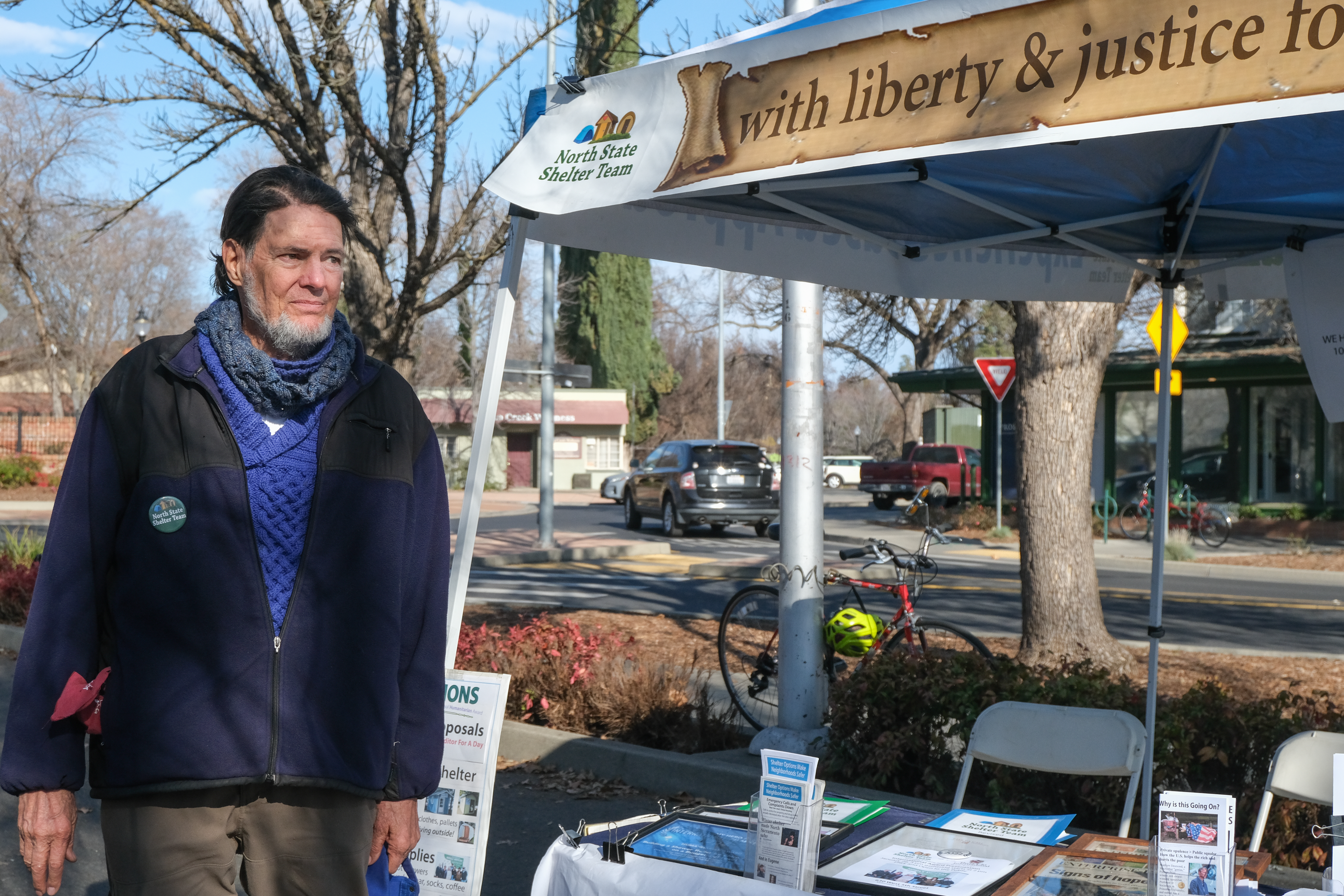
There were two motions on the table when one of the two passed 4-3 — supporting a pilot program for tiny homes on a church parking lot that can house women. The motion directs City staff to move forward with the plan that was presented earlier by the North State Shelter Team (NSST). Most importantly, compared to the other motion, this motion doesn’t limit the number of houses that will be provided.
Before the motion passed, there were tense moments with a 3–3 split on the Council. Three conservative councilmembers — Tom van Overbeek, Mike O’Brien and Dale Bennett — voted against the motion, and the three progressive councilmembers — Addison Winslow, Bryce Goldstein, and Katie Hawley — voted in favor. read more
After a lengthy public hearing Oct. 7 over the City’s Alternative Camping Site, a resident, Michael Morgan, speaks with ChicoSol about the unfair assumptions people make about the encampment and who lives there.
Changemaker: A song about a greedy landlord plants a seed for Araujo-Sariñana
by Yucheng Tang | Posted June 10, 2025
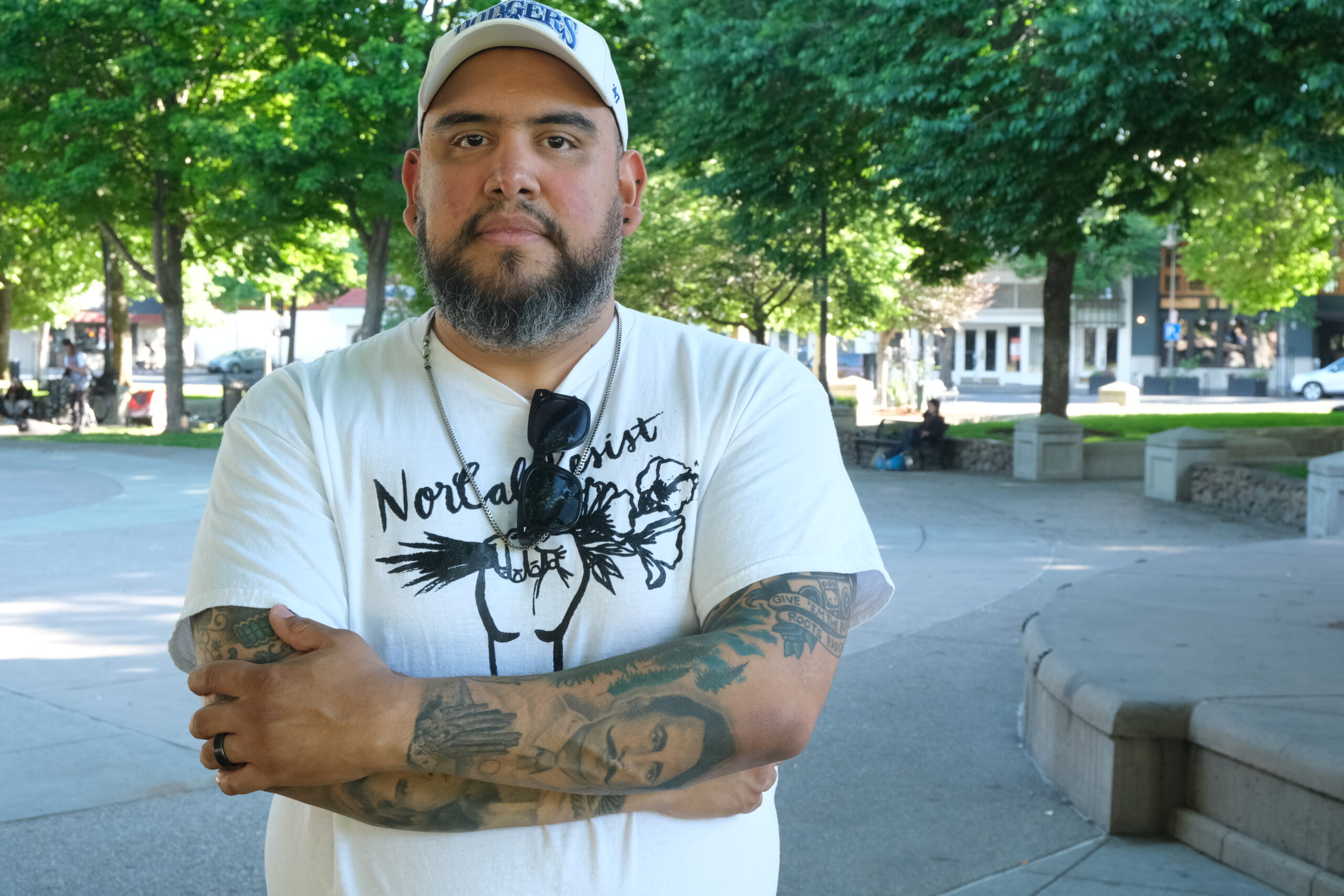
Juan Araujo-Sariñana
“The landlord’s here to visit/They’re blasting disco down below/Says, ‘I’m doubling up the rent ’cause the building’s condemned/You’re gonna help me buy City Hall‘/But we can/You know we can/Let’s lynch the landlord man” — the Dead Kennedys
At age 17, Juan Araujo-Sariñana discovered punk rock music that now, 20 years later, still influences his life.
Fresh Fruit for Rotting Vegetables, one of his favorite albums by one of his favorite singers, Jello Biafra, was something he listened to often back in high school. In that album, there’s a song called “Let’s Lynch the Landlord.”
Biafra’s song planted the seed for the cause Araujo-Sariñana is dedicated to now: Distributing food and resources to those who have lost their homes. “Jello Biafra was one of the influencers in my early life and radicalized me,” he said. read more
Winslow says the ordinance targets the unhoused community

by Yucheng Tang | Posted May 22, 2025
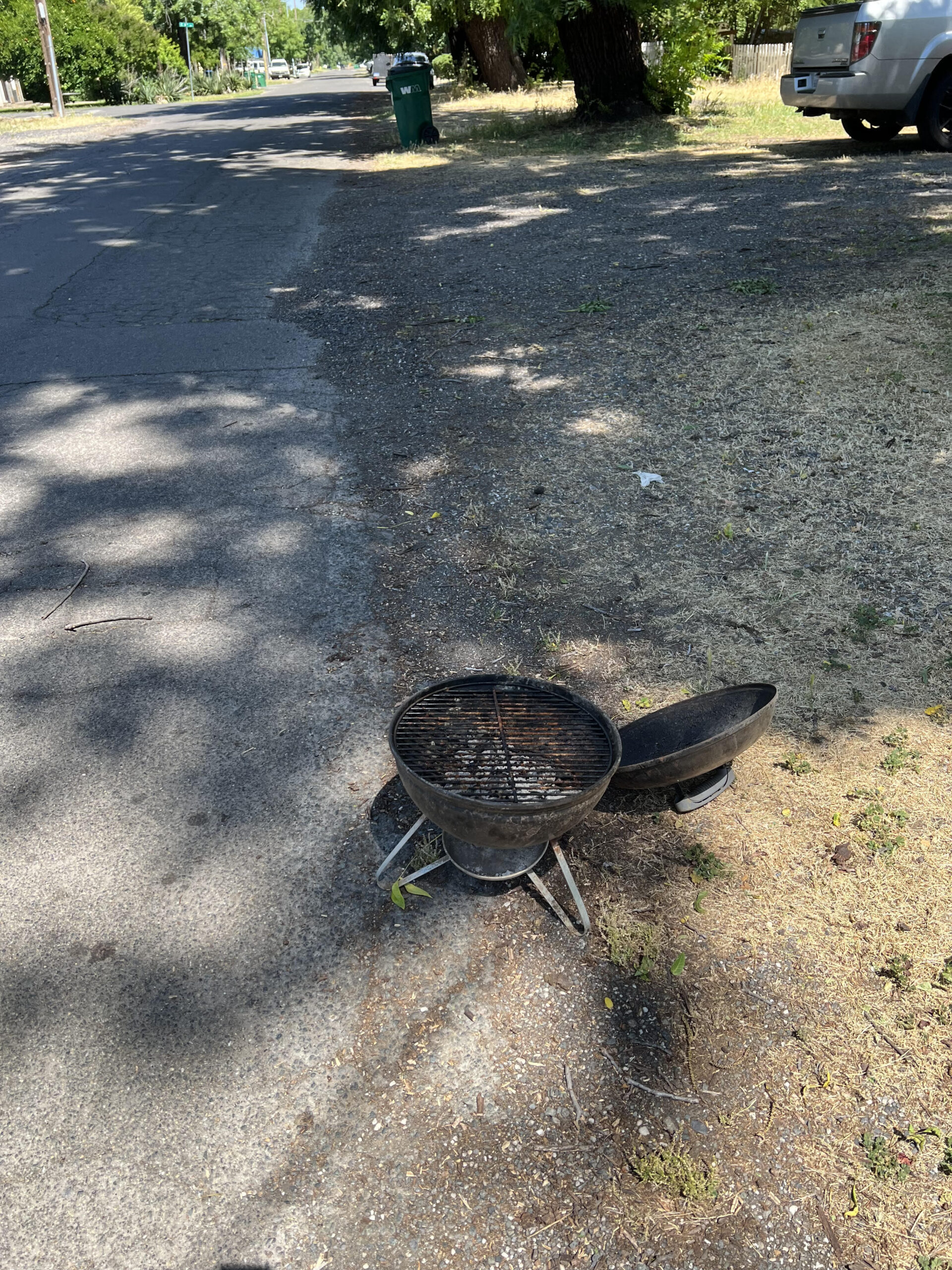
photo by Karen Laslo
The Chico City Council on May 20 finalized the adoption of ordinance amendments to further regulate outdoor warming appliances and barbecues.
Fire Chief Steve Standridge said the new ordinance will regulate to “mitigate significant fire risks before the start of the fire season” and to “better protect our community.”
Councilmember Addison Winslow cast the sole vote in opposition to the ordinance. He says it’s one of the many ordinances targeting the unhoused population.
Under the newly-amended ordinance, the use of outdoor warming appliances and barbecues is limited to private property or in some areas designated parks, and the barbecues on public property or in public right of way will be prohibited without a permit.read more
A frustrated mayor responds; an advocacy organization for the unhoused applauds ruling
by Yucheng Tang | Posted April 4, 2025
photo by Leslie Layton
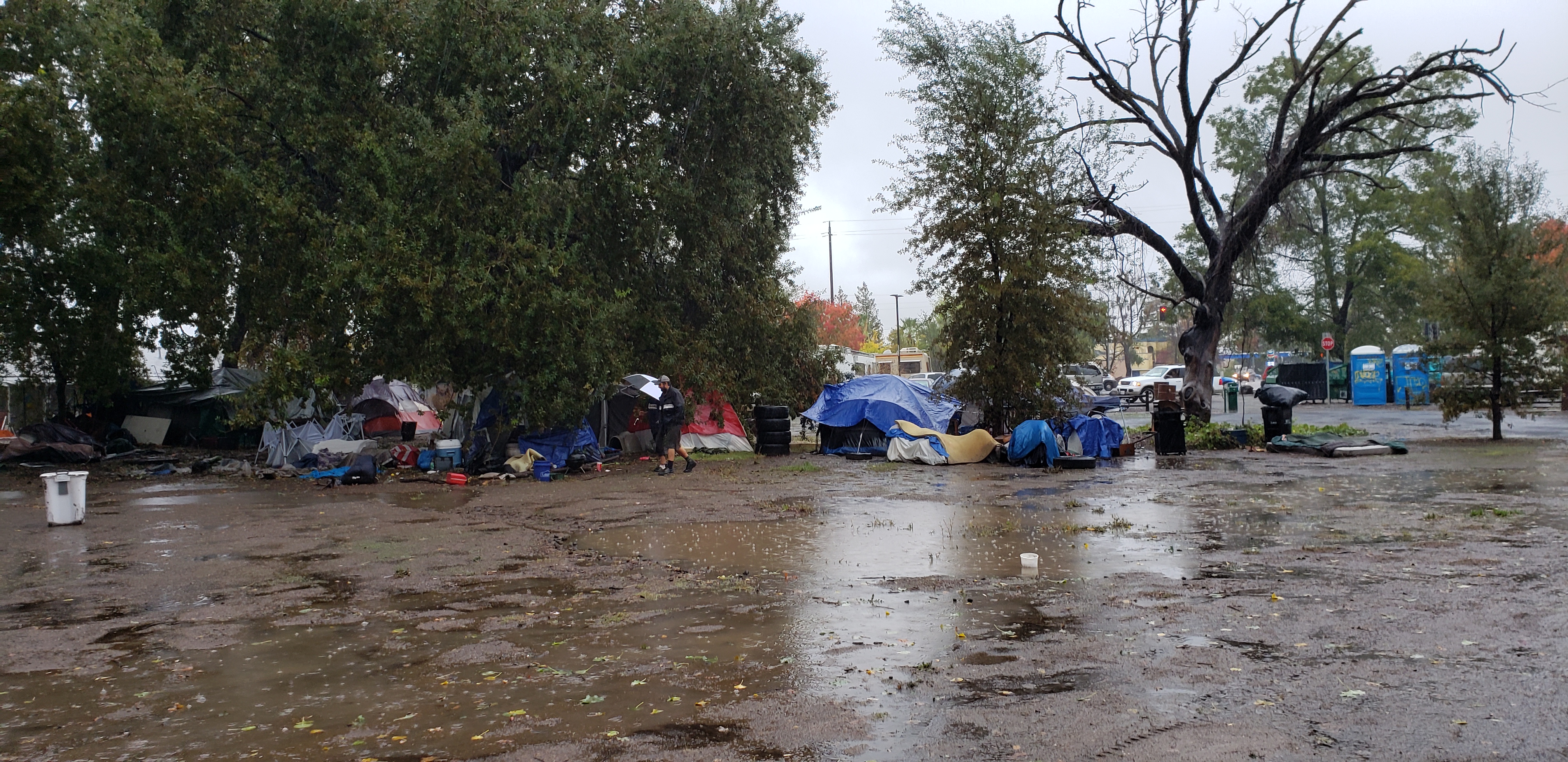
The Comanche Creek encampment was removed years ago.
In September of last year, the City of Chico began another legal journey – this time an effort to exit the Warren v. Chico Settlement Agreement.
On March 31, the U.S. District Court for the Eastern District of California denied the City’s motion, which means the City has to abide by the five-year agreement that started in 2022 and ends in 2027.
The Settlement Agreement prohibits the City from enforcing anti-camping ordinances when adequate shelter is unavailable. In planning an eviction of unhoused campers from public spaces, the City must make a count of available shelter beds, advise plaintiff counsel Legal Services of Northern California (LSNC) and notice campers who will be assessed and referred elsewhere. Some City officials consider the process unnecessarily onerous.
The settlement was the result of a 2021 lawsuit against the City and its police department filed by Legal Services, a legal aid agency. The lawsuit argued that the City was violating the rights of homeless people when it razed encampments.
The order says that the City voluntarily entered the agreement and failed to demonstrate any changed circumstances that warrant the granting of relief.
Viewpoints on the ruling differ
Some City leaders and homeless advocates view this recent ruling in different ways.
After seven months of waiting for the court ruling, Chico Mayor Kasey Reynolds said she was disappointed that the City’s motion was denied.
“While we respect the judicial process, we firmly disagree with the Court’s ruling,” Reynolds said. “This will continue to limit the City’s ability to timely and effectively address the public safety issues in the City.”
In an emailed statement, Reynolds wrote that the City is reviewing the Court’s decision and evaluating its legal options going forward. “I would not rule out any possibility at this time, however cost and time will need to be carefully considered with any and all decisions made on the City’s behalf,” she said.
Reynolds also noted that this agenda falls into the “Existing Litigation” category, meaning that it will only be discussed in closed session rather than publicly at the City Council meeting.
LSNC, which represented the eight unsheltered people in the Warren v. Chico case, said it is pleased that the court held the City of Chico to the obligations it agreed to in the Settlement Agreement.
Will Knight, decriminalization director at the National Homelessness Law Center, views the recent Warren v. Chico ruling as good news. He is part of the team of attorneys and advocates dedicated to protecting the rights of the homeless and solving homelessness.
“Despite the shameful ruling in Grants Pass, it remains counterproductive, morally corrupt, and legally unwise for cities to arrest or fine people for living outside when they have nowhere else to go,” Knight said.
City watched U.S. Supreme Court ruling
The City’s motion followed the Supreme Court’s decision in the Grants Pass v. Johnson case, which overturned its previous ruling and allowed cities to evict and penalize individuals sleeping in public, even when no alternative public spaces or shelters are available.
“Instead of wasting taxpayer dollars by passing or enforcing laws that make it illegal to be homeless or reopening settled cases,” Knight said, “elected officials in Chico and across the country must focus on proven solutions to homelessness, like housing and care.”
But the Supreme Court’s ruling became one of the key arguments in the City of Chico’s motion.
The City contended that “it is inequitable for the Settlement Agreement to remain
unmodified because the decision in Grants Pass would not constrain their enforcement of the Anti-Camping Ordinances,” according to the judge’s order.
The court was not persuaded. “This is because defendants voluntarily entered into the Settlement Agreement, thereby agreeing to assume obligations beyond the minimum constitutional requirements, and did so for the purposes of resolving the litigation,” the order explains.
The court order also says that the City failed to demonstrate that some public safety issues, like fires and crimes, have worsened after entering the Settlement Agreement.
LSNC pointed out that “the overwhelming majority of unhoused people who have talked with us say they would stay at the Pallet Shelter if they were offered a spot, yet it is our understanding that the Shelter has never once filled since it opened.”
Members of the public indicated concern about the City’s approach to homelessness during the March 4 City Council meeting. Felix Mahootian protested the ongoing eviction sweeps launched by the City. “As it stands, the sweeps do nothing to help leverage folks out of homelessness who are there,” Mahootian said. “These are just enforcement, not preventive.”
In fact, despite the Settlement Agreement’s restrictions on ordinance enforcement, the City has published 15 notices of planned enforcement of camping ordinances since February 2024.
An unhoused man ChicoSol spoke with during the Feb. 27 eviction sweep at City Plaza said he didn’t know where to move his belongings. He said he might relocate to a parking lot or under tree cover for a few days. In the end, he said, he would return to City Plaza.
The man said he preferred the Genesis pallet shelter emergency housing over the Torre Community Shelter for its greater freedom. Though he had been repeatedly offered a Torres Shelter bed, he preferred to remain unsheltered.
“We look forward to continuing to work with the City to improve conditions and access to shelter for Chico’s unhoused residents, particularly by increasing opportunities for unhoused people to enter the Pallet Shelter,” says the LSNC statement.
Yucheng Tang is a California Local News Fellow reporting for ChicoSol.
U.S. District Court Judge Dale A. Drozd has denied the City of Chico’s motion for relief from final judgment in the case Warren v. Chico.
The case led to a settlement agreement in 2022 that prohibited the City from enforcing anti-camping ordinances when adequate shelter was unavailable. The City later sought to modify or terminate that agreement, citing changes in the law (the Grants Pass v. Johnson decision by the U.S. Supreme Court) and changed circumstances, such as public health and safety concerns.
The court order says the City failed to prove that some public safety issues, like fires and crimes, have worsened after entering the Settlement Agreement.
“It is undisputed by the parties that the number of fires attributable to homeless people in general has been reduced during the operation of the Settlement Agreement compared to the number that took place prior to their entry into the Settlement Agreement,” the order says. “…nor have they presented evidence showing that the level of crime in Chico has changed since their entry into that agreement.”
District 4 Councilmember Addison Winslow commented in an Instagram post.
“What the judge gave us is the resounding rejection of everything that the City claimed,” Winslow says.
“We can negotiate a plan that can outlast the Settlement Agreement so we find a way to really workably handle homelessness in our community,” Winslow said, “or we can sit and complain.”