
How a judge decided to leave Settlement Agreement intact

A frustrated mayor responds; an advocacy organization for the unhoused applauds ruling
by Yucheng Tang | Posted April 4, 2025

photo by Leslie Layton
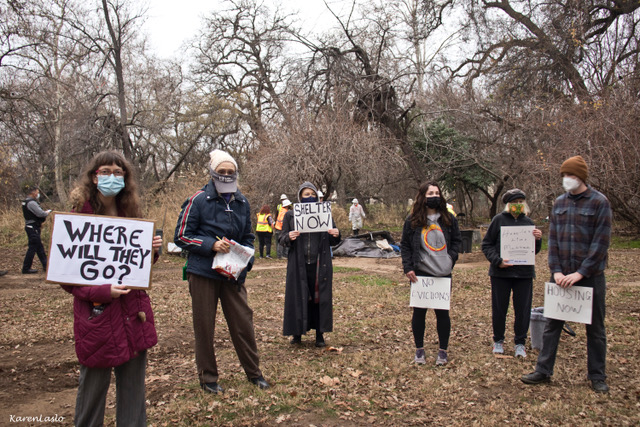
The Comanche Creek encampment was removed years ago.

In September of last year, the City of Chico began another legal journey – this time an effort to exit the Warren v. Chico Settlement Agreement.

On March 31, the U.S. District Court for the Eastern District of California denied the City’s motion, which means the City has to abide by the five-year agreement that started in 2022 and ends in 2027.

The Settlement Agreement prohibits the City from enforcing anti-camping ordinances when adequate shelter is unavailable. In planning an eviction of unhoused campers from public spaces, the City must make a count of available shelter beds, advise plaintiff counsel Legal Services of Northern California (LSNC) and notice campers who will be assessed and referred elsewhere. Some City officials consider the process unnecessarily onerous. read more

Chico moves to dissolve lawsuit settlement

Winslow: The pallet shelters are "hostage" in the homeless case

by Leslie Layton and Natalie Hanson | Posted July 17, 2024

photo by Dave Waddell
Eric Johnson

The City of Chico announced today that it plans to dissolve the lawsuit settlement that for the past 18 months has restricted its ability to conduct eviction sweeps at homeless encampments. It says it will return to court.

The January 2022 Settlement Agreement produced by the Warren v. Chico lawsuit requires the City show it has shelter beds available before evicting unhoused people from public property. If the City prevails in a new round of litigation, it will once again be able to enforce anti-camping ordinances and conduct eviction sweeps freely. read more

Divided Supreme Court ruling delivers victory to Grants Pass

‘Either stay awake or be arrested’
by Natalie Hanson | Posted June 28, 2024

photo by Karen Laslo
The City-sanctioned campground in north Chico that was opened to meet a court requirement.

The country’s highest court dropped a landmark decision on the question of civil rights for America’s unhoused people today.

In a decision that many attorneys and activists had predicted, the U.S. Supreme Court has ruled that cities enforcing anti-camping laws are not committing cruel and unusual punishment during evictions of unhoused people. It remanded the City of Grants Pass v. Johnson case back to the lower courts with a ruling that could affect policy in cities like Chico. read more

Settlement ends lawsuit against City of Chico

Vice mayor makes 11th-hour bid to postpone settlement
by Leslie Layton | Posted January 16, 2022

photo by Karen Laslo
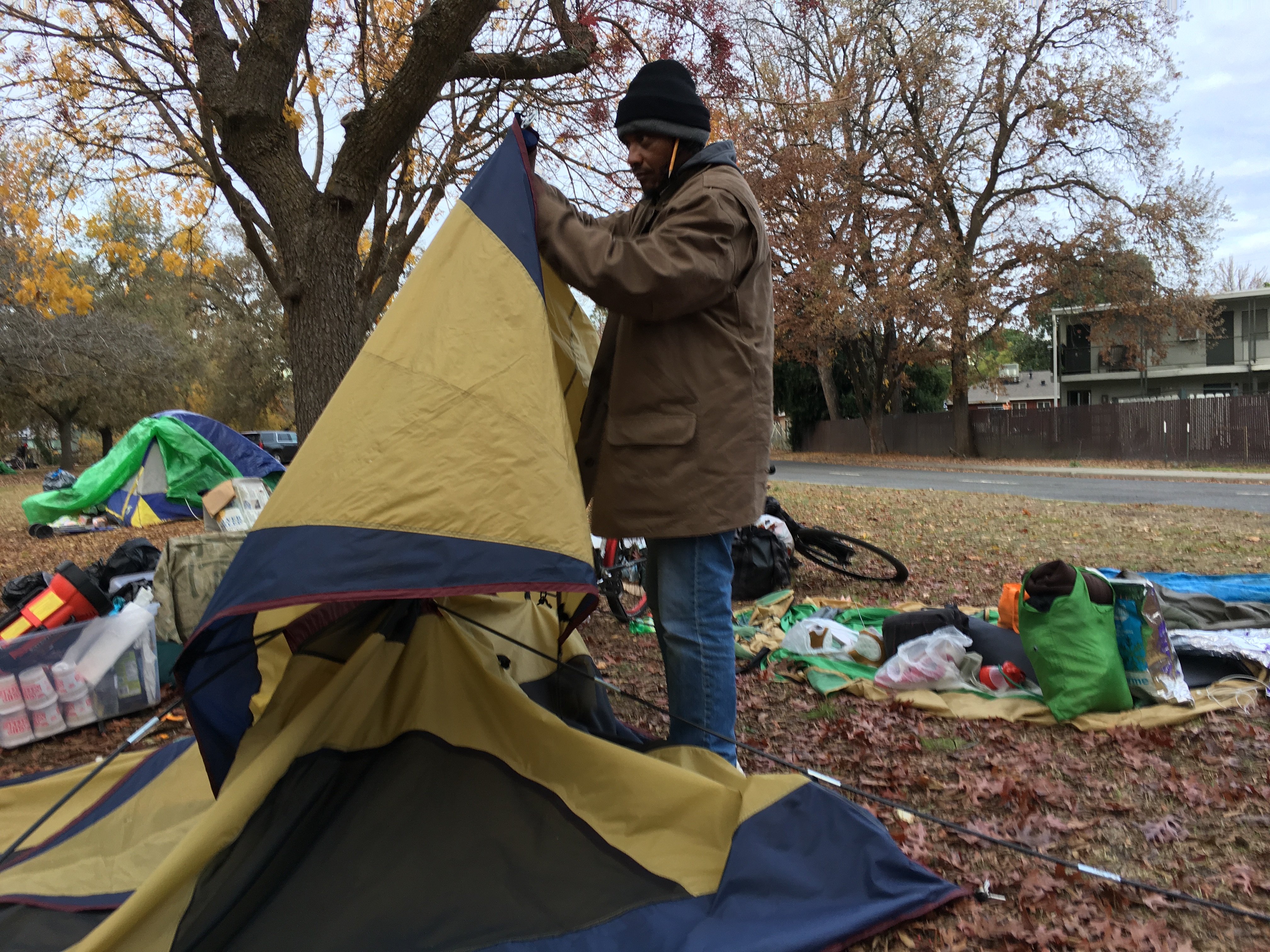
Evicted campers leave their site after a sweep.

A settlement agreement in the lawsuit related to the city’s treatment of unhoused people, signed Friday by a federal judge, could end the spectacle of chaotic mass evictions that stranded campers who had nowhere to go.

Early last year, a newly-installed City Council began a series of sweeps in parks, near waterways and on patches of grass on public land.

Journalists watched as workers came in atop tractors, rumbling through encampments where displaced people had pitched tents and had failed to move their few belongings to who knows where – until we weren’t allowed to watch. read more

Homeless evictions continue in southeast Chico

Chico police block media from watching; upset citizens decry policy
by Leslie Layton | Posted February 17, 2021

photo by Karen Laslo
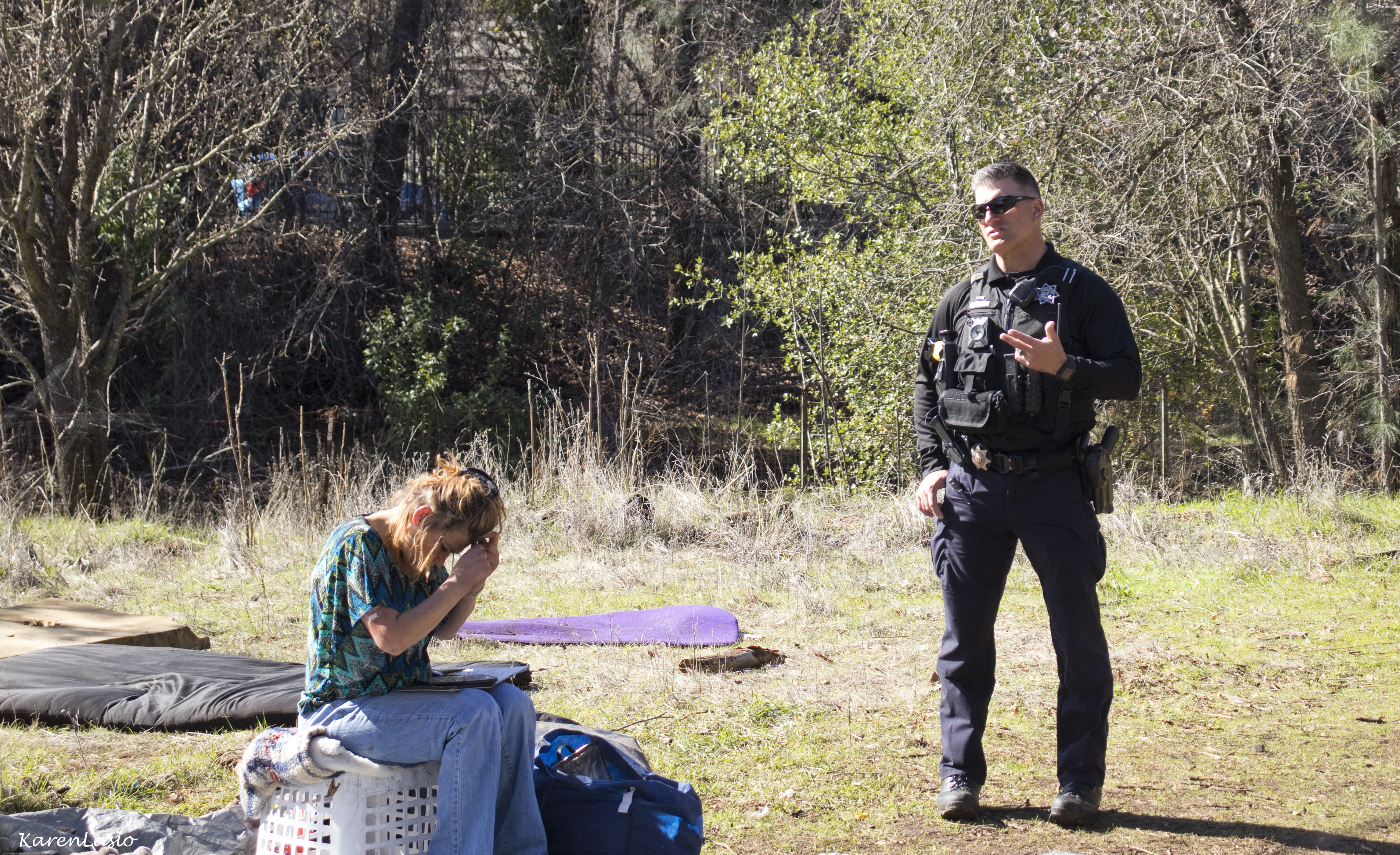
An officer tells a homeless woman at Humboldt and Forest to be out by evening on Feb. 16 as she stares into a small mirror.

Chico Police Department today blocked the media from Boucher Street as officers informed homeless people camping there and at Forest and Humboldt streets that they had to move.

Unhoused people at both sites had been given 72-hour eviction notices that had expired. And as the rain ceased and the sun broke through today, police moved in on the encampments.

At Boucher and Wisconsin streets, community members offered to help campers load tents and possessions into trucks and move them if they had someplace to go. A few people chose to move to beneath the Highway 99 overpass in lower Bidwell Park. But with no shelter space available in the city, many didn’t know what to do. read more