Council increases security, code enforcement at Alternative Camping Site

Unanimous Council vote increases nighttime security for the neighborhood
by Yucheng Tang | Posted October 22, 2025
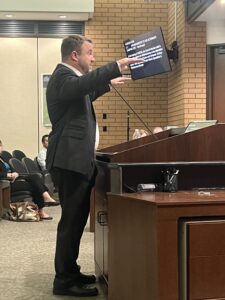
Public Works Director Erik Gustafson. Photo by Yucheng Tang.

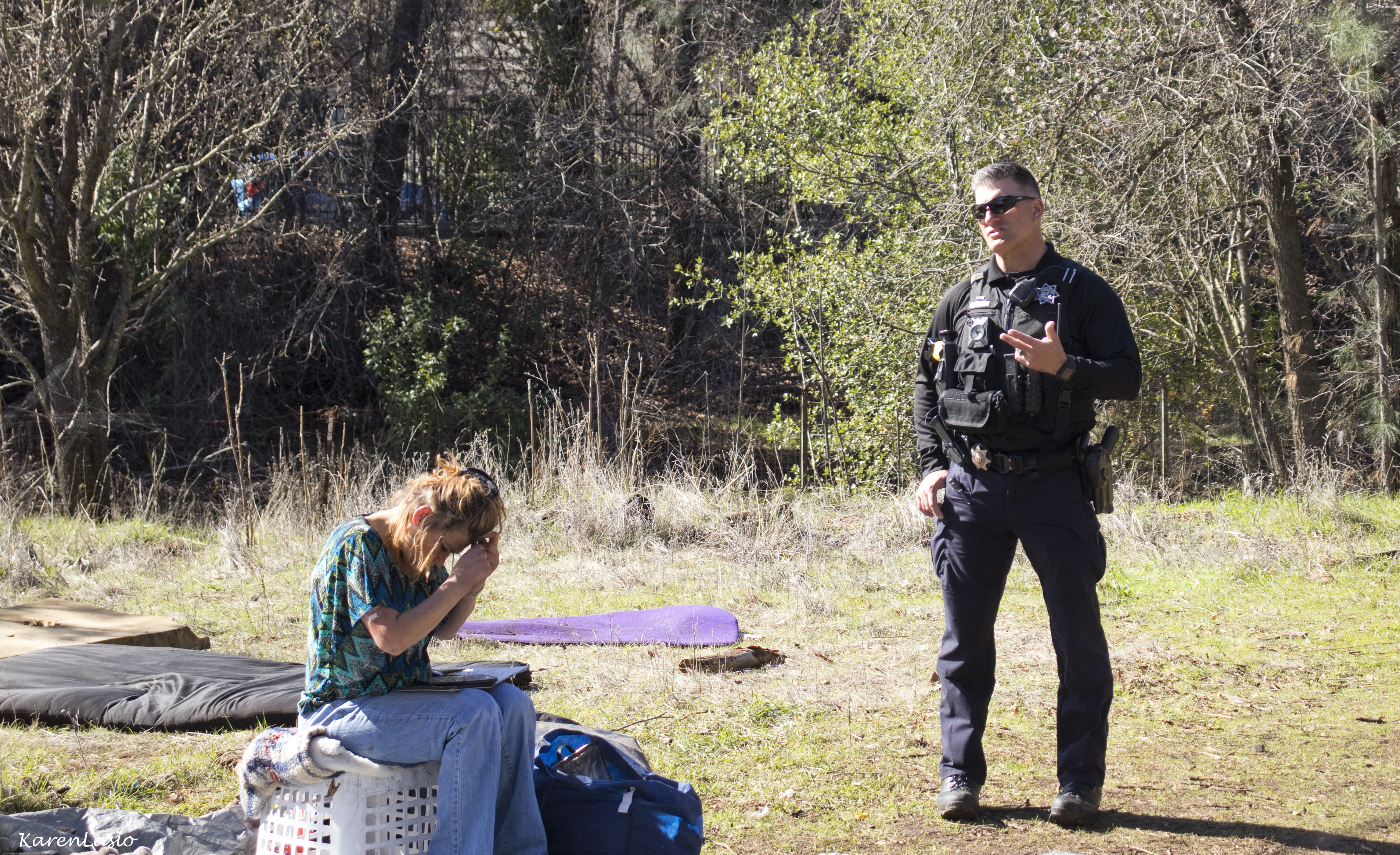
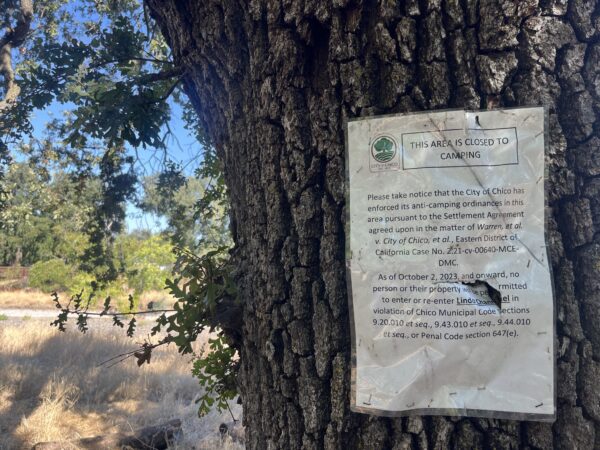
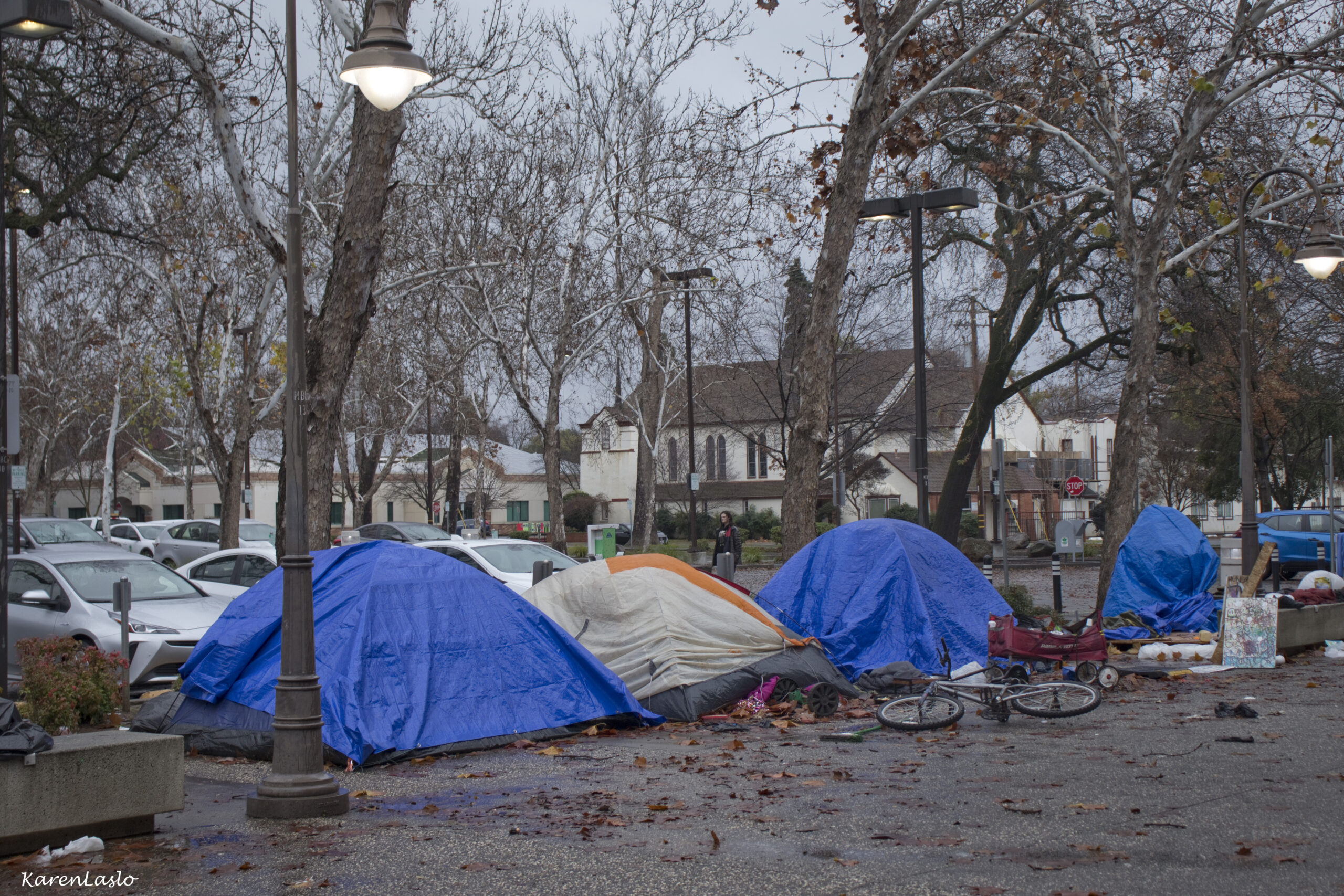
The Chico City Council voted Oct. 21 to increase visits by Jesus Center staff to the Alternative Camping Site from twice a week to seven days a week, and to have Armed Guard Private Security patrol not only the site, but also the nearby neighborhood.

The plan will be implemented for two months at the north Chico homeless encampment, after which time City staff will return to the Council with an assessment.

Meanwhile, the City will incorporate several new rules into the site’s code of conduct, require that residents who are now eligible for the Genesis pallet shelter relocate there, and provide pallet pads to help raise existing tents off the ground.

The updated Code of Conduct for unhoused people living on a corner lot at Eaton and Cohasset roads will prohibit the addition of any structure of any kind to an assigned space; will ban certain items — including generators, full or empty gas cans, electrical cords and propane tanks of any size; and will permit animal fencing but only with prior approval. read more

Homeless people in Chico victimized

Should violent acts targeting unhoused be treated as hate crimes?

by Peter Schurmann | Posted February 7, 2023

photo by Manuel Ortiz, EMS
Jimbo Slice

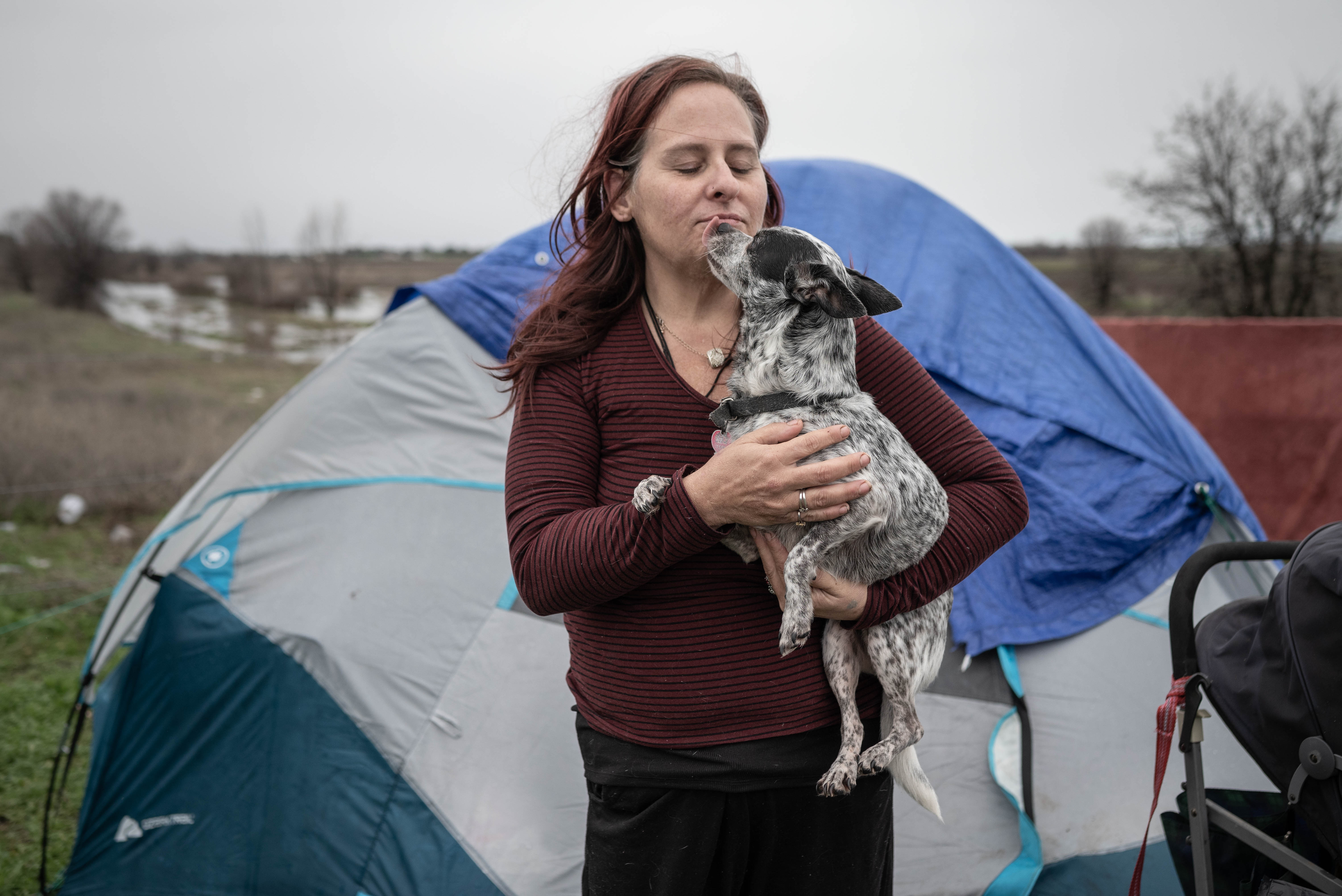
The Eaton-Cohasset homeless encampment sits on Chico’s northern edge, a motley assortment of weathered tents, a couple of dumpsters and a port-o-potty that juts up from the muddy gravel.

With hate crimes targeting racial, religious, and sexual minorities on the rise nationwide, residents here say they’re being targeted for another reason: because they’re homeless.

“There’s some guy who drives around with a loudspeaker and a mask on saying, ‘Get out of Chico or get killed,’” says Jimbo Slice, 29. A native of Paradise, about 12 miles east of Chico, Jimbo -— he declined to give his last name -— is among the thousands who were left homeless by the 2018 Camp Fire that devastated the region. “He drove by three times yesterday.”

For camp residents the threats feel all too real.

On several occasions last October and into November, the two dozen or so people who live here were sprayed with air-gun pellets fired from a passing vehicle. Charles Withuhn with the North State Shelter Team, which provides mobile showers to Chico’s unhoused, says four people were hit in those incidents.

“In the early evening, before dark, a police car would go by. A few minutes later, a compact car passed with the passengers shouting profanities (and releasing) high-powered automatic pellet fire,” residents told Withuhn.

The year prior, a homeless man at the Teichert Ponds camp was shot and killed and another injured by two teens. The judge in that case dismissed the charges, ruling the shootings were done in self-defense before any defense evidence was presented.

Phil, who is 56 and has lived at the Eaton-Cohasset camp the past two months, says being homeless in Chico is like having a target on your back. He points to his bicycle, which leans against the low-slung barbed wire that serves as the camp’s fencing. “If you’re on a bike with a backpack in this city, you’re a target.”

Experts in hate crime legislation say the original intent of such laws was to protect groups identified by specific, immutable characteristics such as race, religion, or sexual identity. A person with long experience in the field who spoke on background said there is a heated debate now over whether to extend such protections to other classes, including the homeless.

One such effort in 2019 failed to make it out of committee hearings. Opponents at the time argued hate crime laws would not deter attacks against people experiencing homelessness. More recently they contend that extending such protections to the unhoused would dilute the efficacy of hate crime laws at a moment when hate crimes and related incidents targeting racial, ethnic, and gender groups are spiking.

But with California home to nearly a third of the nation’s unhoused population, and with solutions seemingly non-existent, frustration is growing and, in some cases, turning into violence directed at an already marginalized and vulnerable group.

In Chico, homeless advocates say social media and political rhetoric are adding fuel to the fire, painting the homeless as a threat to public safety at a time when some city leaders seem bent on attracting work-from-home urbanites who want to move out of larger cities and back to smaller town life.

There’s a “constant group of people that have nothing but negative things to say on social media, and when that is all the public is ingesting it translates to a hateful attitude toward people experiencing homelessness,” says Hilary Crosby, executive director of Safe Space, which provides overnight shelter for unhoused people in Chico.

The latest Point-in-Time count from 2019 puts the number of homeless in surrounding Butte County at 1,125, though many here say the actual number is likely far higher. New figures are expected in March.

Addison Winslow is a Chico native and the lone progressive voice on the City Council. “The right has spun a narrative that taps into that grassroots resentment of homeless people” to create an atmosphere that is growing increasingly hostile and potentially dangerous for the unhoused. The violence is becoming “mainstream,” he adds.

Phrases like “toxic compassion,” meanwhile, are being bandied about by those on the right to justify the denial of resources to people on the street.

Sue Hilderbrand is a local activist and radio personality. In early December she was physically assaulted by a homeless woman while running errands. “As I relive it, there were about four or five seconds where I really thought she would kill me,” recalls Hilderbrand, pulling back her hair to reveal patches of raw skin where her hair had been yanked out.

But instead of turning on the homeless, Hilderbrand says her experience is an example of why the city needs to do more to provide essential services -— including mental health resources -— to this population.

“The lesson learned is not, don’t help people,” she says. “The lesson learned is, we are not helping people and that is making our community more dangerous.”

Back at the Eaton-Cohasset camp, one of three sanctioned by the city, conditions feel increasingly hopeless.

“Every day these large trucks drive past blaring their horns, screaming at us,” says Phil, who jokingly suggests putting up a sign along the fence that says, “Honk if you support homelessness.” “I bet the honking would stop,” he laughs, before his mood once again turns grim. “I’m worried they’ll form vigilante groups one of these days.”

It’s early evening at a Safe Space shelter near downtown. Inside, Colleen Olson sits on a metal folding chair curled around her chihuahua. Born and raised in Chico, Colleen recently lost her RV after it was towed for being illegally parked. She’s struggling to raise the money to get it out of impound.

In a flurry of words, she relates one tragedy after another, ending with the death of her boyfriend, the same individual, she says, who was killed in the shooting at Teichert Ponds.

Asked what has changed about Chico since her childhood, she doesn’t miss a beat. “This is not the town I grew up in. It’s more hateful.”

Editor’s update: The community raised enough money to get Olson’s RV out of impoundment and it has been returned to her since this story was first posted on the San Francisco-based EMS website here.

Additional reporting provided by ChicoSol Editor Leslie Layton.

Final steps underway for pallet shelter site

Advocates: Management style may affect outcomes
by Natalie Hanson | Posted April 4, 2022

photo by Karen Laslo
Pallet shelters

The city’s court-ordered pallet shelter project is close to completion, and advocates for unhoused people are hopeful but cautious about its chance for success.

The proposed code of conduct and the operating standards for the site are now being finalized. The city, plaintiffs and the judge must agree on these standards in order to finalize insurance and open the site on Dr. Martin Luther King Jr. Parkway, said Jesus Center Executive Director Amber Abney-Bass.

Advocates for the unhoused are cautiously optimistic, but have concerns about how the management style will affect use of the site. One question some have is whether there will be armed security.

Abney-Bass: ‘We want people to feel safe’
The pallet shelter project is now under the leadership of interim City Manager Matt Madden – who has been the chief of Chico Police Department – as well as Public Works Director of Operations and Maintenance Eric Gustafson, according to the city’s administrative office.

Abney-Bass told the Butte County Homeless Continuum of Care on March 21 that there is no set opening date for the site. Court negotiations involving the settlement to the lawsuit filed last year by eight unhoused plaintiffs have continued behind closed doors.

Abney-Bass said she hopes to provide more information this month as the Center finalizes site staffing and shelter expectations. The city has already hired a social worker and two case aides, positions that will be the foundation for an “outreach and engagement team,” she added.

The Jesus Center has run separate shelters for unhoused men and women for years, and previously ran meal and mail service programs that have since been eliminated. The organization relocated last year to a new site on Fair Street that includes a housing complex, the Renewal Center, for unhoused people.

The organization was selected by the city to oversee the project, which is the heart of the lawsuit settlement.

The lawsuit stipulates that the city cannot legally continue enforcing ordinances prohibiting public camping, by clearing encampments, while there is insufficient shelter for people who are unhoused in the city.

The lawsuit complaint said 2,304 homeless persons live in Butte County, 891 of whom are unsheltered, and according to the 2019 Point in Time study, with 571 adults living in Chico. Butte County Housing Authority Executive Director Ed Mayer told the Chico Enterprise-Record last March the authority estimated “as many as 6,000 to 7,000 households still living in the Chico and Oroville area are not in housing,” in part due to displacement during the Camp Fire and North Complex fires.

The pallet site project is impacted by the resignation of longtime City Manager Mark Orme after a performance review by Chico City Council on March 25. Orme had been the city’s lead on planning the project operations, alongside the selected managing provider, the Jesus Center.

Abney-Bass said what remains are “very few things we’re continuing to hammer out.” She said the city’s case workers will handle primary contact with unhoused people, and Jesus Center senior-level staffers will also have leadership positions at the site.

“We want people to feel safe. We want them to come to the site because it offers safety, and we want it to be successful,” Abney-Bass said. “We recognize the lack of safety most of this population has experienced while living in our public spaces.”

” … that’s where we believe people have the greatest opportunity to experience a changed and restored life” — Abney-Bass

She added that the Jesus Center’s primary goal is “to get people into shelter and to keep people in shelter, because that’s where we believe people have the greatest opportunity to experience a changed and restored life.”

Abney-Bass praised the leadership former City Manager Mark Orme provided in getting the project off the ground and said, “While Mark has left his post, the folks he left behind there continue to work mightily.”

“We’re looking at success, not speed. I feel very encouraged by the progress we’ve made,” she said.

Advocates weigh in
Chico Housing Action Team has stated support for the Jesus Center’s role as administrator, with some concern for how the site may be managed. Board member Leslie Johnson expressed concern at the Continuum of Care meeting over whether “there will be armed guards there.”

“So many of our clientele are fearful and have much higher anxiety if they see people in uniform carrying guns,” Johnson said. “I know we need security of some sort … but if we have guards, it’s like a jail.”

In an interview with ChicoSol, Johnson said CHAT did not apply to manage the site “because we had made a purposeful decision to focus on long term permanent housing.

“We hope as people come through the pallet shelter site … that we’ll be able to help at least some of them find permanent housing.”

Johnson said she hopes the shelter will be a place where unhoused people feel respect and dignity.

“This is a voluntary program and people have to feel they’re getting something out of it and that it’s beneficial to them. There has to be respect for people and interest in people as individuals and understanding their troubles, and their reason for why they may be the way they are.”

Johnson said she wants to see the site help to eradicate the stigma “associated with homelessness, and the shame and the despair that goes along …”

“I think it’s going to be successful,” Johnson said.

In an April 3 interview with ChicoSol, an unhoused man who identified himself as “David” said he worries that the city will run the pallet shelter site like a “detention camp.”

If the city hires armed guards at the site, David said, “That kills it.” He worries that pallet shelter residents will have to go “in and out of a checkpoint” and that the administering Jesus Center will ban even limited use of alcohol. He said the unhoused won’t use the site if it resembles “county jail.”

“Maybe it will work, but I don’t really see it filling up,” David said.

Advocate Nancy Wirtz has gotten to know unhoused people for more than a year, making and delivering sandwiches each week at encampments throughout the city. Wirtz said people she has talked to know there will be rules, and will be grateful to be able to lock up their belongings, which will give them a better chance to look for work.

“I know a lot of people would like to live there, but some people don’t trust the Jesus Center – they won’t go immediately. But a lot of people will, because the prospect of having a bed off the ground and a door they can lock is just wonderful.

“Living outside is very, very stressful. The more freedom they have coming in, the more comfortable they will be because they have had absolute freedom living in their own tents.”

Wirtz noted that management might be a challenge at times.

“Putting 177-plus people in such close quarters is going to be very hard to manage,” she said. “I think it will be difficult to keep things peaceful and running smoothly, because you put that many people together and there’s going to be friction.”

She added that she hopes there will be no requirement to attend religious events or services.

“As I understand it, they cannot have a religious requirement on this site. And I’m going to count on that, because people choose their own religions and the Jesus Center can’t do that for them.”

“We all really, really want it to work,” Wirtz said.

Homeless advocate Chris Nelson said she is concerned about how the Jesus Center will draw people to the site. She said she thinks women and elderly people with health issues will be most attracted to the shelters, but men and partnered couples may not be as much.

“I just hope there will be places where they can not just have their own little personal shelter, but where people can get together,” Nelson said.

“These are people that have been left out until they’re just about wild – taking care of themselves the best way they can, for a very long time. And you just have to be open and use your listening skills and hear their stories and meet them where they are.”

City staff quiet on details
City staff have not spoken about the site for weeks. ChicoSol made repeated requests for comment on the status and costs of the project, and neither Madden or Gustafson could be reached. “The City of Chico respectfully declines your interview requests,” said Administrative Assistant Courtney Carrier in an email to this reporter.

The City Council has maintained that the court has imposed restrictions on public comment about any outcome of the settlement, including the site. Mayor Andrew Coolidge did not respond to requests for comment.

Councilmember Alex Brown said this: “It is my understanding, after the closed session, that we are allowed to share with the public that forward motion is still happening but there are finer details that are still being worked out. The exact date of the beginning of operation cannot be identified until the finer details are finessed.”

Natalie Hanson previously worked in Chico covering homelessness and now focuses her reporting on Marin County.

This story was corrected April 5 to state that the Jesus Center has moved to Fair Street.

Homeless evictions continue in southeast Chico

Chico police block media from watching; upset citizens decry policy
by Leslie Layton | Posted February 17, 2021

photo by Karen Laslo
An officer tells a homeless woman at Humboldt and Forest to be out by evening on Feb. 16 as she stares into a small mirror.

Chico Police Department today blocked the media from Boucher Street as officers informed homeless people camping there and at Forest and Humboldt streets that they had to move.

Unhoused people at both sites had been given 72-hour eviction notices that had expired. And as the rain ceased and the sun broke through today, police moved in on the encampments.

At Boucher and Wisconsin streets, community members offered to help campers load tents and possessions into trucks and move them if they had someplace to go. A few people chose to move to beneath the Highway 99 overpass in lower Bidwell Park. But with no shelter space available in the city, many didn’t know what to do.

Although some of the community volunteers were allowed entry to the encampment, police blocked a section of Boucher from the press. Officer Andrew Cooper said it was a “work zone” and because heavy equipment was moving around, they couldn’t let reporters pass.

At Forest and Humboldt streets, meanwhile, officers told campers to be out by evening. The homeless residents there said they had been given 72-hour notice late last week, but were unsure where to go.

A new more conservative City Council has moved swiftly to take action that appears to be aimed at driving unhoused people from the area. In a Feb. 5 interview with KPAY radio, Councilmember Sean Morgan said the policy would force people to leave. “The police department is gonna’ keep moving them, and they’re gonna’ keep moving them,” Morgan said. “The stragglers who just came to Chico, which is the great majority of them, because it was convenient and it was easy … They are going to go somewhere else.”

Under the Highway 99 overpass, though, one homeless camper told ChicoSol he was born in Oroville and raised in Chico. “I’ve been in Chico 25 years, Donavan Arbayo said. “I did have an apartment in Oroville in 2018, but because of the cost of living we had to walk away from it.”

His wife, Tia Metcalf, emerged from their tent barefoot and, when offered disposable face masks, asked for help getting socks.

This was at least the third major sweep conducted by the city. The sweeps have left many community members ashamed of their city and struggling with the morality of the policy.

“It’s almost unnecessary cruelty,” said Laurel Yorks, a former housing advocate and Chico resident. “It’s a dangerous, dangerous plan and people are going to die. That doesn’t seem to be enough of a reason not to chase people out of town and treat them as if they’re human garbage. It’s so upsetting.”

Councilmember Scott Huber, who has opposed the panel’s enforcement policy, and activist Charles Withuhn discuss the tragedy of homelessness:

Injustice supersedes civility, activist says

Guest commentary says Council meeting disruption was necessary
by Dan Everhart | Posted September 18, 2018

photo by Leslie Layton

On Sept. 4, a group of local human rights advocates, organizing under the name “Housing Not Handcuffs,” expressed their outrage over Chico City Council’s consistent and enduring ineptitude on the matter of homelessness by disrupting the meeting in protest over conservative enthusiasm for criminalizing our unhoused neighbors even further.

The rich enjoy more polite means of gaining Council’s attention, the rest of us must purchase it with speech amplified enough to be heard above the deafening roar of their wealth.

A serious problem has grown steadily worse for years and still no viable solutions are blossoming from local government despite such fertile circumstances. Elected officials reject all research, reason and experience in response to the common modern social problems of wealth inequality, economic exploitation and housing affordability. For many years now, Chico’s General Plan has described deepening shortfalls in affordable housing. For even longer, City Council has done nothing to reduce the problem or to forestall its projected worsening.

Ten years ago, City Council did identify some excellent measures worth pursuing, but then did nothing except reaffirm those same good ideas and utter lack of progress on them whenever they were periodically required to ratify the latest plan. Would it be considered civil to ask the obvious question of competence posed by doing nothing for so long about a growing problem with such severe and widespread consequences?

For five years, concerned citizens have expressed alarm every time successive councils have failed to decline donors’ whims and answer downtown business outrage with nothing but yet another criminalization ordinance, unconstitutional, impractical, and destined to predictable failure. Research affirms the ineffectiveness of these efforts, finding consistently that it’s cheaper to shelter unhoused people than to persecute them. Doing the right thing reduces harm for the whole community and at the same time costs less. The research is easy to find for anyone willing to look, but that would require the kind of curious doubt those in power rarely encourage. Civility in the face of repeated willful ignorance or outright official deceit eventually counts as complicity.

Numerous ideas proposed before City Council in the past found no receptive audience there. Even nominal liberals seldom do more than mumble campaign promises about progressive action, as evidenced by lack of inclusionary zoning or any other affordability incentives so desperately needed with most federal money for new units now long since gone and rents grown too high for federal vouchers to cover. This problem is not new or newly recognized. Previous efforts have proven wholly insufficient for opening your ears and hearts; civility will be welcome once again when government embraces abrogated obligations to those segments of our community most in need of help.

The status quo dislikes all unpleasantness with potential for reflecting poorly on their anointed candidates. The context of privilege and prosperity once distanced some from the suffering so many neighbors now endure, but poverty has grown so pervasive that ease and comfort are compromised even for affluent citizens by this shameful reality that is enjoyed only by the vicious. It detracts from our collective humanity to have so many neighbors unhoused. It demeans the entire community when law enforcement and park employees are commanded to harass poor people with no place to go and who often suffer from all combinations of physical, psychological, spiritual and substance abuse issues. Where does it end and how can we intervene when you persistently refuse to listen? Either civility or one’s humanity must be abandoned when oppression exceeds all tolerance.

The problem has been identified, solutions have been offered and Council has failed to act.

When government offers relief only to the prosperous, when it refuses to take meaningful action year after year on the most pressing issues facing the city, when the marginalized, oppressed and exploited among us are consistently either dismissed or vilified by an extremist majority, community members committed to social justice are compelled to rise in disobedience. We are obliged to protest because City Council’s right-wing majority seeks to scatter and punish our poorest neighbors with reinvigorated criminalization measures that have already failed here for five years now. Continuing to cooperate with such ineffective and inhumane policies violates the principles of both prudence and compassion. Thanks to our protest, for one brief moment the wealthy were also denied access to city government, just like the rest of us are all the time. When social justice is long abandoned, civility has already failed.

Clearly the fear and hatred consuming us cannot continue much longer, where and when it ends largely depends on what we do right now. Alternatives that express more noble human values are available to us, and cost less too, but cooperation by the broader community is essential to real progress. Please reflect on the spiritual and ethical teachings that inspire your own virtue and see if we don’t agree on quite a lot. What would it look like if we tried to apply our best common values to this problem we all share?

Probably a lot like civility.

Dan Everhart belongs to the group, “Housing not Handcuffs,” and as a social worker and student of nonviolence, describes himself as an “advocate for better decisions, especially those affecting our unhoused neighbors.”

Tiny House Club helps shelter homeless

Chico's first tiny house underway
by Karen Laslo | Posted March 8, 2018

Tiny house floor plan

On this past Sunday morning, Charles Withuhn of the Chico Housing Action Team (CHAT), along with a retired contractor and nine Chico State students from the Tiny House Club, showed up behind the university’s Langdon Hall to get to work on the first tiny house in Chico. (Click on arrows to see slideshow below.)

Work begins
Image is not available
Students volunteer
Image is not available
On flatbed
Image is not available
Frame up
Image is not available
previous arrow
next arrow

Their goal for the day: To put up the framed walls they’d previously hammered together at another work session.

Withuhn said they were building the tiny house because of the many “unsheltered” people in our community. The goal is to house for the least amount of money as many people as possible and as soon as possible.

With Chico’s stock of affordable housing almost non-existent, Withuhn thinks a tiny house village – it will be known as “Simplicity Village” — is the way to go. Withuhn often cites other towns and cities, like Eugene, Ore., that have successfully housed unsheltered citizens in tiny house villages.

Chico’s first tiny house is being built on a flatbed trailer so that it can be hauled around town to places like the farmers market or to the Chico Mall so that people see an example of what a tiny house would look like.

Some of the wood for framing this first tiny house was donated by Payless Building Supply, and the windows were donated by CSUC alumni. Withuhn is in negotiations with property owners to acquire a plot of land for a tiny house village, and this sample tiny house now under construction will be the first to reside there, along with 33 more the Tiny House Club plans to build.

Support for the project is growing; Chico Country Day School has committed to building a house and some local business owners have committed to sponsor additional tiny houses. As Withuhn says, “The project is well underway.”

Karen Laslo is a freelance photographer and frequent contributor to ChicoSol.