Changemaker: Briggs sees her roles online and in the classroom as different
by Lexi Lynn | Posted October 10, 2025
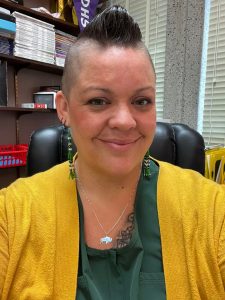
Professor Briggs. Photo by Leslie Layton.
This story by contributor Lexi Lynn is part of ChicoSol’s Changemaker series.
As Chico State students slowly trickle into Lindsay Briggs’ classroom, a Whitney Houston song plays on the overhead speaker, filling the room with the bubbly lyrics of an ’80s hit. A few students first make their way to the front of the classroom to snag a colorful mask from the front table, free to whomever feels inclined to take one.
A colorful slideshow is pulled up on dual projector screens, the initial slide filled with attention-grabbing graphics and memes. Students pull out their computers as Briggs fades out the ’80s music ambiance and begins the day’s lecture on mental health disorders. read more
The lack of information and help frustrate local patients
by Natalie Hanson | Posted February 17, 2023
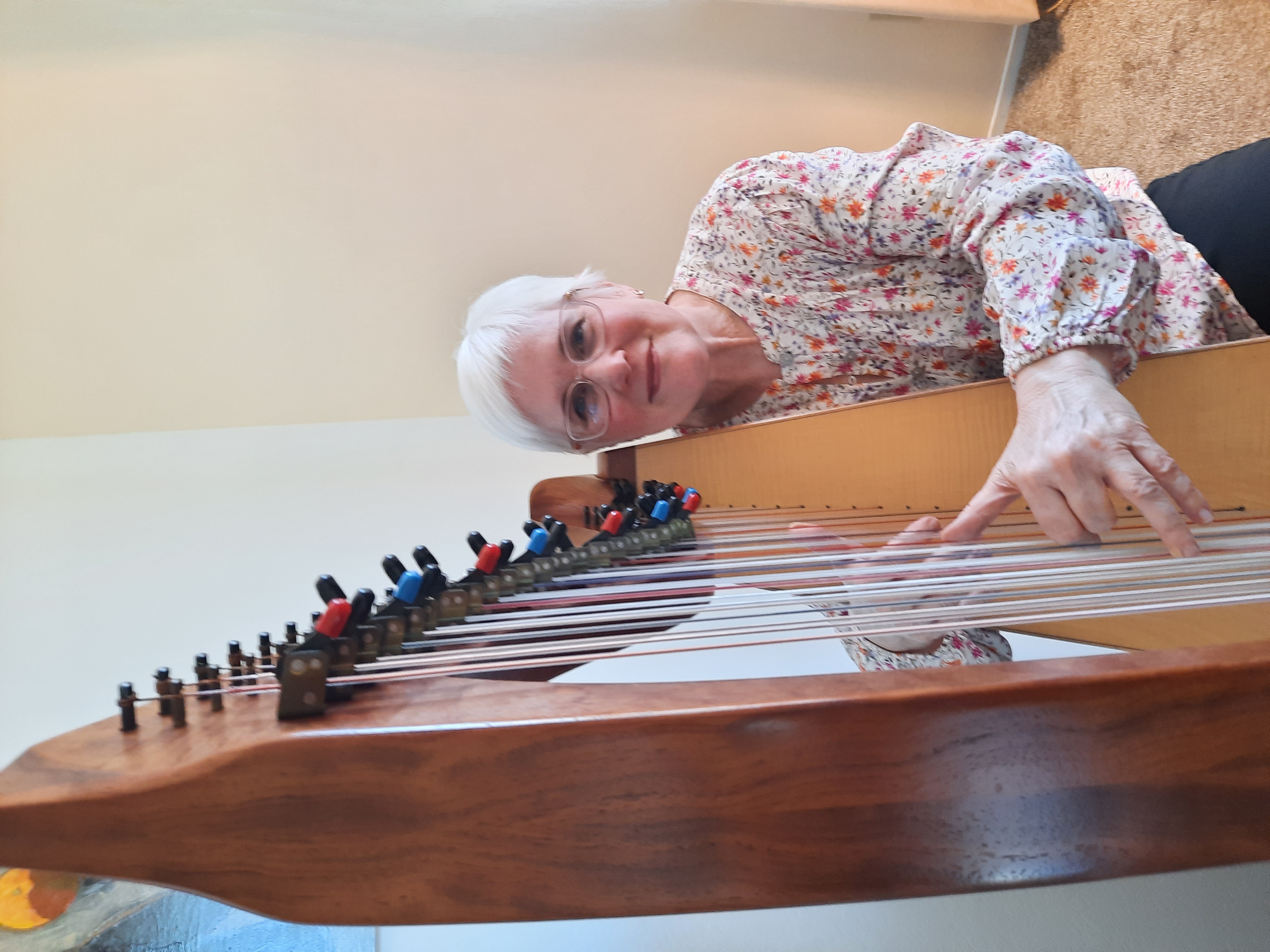
Kathryn Robinson, who was formerly a classical music director at Northstate Public Radio, said her music has brought her great comfort.
Kathryn Robinson never expected that when she contracted COVID-19 in 2021, she would face life-altering symptoms for more than 15 months.
The Chico resident was fully vaccinated when she experienced a mild case of the Delta variant in August 2021. Three days into her symptoms, Robinson lost all sense of taste and smell. Like many COVID patients, she did not get those senses back for several months.
After recovering, Robinson said she awoke months later on Thanksgiving Day smelling what seemed like “sewage” all around her. She said chicken prepared for the holiday dinner tasted like “something rotten dipped in cleaning fluid.” It was then that she realized her sense of taste and smell were altered, a state she learned is called a combination of “parosmia” and “dysgeusia” -– altered smell and taste.
“I soon discovered there were many more foods I couldn’t eat, many more things around me I couldn’t smell right,” said 66-year-old Robinson.
She called it “a terrifying time.”
“I’ve always loved food, I’ve always loved the smell of things,” she said. “I lost 20 pounds in three months -– what a heck of a way to lose weight.”
More than a year later, Robinson said she still has not recovered all sense of taste and smell, and there are many foods she cannot eat. She is convinced that she is suffering from long COVID.
Another Chico resident, Sofia Whitehead, has a serious skin condition that confounds medical providers who don’t have enough information to guarantee that long COVID is the culprit.
Research into mysterious and lingering effects of COVID-19 is emerging but scant after more than a year of study. The lack of robust information is leaving many patients frustrated when they seek help from local doctors who cannot confirm if their ailments are indeed signs of long COVID.
Misinformation vs. science
There are many people who report suffering strange symptoms months or years since first contracting COVID. Some suffer seemingly endless fatigue that makes it difficult to accomplish daily tasks. Others are afflicted by joint and muscle pain that will not abate. Tragically, some have died due to heart complications.
Conspiracy theories about COVID still thrive on social media platforms, making it increasingly difficult for accurate data to break through, misinformation researchers say. That leaves people suffering from pandemic fatigue to become increasingly apathetic about COVID’s continuing dangers.
In a recent seminar hosted by Ethnic Media Services, misinformation expert Cameron Hickey, CEO of the National Conference on Citizenship, called the viral misinformation about COVID “an infodemic.”
UC San Francisco has been a leader in long COVID research. Last January researchers identified causes of the widely reported symptom “brain fog.” Some patients who develop new cognitive symptoms after mild COVID-19 have abnormalities in their cerebrospinal fluid, similar to those in people with other infectious diseases.
This can lead to “executive functioning” issues. Neurologist Joanna Hellmuth of the UCSF Memory and Aging Center said many patients have issues remembering recent events, coming up with names or words, staying focused and holding onto and manipulating information.
“If people tell us they have new thinking and memory issues, I think we should believe them rather than require that they meet certain severity criteria,” Hellmuth said.
However, the Biden administration plans to end the national COVID-19 emergency by May 11. This indicates a government shift away from free tests and treatments, which uninsured and under-insured Americans may have to pay for.
The change could also interfere with pandemic data collection, because states would become exempt from sharing case counts and death rates with the Centers for Disease Control and Prevention. That would impede any analysis of long COVID. While less than 16% of people have received the latest booster, COVID continues to kill hundreds of Americans each day.
Seeking answers on uncharted territory
Sofia Whitehead said she is frustrated with how easily some people consume and believe misinformation about COVID, while people like her seek concrete medical answers.
Whitehead, 68, says that since she had COVID in June 2022, she has had a serious rash over her back and torso.
After recovering from mild symptoms, the rash appeared, starting on her neck. She thought it was a heat rash, but it never improved and made sleep and regular activities difficult.
Whitehead said she has tried cortisol creams, natural methods like plantain oil extract and safflower oil and Chinese cooling medicine.
“I’m not in pain, but it itches like crazy,” Whitehead said. “Every time I think it’s going away, it comes back. It’s definitely affecting my life.”
Whitehead is frustrated with how little research there is on the subject, leaving her speculating about her ongoing condition. She said her primary care doctor was hesitant to make any determinations, and she wishes local providers would inform people about common symptoms in long COVID sufferers. She thinks everyone who has had COVID and has a new health condition should talk to their providers.
“There’s a lot of confusion,” Whitehead said. “It’s hard to know who to listen to.”
“We’re in uncharted territory” — Kathryn Robinson
Robinson’s condition also stumped her doctors. She was told that taste and smell distortion can result from other health conditions.
For months, she only ate sweets and citrus fruits, white bread or plain dairy products. These days, she especially misses bacon, onions, garlic and mint.
“I’m pretty positive this was a direct result of COVID,” Robinson said. She turned to “smell” therapy, sniffing essential oils to bring back her sensibility and taking vitamins like zinc. But like Whitehead, she said she wishes there were local resources for people like her.
Enloe Medical Center said its providers “infrequently” treat patients with life-altering health problems such as requiring oxygen as a result of COVID-19 infection. The center does not track long COVID patients, and recommended that anyone with questions contact Butte County Public Health and primary care providers.
However, Lisa Almaguer, spokesperson for Butte County Public Health, said local public health departments are not funded to conduct research on long COVID.
“We also do not provide direct patient care for those infected with or suffering from long COVID -– this would be done by a medical doctor or primary care physician,” Almaguer said. “So, we do not have direct information about long-term impacts reported by patients.”
“Without the Facebook support page I would have been extremely frightened,” she said. “We’re in uncharted territory. Doctors don’t know what to do or say.”
However, she added, “The good news I’ve been reading is, it takes a lot of time to recover.
“Some people found improvement at the one or two-year mark. For me, that makes me feel like there’s light at the end of this tunnel.”
Natalie Hanson is a contributing writer to ChicoSol.
Enloe Medical Center Chief Medical Officer Marcia Nelson
Public health experts are urging people to stay vigilant and get vaccination boosters as the new COVID-19 variant BA.2 becomes the dominant strain of coronavirus.
Experts worry that as the new variant spreads, in counties like Butte where vaccination rates and community masking are low, communities will be particularly vulnerable.
Butte County Public Health data reports that as of April 11, the population is 55.8% fully vaccinated, 5.76% partially vaccinated and 38.35% unvaccinated. Yet, statewide, 75% of people 5 and older are fully vaccinated and 9% are partially vaccinated.
According to the Centers for Disease Control, by April 2, BA.2 had become the dominant strain in the United States. However, in Butte County, omicron still appeared in 84.6% of the county’s cases while BA.2 was responsible for 15.4% of cases in March.
Experts convened by Ethnic Media Services at a recent news briefing said that compared to the omicron and delta variants, the BA.2 variant is equally virulent. They agreed that due to multiple factors like employment in high-risk jobs with less access to quality healthcare, Latinos are most at risk for infection, hospitalization and death.
The doctors all agreed that a second booster is highly recommended for everyone over 50.
“My concern is that if the vaccination remains low and the caseload surges, those counties that have the lowest vaccination rates will be hit the hardest,” said Dr. Dali Fan, health science clinical professor at UC Davis.
“This is a window of opportunity for us to campaign and get people vaccinated and boosted to prevent the next big hit if it comes. If the caseload in the community is higher, everybody’s vulnerability is higher.”
Another expert warned that vaccinations and boosters don’t have a permanent effect.
“The immunity that we build to exposures or vaccines is temporary,” said Dr. Ben Neuman, professor of biology and chief virologist at the Global Health Research Complex at Texas A&M University. “It has a window and it’s like a little egg timer and it ticks down one tick at a time until you’re no longer protected.”
He said the current COVID-19 variants are able to infect people with some immunity at six to eight times the normal rate. “Think of them like they’re armored. These are the viruses that can spread to people who have some immunity already.”
Neuman added that the word “immunity” can give people false hope when used to denote “complete invulnerability” – rather than the medical definition, which “means you have a fighting chance, and nothing better than that.”
Risks for children
A Stanford pediatrics expert said that even though the new variant hasn’t yet caused more child hospitalizations, vaccination is important.
During the omicron wave, children who were unvaccinated were more vulnerable to getting infected than the vaccinated, said Dr. Manisha Newaskar, pediatric pulmonologist for Stanford Children’s Health. Children with conditions like obesity, asthma or cancer remain the most vulnerable.
Asked if mask mandates should return to K-12 schools, Newaskar said she thinks everyone should follow the judgment of their local public health authorities.
“Kids these days are very cautious,” she said. “They have learned what we all have learned through this pandemic, that we need to be flexible.”
Newaskar said she is hopeful for Pfizer and Moderna achieving emergency use authorization for all age groups. The parents of children who are not vaccinated need, in her opinion, “guidance from the doctors or people who they trust most.”
“As the younger children get vaccinated, it will bring a big sense of relief — at least to the pediatric community,” she said. “It is our duty to sit down and have discussions with the parents and help them understand these vaccines are very safe, they will protect their children and it’s very important.”
Neuman said, “The idea that children or anyone would have an immune system that’s strong enough to deal with COVID, but somehow so fragile that it’ll break under a vaccine has to be one of the weirdest things I have ever heard from a scientific perspective.”
A higher risk for Latinos
According to the California Department of Public Health, Latinos make up 40% of California’s population, and have had 47.6% of total confirmed cases and 43.8% of all COVID-related deaths. This is high compared to non-Latino whites, who make up 36% of the state population, but represent 24.5% of confirmed cases and 34% of confirmed COVID-related deaths.
Similar disparities exist in vaccinations. In the state as a whole, only 64% of Latinos have received at least one COVID vaccine, compared to 74% in the non-Latino white population. However, those numbers are much closer together in Butte County; Public Health Communications Director Lisa Almaguer said as of April 11, 51.3% of white residents have had two doses of the vaccine, compared to 49% of Latinos.
These disparities persist because of over-representation of Latinos in frontline occupations with a high risk of exposure, said Daniel Turner-Lloveras, a volunteer physician for the Covid-19 Vaccine Education & Empowerment in Detention Program. They are also more likely to live in overcrowded housing that is unsuitable for proper quarantine and lack access to quality healthcare.
He said although Latinos are 18 percentage points lower than whites for vaccination rates statewide, Latinos are “actually at one of the highest rates for wanting to get a vaccine.”
“With federal funding of testing, treatment and vaccinations being cut, Latinos will probably see
an already unjust situation get worse than in the past,” Turner-Lloveras said. “Legal status should not be used ever to exclude immigrants from assistance, particularly when you consider all the undocumented essential workers who support day-to-day activities during the last two years of the pandemic.
“We need to improve access to health insurance coverage for all, including those who are undocumented,” he said.
“… we’ve become unusually comfortable with the number of people dying every day …” — Turner-Lloveras
“While we’ve become unusually comfortable with the number of people dying every day, if you look at the people around you, a neighbor, a friend … these are the people dying every day.”
Butte County has had more than 400 COVID-related deaths, according to public health data.
Asked about counties with poor vaccination rates, Neuman said, “Our gains have been impressive, but they are temporary, and can be undone easily if we fail to knock the virus out completely. The one variable we can control is what we do.”
“I see us more or less going back to normal and waiting for the virus to make the next move, and I don’t think that is a good idea.”
Local representatives weigh in
While masks are no longer required in any public settings in Butte County, Almaguer said people are advised to get vaccinated and boosted, to wear masks indoors at schools and at large gatherings; and to get tested if exposed, experiencing symptoms, attending a high risk event, or traveling.
Butte County does not currently have a permanent public health officer running Butte County Public Health. Enloe Medical Center’s Dr. Marcia Nelson has often been relied upon to deliver the latest expert guidance, and said residents should “use good judgment about wearing masks based on our own health and the health of those around us.”
Nelson said BA.2 has been in Butte County since February, and emphasized that COVID vaccines are approved and safe for people at least 5 years old and a booster shot is recommended by Enloe for everyone 12 years old and older.
For now, weekly cases have dropped to about 4 on average, as of last week. Hospitalizations are also at a low point at nine per week, the lowest since July 20 of last year. But Nelson encouraged vigilance.
“We still have new cases of COVID and also see breakthrough COVID in those who have had vaccines and a booster. In both of these situations, COVID can be spread to others,” she said.
Reyna Nolta, president of the Hispanic Resource Council of Northern California, praised Public Health and Enloe for what she called “progress” in performing outreach to Latino residents.
Connecting people with up-to-date medical information about the virus and vaccines and getting trusted community sources to post on social media continues to be critical, Nolta said. She said there are many conspiracy theories about the vaccines circulating, “that it’s bad for them … there’s such crazy stories.”
Nolta said that many social media comments on Public Health posts and at public meetings discourage masking and spread “disrespect of public health recommendations” – behaviors that “put the community at risk.”
“I think the people are getting tired,” she said. “They just want to go on like it’s normal. I think unless we see the same little wave of people dying, they’re not going to take it seriously. That’s my opinion.”
While Nolta said she is concerned about a lack of effort from other counties in the area, in Butte County, Public Health has hired bilingual staff and “really stepped it up.”
“I really feel they’re doing everything they can to have staff who are approachable,” Nolta said.
To connect more people to resources, including immigrants, the Council is organizing Día del Campesino to be held Oct. 2 in downtown Chico with five food vendors, a raffle and booths to connect with local Spanish-speaking providers.
“Everyone from all communities are welcome to come,” Nolta said.
Natalie Hanson is a journalist working for a Marin newspaper and produced this story for ChicoSol with support from an Ethnic Media Services fellowship.
Reporter's Mlog: lawmaker's district torn over path forward
by Leslie Layton | Posted October 3, 2020
photo by Karen Laslo
Assemblyman James Gallagher, who represents most of Butte County and much of the Northern Sacramento Valley, preaches civil disobedience.
Assemblyman James Gallagher (R-Yuba City) preached civil disobedience Thursday in front of the Chico Council Chambers, suggesting to unmasked constituents at an “Open Butte County” rally that opening up for business can be a necessary act of protest.
Speaking to almost 200 people, many of whom waved American flags or “Recall Newsom” signs, some sporting MAGA caps or Reopen T-shirts, the 3rd district assemblyman again said, as he has before, that shops and schools can consider reopening as acts of civil disobedience if they’re in violation of public health regulation.
“If laws are unjust … if we’re under an autocracy which it sure looks it is right now, then we are left with nothing left but civil disobedience,” Gallagher told his cheering crowd.
Gallagher has also filed a lawsuit with fellow lawmaker Kevin Kiley (R-Rocklin) that, in response to Gov. Gavin Newsom’s executive orders, attempts to remove the governor’s emergency powers.
The rally message felt Trumpian, in part because most who attended didn’t wear masks and Gallagher appeared at the event unmasked. A happily honking truck passed with a “Police lives Matter” flag and pro-Trump banners appeared. One sign stated, “The Constitution is my work permit.”
Gallagher didn’t suggest ways the pandemic might otherwise be managed. But he did touch on problems that stay-at-home orders have produced: The isolation that can lead to a mental health crisis, for example. He noted the unfairness in allowing big-box stores to open while family-run barbershops and restaurants are closed. And his listeners – who stood in shoulder-to-shoulder clusters in a hot cloud of wildfire smoke that had blanketed the city -– were delighted, responding with applause or shouts of “dictator” or “recall” to jabs at Newsom.
The event was organized by a Facebook group, “Citizens for opening Chico/Butte County” that disputes the assertion the county is in a public health emergency. Their movement has been fueled by encouragement from Gallagher and other elected Republicans, who challenge the wisdom or authority of the state’s public health pandemic response.
The role of conservative leaders in stirring up insurrection to state public health mandates and the experts who help design them has some people alarmed.
Hours after the Oct. 1 rally ended, news broke that President Donald Trump and First Lady Melania Trump had tested positive for COVID-19. That in itself should convince everyone that ignoring public health guidance is unwise, Butte County District 3 Supervisor Tami Ritter said today.
“We can now see how well that’s working,” Ritter said, “by just looking at the leaders of the country and [their] potentially exposing thousands of others.”
“Red means ‘go’”, Gallagher says
Gallagher’s office did not respond to an effort by ChicoSol to set up a private interview. But referring to Butte County’s move on Sept. 29 to the state’s red-colored Tier 2 – which is less restrictive than Tier 1 where the county had been – Gallagher had a single comment: “Red means ‘go.’”
Under state guidelines, Butte County schools can open if and when the county remains in the red tier for 14 days. “I would encourage every school district, because we’re moving into red, open up your doors and stay open,” Gallagher said.
The uncertainty produced by the state public health department’s tier system rankles members of the Facebook group; the county could backslide and end up in a more restrictive tier again and be required to close newly-opened businesses or schools.
The tiers assigned by the California Department of Public Health are based on the number of new COVID cases appearing in a county; Butte’s new tier assignment reflects an apparent improvement in the local infection rate. But District 2 Supervisor Debra Lucero, who tracks local COVID data on her Facebook page, worries whether the data was skewed by a halt in most testing for 10 days during the wildfire crisis.
The “Citizens for opening” Facebook group, which has more than 6,000 members, emerged soon after Gallagher – who is expected to easily win re-election in his race against Democrat James Henson — began publicly encouraging his constituents to ignore state mandates.
“We are not asking for permission to have basic human rights!,” said Katie Difani Donahoo, a page administrator for the Facebook group in a pre-rally post. “And with this tier system, we are subjected to being moved up and down against our will.”
ChicoSol was unable to reach Difani Donahoo for comment, but in a later post, the page administrator acknowledges that “our numbers can change” in reference to the county’s COVID tracking.
“ … this has to be an absolute nightmare for our schools … think about restaurants, they have to staff, they have to plan,” she says in a video. “Contact the supervisors and ask them to put an end to this public health emergency.”
Earlier this week, another page administrator in the group, Jason Bougie, posted a template for a letter that he asked members to send to the Board of Supervisors requesting just that.
“The data supports that we are not in a local public health emergency,” the letter states. “Our hospitals are not overwhelmed …” The letter asks supervisors to “terminate the Butte County local emergency … and fight for Butte County to reopen and thrive again.”
But even if supervisors were convinced that the pandemic isn’t too big a problem for the county, such a declaration is meaningless, say local officials.
Declaring an end to a public health emergency doesn’t end it
“It would change nothing,” said Danette York, Butte County public health director. “We are under a state health officer. We are still in a public health emergency.”
In Butte County, as elsewhere in the country, the virus has been particularly lethal among the elderly. Almost 78% of the 45 COVID-related deaths in Butte County were people in the 75-year-and-older age group. About 42% of the total 2,840 cases have been in the 18-24-year-old age group; one of them has died.
Nationwide — and as the country with the highest number of COVID-related mortalities in the world — the virus is now the third-leading cause of death in the United States.
Butte County’s York told me that “it stands to reason” that mitigation measures are working in the county’s favor and can continue to work, moving us through a progression of less restrictive tiers.
“I completely understand where our small business owners are coming from,” York said. “We need to continue our mitigation efforts so that we can open the economy more.”
York this week tried to steer small businesses that are struggling to the federally-funded COVID-19 Relief Fund.
In the Facebook group, opinions vary, but members often don’t subscribe to her reasoning. Some encourage mask use; others boast about their success in claiming medical exemptions from the mask-wearing mandate. Still others see themselves as freedom fighters, casting aside fear of confrontation to shop unmasked in what they call a “plandemic.”
“Let’s quit being afraid!” says one member.
On the other side of the issue, there’s a “COVID Responsible Places” group page on Facebook where members often cry out for more enforcement and say they’re exhausted by continually asking their fellow shoppers to mask up.
Relying on the social compact
Meanwhile, Tony Lindsey, the city’s community development director for building and code enforcement, straddles these two seemingly oppositional worlds. Lindsey laughs when asked if his job feels tough. “It’s a challenge, an intricate balance,” he says. “It’s much easier now that we moved into Tier 2.”
Tier 2 allows indoor dining at 25% of a restaurant’s capacity. Lindsey says he hasn’t yet received a complaint that a restaurant is exceeding the capacity allowed by Tier 2.
His code enforcement division is complaint-driven, so he responds to calls (9 a.m.-5 p.m. Monday through Friday) from citizens who spot what they think are violations. If the complaint is credible, his staff then tries to coax the violator into voluntary compliance with personal visits, followed by a notice-of-violation letter, and, finally, a citation.
“We have a multitude of tools given to us by the Council from light Tack Hammers to 50-pound sledgehammers,” Lindsey says. “But we prefer to work with businesses and provide them the resources to comply. We’re relying on the social compact to seek out voluntary compliance.”
Social compact? The old notion of voluntary compliance for the greater good? Yes, he replies. It has been awhile since this reporter has heard the term.
Lindsey says it’s working. Out of 446 complaints received by Sept. 28, code enforcement had issued only two citations. “There’s been a great deal of compliance,” Lindsey says.
Citations run between $100 and $500.
States have authority
Supervisor Lucero said she’s received about 50 letters that were “all the same” arguing that there’s no public health emergency. So she consulted with the county counsel’s office which confirmed that Butte County must follow state guidelines — unless it imposes rules that are more more stringent.
“I completely disagree with Assemblyman Gallagher urging people to disobey our public health officials who are charged with keeping the public healthy, asking for simple things like social distancing, masking up and sanitation,” Lucero said.
Lucero, a Democrat, noted her surprise that members of “the party that likes to quote law and order as their creed are encouraging civil disobedience.”
As a journalist, the anti-maskers and COVID-deniers make reporting more difficult. If you believe in the scientifically-proven usefulness of masking, and you’re hesitant to approach unmasked organizers at an event where people are tightly gathered, interviewing is a challenge.
I wondered: If Gallagher leads the district down the civil disobedience path, how will Lindsey’s social compact survive?
Rally gatherings are allowed as outdoor protest under state guidelines if participants mask and socially distance. Enforcement would fall under the jurisdiction of police, not his, Lindsey had told me the previous day. I thought then that I detected relief in his voice.
The only person I saw at the rally who was in a position to enforce state guidance was a Chico police officer, who wore, not a mask, but rather a friendly smile and a warm willingness to greet people with handshakes.