Mental health diversion underused, some attorneys say
by Yucheng Tang | Posted October 5, 2025
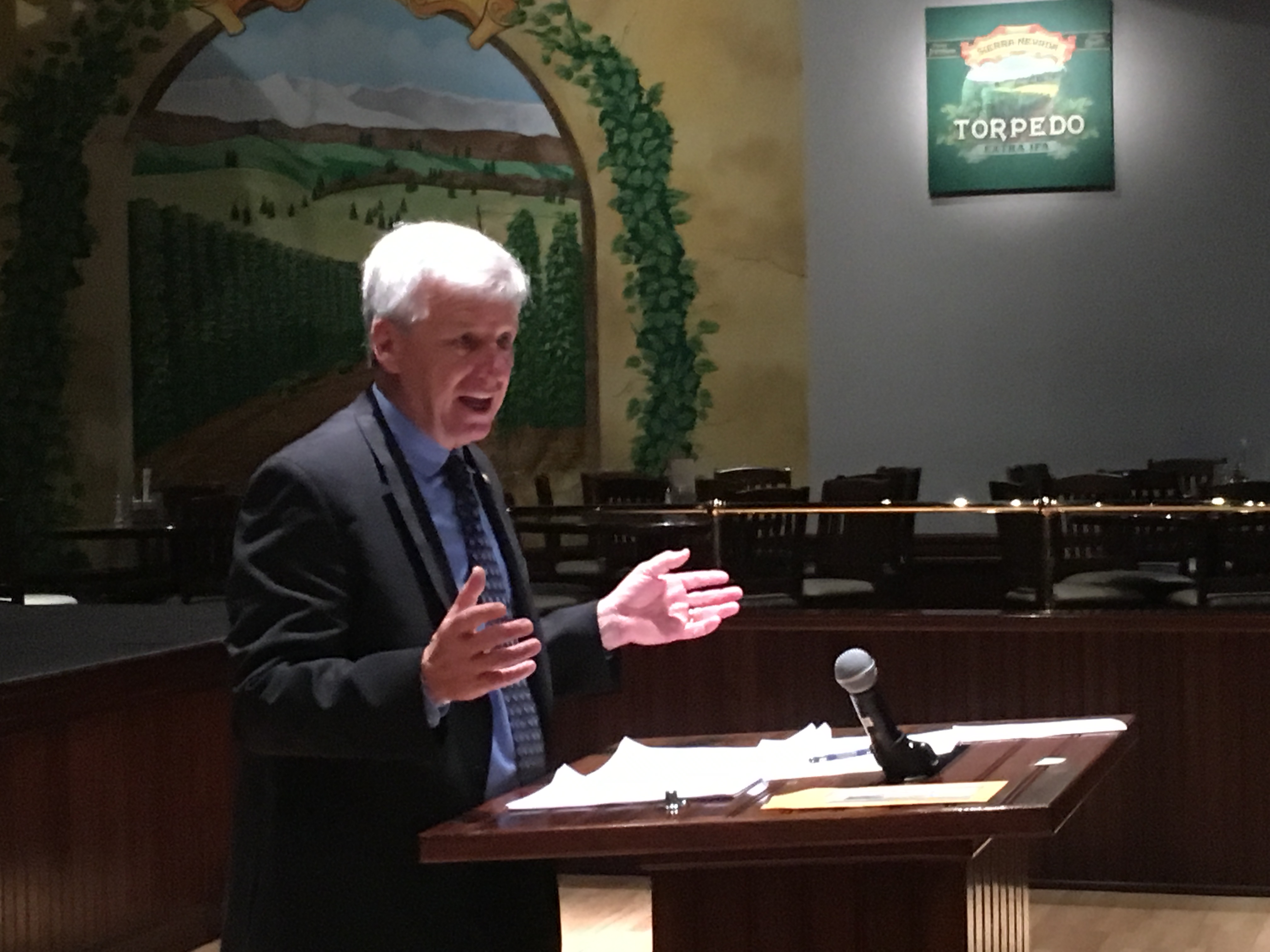
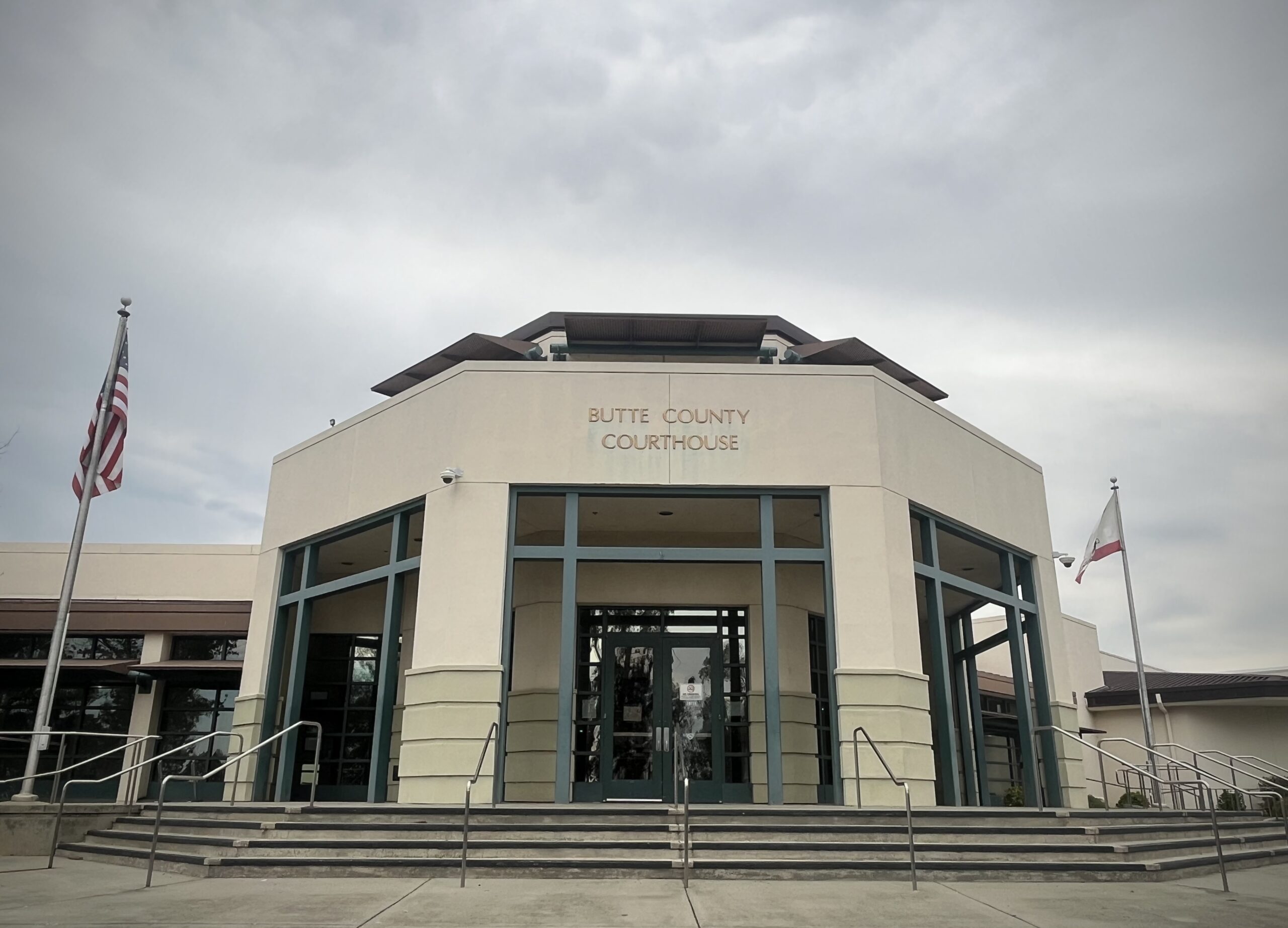
Mental Health Diversion court takes place at Butte County Superior Court monthly. (ChicoSol was unable to get permission to take photos of the proceedings.) Image by AI.
ChicoSol reporter Yucheng Tang attended sessions of Mental Health Diversion court on Aug. 5 and Sept. 2 to learn more about how the program is working in Butte County.Only first names of defendants — who sometimes have charges dismissed — are used in this story.
Michael, then a defendant in a Butte County Superior Court vandalism case, was standing at what a judge called the “finish line.”
“How do you feel?” Judge Jesus Rodriguez asked him.
“My life’s changed in three years,” Michael said, adding that he has learned more about trauma, self-reflection, psychology and empathy.
“Your case has been dismissed. Congratulations,” the judge said, as applause filled the courtroom on a morning in early August.read more
Body cameras recorded shooting of timid man in mental crisis
by Dave Waddell | Posted January 2, 2024
photo by Dave Waddell
At least one police bullet went into Tanabe Dermatology on Magnolia Street along the alley where Rubio died.
GRIDLEY — A year ago today, in the dawn of a new year, was it necessary for Gridley police to kill Baltazar Rubio, a smallish, timid man in acute mental crisis?
Butte County District Attorney Mike Ramsey, 365 days later, still hasn’t answered that question, though he issued a statement the day after the shooting giving the officers’ version of the deadly event. The three shooting officers – Sgt. Eva Smith and officers Anthony Lara and Garrett Mauldin — were soon returned to duty by the Gridley Police Department.
Body-worn camera videos of the killing of Rubio – recently released after denials and delays by the City of Gridley – raise questions about the tragedy. One critical question is how much danger police were in when, after pausing their gunfire, officers pulled their triggers a few final times.
Police had stopped their barrage of wild shooting for roughly four seconds after Rubio fell to the ground. Their last several shots, which came as Rubio had rolled to his back and was not looking toward the officers, stilled and killed him. It is not clear from the redacted videos whether Rubio, once downed, was still holding the gun, which Ramsey said was unloaded and unfired. The gun, in officer Mauldin’s words, was “right next to him” — but not in Rubio’s hand — when picked up and tossed aside by Mauldin after the shooting, videos show. Ramsey did not respond when asked whether Rubio still held the gun while on his back.
In all, 31 shots were fired by police – five by Lara, who started the shooting, his second in 3 1/2 years, while Smith and Mauldin each unloaded a 13-round clip from their semi-automatic handguns.
In response to a Public Records Act (PRA) request from this reporter, DA Ramsey refused to release any investigative records, including the autopsy and forensics reports – records Gridley PD says it doesn’t have. An autopsy report would describe Rubio’s wounds, while a forensics report should reveal whose bullets took the life of the 43-year-old, lifelong Gridley resident.
ChicoSol is making body-worn camera video clips of the shooting publicly available for the first time. They were obtained under a PRA request to the City of Gridley, which issued a blanket denial for access to records prior to communications from attorney Aaron Field, a California public records expert representing this reporter.
(Though redacted by police, the videos may be disturbing to many. Viewer discretion is advised. A clip of Lara’s body cam video is here, Smith’s here, and Mauldin’s here.)
None of the officers seems to have written an incident report about the fatal event, based on the records Gridley released.
Rubio had no criminal history and clearly was in mental crisis when killed. He was accused of pointing the gun at police, but given the distance between Rubio and the officers, as well as various camera obstructions, that’s not clear from the raw, blurry video.
Lara, Gridley’s police officer of the year in 2017, has been a defendant in several excessive force lawsuits. He was involved in a solo shooting in June 2019 in which he fired his gun six times at a fleeing 19-year-old driver. The driver was wounded, though not seriously. That shooting went uninvestigated by either Gridley PD or Ramsey’s office. The teen was not charged with any crime and Gridley paid him $150,000 to settle an excessive force lawsuit.
Smith had been a Gridley police sergeant for just two months on the day Rubio was shot dead. She appeared to be training Mauldin, who was fresh out of the Butte College Law Enforcement Academy and in just his 22nd day as a police officer, according to information provided by the college and Gridley Police Chief Rodney Harr.
Gridley contracted with a private investigator, Michael Allison of Auburn, at $105 an hour to investigate the shooting for the administrative purposes of the Police Department. Allison was not hired until four months after the shooting and did not even interview the three involved officers until November – 10 months after the killing, according to Gridley City Attorney Tony Galyean. Gridley has not released Allison’s findings.
Last July, seven months after Rubio was shot, Gridley businessperson Barbara Caramba-Coker contacted ChicoSol by email over her concern that his killing “was being swept under the rug” by police and the district attorney, while being covered hardly at all by Chico and Gridley newspapers.
In her email, Caramba-Coker, who operates the Bungalow, a Gridley bar, wrote that Rubio was “a quiet, socially awkward guy. He wasn’t big or imposing – maybe 150 or 160 pounds at the most. I have never heard him use foul language or observed him in an aggressive state. At 43, he was still living in his parents’ home. I don’t understand how [Gridley PD] can justify their action. GPD does not seem to understand negotiation or non-lethal tools. If they had taken time to talk him through the situation, Baltazar might still be alive.”
In a later interview, Caramba-Coker said Rubio visited the Bungalow “maybe 10 times a year, at most. He wasn’t a big drinker or anything.” He would meet friends there and “just slap balls around” the bar’s pool table.
“When the guys were talking to him, they’d say, ‘Hey B,’” said Caramba-Coker. “I called him ‘Balta.’ … He wasn’t somebody to be afraid of. … We were all shocked when it was him.”
Rubio came from a “very large, very close, financially comfortable family,” Caramba-Coker said. “Every New Year’s Eve they have a big family gathering at the Masonic Hall.”
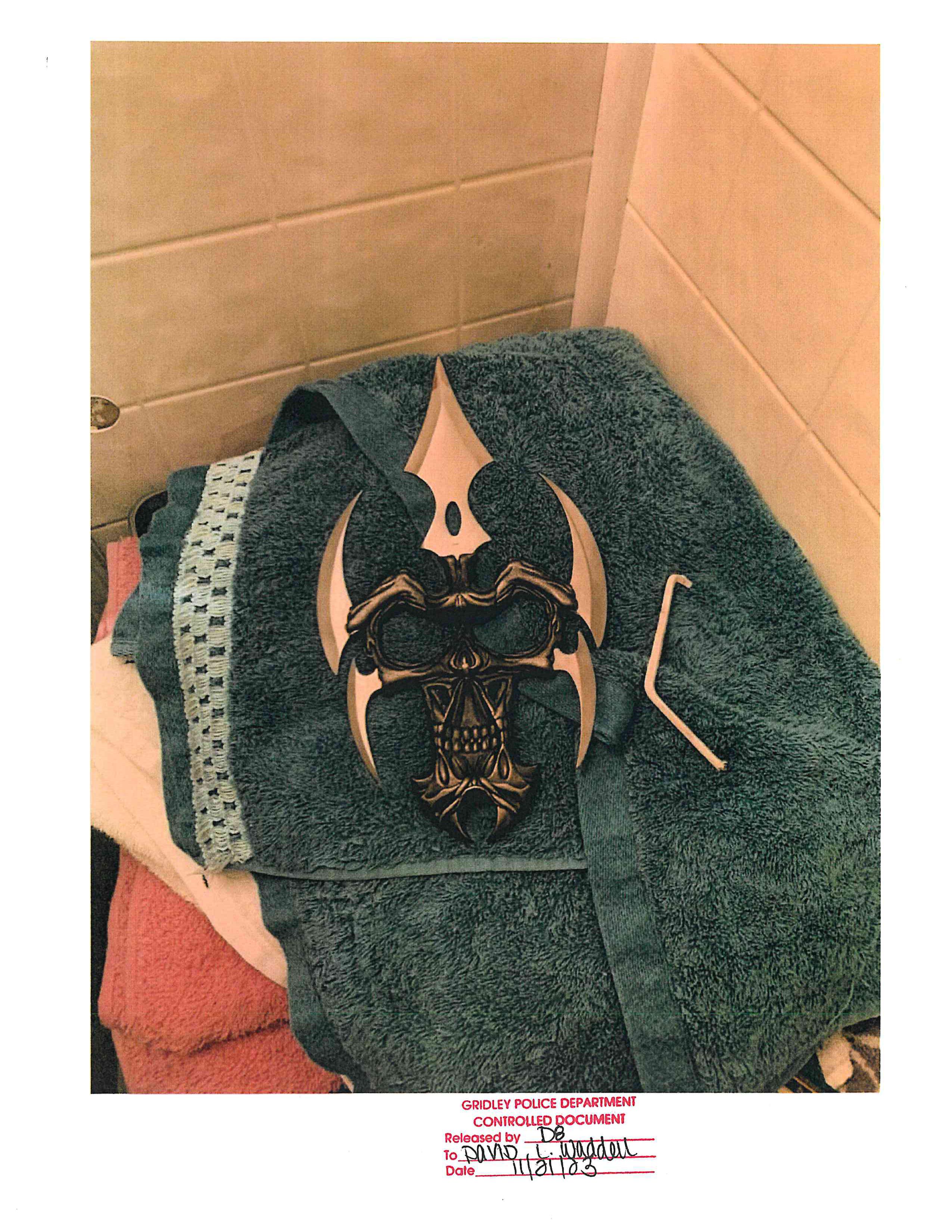
Though he never said anything to police, Rubio was reported to have earlier in the day made statements that sounded delusional. Police were called after he attacked family members with what Ramsey described as “a pair of scissors” and Gridley PD called a “knife.” In a picture sent by police, it actually appears to be a sharp-pointed metal decorative item of undisclosed size. A small blood stain can be seen on one of the points. Body-cam videos show family members quite shaken by Rubio’s uncharacteristic attack. Their injuries were minor.
After the attack, Rubio took off and stole the handgun from a neighbor’s house. Mauldin drove a police SUV with Sgt. Smith in the passenger’s seat through an alley looking for him. The alley runs between and parallel to Kentucky and Ohio streets and the shooting area was bordered on the north by Sycamore Street and on the south by Magnolia Street. Suddenly, Rubio banged on the back of the vehicle with the gun. The two officers sped out of the alley onto Sycamore and then looped back in.
Meantime, Lara, in another vehicle, parked blocking the entrance to the alley from Magnolia and ordered Rubio to drop the gun. Rubio did so and dropped to his knees with his arms raised above his head. However, Rubio did not follow Lara’s repeated orders to get on his stomach. Instead, according to Ramsey’s statement, Rubio grabbed the gun and pointed it at the officer. Lara rapidly fired five times as he was backing out of the alley and retreating behind a fence along Magnolia.
Before Lara began firing, Mauldin and Smith’s SUV had re-entered the alley. Mauldin put it in park at about the same moment Lara fired his first bullet. Lara’s body cam footage shows the SUV to be in his line of fire.
With Rubio still kneeling, facing sideways to the two officers, and not appearing to be pointing the gun, Mauldin, without saying a word, began firing in rapid succession. Smith did likewise as Rubio stood up and hopped down the alley in her direction. At least one bullet struck Lara’s patrol car and at least one round went into the Tanabe Dermatology office on Magnolia, which was seeing patients that Monday afternoon. A green trash barrel had bullet holes. The shooting scene was less than a block from McKinley Primary School’s playground and portable classrooms, though the school was closed that day on holiday break.
When Rubio went down, Mauldin stepped forward to a position where he could steady his aim on the open driver’s door. After a delay in the shooting of about four seconds, Mauldin appeared to fire two or three more times before running out of bullets. It appears from the videos Smith may also have fired two final shots. Both officers quickly snapped a new ammo clip into their guns, but Rubio was no longer moving. None of the officers identified themselves as police, and Mauldin and Smith never spoke to Rubio prior to shooting him down.
The pause in the shooting before the kill shots was long enough for Lara to think the gunfire was over. His body cam video shows him heading back to the alley during that silence but quickly backing up when the shooting resumed.
Dave Waddell is a contributor to ChicoSol who is working on a book about law enforcement killings.
Butte County’s forever DA has history of demonizing in-crisis victims
by Dave Waddell | Posted December 18, 2022
photo by Karen Laslo
Butte County DA Mike Ramsey
I know Butte County has an elderly district attorney, but who knew Mike Ramsey’s thinking on mental illness was so prehistoric?
I am referring to a quote from Ramsey, Butte’s 35-year (!) DA, in Leslie Layton’s ChicoSol story about the difficult societal problems presented by Thomas David Bona.
Bona is a serial criminal living with schizophrenia and a multitude of delusions. He thinks he’s a member of the Sureños gang, which he isn’t. He also seems to have violently acted out his perceived ties to “The Sopranos” television crime family.
Most recently, Bona is facing felony charges with hate crime enhancements in connection with two terrorizing graffiti incidents in Chico. He is accused of etching swastikas into the Murdered & Missing Indigenous Women mural at Cedar and Second streets and on a Congregation Beth Israel sign at the local synagogue, among other frightening acts. Bona is also charged with throwing a rock through a restaurant window, apparently because it displayed a San Francisco Giants sign. He is due back in Butte County Superior Court on Dec. 21 after a judge last month suspended criminal proceedings and ordered his psychological examination.
Ramsey, who knows Bona has been diagnosed with schizophrenia, offered this take on the situation: “The state prisons have a robust mental health program. He (Bona) did get substantial help, but did it cure him? That’s the question.”
So much is wrong with these words, it’s hard to know where to begin, so let’s parse the passage from back to front.
–“That’s the question.” The real question is: What is it about any of Bona’s criminal behaviors that suggest to the DA that he could be “cured” of mental illness? In 2019, six months after one prison release, Bona was in a Best Buy talking to himself, having apparently stopped taking his meds after losing his housing. There, Bona slugged an 86-year-old man who called him crazy.
–“But did it cure him?” Since Ramsey always sounds like he knows what he’s talking about, even when he’s making stuff up, I did a quick Google search. The following words come from the BrightQuest Treatment Centers’ website: “Schizophrenia is a chronic mental illness that has no cure. It causes symptoms of psychosis, including hallucinations, delusions, disordered thinking and speech, abnormal behaviors … While this condition cannot be cured, it can be successfully treated. Antipsychotic medications are crucial for managing symptoms.”
–“He did get substantial help.” I’m fairly certain Ramsey knows (or cares) as much about Bona’s treatment program in prison as he does about schizophrenia cures.
–“The state prisons have a robust mental health program.” “A robust program,” like “substantial help,” is a vague, subjective phrase, but it suggests something positive. In truth, California prisons have a long history of crappy treatment of mentally ill inmates. Just this year, CalMatters, a non-profit news organization, in a six-part series of stories, described a system in which mentally ill prisoners were bounced from facility to facility. Perhaps that’s what Ramsey means by “robust.” CalMatters concluded that “three decades after California’s prisons first came under court monitoring for rampant abuse and neglect of prisoners with mental illness, the system is still failing to protect its sickest inmates. For many of these men … prison is not a place to heal. It is a place to disappear.”
While taken aback by the backwardness of Ramsey’s words about Bona’s schizophrenia, I’m certainly no stranger to the DA’s dismissiveness of people in mental crisis -– especially those killed by the Chico Police Department. Another Ramsey statement in that ChicoSol story — that Bona “has had many treatment opportunities both in custody and out” -– was precisely Ramsey’s attitude after Chico police gunned down Desmond Phillips, a young Black man in mental crisis, in his father’s living room on St. Patrick’s Day, 2017.
Ramsey rushed out a 13-page, single-spaced report on the Phillips killing, but only a couple of those pages actually reviewed the police incompetence, fear and brutality that took place in that tiny living room that night. The reality is that police shot Phillips, who was in acute psychosis, with a stun gun and then unloaded their Glocks full of hollow-point rounds while he was still reeling from the effects of that Taser. Two inexperienced officers totaled 16 shots, 11 of which hit Phillips, while several other bullets sailed through an adjacent apartment or out the front door of the residence, nearly hitting at least one officer. Phillips was most likely holding only a small stick when assaulted and killed at the age of 25.
One veteran police expert said the slaying had all the signs of a “panic shooting” by officer Alex Fliehr and a “sympathy shooting” by officer Jeremy Gagnebin. Having been quickly exonerated by Ramsey, Fliehr, just five months later, would go on to cruelly shoot Tyler Rushing with a Taser while Rushing was clearly incapacitated and probably dead -– a bizarre action the City of Chico, at considerable taxpayer expense, must now defend in a federal court wrongful death case.
After zero accountability for their killing, Fliehr and Gagnebin continue to carry guns and patrol the streets of a city with a Police Department whose training and conduct standards have been deteriorating since the ineffectual Mike O’Brien, now an appointed City Council member, took over as chief in 2015.
During the past seven years, in a trend unheard of previously, Chico police desperate for greater professionalism quit to take lateral positions at smaller area law enforcement agencies. These defections included multiple minority officers.
Having sifted through Desmond Phillips’ medical records searching for morsels (a missed appointment here, a wrong box checked on a form there) with which to try to demonize Desmond and blame him for the horrifying homicide that took his life, how did Ramsey treat the officers who riddled his body with bullets? Delicately. With kid gloves.
When the original sagas that Fliehr, Gagnebin and a third officer individually told investigators about Desmond’s actions turned out to be so different as to be mutually impossible, Ramsey brought them all together so they could try to get their stories straight. According to Seth Stoughton, a national expert on police use of force, no competent law enforcement official would allow, let alone encourage, people who were supposedly being investigated in a homicide to collaborate on their testimony.
It is vital to understand that district attorneys are by far the most powerful players in our criminal justice system. Multiply that basic power by 3½ decades in office, toss into the mix what is, by and large, a benign, worshipful local news media, and Ramsey has acquired nearly absolute power to spin the criminal justice tale of Butte County. And when it comes to police killings, my research has shown that power has corrupted the county’s so-called investigations absolutely. These investigations are not a search for truth, but rather Ramsey’s pursuit of morsels of information -– no matter how sketchy or irrelevant -– to make deviant police killings seem somehow normal.
All those years with such immense power must do something to a man’s head. In Ramsey’s case, he feels free to simply ignore -– over and over and over again — my California Public Records Act requests for information about Butte County’s epidemic of unnecessary police killings. Since no one is going to prosecute him, I’ve repeatedly been forced to pay for an attorney to compel Ramsey to respond to my requests for the release of public documents. I would prefer a DA who does not consider himself (or herself) above the law; a DA with the courage to investigate police officers who kill as murder suspects; a DA who refuses to regard those wrongly killed by police as beneath the law’s protection.
Ramsey was appointed DA when the nation’s president was Ronald Reagan (the father of our country’s mental health crisis). He will be nearly 80 years old when the four-year term he was elected to in June expires in 2027. Butte County’s forever DA seems bent on doing a J. Edgar Hoover and never leaving office. That‘s alarming because Ramsey has corrupted Butte County law enforcement with his phony officer-involved killing cover-ups. And he is outrageously, dangerously ignorant about the mentally ill.
As for Bona, given his history and current trajectory, the next time he’s released from some “robust” prison treatment program, his despicable crimes could get worse and even become deadly.
As for Butte’s district attorney, the concerns, obviously, are legal, ethical and actuarial. It’s unfortunate and pathetic (to quote Charlton Heston on guns) that the DA’s office may have to be pried from Ramsey’s “cold, dead hands.”
Dave Waddell is a contributor to ChicoSol and a journalist who is researching Butte County law enforcement killings for a book.
Stephen Vest slipped through the cracks, observers say
by Dave Waddell and Leslie Layton | Posted October 29, 2020
photo courtesy of Lisa Currier
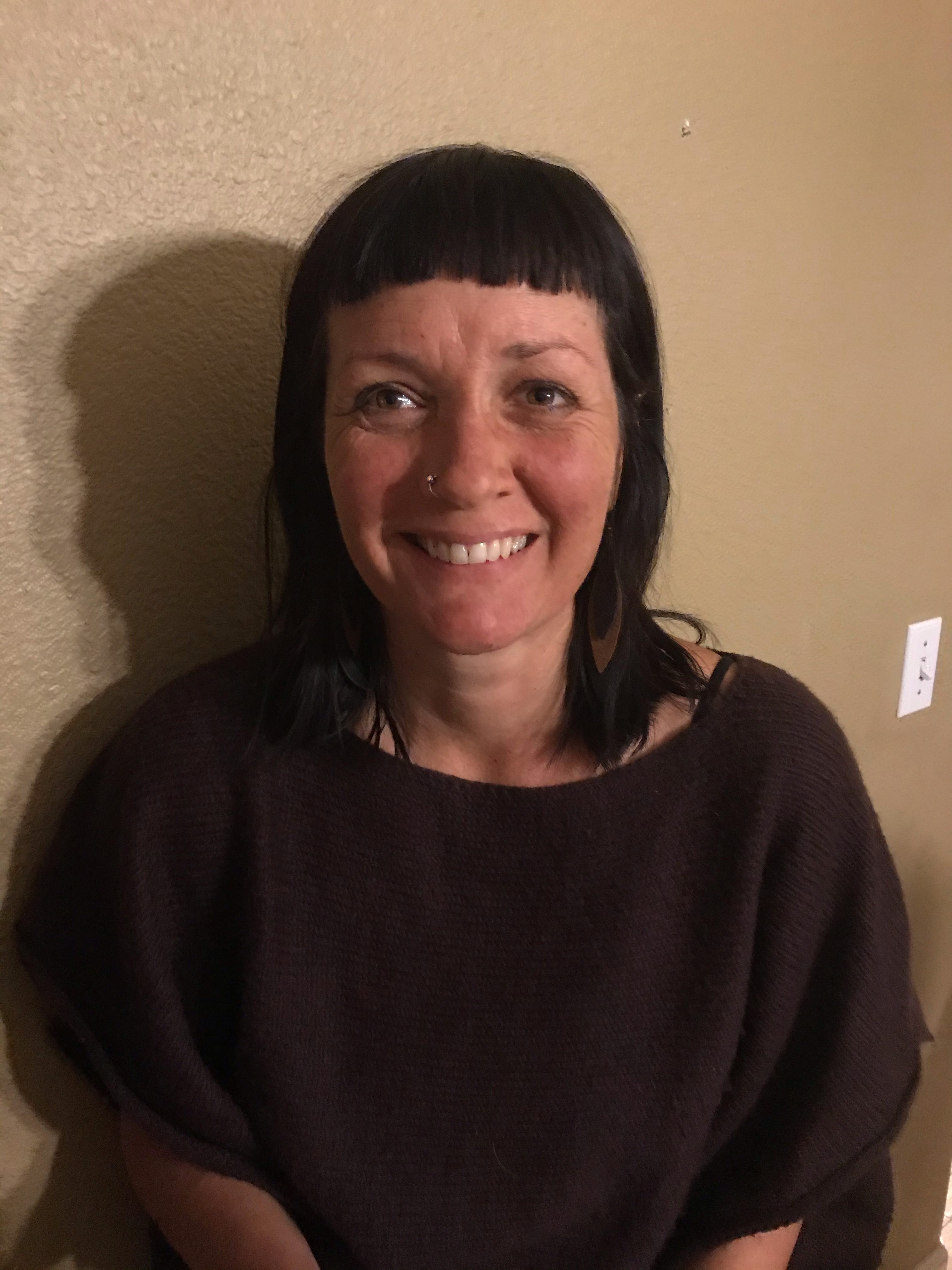
Stephen Vest as a youngster in Paradise.
Chico police reform advocates are questioning the independence of the investigation underway into the killing of Stephen Vest, who was shot Oct. 14 by an officer and his sergeant after Vest’s behavior frightened motorists and passersby.
Reform advocates want a state investigation into the killing outside the local Petco store. Butte County District Attorney Mike Ramsey insists his system for investigating police shootings ensures impartiality and falls within the purview of his position.
Vest, 30, a Camp Fire survivor who grew up in Paradise, was described by friends as a sweet man who struggled with mental illness and by Ramsey as someone in need of drug rehabilitation. Vest was shot dead while advancing on several Chico officers with a knife in the Petco parking lot on Dr. Martin Luther King Jr. Parkway.
Ramsey said officer Will Page tasered Vest but Vest only flinched, officer Tyler Johnson fired his revolver “eight or nine times” within “2.03 seconds,” and Sgt. Nick Bauer shot twice at Vest. Ramsey said Vest was brandishing a folding knife with a 4-inch blade.
Ramsey estimated Vest was about 10 feet from police when they fired, noting that he has seen body camera footage from officers Johnson and Page. Sgt. Bauer did not turn on his camera until after the shooting. No police or bystanders were hurt in the chaos Vest caused leading up to his death.
“He screamed out for help and slipped through the cracks,” said Lisa Currier, who knew Vest from her work with Safe Space, a winter sheltering program for the homeless. In a letter to Chico and Butte County officials, Currier said, “I would like for you all to support a independent investigation into the use of force with Stephen Vest.”
Investigations fail to satisfy reformists
Police killings locally have long been investigated by a collection of officers with a name that is frequently misspoken and miswritten: Their proper name is the Butte County Officer Involved Shooting/Critical Incident Protocol Team. After Vest’s shooting, Chico Police Chief Matt Madden “invoked” the protocol, meaning that he turned over the criminal investigation – as well as the handling of news media — to Ramsey.
As with most officer-involved shootings in Butte County, Ramsey showed up at the site of Vest’s killing and then provided the news media with Chico PD’s account of what took place.
The Butte County protocol team has been around for a quarter of a century and has investigated at least 34 previous law enforcement homicides, of which no fewer than 18 involved a victim in mental crisis, based on one tally. The team is composed of veteran officers from most law enforcement agencies in the county. In all 34 killings, the protocol team’s report found that the shooting officer or officers should face no criminal charges.
In one case, however, Ramsey, who directs the team’s investigation and authors its reports, was forced by public outrage to reverse himself and prosecute Paradise police officer Patrick Feaster for the unprovoked, caught-on-camera killing of unarmed drunken driver Andrew Thomas in 2015. Ramsey’s report exonerating Feaster argued that the shooting was not a crime, but rather an accident.
Just days after that first report, Ramsey released a second report that further explained and defended his contention that Feaster had committed no crime. Under withering public pressure, however, Ramsey later charged Feaster with involuntary manslaughter. Feaster was convicted and sentenced to 180 days in jail, serving half that number.
In all 34 killings since 1997, the team’s report found the officers should face no criminal charges.
Ramsey’s officer-involved shooting report on the Vest killing will be his first following a Jan. 1 change in state law. Assembly Bill 392 altered the definition of the circumstance under which deadly force by police is legally justifiable from “reasonable” to “necessary.” Ramsey estimates the Vest report will take four to six weeks to complete.
The independence of the protocol team has been questioned since Vest’s death. Concerned Citizens for Justice (CC4J), a police reform group, has called on City Manager Mark Orme and the City Council to compel Madden to turn the investigation over to the state attorney general’s office.
CC4J member Jill Bailey said Ramsey’s protocol team, being “composed of law enforcement officers from Butte County agencies,” amounts to “police investigating their coworkers in a use-of-force killing” and is not impartial. Ramsey argues that these investigators are impartial; they do not work for the specific agency involved in the shooting, thereby avoiding, he says, a conflict of interest.
Bailey noted that the killing of Vest occurred “in the midst” of increasingly contentious meetings of the city’s Policing Review Ad Hoc Committee formed by Mayor Ann Schwab. The committee has been discussing, among other things, whether to revise Chico PD’s use-of-force policies. During its meetings, officer and police union president Jim Parrott, one of three committee members from Chico PD, has defended the department’s current policies, training and performance.
Noting Chico police leaders’ satisfaction with the status quo, Bailey wondered about the discrepancy in the number of shots fired at Vest by the two officers. Bailey said she’s been told that officers are trained “to eliminate the threat” to themselves or others. In the Vest killing, officer Johnson fired 4 or 4 1/2 times as many shots as Sgt. Bauer to eliminate the same threat.
Asked about the wide discrepancy, Ramsey said Vest was closer in proximity to Johnson than Bauer.
Police killings of citizens armed only with knives are particularly contentious, as was shown in Philadelphia, a city rocked by unrest after the police killing of Walter Wallace Jr. While police officers in the United States frequently shoot and kill people brandishing knives, it is rare for a police officer to be stabbed to death.
Researcher Franklin Zimring (“When Police Kill”) studied the 292 U.S. police deaths classified as a “felonious killing” from 2008 through 2013 and found only two — a microscopic 0.6 percent — were by knife or another cutting instrument. An officer was more likely to be beaten to death than stabbed to death.
“Attackers who brandish knives and rush at police … never caused a death of an officer in six years,” wrote Zimring, who argues that police departments should consider a no-shooting policy when it comes to knife wielders.
2020: For Vest, decline and then tragedy
By all indications, 2020 was a year of serious decline for Stephen William Vest. On March 2, he changed his Facebook profile picture to one of him looking anxious and unhappy, his eyes with dark circles cast downward and to the side. In a disjointed post accompanying that photo, Vest wrote: “So stressed out right now can barely take it … To the point of almost metal colapse. Laugh at me cause I’m different laugh at them for there all the same.. Breathe…holy shit.”
Within a week of that post, Vest became a criminal, apparently for the first time in his life. He was charged with biting two law enforcement officers on the leg in separate incidents. In one case, Vest bit an officer after being tackled to the ground by Chico police responding to a call in the area of East 20th Street. The following day, in the Butte County Jail, Vest bit an officer on the leg during a scuffle, Ramsey said.
In each case, Vest was charged with two felony counts: battery on a peace officer and obstruction of an officer. Butte County Superior Court’s online records indicate Vest was found mentally competent to stand trial after examination by a forensic psychologist. Vest eventually pleaded no contest and was placed on felony probation.
Vest was later charged with probation violations, and in one case was found in possession of methamphetamine, Ramsey said.
Court records show that Vest was never charged with a drug offense, but Ramsey said part of the “probation deal” was that Vest undergo drug rehabilitation. Ramsey said probation’s efforts to help Vest with housing and rehab were not well received.
The Oct. 14 shooting followed both morning and evening calls to police dispatch about a man who was described as “confused” and seems to fit the description of Vest – a slender white man in a dark hooded sweatshirt — on East 20th Street running in front of cars. (See what the police log shows here.)
That evening, Ramsey says a park security guard saw a man who “appeared to be bloody” near 20th Street Community Park. The guard addressed the man, who turned out to be Vest.
Ramsey said Vest “came through” the guard’s patrol car window with a knife, jumped on the hood of the car and rolled back toward the passenger window. The guard tasered Vest, to no visible effect.
The events that led to the fatal shooting then unfolded rapidly. Vest darted into the intersection of East 20th and Martin Luther King Parkway, jumping on the back of someone’s motorcycle and on the hoods of cars. After breaking a windshield and stabbing a tire, he fled toward Petco and, says Ramsey, chased a delivery driver and store employee with the knife, shouting “Shoot me.”
Representing Vest was criminal defense attorney E. Ryan Lamb, a public defender who declined comment on the case but said he was “super sad” to learn of Vest’s death. Lamb said he has no knowledge of what services were offered by probation, but somewhere in Vest’s long journey he didn’t get the help he needed.
“Clearly, where this ended was tragic, and implicitly something was missing somewhere,” Lamb said. “In general, we have far too few resources to help people rehabilitate, whether it’s mental illness or drugs, so a lot of people slip through the cracks.”
Dave Waddell is a contributor to ChicoSol. Leslie Layton is editor.
Reports: Woman shot dead by Butte deputy had tried to help CHP officer
by Dave Waddell | Posted October 30, 2019
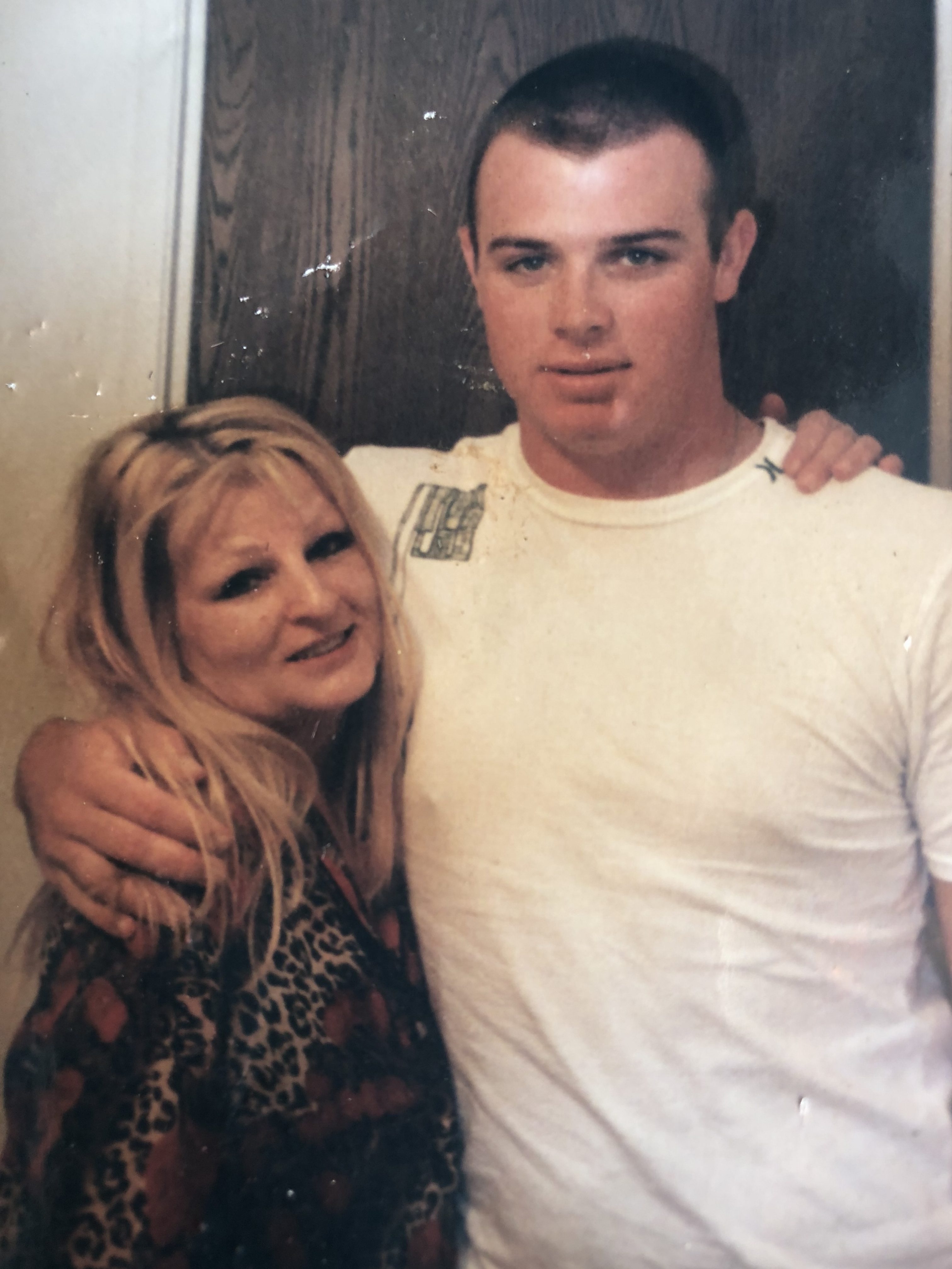
Hali McKelvie with her mother, Myra Micalizio, in 2014. Photo courtesy of family.
Not long after Myra Micalizio was shot five times in the back and killed last year by a Butte County sheriff’s deputy, District Attorney Mike Ramsey declared before television cameras that Micalizio had tried to attack deputies with her vehicle.
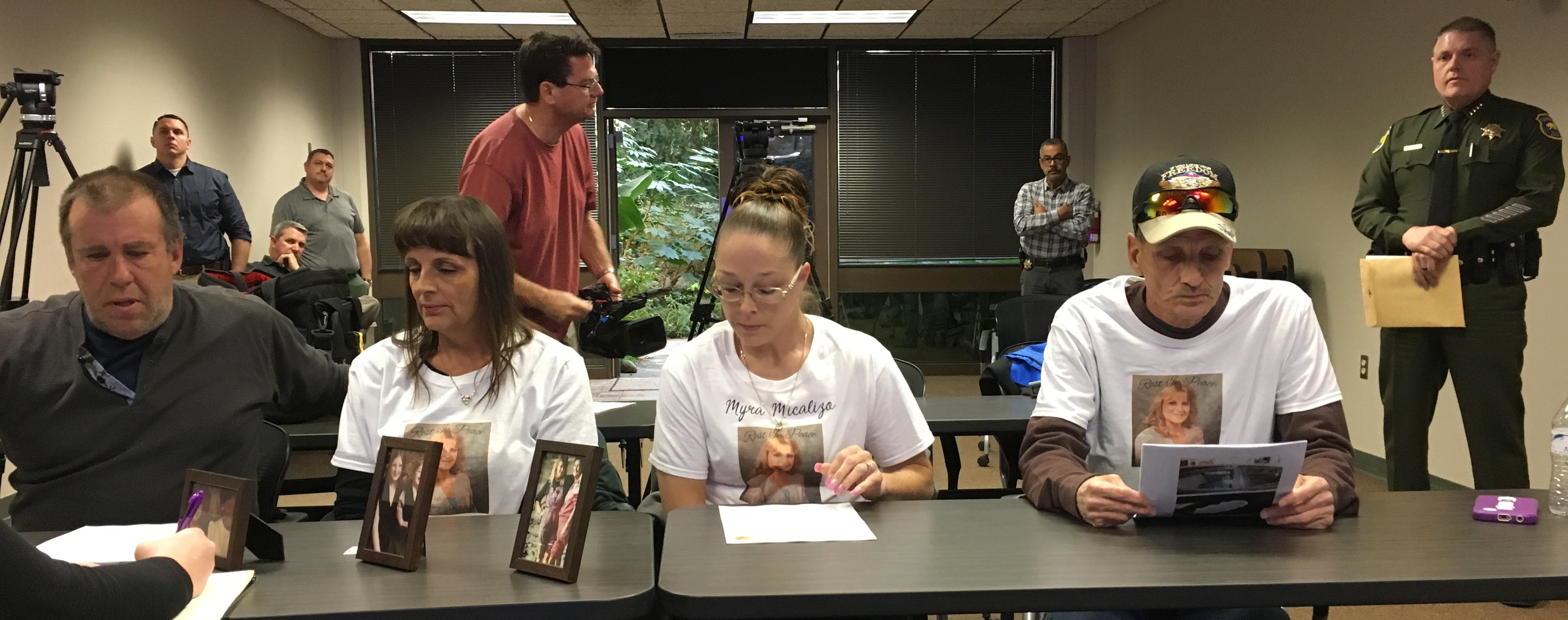
Micalizio’s family never bought that scenario, but Ramsey reaffirmed it many months later when issuing a report clearing deputies Charles Lair and Mary Barker of any criminal wrongdoing in the killing. Micalizio’s three children – Lisa Rutledge, Sean McKelvie and Hali McKelvie – recently settled a wrongful death suit against Butte County for $250,000, said County Counsel Bruce Alpert.
Through many of her 56 years, Micalizio lived with undiagnosed mental illness and was in unprecedented crisis when shot dead on April 26, 2018. On that day, Micalizio was “delusional, depressed, and experiencing hallucinations,” while conversing with what she called her “imaginary friends,” according to her children’s lawsuit.
Micalizio wasn’t a criminal. She had no history of ever being violent. Her favorite nephew is a police officer. She showed such admiration for law enforcement that horrified family members could barely fathom the circumstances of her death. Greg Abrew of Oroville, Micalizio’s brother-in-law, a few months after the killing, recalled his first reaction: “I said, ‘No way. She would never do anything against the police.’”
In fact, just two days before she died, Micalizio had an encounter with a California Highway patrolman that, her relatives say, demonstrated her attitude toward law enforcement personnel. The officer described the encounter as unique.
Micalizio’s conversation with the CHP officer and other details not reported in Ramsey’s narrative of the killing have emerged with the release of investigative reports and witness statements obtained by ChicoSol from Butte County under Senate Bill 1421, the “Peace officers: release of records” law.
CHP officer Randy Siemens was handling a minor traffic collision on April 24 near Micalizio’s residence in the 6500 block of Lincoln Boulevard in the Butte County community of Palermo when Micalizio suddenly appeared. According to a report Siemens was requested to write after her shooting: “She approached my location, on foot … and asked what had happened. I explained I was investigating a minor traffic collision. She asked if she could help. I declined and thanked her, relating I had everything I needed from the collision scene. She turned around and began walking south on the east shoulder of Lincoln Blvd. She turned around, facing me again, and told me to stay safe. I thanked her once again, and she continued walking southbound. The entire contact lasted a minute or less. … The subject appeared to be coherent and able to care for herself. Following our conversation, I noted to myself that the encounter seemed odd. I had never had someone walk up to a collision scene, in my eight years with the California Highway Patrol, and ask if they could help.”
Brenda Widener-Abrew of Oroville, Micalizio’s sister, said the CHP officer’s account “describes the woman Myra was. She loved everyone … This doesn’t surprise me at all. If we had more Myras in the world, our world would be a better place.”
Micalizio’s conversation with patrolman Siemens wasn’t included in Ramsey’s Feb. 11 report, which quotes neighbors as saying Micalizio had recently been yelling and waving her arms in her front yard. Widener-Abrew believes Micalizio was seen responding to one neighbor’s verbal objections to Micalizio’s habit of feeding hungry cats.
Butte County provided hundreds of pages of redacted documents to ChicoSol on Sept. 19. Since deputy Lair’s history was the subject of ChicoSol’s request under SB1421, conspicuous by its absence in the mound of paperwork was Lair’s statement to investigators after the Micalizio shooting. That statement, however, was quickly retrieved from the Sheriff’s Office and forwarded to ChicoSol by Assistant County Counsel Brad Stephens, who had no explanation for why it was not included in the original batch.
Lair was interviewed several hours after the shooting by Jon Angle, an investigator for Ramsey. Chris D’Amato, a sheriff’s department detective, assisted Angle. Representing Lair at the interview was veteran Sacramento labor attorney Timothy Talbot.
Talbot also sat in with deputy Barker, who was interviewed mainly by Mark Bass, a Chico Police Department detective and member of Ramsey’s Butte County Officer Involved Shooting/Critical Incident Protocol Team. Bass, who himself has been involved in two fatal shootings as a Chico officer, was assisted by Tiffany Larsen, a Sheriff’s Office detective.
Ramsey kept Micalizio’s family in the dark about the details of her killing for 10 months before issuing his report exonerating Lair and Barker. From the outset, Micalizio’s brother, Tommy Widener of Oroville, wanted to know how many of the bullets came through the side of his sister’s 1999 black Mercury Sable. Bullets coming from the side, Widener kept saying, proved that Lair “had cleared danger” of being struck by the vehicle when shooting his Glock pistol.
As it turned out, most of Lair’s nine rounds, fired in rapid succession, entered from the side of the Sable, mostly through the driver’s side backseat window into the driver’s seat backrest. Based on state Department of Justice photos and diagrams included in Ramsey’s report, all five bullets of Lair’s that hit Micalizio appear to have been fired through that side window. Ramsey did not respond to questions related to the trajectory of Lair’s gunfire.
Deputies had been dispatched on a trespassing complaint over Micalizio’s “crazy” behavior to a residence in the 2100 block of Stanley Drive, which is a gravel road off Lincoln Boulevard about a half-mile from where she lived. Micalizio, who was unarmed, had apparently gotten it into her head that she was at a yard sale and asked residents if they had change for a trillion-dollar bill. She allegedly pointed a “finger gun” at them, and said she would “smoke them out” and call in the FBI. Her rantings could be heard on multiple 911 calls. She wore one blue latex glove.
The shooting began only about 10 seconds after deputies Lair and Barker arrived in separate vehicles. The deputies approached from the rear of Micalizio’s car, while the residents who had called 911 were outside, positioned near their trailer home. The front of the Sable faced them.
The residents said in statements that Micalizio got in her car and backed it rapidly toward Lair. But because they were in the deputies’ line of fire, they all fled with the sound of gunfire for safety behind the residence. Lair and Barker each wore a body camera, but neither turned it on until after the shooting.
The narrative that Micalizio was transformed by a mental crisis almost overnight from an admirer and supporter of police to someone trying to attack them with her car seems improbable to her siblings. More likely, they say, in her irrational, delusional, confused state, Micalizio was unable to understand Lair’s shouted commands and was trying to get away, not run over deputies.
After the shooting, the reversing Sable was moving slowly enough for Lair to open the driver’s door and try, unsuccessfully, to hit the brake with his foot. The Sable continued on an arc until it was halted by a nearby brush pile.
“As soon as I seen the pictures (of the bullet holes through the side window of Micalizio’s car) that answered all my questions,” Tommy Widener said last week.
As it turned out, the residents were in danger – not from Micalizio’s finger gun – but from deputy Barker’s Glock. Two of her six bullets, which all missed Micalizio, ended up hitting trailer residences on the property, with one round sailing through a bedroom. Another bullet is thought to have skimmed off the top of the Sable and sailed “into the woods.”
Ramsey’s report says Micalizio was unemployed, but she was a member of the United Domestic Workers of America and had worked as an in-home care provider to seniors and the disabled. At her death, she had been on disability for several months, family members said. Two executives of her union, writing about a year after she was killed, described Micalizio as a “warm, childlike and giving” person who had overcome “a life of trauma through faith. Her life was complicated, but it had value.”
Dave Waddell is a freelance writer who contributes to ChicoSol, mostly on law enforcement-related issues.
Unarmed Palermo woman in mental crisis reversed car
by Dave Waddell | Posted July 27, 2018
Myra Micalizio, about seven years ago with her nephew Justin Widener, who is a police officer in Aurora, Colo.
Above all else, her family says, Myra Micalizio of Palermo was a gentle woman who loved the Lord. And she got along really well with her imaginary friends as well.
Micalizio, 56, who lived with mental health issues, was shot dead April 26 in a hail of bullets from two Butte County sheriff’s deputies. On July 20, her family filed a federal civil rights complaint seeking a jury trial and unspecified damages from Butte County, sheriff’s deputies Charles Lair and Mary Barker, and Sheriff Kory Honea.
“It would have been apparent to any law enforcement officer adequately trained to contact and communicate with persons suffering from mental illness that … Micalizio was experiencing mental illness, as opposed to engaging in criminal conduct,” says the complaint, filed in the Sacramento Division of the U.S. District Court, Eastern District of California.
Together, deputies Lair and Barker fired a total of 13 rounds, hitting Micalizio “several” times, the complaint says.
“(Lair and Barker) fired their weapons with such reckless abandon that a stray bullet hit the occupied residence in front of which they shot … Micalizio,” the complaint alleges. “The bullet entered one of the residence’s bedrooms … pierced a dresser at one end and exited out the other end.”
Each deputy wore a body camera, but neither turned it on “at any time during the incident,” in violation of Sheriff’s Department policy, according to the complaint.
The shooting is under investigation by the Butte County Officer-Involved Shooting/Critical Incident Protocol Team, headed up by District Attorney Mike Ramsey. The day of the killing, Ramsey, at the scene, told Action News Now: “It appears that the lady who was the subject of the call backed her car rapidly towards (the deputies), shots were fired, and the lady is now deceased.”
In addition to the Micalizio family’s litigation against Butte County, three lawsuits are currently active against the city of Chico claiming wrongful deaths in police shootings. They were filed by the families of Breanne Sharpe, Desmond Phillips and Tyler Rushing.
Micalizio’s three children – Lisa Rutledge, Sean McKelvie and Hali McKelvie – and her four grandchildren all live in Michigan. Micalizio was a longtime card dealer in Reno before moving to Butte County six or seven years ago to be closer to her siblings. She dealt Black Jack for several years at an Oroville casino.
In recent years, Micalizio was a fixture at the Kingdom Hall of Jehovah’s Witness in Palermo, where the manner of her death “absolutely shocked everyone,” said Micalizio’s sister, Brenda Widener-Abrew of Oroville.
“Her priority was God. Well, ‘Jehovah’ she called him,” Widener-Abrew said. “She was involved in helping people get to know her Jehovah. Besides her children and her grandchildren, Jehovah was the only man in her life.”
Eventually, Micalizio came to view the casino as a “house of sin” and quit working there to become an in-home health-care aide, her sister said. Despite mental issues, Micalizio had been happy and steadily employed.
Widener-Abrew said that as far as she knows Micalizio was never diagnosed with a specific mental illness.
“I thought sometimes she should be checked,” Widener-Abrew said. “Her mental illness issues, they weren’t mean. They centered around her ‘air friends,’ her imaginary friends. … When she found God, she basically turned into a much happier person.”
Widener-Abrew remembers her sister telling her: “My ‘air friends’ make me happy.”
On April 26, Micalizio pulled her black Mercury Sable onto a property about a half-mile from her Palermo residence, apparently thinking that a yard sale was in progress. The complaint describes her as “delusional, depressed, and experiencing hallucinations as she conversed with her … ‘air friends.’” The property owners called the Sheriff’s Department to have her removed.
When the two deputies arrived, Lair immediately ordered Micalizio to put her hands in the air. Instead, Micalizio, who was unarmed, walked to her vehicle, started it up and began backing up. The officers said they felt the car posed a threat to their safety, with Lair firing seven rounds and Barker six. The entire incident happened in just 15 or 20 seconds, says the complaint.
According to a press release issued by the Sacramento law office of Mark E. Merin, which represents the Micalizio family, Butte County has yet to turn over any information about the killing to family members.
“Butte County has the highest per capita number of police killings of civilians of any county in the state,” the press statement says, “and has refused to produce any interviews, investigation reports, photographs, statements of the officers, coroner’s report, autopsy report, toxicology, or any other evidence gathered at the scene of the killing. Neither have they allowed an investigator hired by the family to inspect Ms. Micalizio’s vehicle to determine where the bullets entered the car.”
Micalizio’s brother, Tommy Widener of Oroville, said the location of the bullet holes on her vehicle will be telling.
“If they’re from the side (of the car),” he said, “then (the deputies had) already cleared danger. That’s murder.”
Dave Waddell is news director at ChicoSol.
(The last name of Deputy Mary Barker was originally misspelled and has been corrected — Ed.)